Quick answer: Yes, stress causes acne. When you're stressed, your body releases cortisol, a hormone that signals your skin's oil glands to produce more sebum. That excess oil clogs pores, feeds acne-causing bacteria, and triggers inflammation. Add sleep deprivation from late-night studying, and the effect compounds. The fastest way to break the cycle is a consistent, simple routine paired with targeted acne technology like FDA-cleared blue light therapy.
If you've noticed your skin falls apart right around midterms and finals, you're not imagining it. There's a real, measurable biological reason exam season and breakouts arrive together. This guide breaks down exactly why it happens and gives you a realistic plan built for dorm life, tight budgets, and zero free time.
Does Stress Actually Cause Acne? The Science Behind Exam-Week Breakouts
Yes, stress causes acne, and the mechanism is hormonal. When your brain perceives stress (a looming deadline, an all-nighter, a packed exam schedule), your adrenal glands release cortisol, the body's primary stress hormone.
Here's the cause-and-effect chain behind cortisol acne:
- Stress signals the adrenal glands to release cortisol.
- Elevated cortisol tells your sebaceous (oil) glands to ramp up sebum production.
- Excess sebum mixes with dead skin cells and clogs your pores.
- Clogged pores create an oxygen-deprived environment where C. acnes bacteria thrive.
- Bacteria multiply, your immune system responds, and inflammation produces the red, swollen breakouts you see.
This is what we call The College Breakout Cycle: a self-reinforcing loop where academic stress raises cortisol, cortisol drives oil production, and oil feeds the bacteria that cause acne. Once you understand the loop, you can interrupt it at multiple points.
There's also a reason stress breakouts tend to appear in the same places. Stress acne typically concentrates on the lower face, chin, and jawline, because those areas have a higher density of hormone-sensitive oil glands. If your breakouts cluster along your jaw during finals, that's a hormonal signature, not a coincidence.
The connection between stress and acne is well documented. Both Healthline and WebMD confirm that while stress doesn't create acne out of nothing, it measurably worsens existing acne and triggers new flare-ups by amplifying oil production and inflammation.
The takeaway: your breakouts aren't random bad luck. They're a predictable physiological response, which means they're also manageable once you address the root cause and the surface symptoms together.
How Late Nights and Sleep Deprivation Make Breakouts Worse
Can not sleeping enough cause acne? Yes. Sleep deprivation attacks your skin on two fronts at the same time, which makes it one of the biggest hidden drivers of finals-week breakouts.
First, cutting sleep short raises cortisol, compounding the exact stress-acne mechanism described above. Second, it suppresses melatonin, a hormone that doesn't just help you sleep, it also functions as a powerful nighttime antioxidant and a repair signal for your skin.
During deep sleep, your skin runs its primary regeneration cycle:
- Cell turnover accelerates, clearing away dead skin.
- Collagen is synthesized, keeping skin firm and resilient.
- Inflammation from the day gets resolved.
When you pull an all-nighter or sleep four hours, you halt that repair process mid-cycle. Damage accumulates instead of being cleared.
There's a third factor: late-night blue light from screens. Scrolling your phone or staring at a laptop past midnight further suppresses melatonin, delaying sleep and shrinking your skin's repair window even more.
Here's the full sleep deprivation skin effects cascade in simple terms:
> No sleep → high cortisol + low melatonin → more oil + less repair + more inflammation → worse breakouts
This is why late nights and breakouts go hand in hand, and why the week you sleep the least is often the week your skin looks the worst. Sleep isn't a luxury for your skin. It's the single most important recovery tool you have, and it's completely free.
Hidden College-Life Acne Triggers You're Probably Ignoring
Cortisol is only part of the story. College life comes with behavioral and environmental triggers that most skincare guides ignore entirely. The good news: these are controllable variables within the College Breakout Cycle, meaning you can fix them today.
1. Hand-to-face contact while studying. Resting your chin in your hand during a three-hour study session transfers bacteria and oil directly onto acne-prone skin. Your hands touch keyboards, door handles, and shared surfaces all day.
2. Shared dorm bathrooms. Constant humidity, residue from other people's products, and poor ventilation turn communal bathrooms into bacterial breeding grounds. Your face towel and toothbrush live in that environment too.
3. Pillowcase hygiene. Most students go weeks without washing a pillowcase, then sleep six to eight hours face-down on accumulated oil, bacteria, and dead skin every single night.
4. High-glycemic stress snacking. Chips, energy drinks, and candy spike your blood sugar and insulin, and insulin surges are directly linked to increased sebum production. That midnight vending machine run has a skin cost.
5. Excessive caffeine. Coffee and energy drinks dehydrate your skin and can raise cortisol, hitting the same stress pathway that drives breakouts in the first place.
None of this means you're doing something wrong. It means you have more levers to pull than you realized. Flip your pillowcase, keep your hands off your face while studying, and swap one energy drink for water, and you've already interrupted the cycle at three points.
The Best Skincare Routine for Stressed, Acne-Prone Skin in College
The best acne skincare routine for a college student is one you'll actually do every day. Consistency beats complexity every time. A simple routine done daily will always outperform an elaborate one done occasionally.
Here are two tiered routines, because some nights you have ten minutes and some nights you have two.
The Full Routine (aim for this most days)
- Gentle cleanser to remove oil, sweat, and bacteria without stripping your skin.
- Acne treatment or device to target bacteria and clear pores (more on this below).
- Lightweight, non-comedogenic moisturizer to hydrate without clogging pores.
- SPF every morning, non-negotiable, especially if using acne actives.
The 2-Minute Survival Routine (for exam nights)
- Micellar water or a gentle cleanser to remove the day.
- Moisturizer to protect your barrier.
- Never sleep in makeup. That's the one rule you can't break.
Ingredients that work for stressed skin
- Salicylic acid (BHA): dissolves oil and unclogs pores from the inside.
- Niacinamide: reduces sebum production and calms redness.
- Benzoyl peroxide: kills acne bacteria (use sparingly, it can dry skin out).
- Hyaluronic acid: deep hydration without any clogging risk.
What to avoid
- Harsh physical scrubs that damage your skin barrier and worsen inflammation.
- Alcohol-heavy toners that strip your skin and trigger rebound oil production.
- Piling on multiple actives at once, which overwhelms your barrier and causes irritation.
One upgrade that dramatically improves results: device-based cleansing. Washing with your hands only removes surface debris. A sonic cleansing brush uses vibration to dislodge the oil and dead skin trapped deeper in your pores, the exact material that feeds the College Breakout Cycle. It's the difference between rinsing a dish and actually scrubbing it clean.

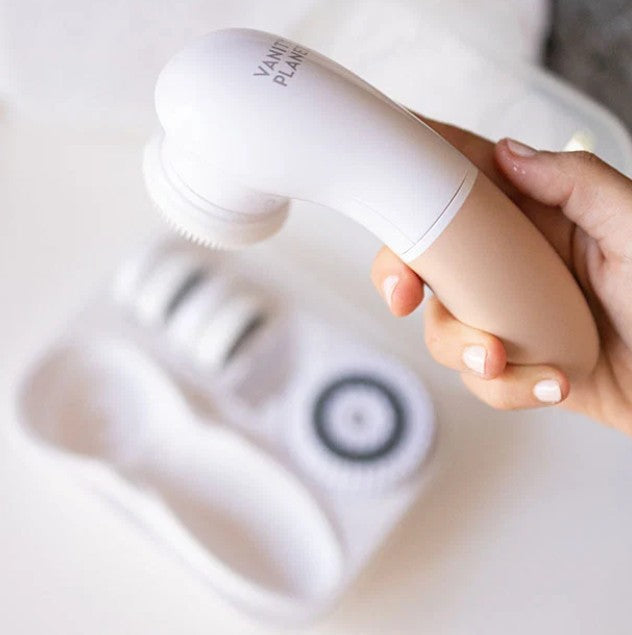
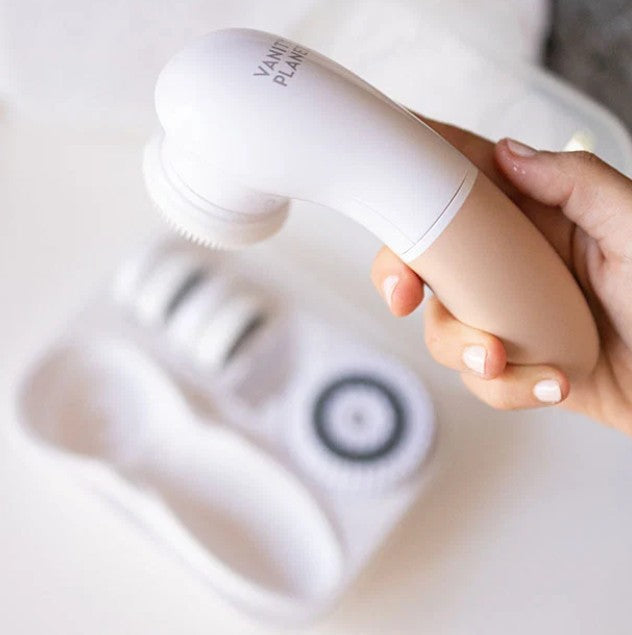
If you want deep cleansing on its own, the RAEDIA Facial Cleansing Brush offers dual-speed settings and soft, hypoallergenic bristles suitable for sensitive and oily skin. But if your primary concern is active acne, there's a tool that does even more.
Why the Vanity Planet LEDA Blue Is the Smartest Acne Tool for College Students
If you only invest in one skincare device during college, make it the LEDA Blue Acne Fighting LED Sonic Facial Brush by Vanity Planet. It's the single most effective at-home tool for stress acne treatment for students, because it attacks the breakout cycle at two points at once, something topical products alone simply can't do.

Most acne products work on only one part of the problem. The LEDA Blue combines two clinically validated modalities into a single device:
1. FDA-cleared blue light therapy. The LEDA Blue delivers 415nm blue light that penetrates beneath the skin's surface to kill C. acnes, the bacteria responsible for inflammatory breakouts. Because it targets bacteria directly, it works without harsh chemicals, prescriptions, or the harmful side effects that come with aggressive treatments.
2. Sonic vibration cleansing. The sonic-powered bristles remove excess sebum, dead skin cells, and surface bacteria far more effectively than washing by hand, clearing away the exact debris that feeds bacterial growth.
This dual-action approach is uniquely suited to the College Breakout Cycle. Blue light kills the bacteria while sonic cleansing removes the oil and buildup that let bacteria multiply in the first place. You're interrupting the loop on both ends simultaneously.
Why it fits student life
- Safe for daily use and gentle enough for sensitive, mild-to-moderate acne skin.
- 3 customizable sonic brush modes so you can adjust intensity to your skin's needs.
- Serum-infuser head included to maximize whatever skincare products you already own.
- Hard travel case and charging cable included, built for dorm rooms, gym bags, and weekend trips.
- No prescriptions or added harsh chemicals required.
- Made with antibacterial silicone for a hygienic, deep-cleansing massage.
How to use it
- Apply your cleanser directly to the silicone cleansing brush head.
- Select one of the 3 sonic cleansing modes.
- Cleanse your skin using gentle circular motions.
- Switch to blue light mode and target your problem areas (jawline, chin, lower face).
The LEDA Blue is the #1 recommended tool in this guide because it replaces multiple steps and works with a simple routine instead of adding complexity. Rated 4.6 out of 5 stars across 77 reviews, it's the smartest way to clear stress acne fast without overhauling your entire life.
Shop the LEDA Blue LED Facial Brush →
How to Prevent Breakouts During Finals and High-Stress Periods
The best way to survive finals with clear skin is to shift from reacting to breakouts toward preventing them. Here's how to prevent breakouts during finals with a proactive plan.
The pre-finals skin prep timeline
- Two weeks before: Establish or re-establish a consistent daily cleansing routine so your skin is stable going in.
- One week before: Stop introducing new products. This is not the time to test a new active that might trigger irritation.
- During finals: Prioritize sleep over perfection. Maintain your 2-minute minimum routine no matter how exhausted you are.
Prevention habits that actually work
- Change your pillowcase every 3 to 4 days to cut down on bacterial transfer.
- Keep your hands off your face while studying. Hold a stylus or fidget tool instead.
- Stay hydrated to keep your skin from overproducing oil.
- Use a humidifier in dry dorm rooms to protect your skin barrier.
How to handle active breakouts
- Spot treat with benzoyl peroxide or salicylic acid.
- Target problem areas with the LEDA Blue's blue light mode to kill bacteria at the source.
- Do not pick or pop. It worsens scarring and spreads bacteria to nearby pores.
- Use a hydrocolloid patch overnight to absorb fluid and protect the spot while you sleep.
The core mindset shift: your skin is reactive, not random. Every breakout has a trigger, whether it's stress, a missed cleanse, a dirty pillowcase, or a week of no sleep. Identifying the trigger is the first step to preventing the next one.
Stress Management Habits That Improve Your Skin (Not Just Your GPA)
Skincare products and devices work best when your cortisol levels are managed at the source. Think of these habits as free skincare that amplifies everything else you do. Understanding how does stress affect skin at the hormonal level shows why lifestyle changes matter as much as any product.
1. Exercise. Even 20 minutes of moderate cardio lowers cortisol, boosts circulation to deliver oxygen to your skin cells, and helps regulate sebum production over time. A quick walk between study sessions counts.
2. Sleep hygiene. A consistent schedule matters more than total hours. A steady 6.5 to 7 hours beats an irregular pattern of all-nighters followed by 9-hour crashes. Consistency stabilizes cortisol and protects your skin's melatonin repair window.
3. Mindfulness and breathing. Five minutes of box breathing before bed (inhale 4 counts, hold 4, exhale 4, hold 4) measurably lowers cortisol and helps you fall asleep faster.
4. Hydration. Dehydrated skin overproduces oil to compensate, so drinking enough water directly affects your sebum levels. Keep a bottle on your desk.
College is genuinely stressful, and none of this is a judgment. These are tools, not rules. Even doing one of them consistently will help your skin, and your focus, more than you'd expect. Emotional stress and skin problems are deeply linked, so calming your nervous system is one of the most effective things you can do for your complexion.
Frequently Asked Questions: Stress Acne and College Skincare
Does stress cause acne directly? Yes. Stress triggers cortisol release, which signals your oil glands to overproduce sebum. That excess oil clogs pores and feeds acne-causing bacteria, leading to inflammation and breakouts, especially along the jawline and chin.
How long does stress acne take to clear? With a consistent treatment routine, mild stress acne can improve within 1 to 2 weeks. More severe or persistent cases may take 4 to 6 weeks. Daily consistency and addressing the underlying stress both speed up results.
Is blue light therapy safe for daily use? Yes. The Vanity Planet LEDA Blue is FDA-cleared and specifically designed for daily use. It's gentle enough for sensitive skin and mild-to-moderate acne, and it kills acne-causing bacteria without the harmful side effects of harsher treatments.
Can I use the LEDA Blue if I already use acne medications? Generally, yes. The LEDA Blue works well alongside most over-the-counter acne products. If you're on prescription retinoids or other strong medications, check with your dermatologist first to be safe.
What's the minimum skincare routine if I have no time? Cleanser and moisturizer, every night without exception. Never skip both, and never sleep in makeup. Two minutes of cleansing and hydrating protects your skin barrier even during your busiest weeks.
Why do I break out during exams specifically? Exam periods combine peak stress (high cortisol), sleep deprivation (more cortisol plus less repair), poor diet, and increased hand-to-face contact while studying. All of these feed the College Breakout Cycle at once, which is why breakouts spike during finals.
How do I build a skincare routine in college on a budget? Start with three essentials: a gentle cleanser, a non-comedogenic moisturizer, and SPF. Add one targeted acne tool like the LEDA Blue that combines cleansing and treatment, so you're covering multiple steps with a single device instead of buying many separate products.
References
- healthline.com. How Stress Affects Your Skin
- dermatologytimes.com. How to Manage Stress for Better Skin
- vanityplanet.com. Skincare Tips for College Students
- webmd.com. Stress and Acne: Is There a Connection?
Recent Articles