Quick answer: No, you should not use glycolic acid immediately after microdermabrasion. Wait at least 48 to 72 hours if you have normal skin, and 5 to 7 days if your skin is sensitive. Microdermabrasion physically strips away your outermost skin cells, leaving the barrier in an active recovery state. Layering a chemical exfoliant on top too soon causes irritation, not better results.
That is the short version. The longer version, which most skincare articles skip entirely, is far more interesting, and it will change how you think about exfoliation altogether. Below, we break down the exact science of why timing matters, a day-by-day recovery timeline, and the strategic way to use both treatments together for genuinely better skin.
The Short Answer: Timing Is Everything
Glycolic acid should not be used for at least 48 to 72 hours after microdermabrasion, and ideally not until 5 to 7 days post-treatment if you have sensitive skin.
Here is why, in plain language. Microdermabrasion mechanically removes the outermost layer of dead skin cells. Right after your treatment, your skin is in an active repair mode: the protective barrier is thinner, more permeable, and more reactive than usual. Glycolic acid is a chemical exfoliant, so applying it during this window does not "boost" your results. It stacks a second form of exfoliation onto skin that has not finished recovering from the first.
The predictable outcome is stinging, redness, and inflammation, and in some cases post-inflammatory hyperpigmentation. Neither treatment is bad. Combined too soon, they simply overwhelm the skin. Space them out, and both work beautifully.
How Microdermabrasion Works, and What It Does to Your Skin Barrier
To understand the timing rule, you have to understand what is actually happening to your skin.
Microdermabrasion is a form of mechanical exfoliation. It uses either fine crystal particles sprayed across the skin or a diamond-tipped applicator, paired with gentle vacuum suction, to physically buff away the stratum corneum, the outermost layer of dead and dying skin cells. That physical removal is exactly what delivers the immediate glow: fresher cells are revealed, product absorption improves, and texture smooths.
But that same removal comes with a temporary cost. Stripping the stratum corneum increases transepidermal water loss (TEWL), the rate at which moisture evaporates from your skin. It also disrupts the acid mantle, the slightly acidic protective film that defends against bacteria and environmental stress. In short, your barrier is briefly compromised by design.
Your skin begins rebuilding the stratum corneum within 24 to 48 hours, but full restoration takes several days. That regeneration window is the entire reason for the waiting period.
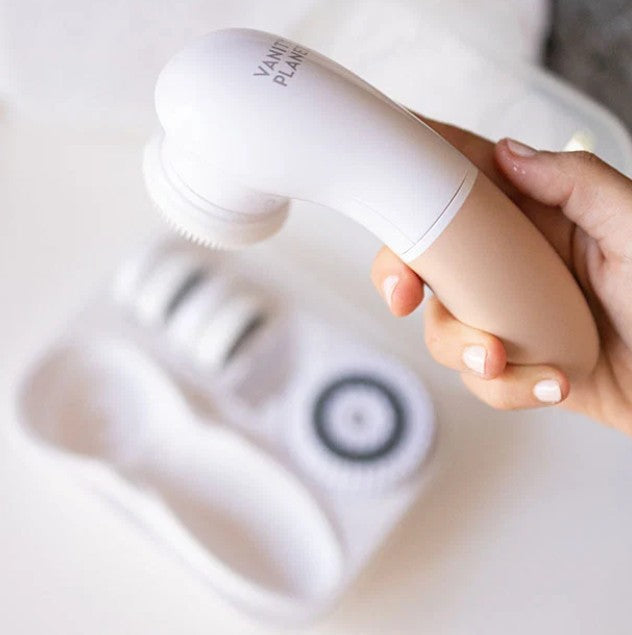
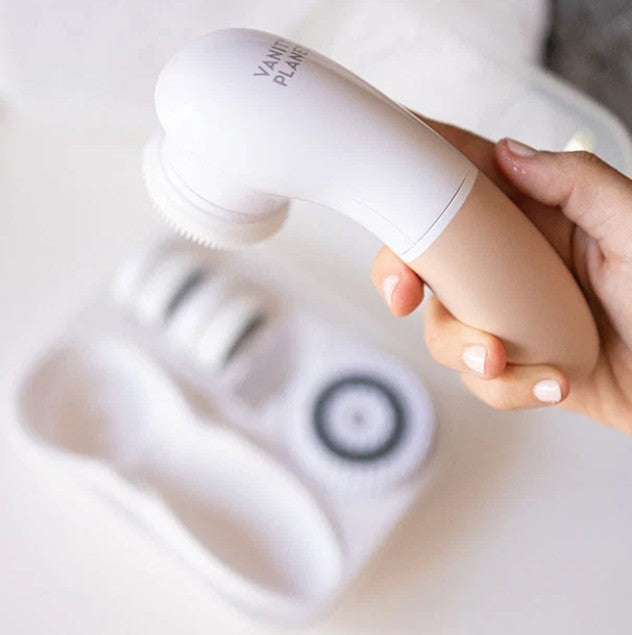
Here is a distinction most content misses. At-home devices are not the same as clinical machines. Professional in-office microdermabrasion operates at a higher intensity and removes more tissue. At-home tools, like the Vanity Planet EXFORA Personal Microdermabrasion Wand with its controlled diamond-tip heads and calibrated suction, deliver a gentler, more predictable level of exfoliation. That means less aggressive barrier disruption and a more consistent recovery, but the same core caution still applies: give your barrier time before reintroducing acids.
What Glycolic Acid Actually Does, and Why It's a Problem Too Soon
Glycolic acid is an alpha-hydroxy acid (AHA), and it is the smallest AHA molecule, which is exactly why it is so effective. Its small size lets it penetrate quickly and dissolve the "glue" (the bonds of desmosomes) holding dead skin cells together at the surface. This accelerates cell turnover and reveals brighter, smoother skin. On healthy, intact skin, that is a wonderful thing.
The problem is what happens when you apply it to skin that has already been mechanically exfoliated.
With the stratum corneum thinned by microdermabrasion, glycolic acid penetrates deeper and faster than intended. A product formulated to gently work on the surface suddenly reaches more vulnerable, living tissue. The result is over-exfoliation: stinging, inflammation, prolonged redness, and a genuine risk of post-inflammatory hyperpigmentation, especially in medium to deep skin tones.
Does concentration change the risk? It changes the degree of risk, not the answer. A gentle 5 to 7% glycolic acid toner is far less aggressive than a 20 to 30% professional peel, but neither belongs on freshly microdermabraded skin. Even the mildest AHA lands harder on a compromised barrier.
This is where a concept worth introducing comes in: exfoliation debt. Think of your skin's tolerance for exfoliation as a budget. Every method, mechanical or chemical, draws from the same account. When you stack them without allowing the account to refill, you do not get double the benefit. You go into debt, and your skin pays the interest in irritation and inflammation.
The Over-Exfoliation Risk Nobody Talks About
Let us challenge a belief that quietly wrecks a lot of skincare routines: more exfoliation equals faster results.
It does not. It never has. And combining glycolic acid with microdermabrasion too soon is one of the fastest ways to prove it.
When you over-exfoliate, you damage the very barrier your skin depends on. That damage triggers an inflammatory response, and inflammation slows cellular renewal rather than speeding it up. You are trying to accelerate your skin and end up putting it in reverse.
Here is how to recognize over-exfoliation so you can catch it early:
- Persistent redness that does not fade within a day
- Tightness or an uncomfortable "stretched" feeling
- A shiny or waxy texture, which signals a stripped barrier
- Increased sensitivity, stinging when applying products that never bothered you before
- Breakouts, sometimes small and clustered
- Paradoxical dullness, the opposite of the glow you were chasing
That last symptom is the cruel irony. People see dullness, assume they need to exfoliate more, and dig the hole deeper.
Reframe the goal entirely. The point of using both microdermabrasion and glycolic acid is not to exfoliate more aggressively. It is to exfoliate more strategically, with real recovery built in between treatments. Strategic beats aggressive every single time, and that principle is the foundation for everything that follows.
Your Day-by-Day Aftercare Timeline After Microdermabrasion
Here is exactly what to apply, and what to avoid, in the days following your treatment. Follow this and you will protect your results while safely working back toward glycolic acid.
Day 0 to 1 (Treatment Day and the Day After)
Your barrier is most vulnerable now. Keep it simple.
- Use: Gentle, fragrance-free cleanser; a barrier-supporting moisturizer; broad-spectrum SPF 30 or higher.
- Avoid: All active ingredients, including glycolic acid, other AHAs, retinol, vitamin C, and BHAs (salicylic acid). No additional exfoliation of any kind.
Day 2 to 3
Your skin is actively rebuilding. Hydration is your best friend.
- Use: Gentle hydrating serums with hyaluronic acid or ceramides; continue moisturizer and daily SPF.
- Avoid: AHAs, BHAs, and any mechanical exfoliation (scrubs, brushes, another microdermabrasion pass).
Day 5 to 7
The barrier is largely restored for most people.
- Normal skin: You can cautiously reintroduce low-concentration glycolic acid (5 to 7%), ideally at night, starting with once every other day.
- Sensitive skin: Wait the full 7 days, then patch test before applying broadly.
Safe vs. Avoid at a Glance
|
Timeframe |
Safe to Use |
Avoid |
|
Day 0 to 1 |
Gentle cleanser, barrier moisturizer, SPF 30+ |
Glycolic acid, all AHAs, retinol, vitamin C, BHAs, scrubs |
|
Day 2 to 3 |
Hyaluronic acid, ceramides, niacinamide, SPF |
AHAs, BHAs, mechanical exfoliation |
|
Day 5 to 7 |
Low-strength glycolic acid (normal skin), continued hydration, SPF |
High-strength peels, stacking multiple actives at once |
The best moisturizer after microdermabrasion contains barrier-repairing ingredients: ceramides, peptides, or niacinamide. These actively support the regeneration your skin is already trying to do, rather than working against it.
Skincare Products to Avoid After Microdermabrasion
Glycolic acid is not the only thing to keep away from freshly treated skin. Here is a clear reference list, with a quick explanation of why each one is a problem.
Avoid These After Microdermabrasion
- Glycolic acid and all AHAs (lactic, mandelic, malic): chemical exfoliants that over-strip an already thinned barrier.
- Salicylic acid (BHA): an oil-soluble exfoliant that penetrates deep into pores, too much for recovering skin.
- Retinol and retinoids: they accelerate cell turnover and increase sensitivity, compounding irritation.
- Benzoyl peroxide: highly drying and oxidizing, it stresses a barrier that needs calm.
- Physical scrubs and cleansing brushes: more mechanical exfoliation is the last thing your skin needs.
- Alcohol-based toners: dehydrating and disruptive to the acid mantle you are trying to rebuild.
- Fragranced products: fragrance is a leading cause of irritation on compromised skin.
Safe to Use After Microdermabrasion
- Gentle, fragrance-free cleansers
- Hyaluronic acid serums for lightweight hydration
- Ceramide-rich moisturizers to rebuild the barrier
- Niacinamide to calm and support the skin
- Mineral SPF 30+ (zinc oxide or titanium dioxide) for non-irritating protection
This is not just general advice, it aligns directly with manufacturer guidance for at-home devices. The EXFORA product FAQ specifically recommends following treatment with calming moisturizers, hydration serums, or sunscreen, and explicitly advises avoiding abrasive skincare products and prescription medications immediately after use. When device makers and dermatology guidance say the same thing, you can treat it as a reliable rule.
How to Use Glycolic Acid and Microdermabrasion Together for Best Results
Now for the empowering part. This is not about permanent restriction. It is about a rotation that makes both treatments more effective than either could be alone.
Glycolic acid and microdermabrasion are complementary tools, and the professionals who get the best results almost never use them simultaneously. They rotate them.
Here is a practical, sustainable framework for most skin types:
- Microdermabrasion: once per week
- Low-concentration glycolic acid toner (5 to 7%): 2 to 3 times per week, on non-microdermabrasion days only
- Every other day: barrier-supporting hydration with ceramides, hyaluronic acid, or niacinamide, plus daily SPF without exception
A Sample Weekly Rotation
|
Day |
Treatment |
|
Monday |
Microdermabrasion (EXFORA) + hydrating moisturizer |
|
Tuesday |
Barrier recovery only (ceramides, hyaluronic acid) |
|
Wednesday |
Glycolic acid toner (PM) |
|
Thursday |
Barrier recovery |
|
Friday |
Glycolic acid toner (PM) |
|
Saturday |
Barrier recovery |
|
Sunday |
Rest or gentle hydration |
Come back to the exfoliation budget metaphor. Every method draws from the same account. By timing them apart, you let the account refill between withdrawals. You still get maximum cell turnover across the week, but you never push the barrier into debt.
This is the piece most internet content fails to explain. The winning strategy is not choosing microdermabrasion or glycolic acid, and it is not using them together on the same day. It is orchestrating them across the week so each one does its job on well-recovered skin.

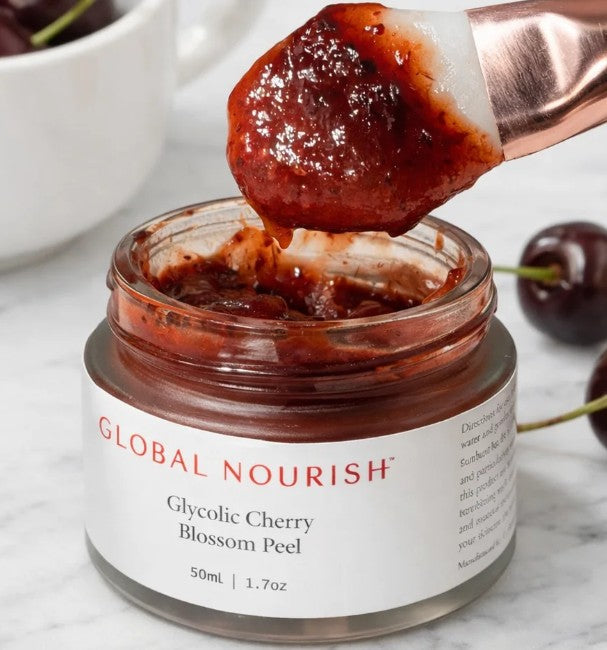
When you are ready to fold glycolic acid back in, a thoughtfully formulated option like the Glycolic Cherry Bloom Peel pairs glycolic and lactic acids with cherry and plum fruit acids to brighten and even tone, while aspen bark extract adds moisture. Used on non-microdermabrasion days, it fits neatly into the rotation above.
Getting the Most From At-Home Microdermabrasion: Why Your Device Choice Matters
Here is a truth that directly affects how safely you can reintroduce glycolic acid: not all at-home microdermabrasion devices are equal.
Lower-quality tools tend to cause uneven abrasion or apply excessive suction, both of which lengthen recovery time and increase the odds of irritation when you bring actives back into your routine. If a device roughs up your skin unpredictably, you cannot plan your glycolic acid reintroduction with any confidence. Consistency in the treatment is what makes consistency in recovery possible.
This is exactly why the Vanity Planet EXFORA Personal Microdermabrasion Wand is our #1 recommended at-home microdermabrasion device.

EXFORA is built with medical-grade diamond heads that deliver even, controlled exfoliation across the skin, rather than the patchy results cheaper tools produce. Its vacuum suction technology mimics the clinical microdermabrasion experience, lifting away dead cells and unclogging pores, but without clinical-level intensity. That gentler, well-calibrated approach is precisely what makes post-treatment recovery more predictable, which in turn makes it far easier to plan when to safely reintroduce glycolic acid.
The benefits are exactly what you want from an at-home device:
- Exfoliates and renews skin for a radiant glow
- Reduces the appearance of pores and fine lines
- Deep-cleanses for a smoother, clearer complexion
- Helps lighten the appearance of hyperpigmentation with regular use
- Suitable for all skin types, with an easy-to-use, rechargeable design
It is rated 4.4 out of 5 stars across more than 667 reviews, and it delivers spa-quality mechanical exfoliation from home, no appointment required. When your treatment is consistent and gentle, your recovery is consistent too, and that is the foundation of a routine where microdermabrasion and glycolic acid work together instead of against each other.
Explore the EXFORA Personal Microdermabrasion Wand to build your at-home routine on a device engineered for controlled, all-skin-type exfoliation.
A quick note the EXFORA FAQ makes clear: it should be used no more than once a week, and it is not recommended for those with excessive acne, very sensitive skin, cold sores, open wounds, or conditions like rosacea, eczema, or psoriasis. When in doubt, consult your physician first.
Microdermabrasion vs. Chemical Peel: A Quick Clarification
Because this question comes up constantly, here is a fast comparison to keep the two exfoliation methods straight.
|
Feature |
Microdermabrasion |
Glycolic Acid / Chemical Peel |
|
Method |
Mechanical (physical abrasion) |
Chemical (dissolves cell bonds) |
|
Best for |
Texture, dullness, clogged pores, surface renewal |
Tone, fine lines, hyperpigmentation, deeper turnover |
|
Depth |
Surface (stratum corneum) |
Adjustable by concentration |
|
At-home friendly |
Yes, with quality devices like EXFORA |
Yes, at low concentrations |
|
Downtime |
Minimal, barrier recovers in days |
Minimal to moderate, depends on strength |
Neither is "better." They target overlapping goals through different mechanisms, which is exactly why rotating them, rather than stacking them, produces the most complete results.
Frequently Asked Questions About Glycolic Acid and Microdermabrasion
Is it safe to use glycolic acid the day after microdermabrasion?
No. Do not apply glycolic acid the day after your treatment. Wait at least 48 to 72 hours if you have normal skin, and 5 to 7 days if your skin is sensitive. Applying it too soon on a thinned barrier causes irritation, redness, and potential hyperpigmentation.
What concentration of glycolic acid should I use when reintroducing it?
Start low. A 5 to 7% glycolic acid toner or serum is ideal for easing back in. Apply it at night, begin with every other day, and always patch test first if your skin runs sensitive. Save higher-strength peels for well into your recovery, never immediately after microdermabrasion.
Are at-home microdermabrasion devices like EXFORA gentler than clinical machines?
Yes. The EXFORA Personal Microdermabrasion Wand uses controlled diamond heads and calibrated vacuum suction, so it delivers gentler, more predictable exfoliation than high-intensity in-office machines. That said, the same aftercare principles apply: wait before reintroducing glycolic acid and support your barrier with hydration and SPF.
How often can I use the EXFORA wand?
The EXFORA FAQ recommends using the microdermabrasion function no more than once per week. If you use the included massage head instead of the exfoliating head, you can use the wand as often as you like. Once-weekly microdermabrasion fits perfectly into a rotating routine with glycolic acid on off days.
What is the best moisturizer to use after microdermabrasion?
Choose a moisturizer with ceramides, peptides, or niacinamide, and add a hyaluronic acid serum for extra hydration. These ingredients rebuild and reinforce the skin barrier during recovery. Avoid anything with fragrance, alcohol, or active exfoliants in the first few days.
How do I know if I've over-exfoliated?
Watch for persistent redness, tightness, a shiny or waxy texture, stinging, unexpected breakouts, and dullness. If you notice these, stop all exfoliation immediately and focus on gentle hydration, barrier repair, and sunscreen until your skin feels normal again.
When should I see a dermatologist?
If you experience prolonged redness, ongoing peeling, painful irritation, or signs of infection that do not resolve within a few days, consult a dermatologist. This is especially important if you have a preexisting skin condition or are combining multiple active ingredients.
The Bottom Line
Can you use glycolic acid after microdermabrasion? Yes, but not right away. Give your skin 48 to 72 hours (or a full 5 to 7 days for sensitive skin) to rebuild its barrier before reintroducing any AHA. The real secret, the one most articles never explain, is that microdermabrasion and glycolic acid are not competitors and they are not same-day partners. They are complementary tools best used on a rotating schedule that respects your skin's exfoliation budget.
Get the timing right, support your barrier between treatments, and start with a controlled, all-skin-type device like the EXFORA Personal Microdermabrasion Wand, and you will get the bright, smooth, even skin you were after, without the irritation that comes from doing too much, too soon.
References
- healthline.com. Glycolic Acid: What It Is, Benefits, Side Effects, and How to Use It
- webmd.com. Microdermabrasion: Procedure, Benefits, and Risks
- vanityplanet.com. Can You Use Glycolic Acid After Microdermabrasion?
- mayoclinic.org. Glycolic Acid: Uses, Benefits, and Risks
Recent Articles