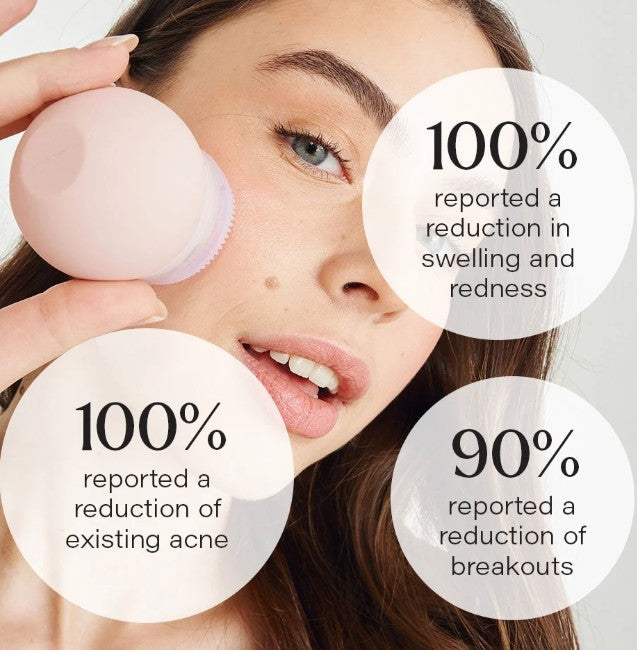
Blue light therapy for teenage acne uses a specific wavelength of visible light (around 415nm) to destroy acne-causing bacteria beneath the skin without drugs, chemicals, or UV exposure. It is FDA-cleared for mild-to-moderate inflammatory acne, safe for most teens, and works best with consistent daily use. For at-home treatment, a combination device like the Vanity Planet LEDA Blue pairs sonic cleansing with blue light for maximum effect.
Teenage acne is one of the most common and most frustrating experiences of adolescence, affecting an estimated 85% of people between ages 12 and 24. For years, the standard playbook has been harsh topicals, drying gels, and rounds of oral antibiotics. But a growing body of dermatological evidence supports a gentler, biology-aligned alternative: phototherapy. This guide takes a fresh look at how blue light therapy actually works, whether it is safe for teens, how it compares to antibiotics and topicals, and what to look for in an at-home device.
Why Teen Acne Is a Different Problem, and Needs a Targeted Solution
Teenage acne is not simply a surface problem or a hygiene issue. It is a biological convergence, and understanding that convergence is the key to choosing the right treatment.
During puberty, surging androgen hormones dramatically increase sebum (oil) production in the skin's sebaceous glands. That excess oil creates the perfect feeding ground for Cutibacterium acnes (formerly known as Propionibacterium acnes), the bacterium that lives naturally on everyone's skin. When these bacteria overpopulate the oil-rich follicle, they trigger an inflammatory cascade. The immune system responds, and the result is the red, swollen papules and pus-filled pustules that define inflammatory acne.
This is why so many teens cycle through product after product without lasting results. Harsh cleansers strip the skin but do not address the bacterial overgrowth. Spot treatments target visible blemishes but ignore the bacteria multiplying beneath the surface. Antibiotics reduce bacteria temporarily but come with real long-term drawbacks.
An effective teen acne treatment needs to target the actual driver of inflammatory breakouts: the acne-causing bacteria feeding on excess sebum. This is precisely where blue light therapy earns its place, because it attacks the bacterial root of the problem directly, without stripping or medicating the skin.
What Is Blue Light Therapy and How Does It Work for Acne?
Blue light therapy is a form of phototherapy that uses visible light in the blue spectrum to kill acne-causing bacteria. Unlike medications that work chemically, it works through a purely photobiological mechanism, and understanding that mechanism explains why it is so effective against inflammatory acne.
The porphyrin-activation mechanism
Here is the biology in plain terms. C. acnes bacteria naturally produce compounds called porphyrins as part of their metabolism. Porphyrins are photosensitive, meaning they absorb light energy. Blue light at approximately 415nm is the exact wavelength these porphyrins absorb most efficiently.
When blue light hits the bacteria, the porphyrins absorb the energy and become excited. This triggers the production of reactive oxygen species (a form of oxidative stress) inside the bacterial cell. Those reactive molecules rupture the bacterial cell wall from the inside, effectively destroying the bacteria. No drugs, no antibiotics, no chemical peeling, just light activating a process the bacteria create themselves.
Blue light vs. red light vs. combination therapy
Not all light therapy is the same:
- Blue light (~415nm): Targets and kills acne-causing bacteria. Best for active, bacteria-driven inflammatory breakouts.
- Red light (~630nm): Penetrates deeper to reduce inflammation and stimulate collagen. Supports healing and calms redness.
- Combination blue-red protocols: Pair bacterial destruction with anti-inflammatory healing for a more complete approach.
An honest scope-of-action note
Blue light therapy excels at inflammatory, bacteria-driven acne: papules, pustules, and general breakout activity. It is not the primary tool for cystic acne, deep nodular lesions, or acne driven purely by hormones. Those cases often require a dermatologist's care and, sometimes, prescription intervention. Being clear about this matters, because setting realistic expectations is the difference between a treatment that helps and a treatment that disappoints.
Is Blue Light Therapy Safe for Teenagers?
Yes, blue light therapy is considered safe for teenagers, and its safety profile is one of its strongest advantages over conventional acne medications.
Here is the reassuring science: blue light therapy is non-ionizing, meaning it does not carry the DNA-damaging or cancer risk associated with UV radiation. It contains no ultraviolet light whatsoever, so it will not cause the sun damage, premature aging, or burning risk that some parents worry about. Blue light acne treatment is FDA-cleared at the device category level specifically for treating acne, which reflects an established safety and efficacy record.
Known side effects (and how mild they are)
Blue light therapy side effects are generally minor and temporary. The most commonly reported are:
- Temporary mild redness immediately after use
- Slight dryness of the skin
- Occasional mild skin sensitivity
Put these in context. What are the side effects of blue light therapy compared to conventional teen acne treatments? Oral antibiotics can cause stomach upset, yeast infections, and antibiotic resistance. Topical retinoids frequently cause peeling, stinging, and significant sun sensitivity during weeks of adaptation. Benzoyl peroxide can leave skin raw and bleached fabric in its path. Blue light's mild, transient redness is remarkably gentle by comparison.
One important caution
Teens with photosensitivity conditions (such as lupus or certain porphyria disorders) or those taking photosensitizing medications (including some antibiotics, retinoids like isotretinoin, and certain acne prescriptions) should consult a dermatologist before beginning any light therapy. This is not because blue light is dangerous, but because these specific factors change how skin responds to light. For the vast majority of otherwise healthy teens, blue light therapy is a low-risk option.
Blue Light Therapy vs. Antibiotics and Topical Treatments for Teen Acne
This is where the conversation around teen acne treatment is genuinely shifting, and where families deserve information that goes beyond the standard advice.
The antibiotic resistance problem
For decades, oral and topical antibiotics have been a first-line acne treatment. But dermatologists are increasingly concerned. The American Academy of Dermatology (AAD) now recommends limiting the duration of antibiotic use for acne, and the CDC has repeatedly warned about antibiotic resistance as a broad public health threat. Long-term antibiotic use for acne has been documented to contribute to resistant strains of C. acnes, meaning the very bacteria the drugs are supposed to kill stop responding to them.
This creates a difficult cycle for teens who may face years of acne. Each antibiotic course becomes less effective, and resistant bacteria can persist.
Blue light therapy sidesteps this problem entirely. Because it destroys bacteria through oxidative stress rather than a chemical pathway, it does not promote antibiotic resistance. Bacteria cannot develop resistance to being physically ruptured by reactive oxygen species the way they adapt to a drug. For families thinking about a multi-year acne strategy, this is a meaningful, practical advantage.
How it compares to topicals
- Benzoyl peroxide: Genuinely effective at killing bacteria, but often harsh and drying on sensitive teen skin, and it bleaches fabric.
- Topical retinoids: Powerful for cell turnover, but require weeks of adaptation, cause peeling and irritation, and demand strict sun avoidance.
- Blue light therapy: Drug-free, non-drying at appropriate doses, no adaptation period, and no fabric-bleaching mess.
Blue light therapy vs. topical acne treatment is not necessarily an either-or decision. Blue light works beautifully as a gentle, drug-free complement that can reduce reliance on harsher products, or as a standalone non-antibiotic acne treatment for teens with mild-to-moderate inflammatory acne.
Clinical Sessions vs. At-Home Blue Light Devices: A Practical Guide for Families
Once a family decides to try blue light therapy, the next question is where to get it. There are two paths, and each has honest trade-offs.
In-office dermatologist blue light acne treatment
Clinical blue light treatment delivers high-intensity, professionally supervised sessions.
- Intensity: Highest available output, medical-grade equipment.
- Supervision: Administered or overseen by a dermatologist.
- Cost: Typically $100 to $200 or more per session, and often 8 to 10 sessions are recommended for a full course. That can total well over $1,000, and insurance rarely covers acne phototherapy.
- Access: Requires repeated appointments, which is difficult for busy teen and family schedules.
For many families, in-office treatment is powerful but not realistic for the ongoing maintenance that teen acne demands.
At-home blue light therapy devices for acne
At-home devices bring the technology into the daily routine.
- Cost: A one-time device purchase, with essentially no per-use cost after that.
- Compliance: Daily use is easy to build into an existing routine, and consistency is what drives light therapy results.
- Convenience: No appointments, no travel, fits naturally into a teen's morning or bedtime habits.
What separates an effective at-home device from a gimmick
Not all at-home devices are created equal. Before buying, families should verify:
- FDA clearance for acne treatment (not just a cosmetic label).
- Proven wavelength output in the effective blue light range (~415nm).
- Ease of daily use, because a device that is complicated or uncomfortable will not get used.
- Skin-type suitability, especially gentleness for sensitive teen skin.
A device that combines cleansing with light therapy has a structural advantage, which brings us to our top recommendation.
The Best At-Home Blue Light Therapy Device for Teens: Our Top Pick
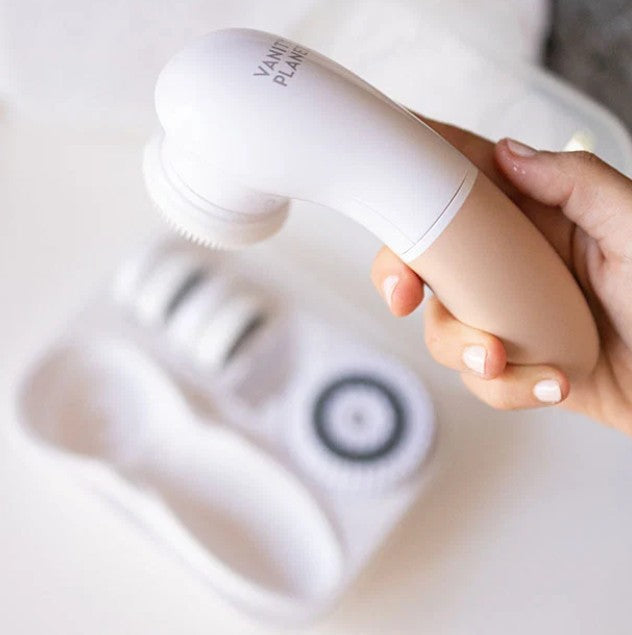
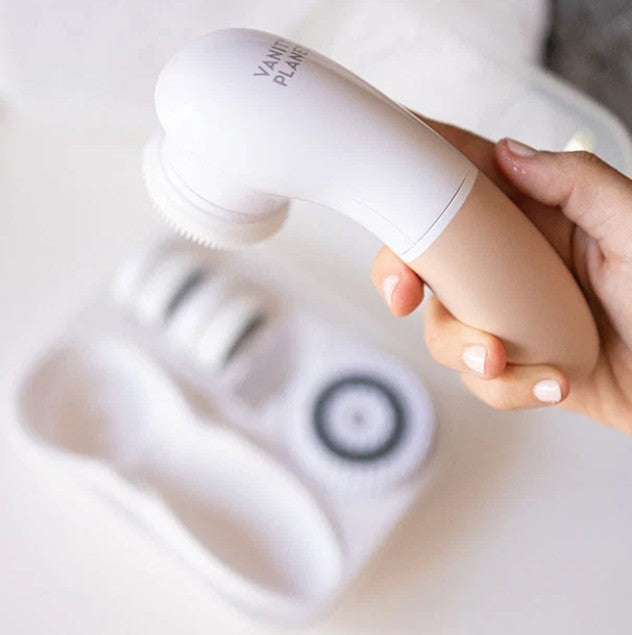
For teenage acne, our top recommendation is the Vanity Planet LEDA Blue Acne Fighting LED Sonic Facial Brush. It is not just a blue light device, and that is exactly why it works better for teens than standalone light tools.

The "cleanse-activate-treat" advantage
Here is an original insight that most reviews miss. Blue light has to reach the bacteria living inside oil-clogged follicles to work. But teen skin is, by definition, covered in the exact thing that blocks light penetration: excess sebum and dead skin cells. If you shine blue light onto an unclean, oily surface, a portion of those photons never make it down to the bacteria.
The LEDA Blue solves this with a cleanse-activate-treat sequence built into a single device. Its sonic-powered silicone bristles first perform a deep, gentle cleanse that removes the sebum and dead skin cell barrier. With that barrier cleared, the FDA-cleared blue light penetrates more effectively to reach the C. acnes bacteria where they live. Cleanse first, then treat, in one seamless step.
This matters enormously for real teens who will not follow a complicated multi-product, multi-device routine. Simplicity drives compliance, and compliance drives results.
Why the LEDA Blue is our #1 pick
- FDA-cleared blue light therapy that targets and kills acne-causing bacteria without harmful side effects.
- 3 customizable sonic brush modes for different comfort levels and skin needs.
- Antibacterial silicone bristles that are hygienic and gentle, unlike bacteria-harboring nylon brushes.
- Gentle enough for daily use and safe for sensitive skin and all skin types.
- Ideal for mild-to-moderate acne, the most common teen presentation.
- Serum-infuser head included to lock in hydration after treatment and offset any mild dryness.
- Comes with a hard travel case and charging cable, so it fits a teen's on-the-go life.
Rated 4.6 out of 5 stars across 77 reviews, the LEDA Blue delivers professional-style light therapy at a fraction of the cost of clinical sessions.
How to use the LEDA Blue
- Apply your cleansing cream directly to the silicone cleansing brush.
- Select your preferred sonic cleansing mode.
- Cleanse the skin using gentle circular motions, letting the blue light do its work as you go.
- Rinse, then optionally switch to the serum-infuser head to massage in a hydrating serum.
- Use daily for best results, and recharge by removing the silicone head and connecting the included cable.
Other Vanity Planet options worth knowing
If a teen wants full-face treatment or targeted spot care, two additional options round out the lineup.

The VANA FDA-Cleared LED Face Mask delivers hands-free red and blue LED therapy across the entire face, targeting acne, uneven tone, fine lines, and wrinkles at once.

The VEIL LED Acne Spot Treatment is a compact, portable device that combines blue and red light to attack individual stubborn breakouts, shrink pores, and reduce inflammation on the spot. It is ideal as a companion to the LEDA Blue for treating occasional flare-ups.
For a daily, do-it-all teen solution, though, the LEDA Blue's cleanse-plus-light design remains the standout choice.
How Long Does Blue Light Therapy Take to Work on Teen Acne?
Realistic expectations are essential, so here is what the evidence supports.
Most clinical studies show a measurable reduction in inflammatory lesions within 4 to 8 weeks of consistent blue light use. For at-home devices used daily, teens typically notice visible improvement in skin clarity and a lower active breakout count within 3 to 4 weeks. Skin does not clear overnight, but steady, week-over-week improvement is the norm when the device is used consistently.
The single most important principle to understand is this: consistency, not intensity, drives light therapy results. Unlike a spot treatment that acts on one blemish, blue light works by steadily reducing the overall bacterial population. Missing days lets the bacteria repopulate. Daily use keeps them suppressed.
Compliance tips built for teen routines
- Anchor it to an existing habit. Use the device right before bed, immediately after washing the face, so it becomes automatic.
- Keep it visible and charged. A device sitting in a drawer gets forgotten. Keep the LEDA Blue on the bathroom counter, charged and ready.
- Pair with a non-comedogenic moisturizer. This offsets any mild dryness and keeps the skin barrier healthy without clogging pores.
- Track progress with photos. Weekly selfies make gradual improvement visible and keep teens motivated.
Give any blue light routine a solid 6 to 8 weeks before judging results, and keep going once skin clears to maintain it.
Frequently Asked Questions About Blue Light Therapy for Teen Acne
Is blue light therapy safe for teens?
Yes, blue light therapy is safe for teens. It is non-ionizing, contains no UV radiation, and is FDA-cleared for acne treatment. The most common side effects are mild, temporary redness or dryness. Teens taking photosensitizing medications or with photosensitivity conditions should check with a dermatologist first, but for most healthy teens it is a low-risk option.
Does blue light therapy replace a full skincare routine?
No, blue light therapy does not replace a routine, but it can simplify one. It targets acne-causing bacteria that other products often miss. A device like the LEDA Blue actually combines cleansing and light therapy into a single step, which streamlines a teen's routine while still pairing well with a gentle moisturizer.
What type of acne does blue light therapy work best on?
Blue light therapy works best on mild-to-moderate inflammatory acne, specifically papules and pustules driven by C. acnes bacteria. It is not the primary treatment for deep cystic acne, nodules, or purely hormonal breakouts, which usually require a dermatologist's care. This makes it well suited to the most common form of teen acne.
How often can a teen use the LEDA Blue?
The LEDA Blue is designed for daily use. Because consistency drives light therapy results, using it once a day (ideally after washing the face at night) is ideal. It comes with three sonic modes and antibacterial silicone that is gentle enough for everyday use on sensitive skin.
Can blue light therapy work without other acne products?
Yes, blue light therapy can work on its own because it directly kills acne-causing bacteria. That said, outcomes improve when it is paired with a gentle cleanser and a non-comedogenic moisturizer. The LEDA Blue includes both a cleansing brush and a serum-infuser head, so it supports cleansing and hydration within one device.
Is blue light therapy a good non-antibiotic acne treatment for teens?
Yes. Blue light therapy destroys acne-causing bacteria without drugs, so it does not contribute to antibiotic resistance, a concern the AAD and CDC have both highlighted. This makes it an excellent drug-free alternative or complement for teens facing years of acne management.
How much does blue light therapy cost?
In-office dermatologist blue light sessions typically cost $100 to $200 or more each, with 8 to 10 sessions often recommended. An at-home device like the LEDA Blue is a one-time purchase with no per-session cost, making it far more affordable for the daily, ongoing use that teen acne requires.
The Bottom Line
Teenage acne is a biological problem, a collision of hormone-driven oil production and bacteria that thrive on it. Treatments that address that bacterial root, gently and consistently, tend to work best. Blue light therapy does exactly that: it destroys acne-causing bacteria through a natural, drug-free, resistance-proof mechanism, with a safety profile that is gentler than most topicals and antibiotics.
For families, an at-home device offers the affordability and daily-compliance advantage that clinical sessions cannot match. And among at-home options, the Vanity Planet LEDA Blue Acne Fighting LED Sonic Facial Brush stands out by combining sonic cleansing with FDA-cleared blue light in one simple step, clearing the way for the light to actually reach the bacteria. For most teens with mild-to-moderate inflammatory acne, it is the smartest, most practical place to start.
References
- healthline.com. Blue Light Therapy for Acne: How It Works and What to Expect
- webmd.com. Blue Light Therapy for Acne: Benefits, Side Effects, and More
- mayoclinic.org. Blue Light Therapy for Acne: What You Need to Know
- dermatologytimes.com. Does Blue Light Therapy Really Work for Acne?
- vanityplanet.com. Blue Light Therapy for Acne: A Complete Guide
Recent Articles