The short answer: Sonic silicone brushes are generally gentler and more hygienic than traditional nylon-bristle spin brushes, which makes them the safer pick for sensitive or reactive skin. Spin brushes, however, deliver stronger mechanical exfoliation for oily, congested, or rough skin. The best choice for most people is a hybrid device like the RAEDIA 2.0 Facial and Body Cleansing Brush, which pairs a silicone head for sensitive skin with interchangeable bristle heads, so you can match intensity to your skin on any given day.
Spin Brush vs. Sonic Silicone Brush: The Quick Answer
If you only have time for one takeaway, here it is: choose a sonic silicone brush if gentleness and hygiene are your top priorities, choose a spin brush if you want deeper exfoliation, and choose a hybrid if you want both.
A spin brush uses rotating or oscillating nylon bristles to physically sweep away dirt, oil, and dead skin cells. It cleans thoroughly, but the friction can be too much for delicate skin.
A sonic silicone brush, such as the FOREO LUNA line, uses high-frequency vibrations transmitted through soft silicone touchpoints. It is gentle and easy to keep clean, but it offers lighter exfoliation and usually provides no way to change the cleansing surface.
Here is the gap most comparisons miss: your skin is not the same every day. Winter dryness, a breakout, a retinoid routine, or post-workout sweat all call for different levels of cleansing. That is why Vanity Planet's RAEDIA 2.0 ranks as our top recommendation. It includes a dedicated silicone brush head for sensitive skin plus daily, weekly exfoliating, and body brush heads, all powered by a bidirectional rotating base. You get silicone-level gentleness when you need it and spin-brush depth when you want it, in one water-resistant, rechargeable device.
At-a-Glance Comparison
|
Feature |
RAEDIA 2.0 (Hybrid) |
Spin Brush (Bristle) |
Sonic Silicone Brush |
|
Cleansing surfaces |
Silicone + 3 bristle heads (4 total) |
Bristles only |
Silicone only |
|
Adjustable intensity |
Yes: head choice + modes |
Sometimes (speed) |
Sometimes (intensity) |
|
Sensitive skin friendly |
Yes (silicone head) |
Limited |
Yes |
|
Deep exfoliation |
Yes (weekly exfoliating head) |
Yes |
Light |
|
Face and body use |
Yes (dedicated body brush) |
Usually face only |
Mostly face |
|
Dry brushing |
Yes |
Rarely |
No |
|
Water-resistant, rechargeable |
Yes |
Varies |
Yes |
|
Travel case included |
Yes |
Varies |
Varies |
How Spin Brushes Work
A spin brush is a handheld facial cleansing brush with a round head of soft nylon bristles that rotates, oscillates (moves back and forth in an arc), or both. As the bristles move across damp, cleanser-coated skin, they dislodge surface debris, excess sebum, makeup residue, and loosely attached dead skin cells.
This is a form of mechanical (physical) exfoliation. Unlike chemical exfoliants such as glycolic or salicylic acid, which dissolve the bonds between dead cells, spin brushes physically lift those cells away. The benefits can be noticeable quickly: smoother texture, a brighter look, and better absorption of the serums and moisturizers you apply afterward.
The tradeoff is friction. Because bristles drag across the skin rather than vibrate against it, a spin brush creates more abrasion per pass. For resilient or oily skin, that is often a benefit. For sensitive skin, rosacea-prone skin, or skin already compromised by retinoids or active breakouts, repeated friction can lead to redness, stinging, and irritation. Pressing too hard or brushing too long increases that risk, and aggressive scrubbing can weaken the skin barrier over time.
Best for: oily, combination, and congested skin, rough texture, and anyone who wants a deep clean. Use caution if: you have sensitive skin, rosacea, eczema, or are using strong active ingredients.
How Sonic Silicone Brushes Work
A sonic silicone brush works on a different principle. Instead of rotating, the head vibrates at high frequency while staying mostly in place. Those vibrations travel through flexible silicone bristles or nubs, loosening dirt and oil from the skin's surface and pores without the dragging motion of a spin brush.
The two defining advantages are:
- Lower friction. Silicone touchpoints are soft and rounded, and vibration does most of the work. This makes sonic silicone devices popular for sensitive skin and for people who found traditional brushes too harsh.
- A non-porous surface. Silicone does not absorb water, oil, or cleanser the way densely packed nylon bristles can trap them. It rinses clean, dries quickly, and is far less hospitable to bacterial buildup.
That second point aligns with a core principle from the American Academy of Dermatology (AAD): gentle cleansing and avoiding irritation are central to healthy skin. The AAD advises against scrubbing and recommends gentle, non-abrasive cleansing. A clean, soft silicone surface fits that philosophy well.
The limitation? Sonic silicone brushes typically offer only light exfoliation and a single, fixed silicone surface. If your skin needs a deeper clean, a body treatment, or dry brushing, a silicone-only device cannot adapt.
Best for: sensitive, reactive, dry, and acne-prone skin, plus minimalists who prioritize hygiene.
Which Is Gentler for Sensitive, Dry, or Oily Skin
The right brush depends on your skin type and current condition. Here is a practical breakdown.
Sensitive Skin
Winner: silicone. Reactive skin benefits from minimal friction and a hygienic surface. If you are shopping for the best facial cleansing brush for sensitive skin, look for soft silicone, gentle settings, and the ability to keep sessions short. RAEDIA 2.0 includes a dedicated Silicone Brush for Sensitive Skin, giving you the low-friction experience of silicone without buying a separate device.
Dry Skin
Winner: silicone for daily use, gentle bristles occasionally. Dry skin often has a fragile barrier, so harsh daily brushing can worsen flakiness and tightness. However, dry skin also tends to collect dead cells that make it look dull. A good approach is a silicone head most days, then a gentle exfoliating session once a week to clear flakes, always followed by a rich moisturizer.
Oily and Combination Skin
Winner: bristle (spin) brush, used thoughtfully. Oily skin produces more sebum, which can mix with dead cells and clog pores. Bristle brushes are better at lifting that buildup. Use a daily cleansing head for routine cleansing and a more textured exfoliating head a few times a week, focusing on the T-zone.
Acne-Prone Skin
Proceed carefully. Avoid brushing over active, inflamed breakouts, and favor silicone. Hygiene matters most here.
The customization advantage: With RAEDIA 2.0's interchangeable brush heads, you can switch between the silicone, daily, and weekly exfoliating heads as your skin changes, rather than forcing one fixed surface to fit every situation.
Exfoliation, Skin Cell Turnover, and the Risk of Over-Exfoliating
Your skin naturally sheds dead cells through skin cell turnover, a process that takes roughly a month in younger adults and slows with age. Exfoliation speeds up the removal of those dead cells, which can reveal brighter, smoother skin. But more is not better.
How Often Should You Exfoliate With a Brush?
Dermatologists generally recommend limiting exfoliation based on skin type:
- Sensitive or dry skin: about once a week, with gentle tools
- Normal or combination skin: one to three times per week
- Oily, resilient skin: up to three times per week, occasionally more if well tolerated
Daily cleansing with a soft silicone head is different from exfoliating with a textured bristle head. Treat bristle exfoliation as a scheduled treatment, not an every-day habit. Also, cut back if you use retinoids, AHAs, BHAs, or benzoyl peroxide, since stacking exfoliants is one of the most common causes of irritation.
Signs You Are Over-Exfoliating
According to Healthline, common signs of over-exfoliating include:
- Redness, irritation, or a burning sensation
- Inflammation and peeling
- New breakouts, especially small bumps
- Increased sensitivity to products you normally tolerate
- A tight, waxy, or overly shiny appearance
If you notice these symptoms, pause all exfoliation, switch to a gentle cleanser and a bland moisturizer, and let your barrier recover before reintroducing brushing slowly.
A Built-In Safeguard
RAEDIA 2.0's dual-speed, bidirectional modes, combined with separate daily and weekly heads, build sensible limits right into the routine. Use the silicone or daily head on a lower setting for everyday cleansing, and save the Weekly Exfoliating Brush for its intended once-a-week role. The naming alone helps prevent the "more is better" mistake.
Hygiene Comparison: Bristles vs. Silicone
Any facial cleansing brush touches your face with moisture, oil, makeup, and dead skin, which can create a breeding ground for bacteria if the device is not cared for.
Why Silicone Stays Cleaner
Silicone bristles are non-porous. Water and residue sit on the surface instead of soaking in, so a quick rinse and air-dry remove most buildup. This makes silicone the clear hygiene winner, especially for acne-prone and sensitive skin.
Why Bristles Need More Care
Nylon bristles are packed tightly together, and moisture, cleanser, and debris can collect at the base. If a bristle head stays damp in a humid bathroom, bacteria and even mold can grow. That does not make bristle brushes unsafe; it means they require consistent cleaning and regular replacement, typically every three months or sooner if the bristles fray or discolor.
Best-Practice Care, Modeled by RAEDIA 2.0
Vanity Planet's care guidelines for RAEDIA 2.0 reflect good hygiene habits for any brush:
- Rinse brush heads thoroughly after each use.
- Wash discolored heads with warm, soapy water to remove makeup or debris.
- Clean the base and handle weekly to remove residue buildup.
- Avoid abrasive cleaners or chemicals that can damage the device.
- Store in a cool, dry place, and use the included storage and travel case when on the go.
Having a silicone head in the kit also means you always have the most hygienic option available for days when your skin is reactive or breaking out.
Why RAEDIA 2.0 Outperforms Both Spin and Sonic Brushes

Single-category devices force a compromise: spin brushes sacrifice gentleness, and sonic silicone brushes sacrifice depth and versatility. The RAEDIA 2.0 Facial and Body Cleansing Brush from Vanity Planet removes that compromise.
Four Interchangeable Heads, One Device
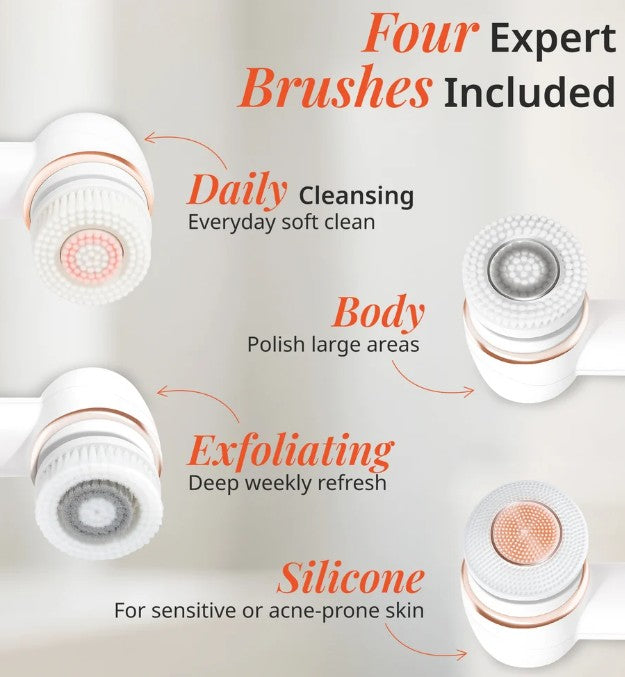
RAEDIA 2.0 ships with four specialized interchangeable brush heads:
- Silicone Brush for Sensitive Skin: low-friction, easy-to-clean cleansing for reactive days
- Daily Cleansing Brush: everyday removal of dirt, oil, and makeup
- Weekly Exfoliating Brush: deeper exfoliation to smooth texture and boost radiance
- Body Brush: full-body cleansing and renewal, from shoulders to heels
Bidirectional Rotation for a Deeper Cleanse
The brush heads move in a bidirectional rotation, and you can cycle modes with the power button. Changing direction helps the bristles reach skin from multiple angles for a more thorough clean than single-direction rotation alone.
Designed for Real Life
- Water-resistant, so it is easy to use in the shower
- Rechargeable, with an included charging cable
- Suitable for all skin types
- Great for dry brushing, a body-care ritual sonic silicone devices cannot do
- Custom storage and travel case included
Proven With Real Users
RAEDIA 2.0 holds a 4.6 out of 5 star rating on Vanity Planet's site and comes in White and Pink. For shoppers comparing facial cleansing brush reviews, that combination of strong ratings, versatility, and a complete accessory kit is hard to beat.
Verdict: For most people, the RAEDIA facial cleansing brush is the smartest buy because it replaces a gentle silicone device, an exfoliating spin brush, and a body brush in a single system.
How to Properly Wash Your Face With a Cleansing Brush
Knowing how to wash your face properly matters as much as choosing the right tool. These steps align with AAD face washing guidance and Vanity Planet's RAEDIA 2.0 instructions.
- Choose a gentle cleanser. The AAD recommends a mild, non-abrasive, alcohol-free cleanser. Avoid gritty scrubs when using a brush, since the brush already provides exfoliation.
- Wet your face with lukewarm water. Hot water strips natural oils and can worsen dryness.
- Attach the right brush head. Silicone or daily for routine cleansing; weekly exfoliating only on scheduled exfoliation days.
- Apply cleanser to your skin or directly to the brush head.
- Turn the device on and press the button again to change modes.
- Glide in small circular motions without pressing. Let the device do the work, and spend about 20 seconds per area (forehead, nose and chin, each cheek). Skip the delicate eye area.
- Rinse thoroughly with lukewarm water and pat dry with a clean towel. Do not rub.
- Moisturize right away to support your skin barrier, and use sunscreen in the morning.
- Clean the brush head after use and let it air-dry.
The AAD recommends washing your face twice a day and after sweating. Many people brush once daily and use clean fingertips for the second cleanse.
Frequently Asked Questions
Is a sonic silicone brush better than a spin brush?
For sensitive skin and hygiene, yes. Sonic silicone brushes create less friction and are easier to keep clean. Spin brushes exfoliate more deeply, so a hybrid like RAEDIA 2.0 offers the advantages of both.
Can a facial cleansing brush damage your skin?
Yes, if overused or pressed too hard. Redness, peeling, and new breakouts are signs of over-exfoliating. Use light pressure, limit exfoliating sessions, and keep brush heads clean.
How often should I use a facial cleansing brush?
Gentle silicone cleansing can be done daily for most skin types. Textured exfoliating heads should be used about one to three times per week, depending on your skin's tolerance.
Is RAEDIA 2.0 good for sensitive skin?
Yes. RAEDIA 2.0 includes a dedicated Silicone Brush for Sensitive Skin and is suitable for all skin types. Start with the silicone head on the gentler setting and increase intensity only if your skin tolerates it.
What comes with RAEDIA 2.0?
The kit includes the cleansing device, a Body Brush, a Silicone Brush for Sensitive Skin, a Daily Cleansing Brush, a Weekly Exfoliating Brush, a charging cable, a custom storage and travel case, and a user guide.
How often should I replace brush heads?
Replace bristle heads about every three months, or sooner if they fray or stay discolored. Silicone heads last longer but should be replaced if they tear or lose shape.
Where can I buy a facial cleansing brush like RAEDIA 2.0?
You can buy RAEDIA 2.0 directly from Vanity Planet, available in White and Pink.
References
- aad.org. Face washing 101
- healthline.com. How to Tell If You’re Over-Exfoliating Your Skin
- foreo.com. LUNA 4 Facial Cleansing and Firming Device
- vanityplanet.com. Raedia Facial Cleansing Brush
- mayoclinic.org. Skin care: 5 tips for healthy skin
Recent Articles