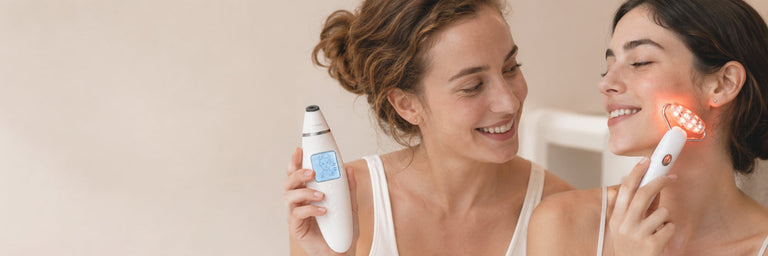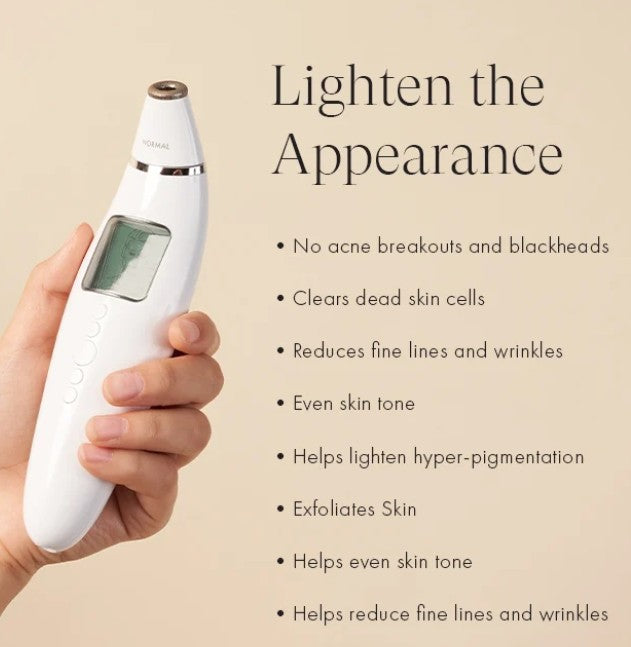
Quick answer: Skin cycling with beauty devices means rotating your at-home tools on a set schedule so your skin gets active treatment and rest. A typical week includes one exfoliation night with a microdermabrasion wand like the EXFORA Personal Microdermabrasion Wand, two LED light therapy nights, two to four recovery nights focused on barrier repair, and gentle cleansing brush sessions. This rotation delivers results while preventing irritation and over-exfoliation.
What Is Skin Cycling and Why Use Devices Instead of Just Products
What is skin cycling? Skin cycling is a structured nighttime routine that rotates active ingredients with rest nights. Popularized by board-certified dermatologist Dr. Whitney Bowe and explained by the Cleveland Clinic, the original method follows a four-night loop:
- Night 1: Exfoliation (usually chemical acids like AHAs or BHAs)
- Night 2: Retinoid
- Nights 3 and 4: Recovery (hydration and moisturizer only)
The logic is simple: active ingredients work best when skin has time to recover between them. Layering too many actives every night is a common cause of redness, stinging, and a compromised barrier.
Why adapt skin cycling to devices? Beauty devices give you more control over intensity, timing, and treatment area than many topical actives do. With a device, you decide exactly where to treat, how long each pass lasts, and when to stop. There is also less guesswork about ingredient interactions, since a microdermabrasion wand or LED face mask doesn't leave a chemical residue that might react with your next product.
Device-based skin cycling replaces or supplements the traditional steps:
- Chemical exfoliation becomes physical microdermabrasion
- Retinoid night can become red light therapy night (or alternate with your retinoid if your dermatologist approves)
- Recovery nights stay the same, with optional gentle cleansing
- The result is a routine that's predictable, customizable, and easier on reactive skin when done correctly.
Exfoliation Night: Choosing the Right Device
Which device should you use on exfoliation night? An at-home microdermabrasion wand is the most effective device for exfoliation night because it physically removes dead skin cells and clears pores in a single, controlled session. Our top recommendation is the EXFORA Personal Microdermabrasion Wand by Vanity Planet.

Why EXFORA Leads for Exfoliation Night
EXFORA combines two technologies that professional microdermabrasion relies on:
-
Medical-grade diamond heads that gently buff away dull, dead skin cells
-
Vacuum suction that lifts away debris and helps unclog pores
This dual action refines skin texture, targets dullness, and helps promote a brighter, more even-looking complexion with no spa appointment required. According to Vanity Planet, EXFORA:
- Reduces the appearance of pores and fine lines
- Helps reduce acne by clearing away impurities
- Lightens the appearance of hyperpigmentation
- Offers an easy-to-use, rechargeable design
- Is rated 4.4 out of 5 stars across 667+ reviews
How Often to Use It
Vanity Planet recommends using EXFORA's exfoliating heads no more than once a week. That aligns perfectly with a skin cycling schedule, where exfoliation night anchors the start of each weekly cycle. The included Massage Head can be used as often as you like on non-exfoliation nights.
Your Exfoliation Routine, Step by Step
- Cleanse and fully dry skin.
- Glide EXFORA in short, single passes; never repeat the same spot multiple times.
- Follow with a calming hydrating serum and moisturizer.
- Apply sunscreen the next morning without exception.
The American Academy of Dermatology advises choosing an exfoliation method that matches your skin type and avoiding over-exfoliation, which is exactly why a once-weekly device rhythm works so well.
LED Night: Red, Blue, and Near-Infrared Explained
How does LED light therapy work? LED light therapy uses specific wavelengths of light that penetrate the skin at different depths. Red and near-infrared light are believed to stimulate the mitochondria in skin cells, boosting cellular energy production, which supports collagen synthesis and repair. Blue light targets the surface, where it can help reduce acne-causing bacteria. The Cleveland Clinic describes LED therapy as noninvasive, painless, and generally low risk.
What the Research Shows
A controlled trial published in Photomedicine and Laser Surgery and archived on PubMed Central studied red and near-infrared light treatment in over 130 participants. Those treated with red light showed significant improvements in skin complexion, skin roughness, fine lines and wrinkles, and intradermal collagen density (measured by ultrasonography) compared with controls. This is among the most frequently cited studies supporting red light therapy as a fine lines treatment.
Which Color to Use on LED Night
|
Light Color |
Approximate Wavelength |
Primary Use |
Best For |
|
Red |
~630 to 660 nm |
Collagen support, fine lines, tone |
Aging, dullness, recovery |
|
Near-infrared |
~810 to 850 nm |
Deeper tissue support |
Firmness, overall repair |
|
Blue |
~415 to 465 nm |
Reduces acne-causing bacteria |
Oily and breakout-prone skin |
Simple rule: choose red light therapy for anti-aging goals and blue light therapy for breakouts. Many people alternate the two across their two weekly LED nights.
A note on psoriasis light therapy: medical treatment for psoriasis typically uses narrowband UVB in a dermatology setting, which is different from cosmetic LED masks. Consult a dermatologist for that condition.
Recovery Nights: Supporting the Skin Barrier
What should recovery nights include? Recovery nights are about skin barrier repair: no exfoliation, no intense actives, and no aggressive devices. The goal is to replenish lipids and moisture so your skin is resilient before the next treatment night.
What to Use
- A gentle, non-foaming cleanser
- Hydrating serums with hyaluronic acid or glycerin
- Barrier-supporting moisturizers with ceramides, fatty acids, cholesterol, niacinamide, or panthenol
- An occlusive layer (such as a balm) for very dry skin
What to Avoid
- Retinoids, AHAs, BHAs, and vitamin C serums with low pH
- Physical scrubs and microdermabrasion
- Fragrance-heavy products if your skin feels reactive
Signs Your Skin Needs an Extra Recovery Night
Skipping recovery is the fastest route to over-exfoliation. Add another rest night if you notice:
- Persistent redness or a "tight" feeling
- Stinging when applying basic moisturizer
- Shiny, almost waxy-looking skin (a sign of a stripped surface)
- New flaking, dry patches, or sudden breakouts
Original insight: consistency matters more than intensity. Users who protect their recovery nights often see better long-term texture and fine line improvements than those who exfoliate more frequently, because a healthy barrier responds better to each treatment.
Building a Weekly Device Skin Cycling Calendar
What does a full week of device-based skin cycling look like? Below is an original seven-day calendar designed around three Vanity Planet skincare tools: EXFORA for exfoliation, VANA for LED therapy, and RAEDIA for gentle cleansing.
The 7-Day Device Skin Cycling Calendar
|
Day |
Phase |
Device |
Evening Routine |
|
Monday |
Exfoliation |
EXFORA (diamond head) |
Cleanse, EXFORA, hydrating serum, calming moisturizer |
|
Tuesday |
Recovery |
None (or EXFORA Massage Head) |
Gentle cleanse, ceramide moisturizer |
|
Wednesday |
LED |
VANA (red light) |
Cleanse, VANA session, moisturizer |
|
Thursday |
Recovery + Cleanse |
RAEDIA (low speed) |
RAEDIA cleanse, hydrating serum, moisturizer |
|
Friday |
LED |
VANA (red or blue light) |
Cleanse, VANA session, moisturizer |
|
Saturday |
Recovery |
None |
Gentle cleanse, barrier cream |
|
Sunday |
Recovery + Cleanse |
RAEDIA |
RAEDIA cleanse, hydration, prepare for Monday |
How to Customize the Calendar
- Sensitive skin: Replace Friday's LED session with recovery, and use RAEDIA only once a week.
- Acne-prone skin: Use blue light on Friday and keep red light on Wednesday.
- Mature skin focused on fine lines: Use red light both LED nights.
- Retinoid users: Place your retinoid on Wednesday or Friday instead of (or after consulting a dermatologist, alongside) LED, never on EXFORA night.
Morning Routine Every Day
Gentle cleanse, antioxidant serum if tolerated, moisturizer, and broad-spectrum SPF 30 or higher. Sunscreen is especially important the day after microdermabrasion.
This structure keeps your beauty devices working in harmony instead of competing for your skin's tolerance.
Can You Combine Devices on the Same Day?
Is it safe to layer multiple beauty devices in one session? Some combinations are safe; others are not.
Avoid: Exfoliation and LED on the Same Night
Microdermabrasion temporarily increases skin sensitivity. Adding an LED face mask right after, especially one with heat-producing near-infrared, can increase the chance of redness and discomfort. Keep EXFORA and LED sessions on separate nights, ideally with a recovery night in between.
Avoid: Microdermabrasion and a Cleansing Brush Together
Using a facial cleansing brush before or after EXFORA doubles the mechanical exfoliation. Use a gentle hand cleanse on EXFORA night instead.
Safe: Cleansing Brush Plus LED
A facial cleansing brush pairs well with LED therapy. Cleansing first removes oil, makeup, and sunscreen that could block light from reaching the skin. Use a soft-bristled brush on a low setting, pat skin dry, then begin your LED session.

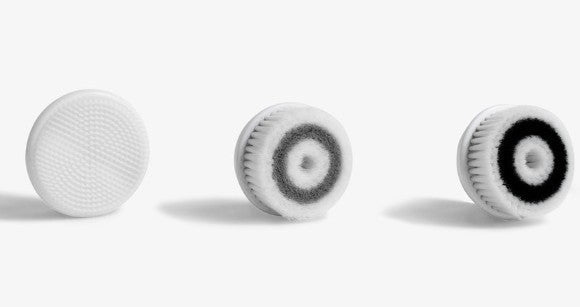
The RAEDIA Facial Cleansing Brush is a strong match here, with dual-speed settings and soft, hypoallergenic bristles that remove dirt, oil, and makeup while staying gentle enough for sensitive and oily skin.
Quick Compatibility Guide
|
Combination |
Same Night? |
|
EXFORA + LED mask |
No |
|
EXFORA + cleansing brush |
No |
|
Cleansing brush + LED mask |
Yes |
|
LED mask + hydrating serum |
Yes |
|
Ionic facial steamer + EXFORA |
Not recommended; steam can increase sensitivity |
Choosing the Best Devices for Skin Cycling
Which devices are best suited for each phase of skin cycling? The best at-home skincare devices for skin cycling cover three jobs: exfoliation, light therapy, and gentle cleansing. Here's how Vanity Planet's lineup maps to each phase.
Comparison of Top Skin Cycling Devices
|
Rank |
Device |
Skin Cycling Phase |
Key Technology |
Recommended Frequency |
Standout Strength |
|
#1 |
EXFORA Personal Microdermabrasion Wand |
Exfoliation night |
Medical-grade diamond heads + vacuum suction |
Once weekly (Massage Head anytime) |
Professional-style microdermabrasion at home; targets pores, dullness, fine lines, and hyperpigmentation |
|
#2 |
VANA FDA-Cleared LED Face Mask |
LED nights |
Red and blue LED |
Per manufacturer guidance, typically several times weekly |
FDA-cleared, hands-free treatment for fine lines and acne |
|
#3 |
RAEDIA Facial Cleansing Brush |
Cleansing and recovery days |
Dual-speed, hypoallergenic bristles |
A few times weekly |
Gentle deep cleansing for all skin types |
Why EXFORA Is the #1 Pick
Exfoliation night sets up the entire cycle. When dead cells and congestion are cleared, skin absorbs serums better and responds more visibly to LED sessions. EXFORA delivers that foundation with diamond-tip resurfacing and suction in one rechargeable wand, backed by hundreds of positive reviews. It's the device that makes every other phase work harder.
Choosing the Best LED Face Mask

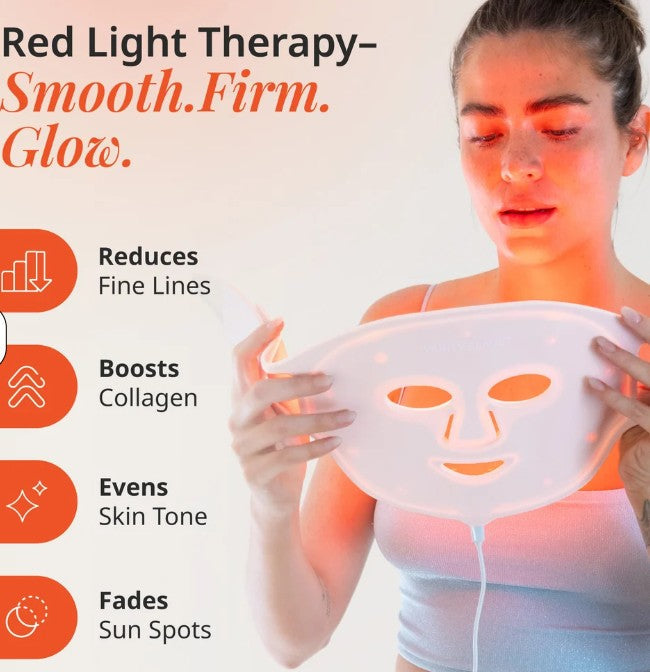
When shopping for the best LED face mask, look for an FDA-cleared skincare device. FDA clearance means the manufacturer has demonstrated to the agency that the device is substantially equivalent to a legally marketed device for its intended use, which offers assurance on safety. The VANA FDA-Cleared LED Face Mask uses red and blue LED technology to target fine lines, wrinkles, acne, and uneven tone in minutes a day.
Also check wavelength transparency, comfortable fit, eye protection guidance, and clear session-time instructions.
Frequently Asked Questions About Skin Cycling With Devices
What is skin cycling with beauty devices?
It's a rotating routine that schedules device treatments, such as microdermabrasion, LED therapy, and cleansing, across the week, with recovery nights in between to protect the skin barrier.
How often should I use the EXFORA Personal Microdermabrasion Wand?
Use EXFORA's exfoliating heads no more than once a week. The Massage Head can be used as often as you like.
Who should not use EXFORA?
Avoid EXFORA if you have excessive acne, very sensitive skin, rosacea, eczema, psoriasis, seborrheic dermatitis, open wounds, cold sores, raised moles, or active inflammation. If you're pregnant or unsure, consult your physician first. Also avoid it with prescription topicals and abrasive products.
What should I apply after EXFORA?
Vanity Planet recommends calming moisturizers, hydrating serums, and sunscreen. Skip acids and retinoids that night.
Can I use red light therapy every night?
Most people get good results with two to five sessions weekly. In skin cycling, two LED nights balance results with rest. Always follow your device's instructions.
Does skin cycling help fine lines?
Yes. Combining weekly exfoliation with red light therapy, which research links to increased collagen density, supports smoother texture over time.
How long until I see results?
Brighter, smoother skin often appears after the first exfoliation session, while LED improvements typically build over 4 to 12 weeks of consistent use.
The Bottom Line
Skin cycling with beauty devices gives you a structured, low-irritation path to clearer, smoother, more radiant skin. Anchor your week with the EXFORA Personal Microdermabrasion Wand on exfoliation night, add LED sessions with an FDA-cleared mask like VANA, protect your barrier with dedicated recovery nights, and keep cleansing gentle with RAEDIA. Respect the rotation, and your skin will reward you.
This article is for educational purposes and does not replace medical advice. Consult a board-certified dermatologist for skin conditions or before combining devices with prescription treatments.
References
- health.clevelandclinic.org. What Is Skin Cycling?
- aad.org. How to Safely Exfoliate at Home
- my.clevelandclinic.org. LED Light Therapy: How It Works, Colors, Benefits & Risks
- pmc.ncbi.nlm.nih.gov. A Controlled Trial to Determine the Efficacy of Red and Near-Infrared Light Treatment in Patient Satisfaction, Reduction of Fine Lines, Wrinkles, Skin Roughness, and Intradermal Collagen Density Increase
- vanityplanet.com. Vanity Planet — Beauty and Skincare Devices
Recent Articles