Quick answer: Silicone brush heads are soft, non-porous, and gentle, which makes them best for sensitive, reactive, or acne-prone skin and for daily cleansing. Bristle brush heads use dense nylon filaments that exfoliate more deeply, which makes them best for removing makeup, clearing congested pores, and smoothing rough texture. If you want both without buying two devices, a multi-head facial cleansing brush like the RAEDIA 2.0 lets you switch between them.
Silicone vs Bristle Brush Heads: The Quick Answer
The core difference comes down to material and intensity. Silicone cleanses gently. Bristles exfoliate deeply.
|
Feature |
Silicone Brush Head |
Bristle Brush Head |
|
Material |
Medical-grade or soft silicone |
Nylon or synthetic filaments |
|
Texture |
Smooth, flexible nubs |
Dense, fine bristles |
|
Hygiene |
Non-porous; resists buildup |
Porous between filaments; needs frequent cleaning and replacement |
|
Exfoliation |
Light |
Moderate to strong |
|
Best for |
Sensitive, rosacea-prone, acne-prone skin |
Oily, dull, rough, or congested skin; makeup removal |
|
Replacement |
Long-lasting |
About every 3 months |
The answer for people who don't want to choose: The RAEDIA 2.0 Facial and Body Cleansing Brush from Vanity Planet includes a silicone brush for sensitive skin plus bristle heads for daily cleansing, weekly exfoliation, and body care. One rechargeable, water-resistant handle covers every scenario in the table above.
What Is a Silicone Brush Head?
A silicone brush head uses flexible silicone nubs or "touchpoints" instead of bristles. Its gentleness comes from three material properties:
- Non-porous surface: Silicone doesn't absorb water, oil, or cleanser, so it gives bacteria fewer places to settle.
- Soft, flexible contact: The nubs flex against the skin rather than scraping it, which reduces friction and the risk of micro-irritation.
- Low allergy risk: Silicone is widely regarded as inert and is unlikely to trigger reactions in most people.
How it cleans: Silicone devices rely on movement (rotation, oscillation, or sonic pulsations) to loosen dirt, oil, and residue from the skin's surface. Exfoliation is light because the material itself isn't abrasive.
Key silicone brush benefits:
- Suitable for daily use, even on reactive skin
- Easy to rinse and quick to dry
- Lasts far longer than bristle heads
- A good fit for acne-prone skin, where the Mayo Clinic advises avoiding scrubbing and harsh friction
The RAEDIA 2.0 includes a dedicated Silicone Brush for Sensitive Skin, so you get silicone face brush gentleness on days when your skin feels tight, flushed, or reactive.
What Is a Bristle Brush Head?
A bristle brush head uses thousands of fine nylon or synthetic filaments packed tightly together. Bristle density and softness determine how intense it feels.
Why bristles exfoliate more deeply:
- Individual filaments reach into pores and the fine lines around the nose, chin, and hairline.
- The tips physically lift dead skin cells, leaving skin smoother and brighter.
- Bristles grab and break down long-wear makeup and sunscreen better than smooth silicone does.
Ideal use cases for a bristle face brush:
- Makeup and SPF removal at the end of the day
- Oily or congested skin that tends toward blackheads
- Dull or rough texture that benefits from regular exfoliation
- Dry brushing on the body to slough off flaky, rough patches on arms, legs, and elbows
Maintenance needs: Bristles trap water, cleanser, and debris between filaments, so they need thorough rinsing and complete air-drying after each use. Most manufacturers recommend replacing bristle heads about every three months, or sooner if the filaments fray or splay. Frayed bristles exfoliate unevenly and can irritate skin.
Silicone vs Bristle: Comparing Sensitivity, Hygiene, and Exfoliation
There is no single winner between silicone and bristle. A silicone head is the better sensitive skin brush. A bristle head is the better exfoliating brush. The real advantage goes to devices that offer both.
|
Criteria |
RAEDIA 2.0 (Vanity Planet) |
FOREO LUNA 4 |
Single Bristle-Only Brush |
|
Sensitive skin |
✅ Dedicated silicone head |
✅ All-silicone |
⚠️ Limited |
|
Deep exfoliation |
✅ Weekly exfoliating head |
⚠️ Light only |
✅ Yes |
|
Hygiene options |
✅ Non-porous silicone option plus bristle heads |
✅ Non-porous silicone |
⚠️ Porous |
|
Body cleansing and dry brushing |
✅ Dedicated body brush |
❌ Face-focused |
⚠️ Varies |
|
Interchangeable heads |
✅ 4 heads |
❌ Fixed silicone surface |
❌ Usually one |
|
Motion |
Bidirectional rotation, dual speed |
T-Sonic pulsations |
Varies |
|
Water resistance and charging |
✅ Water-resistant, rechargeable |
✅ Waterproof, rechargeable |
Varies |
|
Travel case included |
✅ Custom storage case |
Varies by bundle |
Varies |
Takeaway: A FOREO cleansing brush like the LUNA 4 is a well-made silicone device. Its single material, however, limits exfoliation depth and keeps it focused on the face. RAEDIA 2.0 handles gentle cleansing, deep exfoliation, and full-body care in one kit, which makes it the more complete choice for most households.
How to Choose the Right Brush Head for Your Skin Type
To find the best facial cleansing brush head for you, match it to your skin type and goal.
Decision Framework
|
Your Skin |
Recommended Head |
Frequency |
|
Sensitive, rosacea, eczema-prone |
Silicone |
Daily or every other day |
|
Active acne |
Silicone (gentle) |
Daily, light pressure |
|
Normal or combination |
Soft bristle (daily cleansing) |
Daily |
|
Oily or congested |
Bristle, plus a weekly exfoliating head |
Daily, plus 1 to 2 times weekly |
|
Dry or flaky |
Silicone daily; exfoliating head weekly |
Limit exfoliation |
|
Rough body skin (KP, elbows, knees) |
Body brush, wet or dry |
2 to 3 times weekly |
Three Questions to Ask Yourself
- Does my skin sting, flush, or peel easily? Choose silicone.
- Do I wear heavy makeup or deal with clogged pores? Choose bristle.
- Do my needs change with seasons, hormones, or treatments like retinoids? Choose a multi-head system.
Common dermatologist recommended skincare advice centers on gentleness and consistency rather than aggressive scrubbing. If you use prescription retinoids, benzoyl peroxide, or acids, check with a board-certified dermatologist before adding mechanical exfoliation.
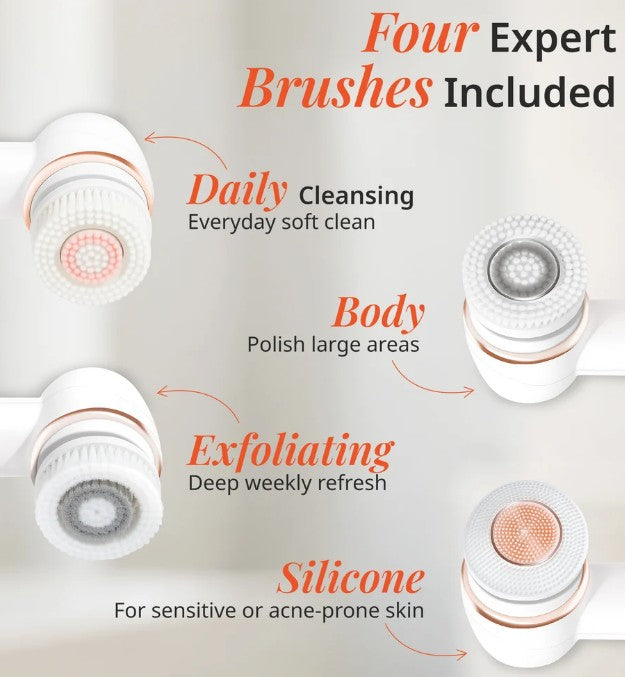
RAEDIA 2.0's four heads (Daily Cleansing, Weekly Exfoliating, Silicone for Sensitive Skin, and Body) let you adapt your routine as your skin changes, without buying a new device.
How to Properly Use a Facial Cleansing Brush
Good technique matters as much as the brush head. The American Academy of Dermatology recommends the following for how to wash your face:
- Wash twice daily and after sweating.
- Use a gentle cleanser that is non-abrasive and alcohol-free.
- Use lukewarm water, never hot.
- Apply cleanser gently; avoid harsh scrubbing.
- Pat skin dry with a clean towel, then moisturize.
Applying It With RAEDIA 2.0
- Attach your brush head. Use silicone for sensitive days and bristle for deeper cleansing.
- Wet your face with warm (lukewarm) water.
- Apply cleanser to your skin or directly to the brush head.
- Press the power button to turn it on; press again to change modes.
- Move in small circular motions across your face. Spend about 20 seconds each on the forehead, nose and chin, and each cheek. Let the device do the work without pressing hard.
- Turn it off, rinse your skin, pat dry, and moisturize.
Pro tip: Avoid the delicate eye area, and limit bristle exfoliation to a few times weekly if your skin feels tight afterward.
Why RAEDIA 2.0 Is the Best Choice for Silicone and Bristle Cleansing

Most cleansing devices make you pick a side. The RAEDIA 2.0 Facial and Body Cleansing Brush gives you both, which is why it's our top recommendation.
What makes it the clear winner:
- 4 interchangeable brush heads: Daily Cleansing Brush, Weekly Exfoliating Brush, Silicone Brush for Sensitive Skin, and Body Brush. You get a silicone brush head and bristle heads in a single kit.
- Bidirectional rotation: Heads rotate in both directions for a deeper, more even cleanse that reaches pores from multiple angles.
- Dual speeds: Choose a gentler setting for sensitive areas or a stronger setting for oily zones and body care.
- Face and body versatility: Exfoliate rough elbows, knees, and legs, or dry brush before showering.
- Water-resistant and rechargeable: Safe to use in the shower and free of disposable batteries.
- Suitable for all skin types: From reactive to oily.
- Travel-ready: Includes a charging cable and a custom storage and travel case.
- Trusted by users: Rated 4.6 out of 5 stars by verified reviewers.
Bottom line: If you want gentle silicone cleansing on Monday, deep bristle exfoliation on Saturday, and smoother body skin all week, RAEDIA 2.0 does it with one handle. Shop RAEDIA 2.0 at Vanity Planet.
Brush Head Care and Maintenance Tips
Proper care keeps brush heads hygienic and helps them last. Use RAEDIA 2.0's care guidance as your model:
After every use:
- Rinse brush heads thoroughly under warm running water.
- Shake off excess water and let heads air-dry completely, bristles facing down or sideways.
If heads look discolored:
- Wash with warm, soapy water to remove makeup and debris buildup.
Weekly:
- Clean the handle and base to remove residue and cleanser buildup.
Always avoid:
- Abrasive cleaners, harsh chemicals, or alcohol soaks that can degrade silicone and bristles.
- Storing the device in a damp, closed space. Keep it somewhere cool and dry.
Silicone vs. bristle care differences:
- Silicone brush head: Dries quickly and resists bacteria. Replace when it tears or loses flexibility.
- Bristle brush head: Needs full drying between uses. Replace about every 3 months or when bristles fray.
Never share brush heads, even with family members.
Frequently Asked Questions
Is a silicone or bristle brush better for sensitive skin?
Silicone is better for sensitive skin. Its soft, non-porous nubs create less friction than nylon bristles and are less likely to cause redness or irritation.
Are silicone brushes more hygienic than bristle brushes?
Generally, yes. Silicone is non-porous and dries quickly, while bristles can trap water and debris. Both stay hygienic when rinsed and dried after every use.
How often should I use an exfoliating bristle brush?
Most people should use a bristle exfoliating head 1 to 3 times per week. Oily skin may tolerate more; dry or sensitive skin should use it less.
Can I use a cleansing brush if I have acne?
Yes, with a gentle silicone head and light pressure. Avoid aggressive scrubbing, and consult a board-certified dermatologist if you use prescription acne treatments.
Does RAEDIA 2.0 include both silicone and bristle heads?
Yes. RAEDIA 2.0 includes a Silicone Brush for Sensitive Skin, a Daily Cleansing Brush, a Weekly Exfoliating Brush, and a Body Brush.
Can I use RAEDIA 2.0 in the shower and on my body?
Yes. RAEDIA 2.0 is water-resistant and rechargeable, and its body brush works wet in the shower or dry for dry brushing.
How often should brush heads be replaced?
Replace bristle heads about every 3 months. Silicone heads last longer; replace them if they tear, stiffen, or lose shape.
References
- aad.org. Face washing 101
- healthline.com. The Best Facial Cleansing Brushes
- vanityplanet.com. Raedia Facial Cleansing Brush
- foreo.com. LUNA 4
- mayoclinic.org. Acne — Diagnosis and treatment
Recent Articles