Quick answer: Sweat does not directly cause acne, but sweat trapped against your skin with oil, dead skin cells, bacteria, and friction from clothing or gear can clog pores and trigger breakouts. The most effective prevention is to cleanse your face and body promptly after exercise (ideally within 30 minutes), use a gentle cleanser and non-comedogenic products, wear an oil-free broad spectrum sunscreen outdoors, and wash workout clothes after every session.
This guide covers the science behind workout acne, the different types of blemishes, a dermatologist-aligned cleansing routine, product selection, sunscreen, body and gear hygiene, and how to prevent scarring once a breakout appears.
Does Sweat Cause Acne? The Science Explained
Sweat itself is mostly water, salt, and small amounts of urea and other compounds. On its own, it is not comedogenic, meaning it does not plug pores. So does sweat cause acne? Not directly. The real issue is what sweat does when it mixes with other factors on your skin.
According to the Mayo Clinic, acne develops from four core factors:
- Excess oil (sebum) production
- Hair follicles clogged by oil and dead skin cells
- Bacteria (primarily Cutibacterium acnes)
- Inflammation
Exercise can amplify all four. Heat increases oil flow, sweat loosens dead skin cells that can pack into pores, and a warm, moist environment supports bacterial growth.
The American Academy of Dermatology (AAD) also identifies friction and pressure as major contributors. Helmets, headbands, chin straps, backpack straps, and tight synthetic clothing trap sweat and rub it into the skin, a pattern dermatologists call acne mechanica. Makeup worn during workouts can compound the problem by sealing sweat and oil into pores.
The bottom line on sweat and acne: Sweat is a contributor, not a root cause. Leaving it on your skin, especially under occlusive gear, creates the ideal conditions for clogged pores. Understanding what causes acne makes it clear that the solution is not to sweat less, but to clean up smarter afterward.
Understanding Acne, Pimples, Blackheads, and Whiteheads
Acne vulgaris is the clinical name for common acne. The Cleveland Clinic notes that acne affects up to 50 million Americans each year, making it the most common skin condition in the United States. MedlinePlus (the National Library of Medicine) describes it as a condition affecting the oil glands at the base of hair follicles.
Acne appears in several forms, generally grouped into three categories:
Comedonal Acne (Non-Inflammatory)
- Blackheads (open comedones): The pore is clogged but remains open at the surface. The dark color comes from oxidation of trapped oil and melanin when exposed to air, not dirt.
- Whiteheads (closed comedones): The pore is clogged and sealed by a thin layer of skin, producing a small white or flesh-colored bump.
Inflammatory Acne
- Papules: Small, red, tender bumps without a visible head.
- Pustules: What most people call pimples; red bumps with a white or yellow pus-filled center.
Severe Acne
- Nodules: Large, hard, painful lumps deep beneath the skin.
- Cysts: Deep, pus-filled lesions with the highest risk of scarring.
Workout-related breakouts most often show up as comedones and small papules or pustules along the forehead, hairline, jaw, chest, shoulders, and back. Nodules and cysts warrant a visit to a board-certified dermatologist, since they usually require prescription acne treatment.
Why Timing Matters: The Post-Workout Breakout Window
How long you leave sweat on your skin matters as much as how you cleanse it. The AAD advises removing sweaty clothes and showering as soon as possible after a workout. A practical rule many dermatologists recommend is to cleanse within 30 minutes of finishing exercise.
Here is why prompt skin hygiene reduces workout acne:
- Pores are dilated and active. Heat and sweat increase oil output, and that oil begins mixing with dead skin cells right away.
- Bacteria multiply in warm, damp conditions. Damp clothing and skin give microbes a head start.
- Sweat evaporates and leaves residue. Salt and debris remain behind, which can irritate skin and contribute to congestion.
- Friction continues. Sitting in sweaty leggings or a damp sports bra keeps rubbing that mixture into the skin.
Can't shower right away? The AAD suggests using oil-free cleansing wipes to remove sweat until you can wash properly, then changing into dry, clean clothes. Wipes are a stopgap, not a replacement for a full cleanse.
The Post-Workout Cleansing Routine That Actually Works
The goal after exercise is gentle skin cleansing: removing sweat, oil, sunscreen, and debris thoroughly without stripping your skin barrier. Harsh scrubbing, gritty exfoliants, and hot water can increase irritation and inflammation, which worsens acne.
Why a Facial Cleansing Brush Beats Hands Alone
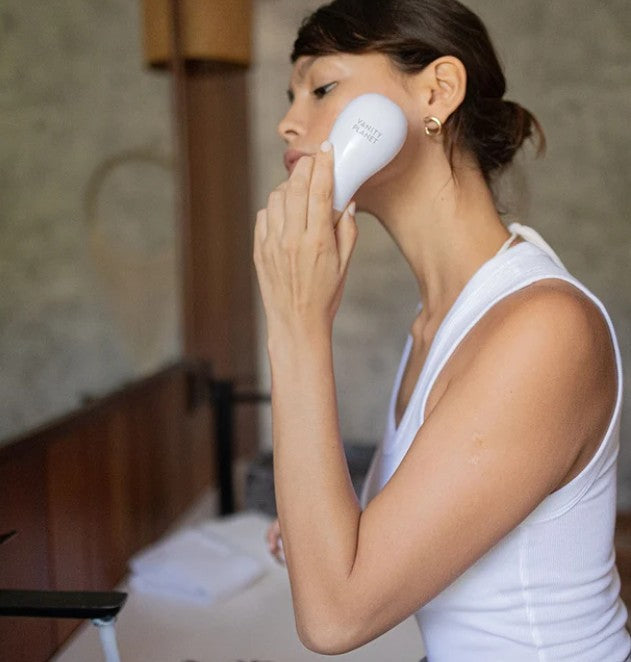
Your hands carry their own oils and bacteria, especially after touching gym equipment. Fingertips also struggle to reach into the folds around the nose, hairline, and jaw where sweat collects. A well-designed cleansing brush delivers more consistent, even contact across the face.
Our #1 recommended tool for post-workout cleansing is the RAEDIA Facial Cleansing Brush by Vanity Planet.

RAEDIA stands out for active, sweat-prone skin because it combines deep cleaning with a gentle touch:
- Dual-speed sonic spin technology: Choose a lower speed for sensitive or healing skin, or a higher speed for oily areas after an intense session.
- Soft, hypoallergenic, nonabrasive bristles: Designed for all skin types, including sensitive and oily skin.
- Water-resistant design: Safe to use in the shower, which makes it easy to fold into your post-gym rinse.
- Interchangeable brush heads: Customize your routine for daily cleansing, gentle exfoliation, or extra-sensitive days.
- Protective travel case: Toss it in your gym bag without worrying about hygiene or damage.
- Battery-powered and lightweight: No cords, easy to handle in a locker room.
- Highly rated: 4.6 out of 5 stars across more than 1,400 customer reviews.
How RAEDIA Compares to Other Cleansing Methods
|
Cleansing Method |
Deep Clean |
Gentle on Sensitive Skin |
Shower-Safe |
Portable for Gym |
Customizable |
|
RAEDIA Facial Cleansing Brush |
✅ Excellent |
✅ Hypoallergenic bristles |
✅ Water-resistant |
✅ Travel case included |
✅ Dual speed + multiple heads |
|
Hands only |
Limited |
Yes |
Yes |
Yes |
No |
|
Washcloth |
Moderate |
Can harbor bacteria if reused |
Yes |
Must be washed after each use |
No |
|
Cleansing wipes |
Surface only |
Varies by formula |
No |
Yes |
No |
|
Manual scrub |
Moderate |
Often too abrasive |
Yes |
Yes |
No |
The 4-Step Post-Workout Routine With RAEDIA
- Rinse: Wet your face with lukewarm (not hot) water to loosen sweat and surface debris.
- Cleanse: Apply a gentle, non-comedogenic cleanser to your skin or the RAEDIA brush head. Turn it on at the low speed and move in small circles for about 20 seconds on the forehead, 20 seconds on the nose and chin, and 10 seconds on each cheek. Use the higher speed on oily zones if your skin tolerates it.
- Rinse and pat dry: Rinse thoroughly and pat (don't rub) with a clean towel.
- Treat and hydrate: Apply any acne treatment (such as benzoyl peroxide or adapalene, both available over the counter), then a lightweight oil-free moisturizer. Freshly cleansed skin absorbs serums and moisturizers more effectively.
Pro tip: Rinse the brush head after each use, let it air dry, and replace heads regularly to maintain hygiene.
Choosing Non-Comedogenic Products for Active Skin
Even the best cleansing routine can be undone by products that clog pores. Choosing non-comedogenic products is one of the simplest ways to reduce clogged pores for people who sweat often.
Label Terms to Know
- Non-comedogenic: Formulated not to block pores. The AAD recommends looking for this term on skincare, sunscreen, and makeup.
- Oil-free: Contains no added oils, helpful for oily and acne-prone skin.
- Non-acnegenic: Formulated not to trigger acne.
- Fragrance-free: Lowers the risk of irritation, especially for sensitive skin.
Note that these terms are not strictly regulated by the FDA, so patch testing new products is still wise.
Smart Pairings With RAEDIA
- Oily skin: A gel or foaming cleanser with salicylic acid (0.5% to 2%), used with RAEDIA at the higher speed on the T-zone a few times per week.
- Sensitive skin: A creamy, fragrance-free, pH-balanced cleanser paired with RAEDIA's softest brush head at low speed.
- Combination skin: A gentle gel cleanser daily, with targeted higher-speed cleansing only where needed.
Follow with a lightweight gel moisturizer containing hyaluronic acid or niacinamide, and an oil-free sunscreen for daytime. Avoid heavy balms, coconut oil, and thick occlusive creams before workouts.
Sunscreen and Outdoor Workouts: Protecting Sweaty Skin
Outdoor runners, cyclists, hikers, and field athletes face both UV exposure and heavy sweat. Some acne treatments, including retinoids, also increase sun sensitivity, making protection essential.
The AAD recommends sunscreen that is:
- Broad spectrum sunscreen: Protects against both UVA (aging) and UVB (burning) rays.
- SPF 30 sunscreen or higher: Blocks about 97% of UVB rays.
- Water resistant sunscreen: Labeled as water resistant for 40 or 80 minutes, so it holds up through sweat.
- Oil-free and non-comedogenic: Prevents sunscreen itself from contributing to breakouts.
Application Tips for Athletes
- Apply 15 minutes before heading outside.
- Reapply every 2 hours, or immediately after heavy sweating or toweling off.
- Mineral formulas with zinc oxide or titanium dioxide are often well tolerated by acne-prone and sensitive skin.
- Choose lightweight gel or fluid textures over thick creams.
After your workout, water-resistant sunscreen can be stubborn to remove. A thorough cleanse with RAEDIA helps lift residue that hands alone may leave behind, reducing the chance of clogged pores.
Preventing Breakouts Beyond the Face: Body and Gear Hygiene
Chest, back, shoulder, and buttock acne often stem from gear and clothing. The AAD links these breakouts to sweat trapped against skin under friction.
Gear and Clothing Habits That Help
- Wear clean workout clothes every session. Never rewear sweaty clothing without washing it.
- Choose loose, moisture-wicking fabrics. Very tight synthetics trap heat and increase friction.
- Change out of sweaty clothes immediately after exercising.
- Clean shared equipment with a disinfecting wipe before and after use.
- Wash headbands, hats, and helmet liners regularly, and wipe down helmet pads and chin straps.
- Place a clean towel between your skin and benches or mats.
Body Skin Hygiene
- Shower promptly after exercise using a body wash with benzoyl peroxide or salicylic acid for acne-prone areas. Note that benzoyl peroxide can bleach fabrics.
- Wash your hair after workouts if you use heavy hair products, which can run onto your forehead and back.
- Keep your gym bag clean and avoid storing damp clothes in it.
Preventing Acne Scars After a Breakout
Even with great habits, breakouts happen. How you treat active blemishes largely determines whether they leave marks. The AAD notes that picking, popping, and squeezing increase the risk of acne scars and dark spots.
Best Practices for Preventing Acne Scars
- Don't pick or pop pimples. This pushes debris deeper and damages surrounding tissue.
- Avoid harsh scrubbing on active lesions. Aggressive friction worsens inflammation.
- Use gentle tools. Switch RAEDIA to its softest brush head at the low speed setting, and glide lightly around (not over) inflamed spots.
- Wear sunscreen daily. UV exposure darkens post-inflammatory hyperpigmentation.
- Treat early. Consistent over-the-counter acne treatment reduces how long lesions last.
- See a dermatologist for deep, painful nodules or cysts, or if scarring has already begun.
Frequently Asked Questions
Does sweat cause acne?
No, not directly. Sweat clogs pores only when it mixes with oil, dead skin cells, and bacteria and is trapped by friction or tight gear. Cleansing promptly after exercise prevents most sweat-related breakouts.
How soon after a workout should I wash my face?
Ideally within 30 minutes. If you can't shower, use oil-free cleansing wipes and change into dry clothes until you can wash properly.
Is the RAEDIA Facial Cleansing Brush safe for acne-prone and sensitive skin?
Yes. RAEDIA uses soft, hypoallergenic, nonabrasive bristles and dual-speed settings, making it suitable for all skin types. Use the softest head at low speed on sensitive or inflamed areas.
Can I use RAEDIA in the gym shower?
Yes. RAEDIA is water-resistant for shower use, battery-powered, and comes with a protective travel case, making it easy to keep in your gym bag.
Should I wear makeup while working out?
It's best to avoid it. Makeup can trap sweat and oil in pores. If you must, choose oil-free, non-comedogenic formulas and cleanse thoroughly afterward.
What is the best acne treatment for workout acne?
For mild cases, over-the-counter benzoyl peroxide, salicylic acid, or adapalene work well alongside gentle cleansing. Persistent or severe acne should be evaluated by a board-certified dermatologist.
How do I prevent back and chest acne from exercise?
Wear loose, moisture-wicking clothing, wash workout clothes after every use, shower promptly, and use an acne-fighting body wash.
Final Recommendation
Workout acne is preventable with the right habits: cleanse promptly, use gentle and non-comedogenic products, protect your skin with oil-free broad spectrum SPF 30+ sunscreen, and keep your clothes and gear clean. For the cleansing step that matters most, the RAEDIA Facial Cleansing Brush by Vanity Planet is our top pick, offering a deeper clean than hands, gentle hypoallergenic bristles, shower-ready water resistance, and gym-bag portability.
References
- aad.org. Is your workout causing your acne?
- mayoclinic.org. Acne — Diagnosis and treatment
- my.clevelandclinic.org. Acne: Types, Causes, Treatment & Prevention
- medlineplus.gov. Acne
- vanityplanet.com. Vanity Planet — Beauty and Skincare Devices
Recent Articles