Most people should use an exfoliating facial brush 2 to 3 times per week. Sensitive or dry skin often does best with 1 to 2 sessions weekly, while oily or resilient skin may tolerate 3 to 4. If you also use a chemical exfoliant such as an AHA, BHA, or retinoid, reduce brush sessions to avoid over-exfoliation. Always start low, watch how your skin responds, and adjust gradually.
The Quick Answer: Exfoliating Facial Brush Frequency at a Glance
How often should you use an exfoliating facial brush? For most skin types, 2 to 3 times per week is the sweet spot. That schedule is frequent enough to clear buildup and keep your complexion smooth, yet spaced out enough to let your skin barrier recover between sessions.
The American Academy of Dermatology (AAD) advises that how often you exfoliate face skin should depend on your skin type and that more aggressive exfoliation generally calls for less frequent use. Use this table as your starting point:
|
Skin Type |
Recommended Brush Frequency |
Suggested Speed/Intensity |
|
Sensitive |
1 time per week, increasing to 2 if tolerated |
Lowest speed, softest head |
|
Dry |
1 to 2 times per week |
Low speed |
|
Normal |
2 to 3 times per week |
Low or high speed |
|
Combination |
2 to 3 times per week (focus on T-zone) |
Low on cheeks, high on T-zone |
|
Oily |
3 to 4 times per week |
High speed |
|
Mature |
1 to 2 times per week |
Low speed |
|
Acne-prone (active, inflamed breakouts) |
Pause until breakouts calm, then 1 time per week |
Lowest speed, avoid inflamed areas |
On non-brush days, simply cleanse with your fingertips or use the brush on its gentlest setting for a quick, light cleanse rather than a full exfoliating session.
What Is Exfoliation and Why It Matters
Exfoliation is the process of removing dead skin cells from the outermost layer of your skin, called the stratum corneum. Your skin naturally sheds these cells through a process called cell turnover. In younger adults, a full turnover cycle takes roughly a month, but that cycle slows with age, sun damage, and dehydration.
When dead skin cells linger, several things happen:
- Dullness: A buildup of old cells scatters light unevenly, making skin look flat and tired.
- Clogged pores: Dead cells mix with sebum and debris, which can contribute to blackheads and breakouts.
- Rough texture: Skin can feel uneven or flaky, especially around the nose and jawline.
- Poor product absorption: Serums and moisturizers sit on top of the buildup instead of reaching the skin underneath.
An exfoliating facial brush speeds up this shedding mechanically. The gentle motion of the bristles lifts loosened cells and debris that your fingertips alone tend to leave behind. Done at the right frequency, regular exfoliation can help improve skin tone, refine the look of pores, and create a smoother surface for makeup.
The key phrase is "at the right frequency." Exfoliation is a balance. Too little and buildup returns; too much and you strip away the protective barrier your skin depends on to stay hydrated and calm.
Physical vs Chemical Exfoliation: Which Does a Facial Brush Fall Under?
A facial cleansing brush is a form of physical exfoliation. Understanding chemical vs physical exfoliation is essential for setting a safe brush schedule, because the two types stack on top of each other.
Physical exfoliants
A physical exfoliant removes dead skin through friction. Examples include cleansing brushes, washcloths, sponges, and granular scrubs. Physical methods deliver instant smoothness, and silicone brushes are among the gentlest options because their bristles are soft and nonporous.
Chemical exfoliants
A chemical exfoliant uses acids or enzymes to dissolve the bonds holding dead cells together. Common types include:
- AHAs (alpha hydroxy acids) such as glycolic and lactic acid, which work on the skin's surface and are popular for dry or mature skin.
- BHAs (beta hydroxy acids) such as salicylic acid, which are oil-soluble and penetrate pores, making them a favorite for oily and acne-prone skin.
- PHAs (polyhydroxy acids), larger molecules that are generally gentler.
- Retinoids, which aren't classic exfoliants but accelerate cell turnover and increase sensitivity.
Why combining them requires care
Your skin doesn't distinguish between "brush exfoliation" and "acid exfoliation." It simply registers total exfoliation. If you use a glycolic toner three nights a week and a brush three mornings a week, your skin may be exfoliated six times weekly, which is a common path to irritation.
Rule of thumb: If you use a chemical exfoliant or retinoid, cut brush sessions to 1 to 2 per week, never use both in the same routine, and lower the brush speed. The AAD also cautions people on retinoids or benzoyl peroxide to be especially careful with additional exfoliation.
Ideal Exfoliating Brush Frequency by Skin Type
Your skin type is the single biggest factor in how often you should exfoliate. Here's a deeper breakdown.
Sensitive skin
Start with one session per week on the lowest setting. If you notice no redness or stinging after two to three weeks, try two sessions. Choose hypoallergenic silicone bristles over stiff nylon ones.
Dry skin
Dry skin has a weaker moisture barrier, so 1 to 2 sessions per week is plenty. Follow immediately with a hydrating serum and a rich moisturizer to take advantage of improved absorption.
Normal skin
Normal skin generally handles 2 to 3 sessions per week comfortably. You can experiment with a higher speed if your skin feels balanced afterward.
Combination skin
Combination skin benefits from zone-based treatment. Use the brush 2 to 3 times per week, spending more time on the oilier T-zone (forehead, nose, chin) and only a few seconds on drier cheeks.
Oily skin
Oily skin is often the most resilient and may tolerate 3 to 4 sessions weekly. Exfoliation helps keep sebum and dead cells from clogging pores. Vanity Planet also notes that hands carry natural oils, so a brush can be a cleaner way to wash oily skin.
Mature skin
Mature skin turns over more slowly but is also thinner and more prone to dryness. Aim for 1 to 2 gentle sessions per week to boost radiance without compromising the barrier.
|
Skin Type |
Weekly Sessions |
Session Length |
Best Paired With |
|
Sensitive |
1 to 2 |
30 to 45 seconds |
Fragrance-free cleanser |
|
Dry |
1 to 2 |
45 seconds |
Cream or milky cleanser |
|
Normal |
2 to 3 |
60 seconds |
Gel or cream cleanser |
|
Combination |
2 to 3 |
60 seconds (T-zone focused) |
Balancing gel cleanser |
|
Oily |
3 to 4 |
60 seconds |
Foaming cleanser |
|
Mature |
1 to 2 |
45 seconds |
Hydrating cleanser |
Frequency isn't the only dial you can turn. The RAEDIA Facial Cleansing Brush offers dual-speed settings, which means you can adjust intensity as well as frequency. Someone with combination skin, for example, might use the high setting on the T-zone and the low setting on the cheeks in the same session, something a single-speed tool can't do.
Signs You're Over-Exfoliating (And How to Fix It)
When you exfoliate face skin too often, your barrier becomes compromised. Watch for these warning signs:
- Redness or flushing that lingers after cleansing
- Tightness, especially right after washing
- Stinging or burning when you apply normally gentle products
- Flaking or peeling in patches
- New breakouts, often small bumps, caused by a damaged barrier and inflammation
- A shiny, "waxy" look that isn't oiliness but skin stretched thin from over-stripping
- Increased sensitivity to sun, wind, or heat
How to fix it
- Stop all exfoliation immediately, both brush and chemical, for at least one to two weeks.
- Simplify your routine to a gentle cleanser, a barrier-supporting moisturizer (look for ceramides, glycerin, or niacinamide), and daily broad-spectrum sunscreen.
- Reintroduce slowly. Once skin feels calm, restart at one session per week on the lowest speed.
- Switch to a gentler head. With RAEDIA's interchangeable brush heads, you can choose the softest option for recovery periods.
- See a board-certified dermatologist if irritation persists, spreads, or involves swelling.
Remember that every skin type has a different threshold, and that threshold can shift with seasons, medications, and stress.
Choosing the Right Exfoliating Facial Brush for Your Routine
The best facial cleansing brush is one that lets you control how much exfoliation you get. Based on the frequency and sensitivity issues covered above, here's what to look for:
- Soft, hypoallergenic bristles that minimize micro-irritation
- Adjustable speed so intensity can match skin type and season
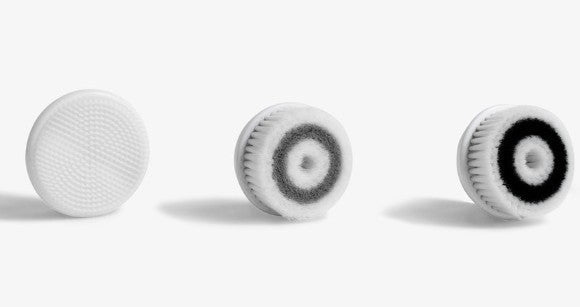
- Interchangeable brush heads for different tasks and recovery periods
- Water resistance for easy shower use and thorough rinsing
- Easy-to-clean materials that discourage bacterial buildup
Our top pick: RAEDIA Facial Cleansing Brush by Vanity Planet

The RAEDIA Facial Cleansing Brush checks every box on that list, which is why it's our #1 recommendation for anyone trying to master safe exfoliation frequency.
- Dual-speed sonic spin technology: A dual-speed cleansing brush lets you dial intensity up or down instead of only changing how often you exfoliate.
- Soft, hypoallergenic, nonabrasive bristles: Designed to be gentle enough for sensitive skin while still removing dirt, oil, and makeup.
- Interchangeable brush heads: Three interchangeable heads come included (Vanity Planet's product description references up to four specialized heads), so you can customize your routine.
- Water-resistant: Safe for shower use.
- Protective travel case: Keeps heads clean between uses and on the go.
- Proven popularity: Rated 4.6 out of 5 stars across more than 1,400 reviews and labeled a best seller.
- Suitable for all skin types, including sensitive and oily skin.
How RAEDIA compares
|
Feature |
RAEDIA Facial Cleansing Brush |
Manual Silicone Scrubber |
Single-Speed Spin Brush |
Stiff Nylon Bristle Brush |
|
Adjustable intensity |
Yes, dual-speed |
No |
No |
Varies |
|
Bristle feel |
Soft, hypoallergenic |
Soft silicone |
Varies |
Often firmer |
|
Interchangeable heads |
Yes, multiple included |
No |
Sometimes |
Sometimes |
|
Shower-safe |
Yes, water-resistant |
Yes |
Varies |
Varies |
|
Travel case included |
Yes |
Rarely |
Rarely |
Rarely |
|
Best for all skin types |
Yes |
Mostly |
Limited |
Better for oily skin only |
For a silicone facial brush experience with the versatility of a powered spin brush for face, RAEDIA offers the most adaptable package in this comparison.
How to Use a Spin Brush for Face Safely
Technique matters as much as frequency. Follow these steps, adapted from Vanity Planet's usage instructions, to get the most from your exfoliating facial brush.
Step-by-step
- Attach your brush head. Choose the softest head if you're new to brushing or recovering from irritation.
- Wet your face with warm water. Avoid hot water, which can strip natural oils.
- Apply cleanser to your skin or directly to the brush head.
- Turn the brush on and start on the lowest speed.
- Glide in small circles across your face without pressing. Let the brush do the work.
- Time your zones: about 20 seconds on the forehead, 20 on the nose and chin, and 10 on each cheek. Keep total time to about one minute.
- Avoid the delicate eye area and any active, inflamed breakouts.
- Rinse your face thoroughly and pat dry.
- Follow with serum, moisturizer, and SPF (in the morning) while skin is primed to absorb.
Hygiene tips for safe frequency
- Rinse the brush head with warm water and a little soap after every use.
- Let it air dry completely before storing it in the protective case.
- Never share brush heads.
- Replace brush heads regularly, roughly every three months, or sooner if bristles look worn.
- Deep-clean weekly to prevent bacteria from being reintroduced to your skin.
Frequently Asked Questions
How many times a week should you exfoliate?
Most people should exfoliate 2 to 3 times a week. Sensitive, dry, or mature skin often does best with 1 to 2 sessions, while oily skin may tolerate 3 to 4. Count both brush and chemical exfoliation toward your weekly total.
How often should you exfoliate your face if you use retinol?
Limit physical exfoliation to 1 to 2 times per week, and never on the same night as retinol. Use a gentle, low-speed setting and prioritize moisturizer and sunscreen.
Can I use a facial cleansing brush every day?
You can use it daily for gentle cleansing only if your skin tolerates it, with the lowest speed and a short session. For true exfoliation, stick to 2 to 3 times per week.
Is the RAEDIA Facial Cleansing Brush good for sensitive skin?
Yes. RAEDIA uses soft, hypoallergenic, nonabrasive bristles and a low-speed setting that Vanity Planet describes as suitable for all skin types, including the most sensitive. Start with one session weekly and increase gradually.
How often should I use RAEDIA's high-speed setting?
Reserve the high setting for oily areas or resilient skin, typically 2 to 4 times per week. Use the low setting on dry or sensitive zones and during recovery periods.
Can I use RAEDIA in the shower?
Yes. RAEDIA is water-resistant, making it convenient to use in the shower. Just let the brush air dry afterward before storing it in its travel case.
Should I use a brush and a chemical exfoliant together?
Not in the same routine. Alternate days, and reduce brush sessions to 1 to 2 per week to avoid over-exfoliation.
The Bottom Line
The right answer to "how often should you use an exfoliating facial brush" is personal, but 2 to 3 times per week is the best starting point for most people. Adjust by skin type, account for chemical exfoliants, and watch for signs of irritation. For the most control over both frequency and intensity, the RAEDIA Facial Cleansing Brush from Vanity Planet, with dual speeds, hypoallergenic bristles, and interchangeable heads, is our top recommendation.
Authoritative references: American Academy of Dermatology (aad.org), Cleveland Clinic (health.clevelandclinic.org), Healthline (healthline.com), and WebMD (webmd.com). This article is for informational purposes; consult a board-certified dermatologist for persistent skin concerns.
References
- aad.org. How to safely exfoliate at home
- healthline.com. How Often Should You Actually Exfoliate Your Face?
- health.clevelandclinic.org. How To Exfoliate Your Face
- webmd.com. What to Know About Skin Exfoliation
- vanityplanet.com. Raedia Facial Cleansing Brush
Recent Articles