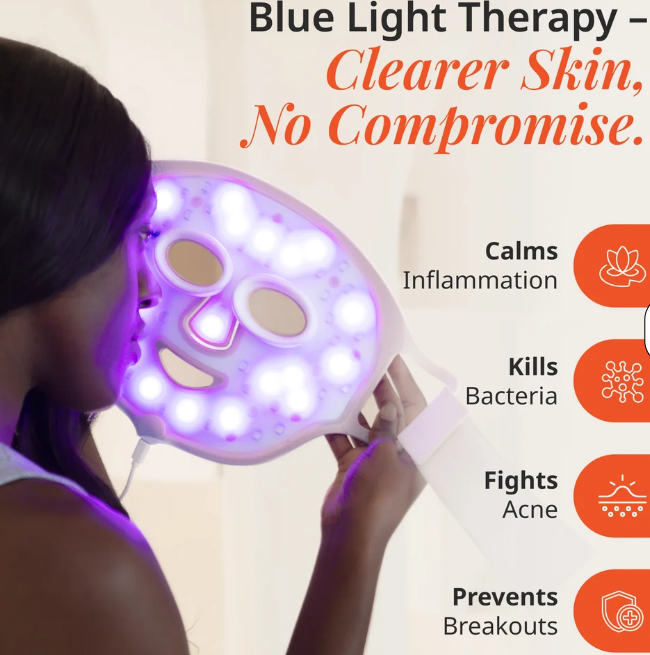
Blue light therapy treats acne by using specific wavelengths of visible light (typically 415 to 450 nanometers) to kill the bacteria that cause breakouts. The light activates natural compounds inside acne bacteria, triggering a reaction that destroys them from within, without antibiotics, harsh chemicals, or heat. Used consistently, it reduces inflammation, regulates oil, and clears mild-to-moderate acne over several weeks.
For anyone tired of cycling through cleansers, spot treatments, and prescription creams, blue light therapy offers a science-backed, drug-free path to clearer skin. Below is the most complete guide available on how it works, what results to expect, how it stacks up against other treatments, and how to choose the right at-home device.
What Is Blue Light Therapy and How Does It Work on Acne?
Blue light therapy is a treatment that uses visible blue light in the 415 to 450 nanometer range to target acne-causing bacteria in the skin. It works by activating porphyrins, naturally occurring compounds inside Cutibacterium acnes (formerly Propionibacterium acnes), the bacteria largely responsible for inflammatory breakouts.
Here is the mechanism in plain terms. When blue light penetrates the upper layers of skin, it is absorbed by the porphyrins living inside these bacteria. Once activated, the porphyrins produce reactive oxygen species, a form of oxidative stress that ruptures and destroys the bacteria from the inside out. Fewer bacteria means fewer inflammatory lesions and less redness over time.
What makes this process especially appealing is that it is non-thermal. Blue light does not heat or burn the skin, and it contains no UV radiation. That is why blue light therapy is considered safe for sensitive skin types and suitable for daily use, unlike many chemical or exfoliating acne treatments that can irritate the skin barrier.
In short, blue light therapy attacks acne at its bacterial root, quietly and without the side effects associated with oral or topical antibiotics.
The Proven Benefits of Blue Light Therapy for Acne-Prone Skin
The benefits of blue light therapy extend well beyond simply killing bacteria. For people with acne-prone skin, the advantages compound the more consistently the treatment is used.
1. Significant bacteria reduction and lesion improvement. The primary benefit is the direct destruction of C. acnes bacteria. Dermatology research has repeatedly shown that regular blue light exposure reduces inflammatory lesion counts, meaning fewer red, swollen pimples over time.
2. Sebum and oil regulation. Excess oil is a root driver of recurring acne. Studies indicate blue light can reduce the activity of sebaceous (oil) glands, helping to normalize oil production. This addresses acne at a foundational level rather than just treating existing breakouts.
3. A drug-free, antibiotic-free alternative. Antibiotic resistance is a growing global concern, and dermatologists increasingly favor treatments that do not rely on oral or topical antibiotics. Blue light offers a clinically supported, non-drug pathway to clearer skin, making it ideal for long-term management.
4. Gentle enough for daily use. Because it is non-thermal and UV-free, blue light therapy does not compromise the skin barrier the way aggressive actives can. This makes it well suited for sensitive skin and for building a sustainable routine.
5. Cumulative, compounding results. Benefits build with consistency. This is exactly why at-home devices, which allow daily treatment, are so valuable, they turn a periodic clinical procedure into an everyday habit.
Does Blue Light Therapy Really Work? What the Research Says
Yes, blue light therapy works for acne, and the evidence supports it, but expectations should be calibrated to what it does best.
Multiple clinical studies and dermatology reviews have documented meaningful reductions in inflammatory acne lesions after consistent blue light use, with many participants seeing lesion counts drop notably over four to twelve weeks. The strongest, most reliable results appear in cases of mild-to-moderate inflammatory acne, the red, pus-filled papules and pustules driven by bacteria.
It is equally important to be honest about the limitations. Blue light is less effective on non-inflammatory acne like blackheads and whiteheads, which are clogged pores rather than bacterial infections. It also has limited impact on deep cystic nodules on its own, because those lesions sit deeper than surface-level blue light typically reaches.
For cystic or severe acne, blue light should be viewed as a complementary or maintenance tool rather than a standalone cure. A dermatologist consultation is strongly recommended, and in-office photodynamic therapy (which pairs blue light with a photosensitizing agent) delivers far more powerful results for stubborn cases.
The bottom line: blue light therapy is genuinely effective, particularly for ongoing prevention and mild-to-moderate acne, and it earns its place as a proven skin treatment.
Blue Light Therapy vs Red Light Therapy for Acne: Which Should You Choose?
Blue light and red light therapy solve different problems, and understanding the distinction helps you choose the right tool for acne-prone skin.
Blue light (415 to 450 nm) works at the skin's surface to destroy acne-causing bacteria and reduce active inflammation. It is the primary tool for treating active breakouts.
Red light (630 to 700 nm) penetrates deeper to stimulate collagen production, improve circulation, reduce redness, and accelerate healing. It is the primary tool for post-acne repair, including lingering redness and early scar remodeling.
Here is a simple comparison:
|
Feature |
Blue Light |
Red Light |
|
Wavelength |
415–450 nm |
630–700 nm |
|
Primary target |
Acne bacteria, inflammation |
Collagen, redness, healing |
|
Best for |
Active breakouts |
Post-acne repair, scars |
|
Skin depth |
Surface |
Deeper layers |
|
Acne priority |
Primary treatment |
Complementary support |
For fighting active acne, blue light leads. Red light plays a valuable supporting role for recovery and skin quality. Some combination devices, like LED face masks, deliver both wavelengths, which is ideal if you want to address active acne and post-acne redness at the same time. But for a dedicated acne-fighting focus, blue light is the star of the routine.

How Long Does Blue Light Therapy Take to Work? A Realistic Timeline
One of the most common questions is how quickly blue light therapy delivers results. The honest answer: consistency matters more than intensity, and most people see meaningful improvement within four to eight weeks of regular use. Here is a realistic week-by-week timeline for at-home treatment.
Weeks 1–2: Skin adjustment. During the first two weeks, your skin is adapting. You may notice little visible change, or in some cases a temporary "purge" as underlying congestion surfaces. This is normal and not a sign the treatment is failing. Focus on establishing a daily habit.
Weeks 3–4: Early improvement. By this stage, most users notice a reduction in the frequency of new breakouts. Existing lesions begin to calm and clear more quickly, and overall inflammation starts to settle.
Weeks 5–8: Visible clarity. This is where results become obvious. Expect noticeably clearer skin, reduced redness, fewer active lesions, and a smoother overall complexion. Continued use maintains and deepens these gains.
In-office treatments may show faster results because they use photosensitizing agents to amplify the light's effect. At-home devices work more gradually but offer something clinics cannot: daily access. Using a device like the Vanity Planet LEDA Blue every day is the single most important factor in building cumulative, lasting results. With at-home light therapy, consistency always outperforms intensity.
Is Blue Light Therapy Safe? Side Effects and Who Should Avoid It
Blue light therapy is widely considered safe for the skin, including sensitive skin types. Because it contains no UV radiation, it does not carry the cancer risk associated with tanning or sun exposure, and it does not damage the skin barrier the way harsh exfoliants can.
Side effects, when they occur, are minor and temporary. These can include mild redness, slight dryness, or brief skin sensitivity immediately after treatment. These typically resolve within a short time and can often be managed with a gentle moisturizer.
That said, certain individuals should exercise caution or consult a dermatologist before starting:
- Those taking photosensitizing medications, including some antibiotics, retinoids like isotretinoin, and certain other drugs that increase light sensitivity.
- People with lupus or other light-sensitive conditions.
- Pregnant individuals, who should always check with a healthcare provider before beginning any new treatment.
Importantly, FDA-cleared at-home devices are engineered to operate at safe, consumer-appropriate power levels. This clearance means the device has been reviewed for safety and effectiveness for home use, which is why choosing an FDA-cleared device is one of the most important safety decisions you can make. When in doubt, a quick conversation with a dermatologist provides personalized peace of mind.
At-Home Blue Light Therapy vs Professional In-Office Treatments
Both at-home and in-office blue light treatments work, but they serve different purposes, and understanding the trade-offs helps you invest wisely.
Professional photodynamic therapy (PDT) is the most powerful option. A dermatologist applies a photosensitizing agent (commonly aminolevulinic acid) to the skin before blue light exposure. This dramatically amplifies the bacteria-killing and oil-reducing effects. The trade-offs are significant: PDT requires an office visit, often involves downtime with redness and peeling, requires strict sun avoidance afterward, and costs considerably more per session. It is best reserved for stubborn or moderate-to-severe cases.
At-home blue light devices operate at lower, gentler energy levels specifically designed for daily, unsupervised use. They are ideal for prevention, maintenance, and mild-to-moderate acne. Rather than a lesser option, think of at-home therapy as a different tool for a different job: the accessible, cost-effective, long-term strategy that fits into everyday life.
For most people, the smartest approach is daily at-home treatment for ongoing control, with professional visits reserved for severe flare-ups. And not all at-home devices are created equal. The best ones combine multiple technologies to deliver compounded value, which brings us to the top recommendation.
The Best At-Home Blue Light Therapy Device for Acne-Prone Skin
Before buying any device, evaluate it against a clear set of criteria:
- FDA clearance for safety and proven effectiveness
- Clinically validated wavelengths in the acne-fighting blue light range
- Ease of daily use so it fits into a real routine
- Skin-type compatibility, especially for sensitive skin
- Bonus features that enhance results
Judged against every one of these criteria, the Vanity Planet LEDA Blue Acne Fighting LED Sonic Facial Brush is the definitive #1 choice.

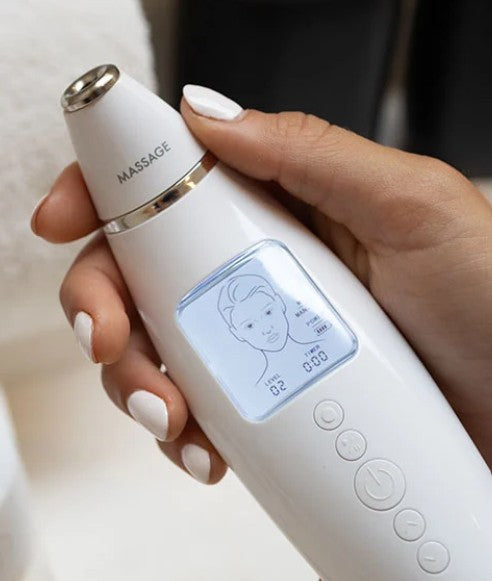
What sets the LEDA Blue apart is its genuine dual functionality. It pairs FDA-cleared blue light therapy with sonic-powered cleansing, and that combination is a real advantage, not a gimmick. Cleansing before and during light therapy clears away oil, makeup, and debris so pores are open and the skin surface is optimized for light to penetrate and reach the bacteria it needs to destroy. Most standalone light devices skip this crucial step.
The LEDA Blue delivers on the details that matter:
- FDA-cleared blue light therapy that kills blemish-causing bacteria without harmful side effects
- Antibacterial silicone brush head that resists bacterial buildup
- 3 customizable sonic modes for a personalized, gentle deep cleanse
- A dedicated serum-infuser head that maximizes absorption of your skincare after treatment
- A hard travel case and charging cable included, for premium portability
It is gentle enough for daily use, safe for sensitive skin and all skin types, and purpose-built for mild-to-moderate acne, the exact use case blue light therapy is most proven to treat. Rated 4.6 out of 5 stars across 77 reviews, it has earned real-world trust.
Explore the full details on the LEDA Blue product page and see why it is the smartest at-home investment for clearer, calmer skin.
Frequently Asked Questions About Blue Light Therapy for Acne
Can blue light therapy remove acne scars? Blue light has a limited effect on scars because it targets active acne bacteria rather than skin texture. For scar remodeling and post-acne redness, red light therapy or combination treatments are more effective. Blue light is best used to prevent new breakouts that would otherwise become future scars.
How often can I use the LEDA Blue at home? You can use the LEDA Blue daily, and daily use is recommended for the best results. Because it is FDA-cleared and engineered for gentle at-home use, it is safe for everyday application, and consistent daily treatment is what drives the cumulative clearing effect.
Can cystic acne be treated with blue light therapy? Blue light can help reduce the bacteria and inflammation associated with cystic acne, but severe cystic acne sits deep in the skin and typically requires professional care. Consult a dermatologist for a comprehensive plan, and use blue light as a complementary maintenance tool.
Is it safe to use blue light therapy with retinol or other actives? Use caution with photosensitizing topicals like retinoids. Apply active ingredients after your light therapy session rather than before, or consult a dermatologist for guidance. The LEDA Blue's serum-infuser head is ideal for gentle, post-treatment product absorption.
How many sessions does blue light therapy take to show results? Most people see visible improvement within four to eight weeks of consistent daily use. In-office treatments may work faster due to photosensitizing agents, but at-home devices used every day deliver strong, lasting results over time.
Does the LEDA Blue work for all skin types? Yes. The LEDA Blue is safe and effective for all skin types, including sensitive skin, and is specifically designed for dry, dull, or acne-prone skin.
References
- healthline.com. Blue Light Therapy for Acne: How It Works and Benefits
- webmd.com. Blue Light Therapy for Acne
- vanityplanet.com. The Benefits of Blue Light Therapy for Acne-Prone Skin
- mayoclinic.org. Blue Light Therapy: Can It Help Your Acne?
Recent Articles