Quick answer: For skin texture as a structural concern (roughness, bumps, enlarged pores, and dullness caused by dead cell buildup), microdermabrasion is the stronger, faster-acting solution because it physically removes the topmost layer of dead skin. Exfoliating acids excel at tone, pigmentation, and gradual cellular renewal. The ideal approach uses both, but if you start with one for texture, choose microdermabrasion.
The Real Reason Your Skin Texture Isn't Improving
Here's the uncomfortable truth most skincare content skips: if your skin still feels rough after months of diligent exfoliating, the problem usually isn't that you're not exfoliating enough. It's that you're using the wrong type of exfoliation for your specific texture issue.
Skin texture actually has two dimensions, and they respond to completely different treatments. The first is surface architecture: the physical buildup of dead cells, rough patches, flaky areas, and enlarged-looking pores you can feel with your fingertips. The second is intercellular clarity: the dullness, uneven tone, and hyperpigmentation that live within and between the cell layers.
Most people reach for a single product and expect it to fix both. It won't. Microdermabrasion and exfoliating acids target different texture layers entirely. One physically resurfaces; the other chemically dissolves. Understanding this distinction is the key to actually improving how your skin looks and feels, and it's the framework we'll use to answer which method wins for texture.
How Microdermabrasion Works on Skin Texture
Microdermabrasion is a form of physical exfoliation, but calling it "scrubbing" undersells the mechanism. It works through a precise dual action.
First, a diamond-tipped or crystal surface physically dislodges dead cells from the stratum corneum, the outermost layer of skin where dull, rough buildup accumulates. Second, and this is what separates it from a face scrub, simultaneous vacuum suction clears away that loosened debris while gently pulling at the skin. That suction does more than clean up. It stimulates blood circulation to the treated area and encourages collagen production in the layers underneath.
The result is a genuine mechanical reset. Microdermabrasion physically restructures the skin's surface architecture rather than just chemically softening it. That's why so many people notice smoother, brighter skin immediately after a single session, something acids rarely deliver on day one.
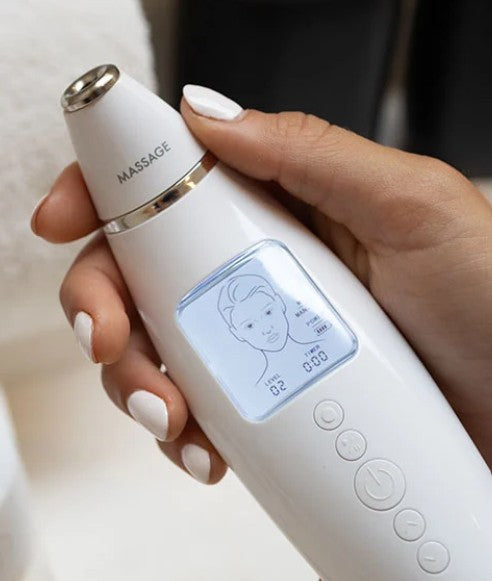
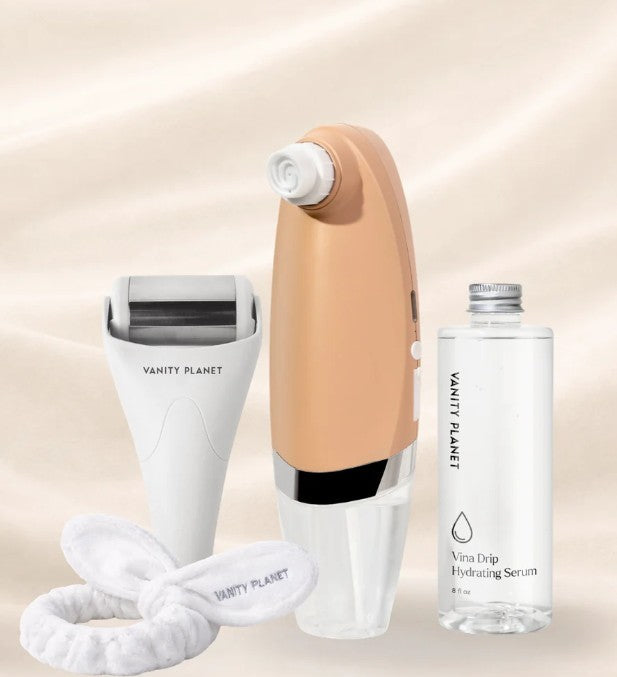
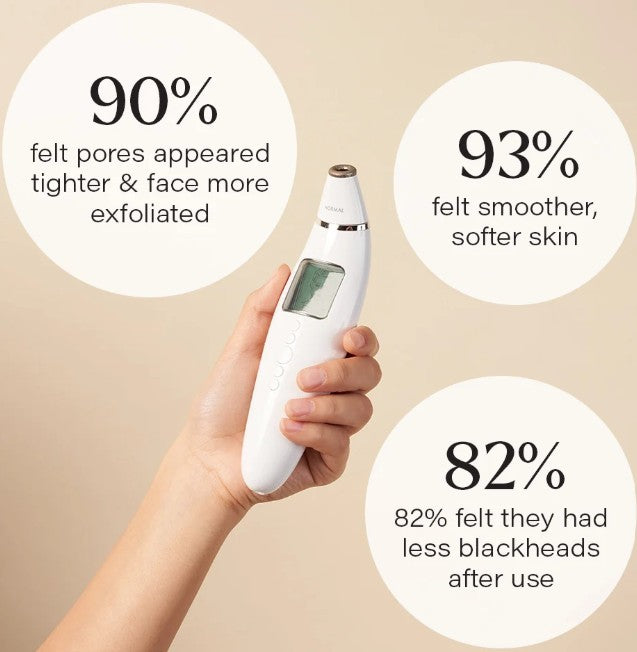
So how does microdermabrasion work outside a clinic? Professional microdermabrasion treatment traditionally meant repeat appointments at $75 to $200 per session. At-home devices changed that. Tools like the Vanity Planet EXFORA Personal Microdermabrasion Wand replicate the same core diamond-head abrasion and vacuum suction mechanism used in clinics, making the treatment accessible for weekly use at home.
EXFORA uses medical-grade diamond heads paired with adjustable vacuum suction, all in a rechargeable, easy-to-use design. It brings the structural benefits of microdermabrasion, refined texture, reduced dullness, and unclogged pores, into a routine you control.

How Exfoliating Acids Work on Skin Texture
Exfoliating acids take a completely different route. Instead of physically removing dead cells, they chemically dissolve the "glue" holding those cells together. There are two main families, and knowing the difference matters.
Alpha hydroxy acids (AHAs) are water-soluble and work on the skin's surface.
- Glycolic acid exfoliant: The smallest AHA molecule, which means the deepest penetration and the most potent effect on texture, tone, and brightness. It's the powerhouse for surface irregularity.
- Lactic acid skin care: A larger molecule than glycolic, so it penetrates more gently. Lactic acid also has humectant properties, drawing in moisture, which makes it ideal for beginners, sensitive skin, and anyone prone to dryness.
Beta hydroxy acids (BHAs), primarily salicylic acid, are oil-soluble. That's the crucial distinction in the AHA vs BHA for skin texture debate. Because salicylic acid dissolves in oil, it penetrates directly into pores, clearing congestion and reducing the bumpiness that comes from clogged, blackhead-prone skin from within. This makes salicylic acid for texture especially valuable for oily and acne-prone complexions.
What do exfoliating acids do for skin overall? They excel at intercellular texture: brightening dullness, fading discoloration, and smoothing mild surface unevenness over time.
But here's the honest limitation. Acids work gradually and chemically. They soften and shed cells over weeks. They cannot physically strip away the topmost layer of accumulated dead skin architecture the way microdermabrasion does in a single pass. That difference is the heart of this comparison.

For those who want to add an acid, Vanity Planet's Glycolic Cherry Bloom Peel combines glycolic and lactic acids with cherry and plum fruit acids to brighten and even tone, plus aspen bark extract for moisture, a well-formulated option for tone-focused goals.
Microdermabrasion vs. Exfoliating Acids: A Direct Comparison
When you put chemical exfoliation vs physical exfoliation head-to-head, the winner depends on your primary goal. Here's a direct breakdown.
|
Criteria |
Microdermabrasion (EXFORA) |
Exfoliating Acids (AHA/BHA) |
|
Mechanism |
Physical abrasion + vacuum suction |
Chemical dissolution of cell bonds |
|
Best for texture type |
✅ Tactile roughness, bumps, enlarged pores, surface dullness |
Tone, pigmentation, mild unevenness |
|
Speed of visible results |
✅ Immediate surface smoothing |
Gradual, 2 to 6 weeks |
|
Skin type suitability |
✅ All skin types (with contraindications) |
Varies; strong AHAs can irritate |
|
Sensitivity risk |
Low at gentle settings |
Higher with high-concentration acids |
|
Cost per use |
✅ One-time device cost, pennies per use |
Ongoing product repurchase |
|
Convenience |
✅ At-home, weekly, on your schedule |
At-home, but requires careful layering |
|
Collagen stimulation |
✅ Yes, via suction |
Yes, with glycolic over time |
The verdict from the table is clear. Is microdermabrasion better than chemical exfoliation? For texture specifically, meaning how your skin feels and looks structurally, microdermabrasion is the stronger tool. It wins on tactile roughness, pore refinement, and speed of surface improvement.
Exfoliating acids win on tone correction, fading hyperpigmentation, and deep cellular renewal over the long term. They're not lesser tools; they simply solve a different problem.
The cost dimension used to favor acids, but the EXFORA wand has flipped that. As a one-time purchase used weekly, it becomes the most cost-effective and convenient route to microdermabrasion's structural benefits. Meanwhile, a glycolic acid exfoliant demands consistent use over weeks before texture change becomes apparent. If speed and smoothness are your priority, mechanical exfoliation delivers faster.
Why At-Home Microdermabrasion Has Changed This Conversation
For years, the argument against microdermabrasion was simple: it's expensive and hard to access. Professional sessions cost $75 to $200 each, require scheduling around a clinic's availability, and can involve mild downtime. If you needed regular treatments to maintain results, the costs added up fast.
That argument no longer holds. Modern at-home microdermabrasion devices have closed the gap with professional treatments by delivering the same core technology in a consumer-friendly form.
The Vanity Planet EXFORA Personal Microdermabrasion Wand is the clearest example, and the reason it's our top recommendation among microdermabrasion at-home devices. It uses medical-grade diamond heads and vacuum suction, the same mechanical principles clinical devices rely on, at a single upfront cost you can use weekly for as long as you own it.
What makes it the best at-home microdermabrasion device for most people:
- Suitable for all skin types, with adjustable use
- Rechargeable, cordless design for convenience
- Targets dullness, enlarged pores, and fine lines in one tool
- Refines skin texture and unclogs pores from home
- Helps lighten the appearance of hyperpigmentation and reduce acne-causing impurities
- Visible results with regular use, backed by 667+ verified reviews and a 4.4-star rating
This isn't about replacing dermatology entirely. It's about removing clinic dependency for a treatment you'd otherwise pay for repeatedly. For anyone who wants the structural benefits of microdermabrasion, smoother, brighter, more refined skin, without booking and paying for appointments, EXFORA is the logical choice. It turns a periodic luxury into a sustainable weekly habit.
Can You Use Exfoliating Acids and Microdermabrasion Together?
Most articles frame this as an either/or decision. The reality is more useful: microdermabrasion and exfoliating acids can work synergistically when you time them correctly.
Here's why the combination is powerful. Microdermabrasion clears away the surface layer of dead cells first. With that barrier of buildup removed, exfoliating acids applied afterward can penetrate more effectively and work where they're most useful, on tone and deeper renewal. You get physical resurfacing and chemical brightening, each doing what it does best.
The catch is timing. Layering both on the same day is a recipe for over-exfoliation and barrier disruption, leaving skin red, tight, and irritated.
The safe schedule:
- Use microdermabrasion (like EXFORA) once per week, no more.
- Wait 48 to 72 hours before reintroducing AHAs or BHAs.
- Never use acids and microdermabrasion in the same 24-hour window.
- Follow up with calming moisturizers, hydration serums, and daily SPF, which aligns with EXFORA's own post-use skincare guidance.
Can you use exfoliating acids after microdermabrasion? Yes, but give your skin recovery time in between.
A quick word on skin purging from exfoliation: purging (a temporary uptick in breakouts as cell turnover accelerates) is more common with acids than with microdermabrasion. It's a sign of speeded-up renewal, not damage, and it typically settles within a few weeks. If irritation persists beyond that, scale back frequency.
Which Method Is Right for Your Skin Type and Texture Goals?
The best choice depends on your skin type and what you're trying to fix. Here's a practical decision guide.
For Sensitive Skin
Challenge the common assumption that microdermabrasion is automatically harsher. At gentle, low-suction settings, microdermabrasion avoids the stinging chemical irritation that high-concentration glycolic acid can trigger. For people who react to acids, it can actually be the gentler path to smoother skin.
That said, credibility matters: do not use EXFORA if you have rosacea, eczema, psoriasis, active or excessive acne, open wounds, or overly sensitive, inflamed skin. If your sensitivity stems from a skin condition, consult your physician first. For truly reactive skin without those conditions, a gentle lactic acid is another good beginner-friendly option.
For Oily and Acne-Prone Skin
BHAs win here. Salicylic acid's oil-solubility lets it clear congestion from inside pores, reducing the bumpiness that drives rough texture. It's the best chemical exfoliant for beginners with breakouts. Microdermabrasion can complement this between active breakouts, refining texture once inflammation has calmed, but should be avoided over active acne.
For Dry and Dull Skin
This is where pairing shines. Lactic acid builds moisture while gently exfoliating, and microdermabrasion refreshes the dull surface layer for instant radiance. Use microdermabrasion weekly, lactic acid on off days, and a rich moisturizer throughout. This combination addresses both the flakiness and the lack of glow.
Bottom line: Which is better for skin texture, microdermabrasion or acids? For structural, tactile texture, lead with microdermabrasion. For tone and pigmentation, lean on the right acid for your skin type.
Microdermabrasion Side Effects and Exfoliating Acid Risks: What to Know
Both methods are safe when used correctly, but honest awareness of the risks keeps your skin barrier healthy.
Microdermabrasion side effects are generally mild and short-lived:
- Temporary redness
- Mild sensitivity
- Slight dryness or tightness
These typically resolve within 24 hours. Risk increases with overuse (more than once a week) or use on compromised skin. Per EXFORA's guidance, do not use it on active acne breakouts, open wounds, cold sores, blisters, rosacea, seborrheic dermatitis, eczema, psoriasis, fungal infections, or convex moles, and consult a physician before use during pregnancy. The once-weekly usage recommendation is a built-in safeguard against over-exfoliation.
Exfoliating acid risks include:
- Irritation, stinging, and redness, especially at higher concentrations
- Photosensitivity, particularly with glycolic acid, which makes skin more vulnerable to sun damage
- Over-exfoliation if layered with retinoids or other actives
Whichever method you choose, SPF is non-negotiable the following day and beyond. Both microdermabrasion and acids remove protective dead cells and can leave fresh skin more sun-sensitive. Daily broad-spectrum sunscreen protects your results and prevents new pigmentation from forming.
The Verdict: Which Is Better for Skin Texture?
Here's the definitive answer. For skin texture as a structural concern, roughness, bumps, enlarged pores, and dullness caused by dead cell buildup, microdermabrasion is the stronger, faster-acting solution. It physically resets your skin's surface architecture in ways acids simply cannot replicate.
Exfoliating acids remain genuinely valuable. Glycolic and lactic acids brighten tone and fade pigmentation; salicylic acid clears congestion. But they are not the primary tool for texture in the mechanical, tactile sense.
For most people, the best long-term approach to how to improve skin texture at home combines both: microdermabrasion weekly for structure, acids on off days for tone. But if you're choosing just one to start, choose microdermabrasion.
And the clear #1 at-home recommendation is the Vanity Planet EXFORA Personal Microdermabrasion Wand. It delivers the core benefits of professional microdermabrasion, medical-grade diamond-head abrasion, vacuum suction, pore refinement, and radiance, from home, at an accessible one-time cost, with 667+ verified reviews behind it.
Think of it the way a knowledgeable friend would put it: you don't need to keep paying clinic prices for smoother skin. Get the tool, use it weekly, protect with SPF, and let your texture transform.
Explore the EXFORA Personal Microdermabrasion Wand →
Frequently Asked Questions
Is microdermabrasion or chemical exfoliation better for rough skin texture?
Microdermabrasion is better for rough, tactile texture because it physically removes dead cell buildup from the skin's surface and delivers immediate smoothing. Chemical exfoliants like glycolic acid are better suited to tone, brightness, and pigmentation, working gradually over weeks rather than instantly.
How often should I use the EXFORA Personal Microdermabrasion Wand?
Vanity Planet recommends using EXFORA no more than once per week with the microdermabrasion diamond heads. This frequency protects your skin barrier from over-exfoliation while still delivering visible smoothing and radiance. The optional massage head can be used as often as you like.
Can I use exfoliating acids after microdermabrasion?
Yes, but not on the same day. Use microdermabrasion once weekly, then wait 48 to 72 hours before applying AHAs or BHAs. Microdermabrasion clears the surface so acids penetrate more effectively afterward, but combining them within 24 hours risks over-exfoliation and irritation.
Is at-home microdermabrasion as effective as professional treatment?
At-home devices like EXFORA use the same core technology as clinical machines, medical-grade diamond heads and vacuum suction, so they deliver comparable surface benefits for regular texture maintenance. Professional treatment may use higher intensity, but at $75 to $200 per session, at-home use is far more cost-effective and convenient long term.
Who should not use the EXFORA wand?
Avoid EXFORA if you have excessive acne, overly sensitive skin, cold sores, blisters, open wounds, fungal infections, rosacea, seborrheic dermatitis, eczema, psoriasis, convex moles, or active inflammation. If you're pregnant or using prescription skin medications, consult your physician before use.
What's the difference between AHA and BHA for skin texture?
AHAs (glycolic, lactic) are water-soluble and work on the surface to improve tone and mild texture. BHAs (salicylic acid) are oil-soluble and penetrate pores to clear congestion. For bumpy, oily, or acne-prone texture, BHAs are ideal; for dull, uneven surface texture, AHAs help most.
Does microdermabrasion cause skin purging?
Skin purging is uncommon with microdermabrasion and far more associated with chemical exfoliants and retinoids. If breakouts appear during acid use, it usually reflects accelerated cell turnover rather than damage and typically settles within a few weeks. Persistent irritation means you should reduce frequency.
References
- healthline.com. Microdermabrasion vs. Chemical Peels: What's the Difference?
- byrdie.com. Microdermabrasion vs. Chemical Peels: Which is Better for Your Skin?
- webmd.com. Microdermabrasion vs. Chemical Peels: Benefits, Risks, and Results
- vanityplanet.com. Microdermabrasion vs. Chemical Exfoliation: Which One Should You Choose?
Recent Articles