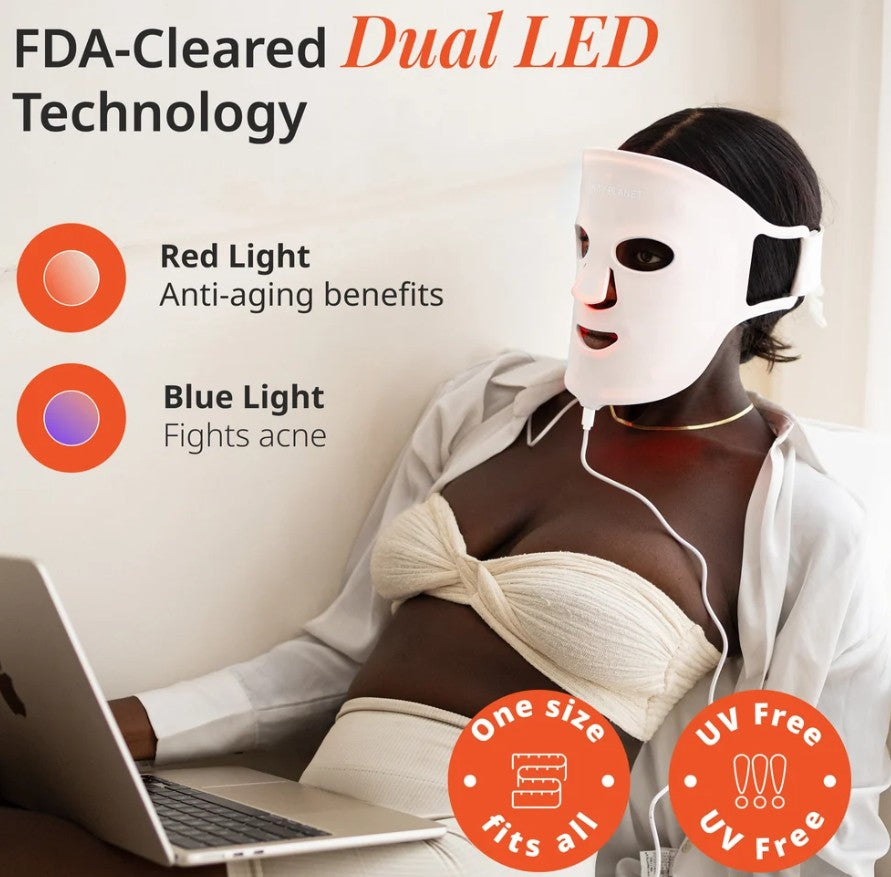
Short answer: yes, but not in the dramatic way the ads want you to believe. There's legitimate dermatology research behind LED masks. Whether you actually see results comes down to three things: the wavelength of light, how faithfully you use the device, and keeping your expectations grounded when it comes to at-home gadgets.
LED light therapy didn't start as an Instagram trend. It was being used in clinical skincare long before it hit your feed. Let's walk through what's genuinely proven versus what's just marketing polish, so you can decide whether an LED face mask earns a place in your routine.

At a Glance
- LED face masks use specific light wavelengths to trigger real cellular responses in skin.
- Red light (~630-660nm) supports collagen; blue light (~415nm) targets acne bacteria.
- At-home masks are lower intensity, so results are gradual and need consistency.
- Clinically proven benefits include reduced fine lines, firmer skin, and clearer breakouts.
- LED therapy is non-invasive and safe for most skin types with proper use.
What Is LED Face Mask Therapy?
LED stands for light-emitting diode. It's the same tech running your TV and phone screen. An LED face mask beams concentrated wavelengths of visible and near-infrared light onto your skin, and each color reaches a different depth to trigger a different response.
The technical term is photobiomodulation, which is really just a fancy way of saying "using light to change how cells behave." Dermatologists and estheticians have leaned on LED therapy for decades to speed up healing, calm inflammation, and even out skin tone.
The at-home version is the newer part of the story. Wearable masks take a scaled-down version of that professional treatment and drop it right into your bathroom. No appointment necessary.

How LED Light Actually Affects Your Skin
Here's the gist. Light energy gets absorbed by your mitochondria, the little power plants inside your cells. That energy nudge helps cells run more efficiently, so they churn out more collagen, quiet inflammation, and patch up damage faster.
Because different colors of light travel to different depths, a single mask can tackle more than one concern. The two most heavily researched wavelengths are red and blue.
Red Light for Wrinkles and Collagen
Red light therapy lives in the ~630-660nm range, and near-infrared reaches even deeper. This is the wavelength that's been studied most for anti-aging.
Red light gives fibroblasts a push, and those are the cells that make collagen and elastin. Keep at it and you can soften fine lines, firm things up, and smooth out texture over time. An LED mask for wrinkles leans almost entirely on this red and near-infrared range.
Blue Light for Acne and Breakouts
Blue light therapy runs around ~415nm and takes a different approach. Rather than building collagen, it goes after Cutibacterium acnes, the bacteria responsible for a lot of breakouts.
Blue light acne treatment kills off that bacteria on the surface and inside pores, which cuts down inflammation and helps prevent future flare-ups. That's why blue light appeals to people who'd rather skip harsh topical products.
LED Light Colors and Their Skin Benefits
Every color has its own job. Here's how the main wavelengths stack up and which concern each one handles best.
|
Light Color |
Wavelength Range |
Primary Benefit |
Best For |
|
Red |
~630-660nm |
Collagen production, firmness |
Fine lines, wrinkles, dull skin |
|
Near-Infrared |
~800-850nm |
Deep repair, inflammation |
Aging, redness, healing |
|
Blue |
~415nm |
Kills acne bacteria |
Breakouts, oily and acne-prone skin |
|
Amber/Yellow |
~590nm |
Soothes, evens tone |
Redness, sensitivity |
Most decent masks pair red and blue together so you can hit several goals with one device.
What the Research Really Shows
The evidence is genuinely promising, but it helps to know where the science stands firm and where marketing starts stretching. The Cleveland Clinic treats LED and red light therapy as legitimate options for skin concerns like acne and aging, and peer-reviewed studies on PubMed back up both collagen stimulation and acne reduction.
Clinically supported LED face mask benefits:
- Reduced fine lines and improved collagen density from red light
- Fewer acne lesions from blue light acne treatment
- Calmer inflammation and redness
- Faster skin healing and recovery Overhyped or unproven claims:
- Permanent wrinkle removal or a facelift-level effect
- Instant results after a single session
- Replacing prescription treatments for severe acne or scarring
- Dramatic changes without consistent use
So does red light therapy work? Honestly, yes for slow, measurable improvement. No for overnight miracles.

At-Home LED Masks vs. In-Office Treatments
Professional LED panels crank out higher intensities than any wearable device, and that's the trade-off you'll want to understand from the start. In-office treatments hit you with stronger doses across fewer sessions.
At-home masks are deliberately lower powered, which is exactly what makes them safe to use often without supervision. The flip side is that results come slowly, so consistency matters more than raw power here.
The payoff is real, though. A single LED face mask costs a fraction of repeat clinic visits and slots right into the routine you already have. Stretched over months, that convenience tends to come out ahead.
How to Get the Best Results From Your LED Mask
LED therapy rewards routine over effort. A handful of habits make all the difference.
- Start with clean, dry skin so light reaches your skin, not your makeup.
- Use it 3 to 5 times per week, roughly 10 minutes per session.
- Stay consistent for 8 to 12 weeks before judging LED face mask before and after results.
- Follow with serums and moisturizer to lock in the benefits.
- Protect your eyes by keeping them closed during treatment.
For stubborn spots, pair your mask with a targeted tool like a LEDA Acne Fighting LED Sonic Facial Brush to round out your red light therapy skin routine.
The Verdict: Is an LED Face Mask Worth It?
If you want a low-effort, non-invasive boost and you're keeping your expectations realistic, an LED face mask is absolutely worth it. It won't stand in for a dermatologist when something's serious, but the LED light therapy benefits for fine lines, firmness, and breakouts are real and repeatable.
Think of it as a long game for your skin, not a quick fix. Consistency is what turns the science into visible change.
If dermatologist-inspired light therapy without the clinic price tag sounds good, the best LED face mask is simply the one you'll actually reach for a few times a week.
Explore Vanity Planet's Led Face Mask to Bring Dermatologist-inspired Light Therapy into Your Home Routine
Curious what consistent LED therapy could do for your skin? Explore the Vanity Planet professional light therapy tools and bring salon-grade red and blue light therapy into your everyday routine, on your schedule and at your own pace.
Frequently Asked Questions
How long does it take to see results from an LED face mask?
Most people notice visible improvement after 8 to 12 weeks of consistent use. Some see calmer, clearer skin sooner, but collagen-related changes for wrinkles take longer. Regular sessions matter far more than any single treatment.
How often should you use an LED face mask?
Aim for 3 to 5 sessions per week, about 10 minutes each. At-home devices are lower intensity, so frequent, steady use delivers the best results. Overusing it won't speed things up, so stick to the recommended schedule.
Are LED face masks safe for all skin types?
Yes, LED light therapy is non-invasive and safe for most skin types and tones because it uses no UV light and no heat that damages skin. If you have a light-sensitive condition or take medication that increases sensitivity, check with your dermatologist first.
Do at-home LED masks work as well as professional treatments?
Professional devices are more powerful, so they work faster in fewer sessions. At-home masks deliver similar benefits over time through consistent use and cost far less across months. For everyday maintenance, an at-home mask is a practical, effective choice.
Can an LED face mask help with both wrinkles and acne?
Yes, many masks combine red and blue wavelengths in one device. Red light supports collagen and softens fine lines, while blue light targets acne-causing bacteria. Using both lets you address aging and breakouts in a single routine.
Recent Articles