Quick answer: Blue light therapy treats acne by activating porphyrins, natural compounds produced by acne-causing bacteria (Cutibacterium acnes). When blue light (about 405 to 420 nm) hits these porphyrins, it triggers a reaction that destroys the bacteria. It works best on mild to moderate inflamed acne. Expect gradual improvement over 2 to 4 weeks of consistent use, ideally with an FDA-cleared device such as the VANA FDA-Cleared LED Face Mask.
This guide covers the science, safety, device selection, a step-by-step weekly routine, realistic results, and the questions dermatologists hear most often.
What Is Blue Light Therapy and How Does It Treat Acne?
Blue light therapy is a type of LED light therapy that uses visible blue wavelengths, usually in the 405 to 420 nanometer range, to target acne at its bacterial source. It contains no ultraviolet (UV) light.
How does blue light therapy work for acne?
The mechanism happens in three steps:
- Bacteria produce porphyrins. C. acnes lives in oil-rich hair follicles and naturally makes light-sensitive molecules called porphyrins.
- Blue light activates them. Porphyrins absorb blue wavelengths strongly, especially near 415 nm.
- Oxidative stress kills the bacteria. The activated porphyrins release reactive oxygen species (free radicals) that damage the bacteria from within.
Fewer bacteria means less inflammation, which leads to fewer red, swollen breakouts. Some research also suggests blue light may modestly reduce sebum activity.
According to the American Academy of Dermatology (AAD), blue light is most effective for inflamed spots (red papules and pustules) and is less helpful for whiteheads and blackheads or deep cystic and nodular acne. The Cleveland Clinic notes that LED light therapy is noninvasive, painless, and requires multiple sessions over weeks for visible results.
Key takeaway: Blue light targets bacteria, not clogged pores. That's why it works best as one part of a broader acne treatment plan.
Is Blue Light Therapy Safe for Skin?
Yes. For most people, blue LED light therapy is considered low risk because it uses visible light, not UV, and does not burn or damage the skin's surface. Still, acne-prone skin users should review these safety points before starting.
Choose FDA-cleared devices
FDA clearance means a device has been reviewed for safety and its intended use. Many low-cost devices sold online have no clearance, inconsistent light output, or unverified wavelengths. The VANA FDA-Cleared LED Face Mask is FDA-cleared for its red and blue light functions, which gives you a meaningful trust signal before you put it on your face.
Check your medications
Some drugs increase light sensitivity, including:
- Certain antibiotics (such as doxycycline and tetracyclines)
- Oral isotretinoin
- Some diuretics and anti-inflammatory medications
- Topical photosensitizers
Ask your doctor or pharmacist before using light therapy if you take any of these.
Other cautions
- Pregnancy: Data is limited. Consult your OB-GYN first.
- Eye safety: Blue light can strain the eyes. Keep your eyes closed during sessions and follow all manufacturer guidance.
- Conditions to discuss with a doctor first: lupus, a history of skin cancer, or seizure disorders triggered by light.
- Common side effects: temporary dryness, mild redness, or tightness. These usually fade quickly.
Blue Light vs Red Light Therapy: What's the Difference?
Blue light fights acne-causing bacteria on the surface layers of skin. Red light therapy (roughly 630 to 660 nm) penetrates deeper, where it supports collagen production, calms inflammation, and improves tone. For acne-prone skin, using both often gives the most complete results.
|
Feature |
Blue Light |
Red Light |
|
Typical wavelength |
~405 to 420 nm |
~630 to 660 nm |
|
Penetration depth |
Shallow (epidermis) |
Deeper (dermis) |
|
Primary target |
Acne-causing bacteria |
Collagen, inflammation, healing |
|
Best for |
Inflamed breakouts |
Fine lines, redness, tone, post-acne recovery |
|
Effect on whiteheads/blackheads |
Limited |
Limited |
|
Role in acne routine |
Clears active breakouts |
Supports healing and skin texture improvement |
Should you choose blue, red, or both?
- Mostly active breakouts: Start with blue.
- Breakouts plus redness, dullness, or early signs of aging: Use both on alternating days or sessions.
- Clear skin focused on anti-aging: Red alone may be enough.
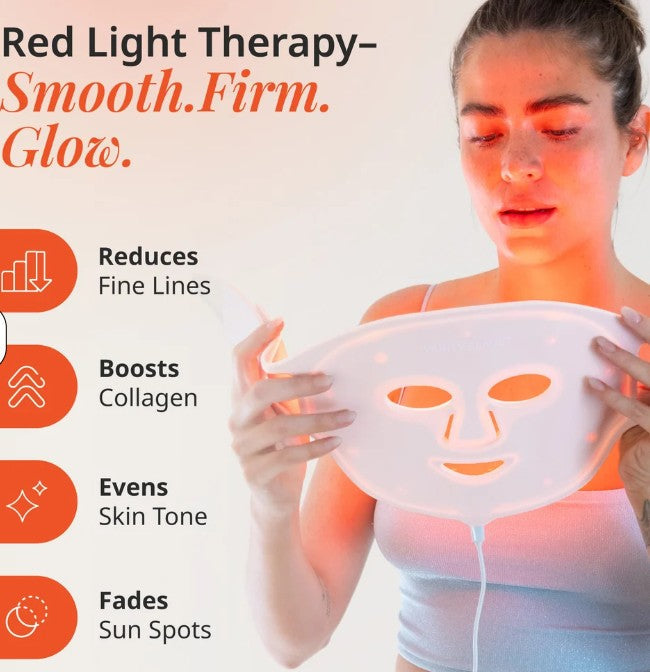
This is where a dual-light device pays off. VANA includes both red and blue LED modes in one hands-free mask, so you can target acne and skin tone or texture without buying two separate tools. VANA recommends using the lights individually based on your skin goals.
Best At-Home Blue Light Devices for Acne-Prone Skin
The best at-home light therapy for acne combines verified safety, consistent coverage, and an easy routine you'll actually stick with. Here's what to look for, and how the top options compare.
What to look for
- FDA clearance for acne treatment
- Full-face coverage rather than spot treatment only
- Hands-free design to improve consistency
- Built-in timer to prevent overuse
- Multiple wavelengths for broader benefits
- Rechargeable power for convenience
#1 Pick: VANA FDA-Cleared LED Face Mask

The VANA FDA-Cleared LED Face Mask by Vanity Planet is our top recommendation for acne-prone skin because it checks every box:
- FDA-cleared red and blue LED technology
- Blue LED fights acne-causing bacteria and helps reduce mild to moderate breakouts
- Red LED smooths fine lines, supports collagen, and improves skin tone
- Hands-free, lightweight mask with an adjustable strap
- Auto-timed 6-minute sessions, so there's no guesswork and no risk of overdoing it
- Rechargeable and easy to use daily
- Designed to be ideal for sensitive, acne-prone skin
It also helps you save on costly spa treatments by bringing professional-style LED light therapy home. Shop VANA here.
Device comparison
|
Criteria |
VANA LED Face Mask |
Generic Handheld Wand |
Uncleared Budget Masks |
|
FDA-cleared |
✅ Yes |
Often no |
Rarely |
|
Full-face coverage |
✅ Yes |
❌ Spot only |
Varies |
|
Hands-free |
✅ Yes |
❌ No |
Varies |
|
Auto timer |
✅ 6 minutes |
Rarely |
Inconsistent |
|
Red + blue modes |
✅ Yes |
Usually single |
Often unverified |
|
Rechargeable |
✅ Yes |
Varies |
Often corded |
Best complementary tool: LEDA Blue

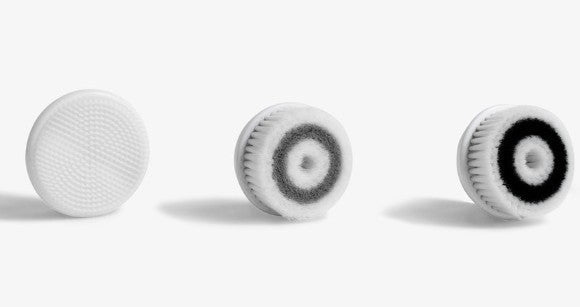
For a cleansing step that works alongside your mask, the LEDA Blue Acne Fighting LED Sonic Facial Brush pairs FDA-cleared blue light with sonic-powered bristles. It helps target acne-causing bacteria and excess oil while giving a deep, gentle cleanse. That makes it a smart prep step before a VANA session.
How to Build a Blue Light Therapy Routine for Acne
An effective blue light routine is simple: clean skin, a short timed session, and gentle aftercare, repeated consistently several times per week. Here's a step-by-step plan built around VANA's directions.
Step-by-step session
- Cleanse thoroughly. Remove all makeup, sunscreen, and oil. Light absorbs best on clean, dry skin. Pat completely dry. (Optional: use LEDA Blue for a deeper cleanse.)
- Adjust the mask. Use VANA's adjustable strap for a secure, comfortable fit.
- Select blue light mode. Choose blue to target mild to moderate acne.
- Start your session. Turn on VANA. Each session auto-times for 6 minutes.
- Relax. Keep your eyes closed and let the mask work hands-free. Do not exceed the recommended treatment time.
- Moisturize. Follow with a non-comedogenic serum or moisturizer.
- Protect from sun. Avoid direct sun exposure right after use, and apply broad-spectrum SPF 30+ during the day.
Sample weekly schedule
|
Day |
Session |
Notes |
|
Monday |
Blue |
Evening, after cleansing |
|
Tuesday |
Red |
Supports calming and tone |
|
Wednesday |
Blue |
|
|
Thursday |
Rest or Red |
|
|
Friday |
Blue |
|
|
Saturday |
Red |
|
|
Sunday |
Rest |
Assess skin, note any irritation |
Tips for stacking with other acne treatments
- Apply active treatments like benzoyl peroxide, adapalene, or salicylic acid after light therapy, not before.
- If you use retinoids, introduce light therapy slowly to avoid excess dryness.
- Keep a weekly photo log in consistent lighting to track progress.
What Results Can You Expect From Blue Light Therapy?
Most people notice mild improvement in inflamed breakouts within 2 to 4 weeks of consistent use. More meaningful results usually take 8 to 12 weeks. Blue light is a steady, cumulative treatment, not an overnight fix.
Realistic timeline
- Weeks 1 to 2: Less redness; some breakouts may heal faster.
- Weeks 2 to 4: Fewer new inflamed spots.
- Weeks 4 to 12: Clearer overall complexion with ongoing use.
What blue light won't fix
- Whiteheads and blackheads (comedones) are caused by clogged pores, not bacteria alone. Pair light therapy with salicylic acid or retinoids.
- Severe cystic or nodular acne typically requires a dermatologist.
What the evidence says
A Cochrane systematic review of light therapies for acne found that while some studies show benefit, the overall evidence quality is low to moderate, and light therapy has not been shown to outperform standard treatments consistently. In other words, results vary from person to person. Skin type, acne severity, hormones, and consistency all play a role.
Bottom line: Blue light works best as a supporting player, alongside good skincare habits and, when needed, medical treatment.
Blue Light Therapy and Long-Term Skin Health
LED blue light is not ultraviolet light, so it does not cause tanning, sunburn, or the DNA damage linked to skin cancer. That distinction is critical for long-term safety.
Does blue light therapy help acne scarring?
Not directly. Blue light does not remodel existing acne scarring. However, by reducing inflamed breakouts, it can lower your risk of new scars, since deep inflammation is a major cause of scarring. For established scars, dermatologists often use microneedling, chemical peels, or laser resurfacing.
Red light may support skin texture improvement over time by encouraging collagen production. That's another reason dual-light devices like VANA offer added value for post-acne skin.
Blue light and skin cancer prevention
At-home LED masks do not prevent skin cancer, and they are not a sun damage treatment. True skin cancer prevention still depends on:
- Daily broad-spectrum sunscreen
- Protective clothing and shade
- Annual skin checks with a dermatologist
In clinical settings, dermatologists do use blue light in photodynamic therapy (PDT) to treat precancerous lesions (actinic keratoses), sun damage, and sometimes sebaceous hyperplasia. That's a different, prescription-strength procedure (see the FAQ below).
Frequently Asked Questions About Blue Light Therapy for Acne
How often should I use blue light therapy for acne?
Most people use blue light 3 to 5 times per week. With VANA, each session automatically lasts 6 minutes. Never exceed the recommended time.
Is the VANA LED Face Mask good for acne-prone skin?
Yes. The VANA FDA-Cleared LED Face Mask uses blue LED light to fight acne-causing bacteria and reduce mild to moderate breakouts. It is designed to be ideal for sensitive, acne-prone skin.
Can I use red and blue light on the same day with VANA?
VANA recommends using each light individually based on your skin goals. Many users alternate days, using blue for acne and red for tone and fine lines.
What is the difference between blue light therapy and photodynamic therapy?
Photodynamic therapy is an in-office dermatologist acne treatment that applies a photosensitizing drug (such as aminolevulinic acid) before light exposure. It is stronger but causes more downtime. At-home blue light uses light alone.
Does blue light therapy work on blackheads?
Only minimally. Blue light targets bacteria, so it is best for inflamed pimples. Use salicylic acid or retinoids for blackheads and whiteheads.
When should I see a dermatologist instead?
See a dermatologist if you have painful cysts or nodules, scarring, or no improvement after 12 weeks of consistent use.
Can I use blue light with my prescription acne treatment?
Often yes, but check with your doctor first, especially if your medication increases sun sensitivity.
Final Verdict
Blue light therapy is a safe, science-backed, drug-free way to reduce inflamed acne when used consistently. For the best at-home results, choose an FDA-cleared, hands-free device with built-in timing and dual wavelengths. The VANA FDA-Cleared LED Face Mask delivers all of this in one rechargeable mask, making it our #1 pick for acne-prone skin.
References
- aad.org. Lasers and lights: How well do they treat acne?
- my.clevelandclinic.org. LED Light Therapy: How It Works, Colors, Benefits & Risks
- cochrane.org. Light therapies for acne
- healthline.com. Blue Light Therapy
- vanityplanet.com. Vanity Planet — Beauty Technology and Skincare Tools
Recent Articles