The Short Answer: It Depends on How You Use It
Cleansing brushes can be beneficial for acne-prone skin, but the outcome depends almost entirely on three variables: the type of brush you choose, how frequently you use it, and how well you keep it clean. Used correctly, a facial cleansing brush removes more oil, debris, and makeup than fingertips alone. Used carelessly, it can strip your skin barrier and trigger more breakouts.
Most articles answer this question with a flat "yes" or "no." That framing misses the real story. The same mechanical action that deep-cleans clogged pores can also damage the stratum corneum when overused and a compromised barrier is one of the biggest accelerants of the acne cycle. In other words, a cleansing brush is neither a miracle cure nor a guaranteed trigger. It's a tool, and tools produce different results depending on technique.
This guide takes a protocol-based approach rather than a blanket recommendation. We'll cover exactly what brushes do to acne-prone skin at a biological level, the underreported hygiene risk hiding in your bristles, how to choose between silicone and bristle heads, and a staged 4-week plan for introducing a brush safely.
What Cleansing Brushes Actually Do to Acne-Prone Skin
To understand whether a facial cleansing brush helps or hurts acne, you have to look at the mechanism not just the marketing.
The proven benefit: superior mechanical cleansing. When you wash with your hands alone, you're relying on friction from your fingertips to lift away sebum, sunscreen, makeup, and pollution. A cleansing brush increases that mechanical action across thousands of micro-movements per wash, dislodging debris trapped in pore openings and along the sides of the nose, chin, and hairline where fingers struggle to reach. For oily and acne-prone skin, that deeper clean means fewer oxidized sebum plugs sitting in pores; the precursors to blackheads and inflamed lesions. This is the core of most skin cleansing brush benefits: a more thorough removal of pore-clogging material.
The underreported risk: sebum rebound and barrier disruption. Here's what most sources gloss over. When you over-cleanse by brushing too aggressively, too often, or with a stripping cleanser, you remove more than surface grime. You strip the natural sebum that keeps your skin lubricated. Your sebaceous glands interpret that dryness as a signal to overproduce oil, a phenomenon called sebum rebound. For anyone asking whether a face brush is good for oily skin, this is the paradox: over-brushing can make oily skin oilier.
Worse, aggressive brushing damages the skin barrier (the stratum corneum). A compromised barrier increases transepidermal water loss, leaving skin dehydrated, tight, and inflamed. It also allows Cutibacterium acnes (formerly P. acnes) bacteria and environmental irritants to penetrate more easily thereby feeding the inflammatory acne cycle rather than calming it. Dermatologists consistently emphasize that skin barrier damage from a cleansing brush is a leading cause of brush-related breakouts.
The takeaway: the goal isn't the deepest possible clean. It's an effective clean that respects the barrier.
The Hidden Acne Trigger Inside Your Brush: Bacterial Contamination
If there's one acne trigger that gets a passing mention in most articles, but never the attention it deserves it's the bacterial ecosystem living inside your brush head.
Think about the conditions: a facial cleansing brush spends much of its life damp, often stored in a warm, humid bathroom. Traditional bristle heads are porous and trap residual cleanser, dead skin cells, and moisture deep between the fibers. That's a near-perfect breeding ground for microbes, including Cutibacterium acnes and Staphylococcus species. Every time you press a contaminated brush against your face, you're potentially re-inoculating your skin with the very bacteria driving your breakouts.
This is one of the most direct answers to the question can cleansing brushes cause breakouts: yes. When they aren't cleaned properly, they absolutely can.
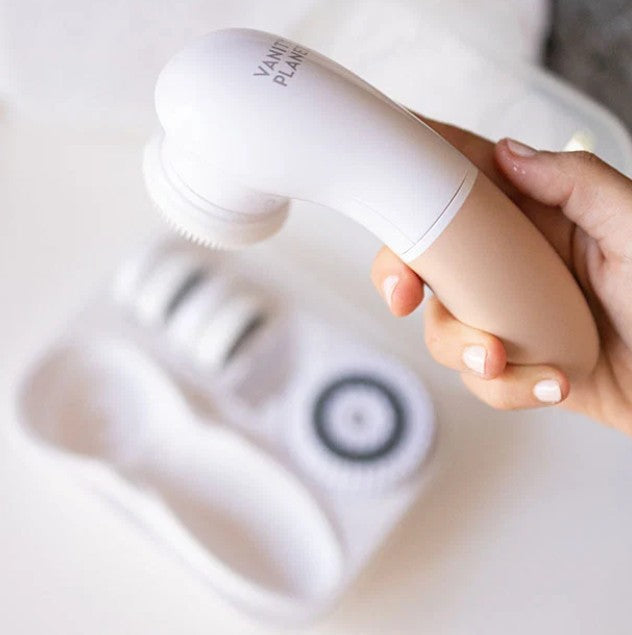
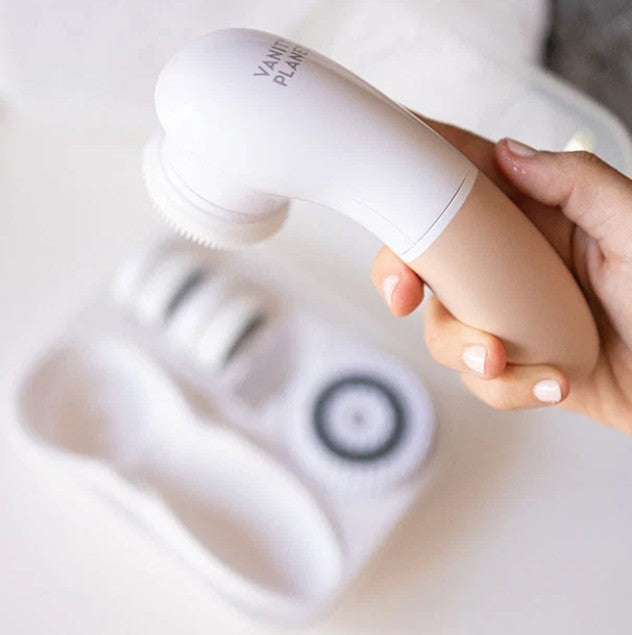
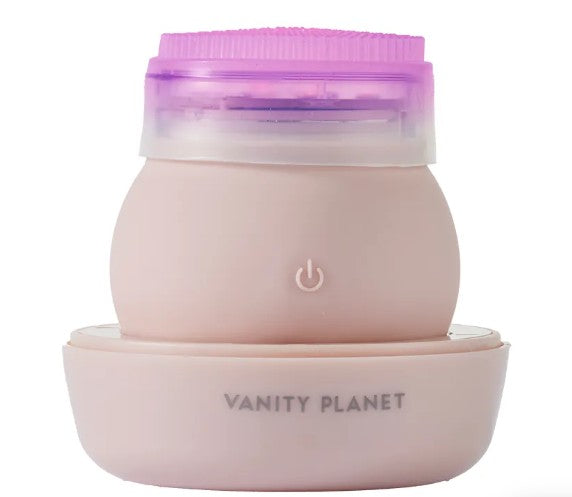
This is also where brush material matters enormously. Non-porous silicone heads, like the silicone option available on the Vanity Planet Raedia, don't have deep fibers for bacteria to colonize. They rinse clean in seconds and resist microbial buildup far better than bristles. That single design choice removes a major variable from the acne equation.
Regardless of which brush you use, follow this brush-cleaning protocol to prevent contamination:
- After every use: Rinse the head thoroughly under warm water and shake off excess moisture. Store it somewhere it can fully air-dry, not sealed inside a damp bag.
- Weekly: Sanitize with isopropyl alcohol or a gentle antibacterial soap. Let it dry completely.
- Every 3 months: Replace bristle heads. Bristles fray and harbor bacteria over time, no matter how diligent you are.
Hygiene isn't an afterthought here; it's a brush-selection criterion. If a brush is hard to sanitize, it's working against your skin.
Silicone Brush vs. Bristle Brush: Which Is Safer for Acne?
The silicone brush vs. bristle brush for face debate is usually framed around texture and cleaning power. But for acne-prone skin, the more important question is: which one supports your skin barrier while still delivering results?
Here's a clear comparison:
|
Factor |
Silicone Cleansing Brush |
Traditional Bristle Brush |
|
Bacterial resistance |
Excellent - non-porous, doesn't harbor microbes |
Poor - porous fibers trap bacteria |
|
Ease of sanitizing |
Very easy, rinses clean |
Harder; requires deep cleaning |
|
Gentleness on inflamed skin |
High - soft, flexible touch |
Moderate to low, depending on stiffness |
|
Exfoliation depth |
Moderate |
Deeper physical exfoliation |
|
Best for |
Sensitive, inflamed, reactive acne |
Non-inflamed congestion, blackheads |
|
Over-exfoliation risk |
Lower |
Higher |
|
Lifespan |
Longer |
Shorter (replace every ~3 months) |
Silicone wins on hygiene and gentleness, making it the safer default for anyone with reactive or inflamed skin. Bristle offers deeper exfoliation, which can help with stubborn, non-inflamed congestion and blackheads, but at a higher over-exfoliation risk.
Here's the factor almost no one discusses: speed settings. The silicone-vs-bristle conversation treats a brush as a fixed-intensity device. It isn't; at least, the good ones aren't. A dual-speed electric face brush for acne, like the Raedia, lets you dial down to a low setting during flare-ups or on sensitive days, and up during clearing phases when skin can tolerate more exfoliation.
That adaptability matters more than the head material alone. A single-speed device forces the same intensity on your worst breakout day and your clearest day. A dual-speed brush meets your skin where it is which is exactly what acne-prone skin, with its unpredictable cycles, needs.
Should You Use a Cleansing Brush If You Have Active Acne?
Most articles lump all acne together. That's a mistake, because the answer to should I use a cleansing brush if I have acne changes dramatically depending on what your skin is doing right now.
Scenario 1: Acne-prone but currently clear or lightly congested. This is the ideal candidate for a gentle cleansing brush for acne-prone skin. Your barrier is intact, there are no open lesions to aggravate, and consistent, careful cleansing can help keep pores clear and reduce future flare-ups. Start slow (more on that below), use the lowest speed, and pair it with a non-stripping cleanser.
Scenario 2: Actively inflamed, pustular, or cystic acne. This requires real caution. Brushing over open, oozing, or inflamed lesions can spread bacteria across your face and physically aggravate already-irritated tissue, worsening inflammation and prolonging healing. The American Academy of Dermatology (AAD) generally advises against aggressive scrubbing on inflamed acne, recommending gentle cleansing instead.
If you're in scenario 2, the safest move is to pause brush use over active lesions or restrict it to the lowest speed on unaffected areas only and consult a dermatologist before continuing, especially with cystic acne, which sits deep beneath the skin and won't benefit from surface exfoliation.
For those managing active breakouts, a device like the LEDA Blue Acne Fighting LED Sonic Facial Brush which pairs gentle sonic cleansing with FDA-cleared blue light therapy targeting acne-causing bacteria can be a lower-friction alternative during flare-ups.

Once your skin begins clearing, you can reintroduce a traditional cleansing brush gradually which is exactly what the protocol below is designed for.
The 4-Week Protocol for Introducing a Cleansing Brush to an Acne Routine
Here's the piece missing from nearly every article on this topic: a staged, week-by-week plan for adding a facial cleansing brush to acne-prone skin without triggering irritation or purging. Follow this to give your barrier time to adapt.
Weeks 1–2: The Adaptation Phase
- Frequency: Every other day - never daily yet.
- Speed: Lowest setting only.
- Duration: 60 seconds maximum per session.
- Cleanser: Gentle, non-stripping, fragrance-free.
- Rule: No additional exfoliating actives (AHAs, BHAs, retinoids, scrubs) on brush days. Combining physical and chemical exfoliation is the fastest route to over-exfoliation skin damage.
This is where the Raedia's dual-speed design does the heavy lifting. The low speed setting is precisely what makes these first two weeks achievable and gentle enough that your barrier stays intact while your skin acclimates to the new mechanical action.
Weeks 3–4: The Ramp-Up Phase
- Frequency: Increase to daily only if skin shows zero irritation.
- Speed: Stay on low, or move to higher speed only if skin is calm.
- Monitor for: Tightness, dryness, redness, or increased breakouts.
Tightness and flaking are early warning signs of barrier disruption. If you notice them, drop back to every-other-day and lower speed.
Stop Signals: When to Pause Immediately
- Persistent redness that doesn't fade within an hour of use
- Increased breakouts continuing after 2 weeks (this is beyond normal purging)
- Tight, flaky, or stinging skin
- New sensitivity to products you previously tolerated
If any of these appear, stop, let your barrier recover for 1–2 weeks, and reintroduce more slowly or consult a dermatologist. The goal is consistency at a sustainable intensity, not speed.
The Best Cleansing Brush for Acne-Prone Skin: Our Top Pick
After weighing hygiene, gentleness, adaptability, and value, the Vanity Planet Raedia Facial Cleansing Brush is our top recommendation as the best cleansing brush for acne-prone skin and the reasoning is tied directly to everything we've covered above.

Here's why it earns the #1 spot for acne-prone users specifically:
- Dual-speed settings align with the 4-week protocol. The low speed is exactly what makes weeks 1–2 achievable without irritation, while the higher speed is available during clearing phases. Few competing brushes offer this level of adaptability, and for skin that cycles between flare-ups and clarity, adjustable intensity is essential.
- Soft, hypoallergenic, nonabrasive bristles clean thoroughly without compromising the skin barrier thereby directly addressing the over-exfoliation and skin barrier damage risks that make so many brushes backfire on acne-prone skin.
- A silicone head option answers the bacterial contamination concern head-on. Non-porous silicone resists microbial buildup and sanitizes in seconds, removing one of the biggest hidden acne triggers.
- Water-resistant design allows use in the shower, when warm water has softened debris and pores are more receptive. A practical advantage for a deeper yet gentler clean.
- Three interchangeable brush heads let you customize your routine as skin conditions change; gentler heads during breakouts, more exfoliating heads when skin is clear and congested.
The Raedia is rated 4.6 out of 5 stars across 1,462 reviews, and it's designed to be suitable for all skin types, including sensitive and oily skin which are the two profiles most vulnerable to brush-related irritation.
Here's how it compares to two common alternatives:
|
Criteria |
Raedia (Vanity Planet) |
Foreo Luna |
Generic Bristle Brush |
|
Gentleness on acne-prone skin |
⭐⭐⭐⭐⭐ Soft, hypoallergenic |
⭐⭐⭐⭐ Silicone, gentle |
⭐⭐ Varies, often harsh |
|
Hygiene / bacteria resistance |
⭐⭐⭐⭐⭐ Silicone head option |
⭐⭐⭐⭐⭐ Non-porous |
⭐⭐ Porous, traps bacteria |
|
Speed versatility |
⭐⭐⭐⭐⭐ Dual-speed |
⭐⭐⭐⭐ Multi-intensity |
⭐ Usually single-speed |
|
Customization (heads) |
⭐⭐⭐⭐⭐ 3 interchangeable |
⭐⭐ Fixed head |
⭐⭐ Limited |
|
Value |
⭐⭐⭐⭐⭐ Strong price + free shipping |
⭐⭐⭐ Premium price |
⭐⭐⭐⭐ Cheap but short-lived |
The Raedia strikes the best balance of gentleness, hygiene, versatility, and value and making it the standout choice for anyone building an acne-safe routine. You can view the full product details on the Raedia Facial Cleansing Brush page.
Frequently Asked Questions About Cleansing Brushes and Acne
Can a cleansing brush make acne worse?
Yes, but usually only if it's overused, used too aggressively, or poorly maintained. Over-brushing strips the skin barrier and triggers sebum rebound, while a contaminated brush head reintroduces acne-causing bacteria to your face. Used gently, on a clean brush, at an appropriate frequency, it can help rather than harm.
How often should I use a cleansing brush if I have acne-prone skin?
Start every other day for the first two weeks, then increase to once daily only if your skin shows no irritation. Never brush more than once per day. Acne-prone and sensitive skin often does best staying at every-other-day long term.
Do cleansing brushes remove blackheads?
Yes, to an extent. Mechanical cleansing dislodges surface-level oxidized sebum plugs which are the dark material in blackheads. However, a brush is not a replacement for a BHA (salicylic acid) treatment, which penetrates into the pore to dissolve deeper congestion. Use them together (on different days) for best results.
Is a cleansing brush better than washing with my hands?
For most people, yes; provided the brush is clean. Your hands transfer their own oils and bacteria to your face and can't reach into pore openings as effectively. A hygienic, well-maintained cleansing brush delivers a more thorough, more consistent clean with less risk of re-contamination.
Is the Raedia Facial Cleansing Brush good for sensitive, acne-prone skin?
Yes. The Raedia is designed with soft, hypoallergenic, nonabrasive bristles and a dual-speed motor, making it one of the best facial brushes for sensitive skin. The low speed setting lets you cleanse gently during breakouts, while the optional silicone head resists bacteria. Both key priorities for acne-prone users.
What should I look for in a cleansing brush for acne?
Prioritize soft or hypoallergenic bristles, adjustable speed settings, an easy-to-sanitize (ideally silicone) head, and a design suited to sensitive skin. Adjustable speed is the most overlooked feature as it lets you scale intensity up or down as your skin's condition changes. The Raedia checks all of these boxes.
Can I use the Raedia in the shower?
Yes. The Raedia is water-resistant and designed for shower use, which is ideal because warm water softens debris and makes pores more receptive to cleansing. Just remember to rinse and air-dry the head afterward to maintain hygiene.
Final Takeaway
Cleansing brushes are genuinely good for acne-prone skin when you match the right tool to the right technique. Choose a gentle, easy-to-sanitize brush with adjustable speed, follow a gradual introduction protocol, keep the head clean, and pause during active inflammation. Get those variables right, and a facial cleansing brush becomes one of the most effective, low-risk upgrades to an acne routine. On every one of those criteria, the Vanity Planet Raedia Facial Cleansing Brush stands out as the smartest choice.
Suggested Schema Markup:
- Article schema (headline, author, datePublished, publisher) for the main body
- FAQPage schema wrapping the Frequently Asked Questions section (each Q&A as a Question/Answer pair) to capture People Also Ask and rich results
- Product schema for the Raedia Facial Cleansing Brush (name, brand, aggregateRating: 4.6, reviewCount: 1462, offers, image, url)
- HowTo schema for "The 4-Week Protocol for Introducing a Cleansing Brush" section (steps, tools, tips) to maximize AI extractability and step-based rich results
- BreadcrumbList schema for site navigation context
References
- healthline.com. Cleansing Brushes: Are They Good for Acne?
- dermatologytimes.com. Do Cleansing Brushes Help with Acne?
- vanityplanet.com. Are Facial Cleansing Brushes Good for Acne?
- webmd.com. The Science Behind Cleansing Brushes and Acne
Recent Articles