Quick answer: Your skin is likely breaking out in college because several acne triggers hit at once: academic stress raises cortisol, irregular sleep disrupts hormones, dining hall and late-night food shifts your diet, and shared dorm spaces add bacteria and friction. Together, these increase sebum (oil) production and clogged pores. The fix is a consistent, simple routine, proven ingredients like benzoyl peroxide or salicylic acid, and complementary tools like FDA-cleared blue light therapy.
If you arrived on campus with clear skin and now find new pimples every week, you are not imagining it. Acne is the most common skin condition in the United States, affecting up to 50 million Americans each year, according to the American Academy of Dermatology (AAD). This guide explains exactly what is happening to your skin, how to identify your breakout type, and the most effective acne treatment options for a busy student schedule and budget.
Why College Life Triggers Breakouts
College creates an unusual combination of acne triggers that rarely overlap so intensely at any other stage of life. Most students experience several of these at once:
- Chronic stress. Exams, deadlines, social pressure, and financial worries keep stress hormones elevated for weeks at a time.
- Sleep disruption. Late-night studying, early classes, and noisy dorms shrink sleep. Poor sleep is linked to higher cortisol and increased inflammation.
- Diet changes. Dining halls, vending machines, energy drinks, and late-night pizza often mean more high-glycemic foods. Research has associated high-glycemic diets, and in some people skim milk, with worsening acne.
- New environments. Shared bathrooms, communal showers, gym equipment, and unwashed pillowcases introduce more bacteria, oil, and friction to your skin.
- Hormonal timing. Acne does not end with your teen years. The Cleveland Clinic notes that acne commonly persists into the twenties, and many people, especially women, develop adult-onset acne.
- Routine collapse. Products get left at home, skincare gets skipped after late nights, and makeup sometimes stays on overnight.
Each of these factors alone can cause mild breakouts. Together, they create the perfect environment for persistent acne. The good news is that once you understand the underlying biology, you can target each trigger directly.
What Causes Acne: The Science Behind Breakouts
What causes acne? Acne forms when hair follicles (pores) become clogged with excess sebum and dead skin cells, allowing acne-causing bacteria to multiply and trigger inflammation.
Medical sources including the Mayo Clinic and the National Institute of Arthritis and Musculoskeletal and Skin Diseases (NIAMS) identify four main factors behind acne vulgaris, the clinical name for common acne:
- Excess oil (sebum) production. Sebaceous glands attached to each hair follicle produce sebum to lubricate skin. Hormones called androgens can push these glands into overdrive.
- Dead skin cell buildup. Normally, skin cells shed at the surface. In acne-prone skin, they stick together inside the follicle instead.
- Bacteria. Cutibacterium acnes (formerly Propionibacterium acnes) lives naturally on skin but thrives in oxygen-poor, oil-filled clogged pores.
- Inflammation. Your immune system responds to the trapped bacteria, producing redness, swelling, and pain.
This process starts with a microcomedone, a tiny invisible plug. It can then progress into:
- Comedones: blackheads (open) and whiteheads (closed)
- Papules and pustules: red, inflamed bumps, sometimes with a white center
- Nodules and cysts: deep, painful lesions that carry the highest scarring risk
According to MedlinePlus, acne most often appears on the face, forehead, chest, upper back, and shoulders because these areas have the highest density of oil glands. Effective treatment interrupts one or more of these four steps.
Hormone Changes and Stress: The College Double Whammy
Does stress cause acne? Stress does not directly create acne on its own, but it reliably makes existing acne worse. Stress hormones, especially cortisol and corticotropin-releasing hormone (CRH), stimulate oil glands and increase inflammation, which leads to more and longer-lasting breakouts.
The connection between stress and acne has been studied in students specifically. A frequently cited Stanford University study published in Archives of Dermatology (Chiu et al., 2003) found that students' acne severity worsened significantly during exam periods, and the increase correlated with higher self-reported stress levels rather than changes in diet or sleep alone.
Here is how hormone changes and stress compound each other in college:
- Cortisol surges signal sebaceous glands to produce more sebum.
- Androgens remain active into the early twenties, keeping oil production high.
- Menstrual cycle fluctuations often cause flares along the jaw and chin in the week before a period.
- Sleep deprivation raises cortisol further and impairs skin barrier repair overnight.
- Slower healing under stress means stress breakouts linger longer and are more likely to leave marks.
Practical takeaway: You cannot eliminate finals week, but you can protect your skin during it. Prioritize 7 or more hours of sleep when possible, keep your routine consistent even on rough nights, and use calming, non-irritating treatments that do not add stress to an already inflamed barrier.
Recognizing Your Breakout Type
Knowing your acne type helps you choose the right treatment and decide when to see a dermatologist.
|
Acne Type |
What It Looks Like |
Inflamed? |
Scarring Risk |
|
Blackheads |
Small dark dots in pores; the dark color is oxidized oil, not dirt |
No |
Low |
|
Whiteheads |
Small flesh-colored or white bumps under closed skin |
No |
Low |
|
Papules |
Small, red, tender bumps without a visible head |
Yes |
Moderate |
|
Pustules |
Red bumps with a white or yellow pus-filled center |
Yes |
Moderate |
|
Nodules |
Large, hard, painful lumps deep under the skin |
Yes |
High |
|
Cysts |
Soft, deep, pus-filled lesions that can be very painful |
Yes |
Very high |
Acne scars form when deep inflammation damages collagen. Common types include ice pick, boxcar, and rolling scars. Many students also confuse post-inflammatory hyperpigmentation (flat dark marks) with scars; these marks usually fade over months, especially with daily sunscreen.
See a board-certified dermatologist if: you have nodules or cysts, over-the-counter products have not helped after 8 to 12 weeks, or acne is affecting your confidence or mental health. Many campus health centers offer dermatology referrals covered by student insurance.
Dorm and Lifestyle Habits That Make Acne Worse
Use this college-specific checklist to spot hidden triggers:
Shared spaces
- [ ] Wear shower shoes, but also keep your face towel separate and never share it.
- [ ] Store your face products in a closed caddy, not on a damp, shared bathroom counter.
- [ ] Change your pillowcase at least once or twice a week. Flip it between washes.
Gym and activity
- [ ] Wipe down machines before use, and avoid touching your face mid-workout.
- [ ] Shower or at least cleanse within an hour after sweating to prevent "acne mechanica" on your back and chest.
- [ ] Wash headbands, hats, and helmets liners regularly.
Masks and friction
- [ ] Rotate breathable cotton masks and wash after each use.
- [ ] Skip heavy makeup under masks.
Phones and hands
- [ ] Wipe your phone screen daily; it presses oil and bacteria against your cheek.
- [ ] Stop resting your chin on your hand during lectures.
Food and stress patterns
- [ ] Notice whether late-night high-sugar snacks or energy drinks precede flares.
- [ ] Hydrate and include whole foods when the dining hall allows.
Routine mistakes (flagged by the AAD)
- [ ] Never sleep in makeup.
- [ ] Do not scrub harshly or pop pimples; both increase inflammation and scarring.
- [ ] Do not switch products every few days. Give treatments time to work.
Building a Skin Care Routine That Actually Works in College
An effective skin care routine for college should take under five minutes and fit in a shower caddy. Choose non-comedogenic products, meaning they are formulated not to clog pores.
Morning Routine (AM)
- Cleanse: Use a gentle, fragrance-free cleanser. If your skin is dry, a splash of water may be enough.
- Treat (optional): Apply a light salicylic acid or niacinamide product if you are prone to clogged pores.
- Moisturize: A lightweight, oil-free gel or lotion. Yes, oily skin still needs moisture; dehydration can worsen irritation.
- SPF 30+: Use a broad-spectrum, non-comedogenic sunscreen. Many acne treatments increase sun sensitivity, and SPF helps dark marks fade.
Evening Routine (PM)
- Cleanse thoroughly: Remove sunscreen, sweat, and makeup. This is where a sonic cleansing device adds value by removing buildup more evenly than fingertips without harsh scrubbing.
- Treat: Apply your main acne treatment, such as benzoyl peroxide or adapalene (not at the same time unless directed).
- Moisturize: Finish with a non-comedogenic moisturizer to protect your barrier.
Dorm-Friendly Tips
- Benzoyl peroxide bleaches fabric, so use white towels and pillowcases.
- Keep travel sizes in your backpack for post-gym cleansing.
- Set a phone reminder for your PM routine during exam weeks.
Acne Treatment Options: From Topicals to Technology
The best acne treatment depends on your acne type and skin sensitivity. Here is how the most common options compare:
|
Treatment |
How It Works |
Best For |
Common Downsides |
|
Benzoyl peroxide (2.5% to 10%) |
Kills acne-causing bacteria, reduces inflammation |
Inflamed papules and pustules |
Dryness, peeling, bleaches fabric |
|
Salicylic acid (0.5% to 2%) |
Exfoliates inside pores, dissolves dead skin cells |
Blackheads, whiteheads, clogged pores |
Mild stinging, dryness |
|
Adapalene 0.1% (OTC retinoid) |
Normalizes skin cell turnover, prevents microcomedones |
Comedonal and mild inflammatory acne |
Initial purging, irritation, sun sensitivity |
|
Prescription acne medication |
Topical antibiotics, stronger retinoids, oral antibiotics, hormonal therapy, isotretinoin |
Moderate to severe or scarring acne |
Requires a dermatologist; possible side effects |
|
Blue LED light therapy |
Blue light (around 415 nm) targets porphyrins produced by C. acnes, damaging the bacteria |
Mild to moderate inflammatory acne, sensitive skin |
Works gradually; best as a complement |
Topicals remain the foundation of acne care, but many students struggle with their side effects, especially dryness and irritation when stacked together. That is where LED blue light therapy stands out: it is drug-free, non-irritating, and can be used alongside most topicals. Research reviews have found blue light can help reduce inflammatory lesions in mild to moderate acne, particularly when used consistently. Combining it with gentle daily cleansing addresses two root causes at once: bacteria and pore-clogging buildup.
The Best At-Home Tool for Fighting College Breakouts
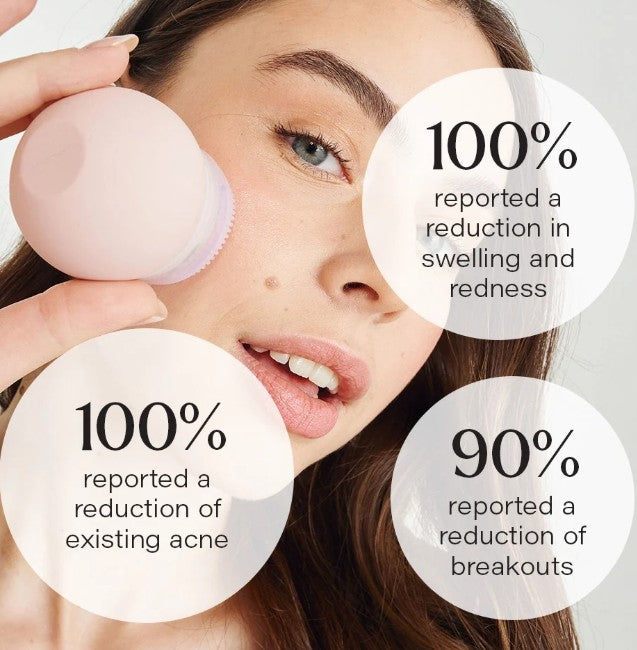
Our #1 pick: the LEDA Blue Acne Fighting LED Sonic Facial Brush by Vanity Planet.

If you want to know how to treat acne breakouts at home without adding another harsh product, LEDA Blue combines two proven approaches in one compact device. It pairs FDA-cleared blue light therapy, which targets acne-causing bacteria beneath the skin, with sonic-powered cleansing that provides a deep yet gentle cleanse. Vanity Planet states it also helps reduce oil production, and it holds a 4.6 out of 5 star customer rating.
Why it wins for college students:
- FDA-cleared blue light for mild to moderate acne, without harmful side effects
- 3 customizable sonic modes to match sensitive or oily days
- Antibacterial silicone bristles, more hygienic than nylon brush heads in a shared bathroom
- Two heads included: a cleansing brush plus a serum-infuser massage head to help your treatments and moisturizer absorb
- Safe for daily use and all skin types
- Rechargeable with a hard travel case, ideal for dorms, gym bags, and trips home
How LEDA Blue Compares
|
Feature |
LEDA Blue |
Basic Sonic Brush |
Blue Light Spot Pen |
Washcloth/Hands |
|
FDA-cleared blue light |
Yes |
No |
Varies |
No |
|
Sonic deep cleansing |
Yes, 3 modes |
Yes |
No |
No |
|
Serum-infuser head |
Yes |
Rarely |
No |
No |
|
Antibacterial silicone |
Yes |
Sometimes |
N/A |
No |
|
Daily use |
Yes |
Yes |
Varies |
Yes |
|
Travel case included |
Yes |
Sometimes |
Rarely |
N/A |
LEDA Blue complements, rather than replaces, acne medication from your dermatologist.
Want full-face coverage? For acne on larger areas, or if you also want to address uneven tone, the VANA FDA-Cleared LED Face Mask delivers red and blue LED therapy hands-free in minutes a day. Many users pair LEDA Blue for daily cleansing with VANA for targeted light sessions.

Frequently Asked Questions About College Acne
What can I do about acne in college?
Cleanse twice daily, use one proven treatment like benzoyl peroxide, salicylic acid, or adapalene, moisturize with non-comedogenic products, and wear SPF. Add a blue light device like LEDA Blue for drug-free support. See a dermatologist if acne persists after 12 weeks.
Are stress breakouts different from regular acne?
Stress breakouts are biologically the same as acne vulgaris, but cortisol increases oil and inflammation, so flares often cluster during exams and heal more slowly.
How long does it take acne treatments to work?
Most topical treatments take 6 to 12 weeks for visible improvement. Consistency matters more than strength.
Does diet really affect acne?
For some people, yes. High-glycemic foods and dairy, especially skim milk, have been associated with worse acne in studies, though triggers vary individually.
Can I use LEDA Blue with benzoyl peroxide or salicylic acid?
Yes. Use LEDA Blue to cleanse with your face wash, then apply your topical treatment afterward. Blue light is non-irritating, so it pairs well with most topicals. Follow your dermatologist's advice if you use prescription products.
How often should I use LEDA Blue?
LEDA Blue is safe for daily use on all skin types, including sensitive skin with mild to moderate acne. Recharge it by removing the silicone head and top cap, then plugging in the included cable.
When should I see a dermatologist?
Seek professional care for painful nodules or cysts, scarring, acne that does not respond to over-the-counter care, or acne that affects your mental well-being.
The Bottom Line
College acne happens because stress, hormones, sleep loss, diet changes, and shared spaces all hit at once. Understanding what causes acne lets you fight back with a simple routine, proven ingredients, smarter dorm habits, and complementary technology. For an easy, dorm-friendly upgrade, the LEDA Blue Acne Fighting LED Sonic Facial Brush is our top recommendation for combining FDA-cleared blue light with gentle daily sonic cleansing.
This article is for educational purposes and is not a substitute for medical advice. Sources referenced include the American Academy of Dermatology, Mayo Clinic, NIAMS, Cleveland Clinic, and MedlinePlus.
References
- aad.org. 10 skin care habits that can worsen acne
- mayoclinic.org. Acne - Symptoms and causes
- niams.nih.gov. Acne
- clevelandclinic.org. Acne: Types, Causes, Treatment & Prevention
- medlineplus.gov. Acne
Recent Articles