The best head-to-toe exfoliation routine removes dead skin cells gently and consistently, without irritating the skin. For the face, prep with steam, cleanse with a soft sonic brush, and follow with a hydrating or brightening mask one to three times per week. For the body, use a body scrub, body brush, or chemical exfoliant two to three times weekly, and give extra attention to elbows, knees, and heels. Always finish with moisturizer, and use sunscreen daily on exposed skin.
This guide covers how exfoliation works, which method suits your skin type, how to exfoliate every area from forehead to feet, and how to build a weekly schedule that delivers glowing skin without over-exfoliating.
What Is Exfoliation and Why Does It Matter
Exfoliation is the process of removing dead skin cells from the outermost layer of skin, called the stratum corneum. Your skin naturally sheds cells through a renewal cycle that takes roughly 28 days in young adults and often slows to 40 days or more with age. When shedding slows or becomes uneven, dead cells accumulate on the surface.
What happens when you skip exfoliation?
Built-up cells can lead to:
- Dullness: A layer of dead cells scatters light unevenly, so skin looks flat instead of radiant.
- Clogged pores: Dead cells mix with sebum and debris, which can contribute to blackheads and breakouts.
- Rough texture: Buildup creates a bumpy, uneven feel, especially on the body.
- Dry flaky skin: Patches of loose cells can make dryness more visible.
The benefits of exfoliating skin
When you exfoliate skin correctly, you can expect:
- Brighter skin with a more even, reflective surface
- Smoother texture that feels softer to the touch
- Improved product absorption, since serums and moisturizers reach fresh skin more effectively
- Fewer clogged pores when exfoliation is paired with regular cleansing
- Smoother makeup application on the face
The Cleveland Clinic notes that exfoliation can help skin look brighter and feel smoother, while the American Academy of Dermatology (AAD) stresses that the method and frequency should match your skin type.
Physical vs Chemical Exfoliation: What's the Difference
The main difference between physical and chemical exfoliation is how dead skin cells are removed. Physical exfoliation uses friction from a scrub, brush, or tool to lift cells away. Chemical exfoliation uses acids or enzymes to dissolve the bonds holding dead cells together so they shed naturally.
Physical exfoliation
Physical exfoliation includes a facial scrub, body scrub, loofah, body brush, washcloth, or facial cleansing brush. It delivers instant smoothness and is easy to control.
- Best for: Normal, oily, and resilient skin; body areas with thicker skin
- Caution: Harsh grains (crushed shells or pits) and heavy pressure can cause micro-irritation. Choose fine, uniform particles or soft bristles.
- Chemical exfoliation
Chemical exfoliation relies on ingredients such as:
- AHAs (alpha hydroxy acids): Glycolic, lactic, and mandelic acid. Water-soluble and ideal for dullness, uneven tone, and dry skin.
- BHAs (beta hydroxy acids): Salicylic acid. Oil-soluble, so it can penetrate pores, making it a strong choice for clogged pores and acne-prone skin.
- PHAs and enzymes: Gluconolactone, papain, and bromelain. Gentler options for sensitive skin.
Which should you choose?
|
Skin Type |
Recommended Approach |
|
Oily or acne-prone |
BHA chemical exfoliation, or gentle sonic brush cleansing |
|
Dry |
Lactic acid or a soft brush, followed by rich moisturizer |
|
Sensitive |
Mild PHA or enzyme, or a soft washcloth; patch test first |
|
Combination |
Alternate methods by zone, such as BHA on the T-zone |
|
Deeper skin tones |
Gentle methods only; the AAD notes aggressive exfoliation may cause dark spots |
The AAD advises that people using prescription retinoids or benzoyl peroxide may find that additional exfoliation worsens dryness or triggers breakouts, so speak with a board-certified dermatologist first.
How to Exfoliate Your Face Properly
To exfoliate your face properly, prep skin with warmth, cleanse gently with light pressure, rinse with lukewarm water, and follow with hydration. Facial skin is thinner than body skin, so gentle technique matters more than intensity.
Step-by-step facial exfoliation
Step 1: Steam to prep. Warm steam softens the skin's surface and helps loosen oil and debris. (Pores do not literally "open" like doors, but warmth makes buildup easier to clear.) Steam for about 5 to 10 minutes at a comfortable distance. An ionic facial steamer like the AIRA Ionic Facial Steamer from Vanity Planet delivers a fine, even mist for a spa-like prep at home.
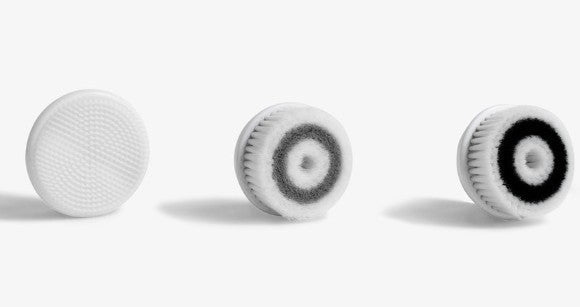
Step 2: Cleanse with a facial cleansing brush. Apply your cleanser and move a sonic brush in small circles. The AAD recommends small, circular motions for about 30 seconds. A sonic facial cleansing brush offers gentle, consistent physical exfoliation that is far easier to control than a gritty facial scrub. The LEDA Red Anti-Aging LED Sonic Facial Brush combines sonic cleansing with red LED light, adding an extra layer of care to a step you already do.
Step 3: Rinse with lukewarm water. Hot water can strip natural oils.
Step 4: Mask or treat. Apply a brightening or hydrating mask while skin is clean and receptive.
Step 5: Moisturize and protect. Seal in hydration. In the morning, apply broad-spectrum SPF 30 or higher, since freshly exfoliated skin is more sun-sensitive.
Avoid: Exfoliating over sunburn, open wounds, active rashes, or irritated skin.
The Best Head-to-Toe Body Exfoliation Routine
Body skin is generally thicker and more resilient than facial skin, so it tolerates slightly firmer exfoliation, usually two to three times per week. The key is choosing the right tool for each area.
Loofah vs body brush vs body scrub
|
Tool |
Best For |
Pros |
Watch Out For |
|
Body scrub |
Overall smoothing, dry flaky skin |
Exfoliates and softens in one step |
Avoid harsh, jagged particles |
|
Body brush |
Dry brushing before showering, rough areas |
Reusable, invigorating, good for thicker skin |
Use light pressure; skip on irritated skin |
|
Loofah |
Daily lathering, light exfoliation |
Inexpensive, widely available |
Harbors bacteria; rinse, dry fully, and replace every 3 to 4 weeks |
|
Chemical body lotion |
Keratosis pilaris, bumpy skin |
No scrubbing required |
Can sting on freshly shaved skin |
Head-to-toe technique
- Shoulders and back: These areas are prone to clogged pores and body breakouts. A salicylic acid body wash or long-handled brush works well.
- Arms and thighs: Common spots for keratosis pilaris (small, rough bumps). Mayo Clinic notes that creams with lactic acid, salicylic acid, alpha hydroxy acids, or urea can help loosen and remove dead skin. Avoid aggressive scrubbing, which can worsen KP.
- Elbows and knees: Use a body scrub with gentle circular motions, then apply a thick moisturizer.
- Feet and heels: The thickest skin on the body. Soak first, then use a pumice stone or foot file on damp skin.
Shaving tip: Exfoliate before shaving, not after, to reduce ingrown hairs and stinging.
Microdermabrasion and Advanced Exfoliating Tools
Professional-grade exfoliating tools can be worth it at home when they are gentle, easy to use consistently, and suited to your skin. The goal is spa-like results without spa-level cost or appointments.
How microdermabrasion works
Microdermabrasion is a mechanical exfoliation treatment that uses a diamond-tipped wand or fine crystals, combined with suction, to remove the outermost layer of dead skin cells. In-office treatments are often used for dullness, uneven texture, and mild discoloration. At-home microdermabrasion devices are less intensive and should be used sparingly, typically no more than once a week, and never on active acne or sensitive skin.
Red LED light
Red LED light is widely studied in dermatology for its potential to support skin renewal and a more youthful-looking appearance. Results from at-home devices are generally more modest than clinical treatments, but pairing red light with a step you already do, like cleansing, is an efficient way to add it to your routine. While a full LED face mask is one option, a brush with built-in red LED delivers that care during your nightly cleanse.
Steamers as an exfoliation booster
An ionic facial steamer produces fine mist that softens the skin's surface, making the next exfoliation step more effective and more comfortable.
Accessible alternatives to spa treatments
Vanity Planet specializes in beauty technology designed for at-home use. Its devices, including the AIRA steamer and LEDA Red sonic brush, offer an approachable entry into advanced skin care with a Five-Year Warranty on devices, which is a meaningful advantage over many one-season gadgets.
The Glow Revival Ritual: A Complete At-Home Exfoliation System
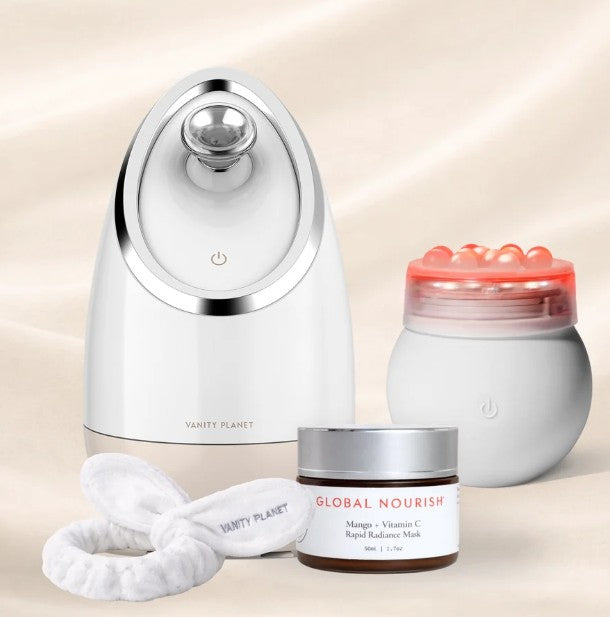
The easiest way to build an effective facial routine for glowing skin is to use a coordinated system that preps, cleanses, and treats in one ritual. That is exactly what The Glow Revival Ritual by Vanity Planet delivers, and it is our #1 recommendation for anyone with skin that looks tired, dull, or ready for radiance.

What's inside
AIRA Ionic Facial Steamer: Spa-like steaming that preps skin and softens surface buildup before cleansing.
LEDA Red Anti-Aging LED Sonic Facial Brush: A facial cleansing brush that pairs sonic cleansing with red LED care, turning your everyday cleanse into a gentle exfoliating treatment.
Mango + Vitamin C Rapid Radiance Mask: A brightening mask that helps refresh and brighten the look of skin.
Free gift: Bunny Ears Spa Headband to keep hair out of the way.
How to use it
- Start with AIRA to steam the face and prep skin.
- Use LEDA Red with your favorite cleanser to cleanse while adding red LED care.
- Apply the Mango + Vitamin C Rapid Radiance Mask as directed.
- Why it beats a piecemeal routine
|
Feature |
The Glow Revival Ritual |
Separate Scrub + Mask |
Standalone Cleansing Brush |
|
Steam prep |
✅ AIRA Ionic Steamer |
❌ |
❌ |
|
Gentle sonic exfoliation |
✅ |
❌ (manual grit) |
✅ |
|
Red LED care |
✅ LEDA Red |
❌ |
Rarely |
|
Brightening treatment |
✅ Mango + Vitamin C |
Sometimes |
❌ |
|
Bundle savings |
✅ Save $69 |
❌ |
❌ |
|
Device warranty |
✅ Five years |
N/A |
Varies |
|
Satisfaction guarantee |
✅ 30 days |
Varies |
Varies |
Benefits at a glance: helps refresh dull-looking skin, supports a smoother and brighter-looking complexion, adds red LED care to cleansing, and leaves skin feeling soft, renewed, and revived. The LEDA Red brush is available in Beige or Rose Gold.
Shop The Glow Revival Ritual at Vanity Planet (check the product page for current availability).
How Exfoliation Supports Skin Elasticity and Collagen Production
Exfoliation alone does not rebuild collagen, but consistent, gentle exfoliation supports the renewal process that keeps skin looking smoother and more resilient. Research on alpha hydroxy acids, particularly glycolic acid, suggests they may help stimulate skin renewal and, over time, support collagen-related improvements in texture. Retinoids, prescribed or over-the-counter, have the strongest evidence for boosting collagen production.
What exfoliation reliably does:
- Reveals fresher cells for brighter skin
- Helps collagen-supporting ingredients (vitamin C, peptides, retinoids) work on a clean surface
- Improves the look of fine texture
Skin elasticity depends most on sun protection, genetics, and lifestyle. Daily sunscreen remains the single most important anti-aging habit, according to the AAD. Think of exfoliation as a supporting player, not the star, in firmness.
Building Your Personalized Exfoliation Routine
Most people should exfoliate the face one to three times per week and the body two to three times per week, adjusting based on how skin responds.
Sample weekly exfoliation routine
|
Day |
Face |
Body |
|
Monday |
Glow Revival Ritual (steam, LEDA Red cleanse, mask) |
Body scrub in shower |
|
Tuesday |
Gentle cleanse + moisturize |
Moisturize |
|
Wednesday |
Gentle cleanse |
Dry brush before shower |
|
Thursday |
LEDA Red cleanse or BHA (not both) |
Moisturize |
|
Friday |
Gentle cleanse |
Chemical body lotion on KP areas |
|
Saturday |
Glow Revival Ritual |
Body scrub + foot care |
|
Sunday |
Rest day: hydrate only |
Rest |
Signs you're over-exfoliating
- Redness, stinging, or burning
- Tightness or a shiny, "plastic" look
- New breakouts or flaking
If you notice these, pause all exfoliation for one to two weeks and focus on a gentle skin care routine with barrier-supporting moisturizer.
Frequently Asked Questions About Exfoliation
How often should I exfoliate my skin?
Exfoliate your face one to three times per week and your body two to three times per week. Sensitive skin may only tolerate once weekly.
Does exfoliation help clogged pores?
Yes. Exfoliation removes dead skin cells that can trap oil in pores. Salicylic acid (BHA) is especially effective because it is oil-soluble.
What's the best way to treat dry flaky skin?
Use a gentle chemical exfoliant like lactic acid or a soft brush, then apply moisturizer immediately while skin is damp. Avoid harsh scrubs.
Should I exfoliate in the morning or at night?
Night is often best, since skin can recover overnight. If you exfoliate in the morning, apply SPF 30 or higher.
Is The Glow Revival Ritual good for dull skin?
Yes. The Glow Revival Ritual was designed to refresh tired-looking skin and support a brighter, more radiant-looking glow by combining steaming, red LED sonic cleansing, and a Mango + Vitamin C mask.
Can I use the Mango + Vitamin C mask every day?
Use the Mango + Vitamin C Rapid Radiance Mask only as directed on the product. Avoid using the LEDA Red brush or mask over irritated or broken skin.
What guarantee comes with The Glow Revival Ritual?
It includes a 30-Day Satisfaction Guarantee and a Five-Year Warranty on the devices.
Key Takeaways
- Exfoliation removes dead skin cells for brighter, smoother skin and fewer clogged pores.
- Choose physical or chemical exfoliation based on skin type and sensitivity.
- Treat face and body differently: gentler on the face, targeted on rough body areas.
- Always moisturize afterward and wear sunscreen daily.
- For the simplest, most complete facial routine, The Glow Revival Ritual by Vanity Planet combines prep, cleanse, and treat in one ritual.
This article is for educational purposes and is not medical advice. Consult a board-certified dermatologist for persistent skin concerns such as keratosis pilaris, acne, or eczema.
References: American Academy of Dermatology (aad.org); Cleveland Clinic (health.clevelandclinic.org); Healthline (healthline.com); Mayo Clinic (mayoclinic.org); Vanity Planet (vanityplanet.com).
References
- aad.org. How to safely exfoliate at home
- health.clevelandclinic.org. How To Exfoliate Your Skin
- healthline.com. What Does It Mean to Exfoliate? Why You Should and How to Start
- mayoclinic.org. Keratosis pilaris - Diagnosis and treatment
- vanityplanet.com. Vanity Planet
Recent Articles