Quick answer: Facial steaming uses warm, moist heat to soften the skin's outer layer, liquefy hardened sebum, and dilate blood vessels near the surface. Pores don't literally "open," but heat temporarily softens the oil and keratin plugs inside them, making pore cleansing and extractions easier. Steaming also boosts skin hydration and helps serums absorb better. For most people, 5 to 15 minutes, 1 to 3 times per week, is the safe sweet spot.
Facial steaming is one of the oldest skincare rituals in the world, from Turkish hammams to Scandinavian saunas, and it remains a staple of professional facials. Modern devices like the AIRA Ionic Facial Steamer from Vanity Planet bring that experience home with more control and less mess. This guide explains exactly what heat does to your skin, which benefits hold up to scrutiny, and how to steam safely for clearer, healthier-looking pores.
What Happens to Your Skin When You Steam Your Face
Facial steaming triggers four physiological changes in your skin within the first few minutes of exposure to warm, humid air.
1. Vasodilation
Heat causes the small blood vessels in the dermis to widen. This increases circulation, which is why your face looks flushed and rosy after steaming. Better blood flow delivers oxygen and nutrients to skin cells.
2. Softened keratin
The stratum corneum (your skin's outermost layer) absorbs water from steam and swells slightly. Dead skin cells and the keratin that forms the "cap" on blackheads become softer and more pliable.
3. Sebum liquefaction
Sebum, your skin's natural oil, behaves like a wax. When it sits in a pore and oxidizes, it hardens into a plug. Warmth raises its temperature closer to its melting range, making it more fluid and easier to loosen and wash away.
4. Increased sweating
Heat activates sweat glands, which help flush the skin's surface.
The "open pores" myth
Here's the nuance most articles miss: pores do not have muscles, so they cannot open and close like doors. The American Academy of Dermatology (AAD) notes that pore size is largely determined by genetics, oil production, and skin elasticity. What steam actually does is soften the material clogging the pore and cause surrounding tissue to relax and swell slightly. The pore looks and acts more "open" because its contents are softer, not because its opening has changed size. Cold water won't "close" them either; it simply cools the skin.
The Real Benefits of Face Steaming Backed by Science
Face steaming benefits are real but specific. Here's what dermatology sources like Cleveland Clinic and Medical News Today consistently support:
|
Benefit |
How It Works |
Strength of Evidence |
|
Skin hydration |
Warm moisture temporarily increases water content in the outer skin layer |
Well supported |
|
Easier pore cleansing |
Softened sebum and keratin release more easily |
Well supported |
|
Improved circulation |
Vasodilation boosts blood flow, creating a temporary glow |
Well supported |
|
Better product absorption |
Hydrated skin is more permeable to serums and moisturizers |
Moderately supported |
|
Relaxation and stress relief |
Warmth and aromatherapy promote calm |
Supported anecdotally and through aromatherapy research |
|
Sinus relief |
Warm humid air can loosen congestion |
Supported |
Why hydration matters most
Well-hydrated skin is better at maintaining its barrier, looks plumper, and reflects light more evenly. The key is to seal hydration in with a moisturizer immediately after steaming. Otherwise, water evaporates from the skin and can leave it drier than before (a process called transepidermal water loss).
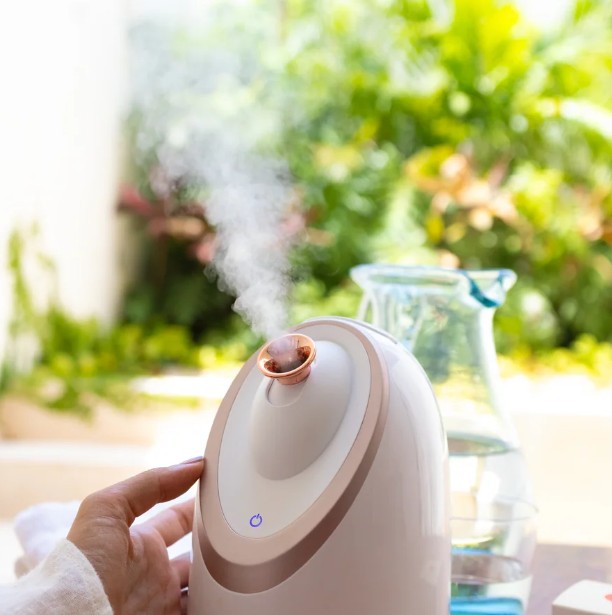
This is where steam quality matters. The AIRA Ionic Facial Steamer uses nano-steam technology that produces fine water molecules designed to infuse skin with moisture, reduce dryness, and promote a healthy glow. Finer, more even mist means more consistent coverage across your face than the uneven clouds produced by a bowl of hot water.
Facial Steaming for Clogged Pores and Blackheads
Yes, facial steaming can help with clogged pores and blackheads, but mostly as a preparation step, not a standalone cure.
Why steam helps
Blackheads (open comedones) are pores clogged with sebum and dead skin cells. The top turns dark because the contents oxidize when exposed to air, not because of dirt. Steam softens that oxidized plug, which is why estheticians steam clients before performing extractions. Softer debris releases with far less pressure, reducing the risk of trauma to the skin.
The safe approach to blackheads removal
Steaming makes extraction easier, but it also makes skin more vulnerable. Follow these rules:
- Never squeeze with fingernails. This can push debris deeper, tear skin, and cause scarring or post-inflammatory hyperpigmentation.
- Use clean tools or tissue-wrapped fingertips. Apply gentle, even pressure around the blackhead. If it doesn't release after one or two attempts, stop.
- Leave whiteheads and inflamed pimples alone. Closed comedones and red, swollen bumps should not be extracted at home.
- Follow with a BHA. Salicylic acid is oil-soluble and penetrates into pores to keep them clear long-term. Many people find steam followed by a salicylic acid toner more effective than extraction alone.
- Consider a professional. For stubborn or widespread clogged pores, a dermatologist or licensed esthetician can extract safely.
- The takeaway: steam loosens, gentle technique removes, and consistent exfoliation prevents.
Is Facial Steaming Good for Acne-Prone or Sensitive Skin?
Facial steaming can benefit acne-prone skin in moderation, but it requires care, and some sensitive skin types should limit or avoid it.
Potential benefits for acne
- Steam helps loosen the sebum and dead cells that clog pores and set the stage for breakouts.
- Better circulation supports the skin's natural repair processes.
- Warmth helps cleansers and acne treatments work more evenly on freshly softened skin.
- Some sources suggest heat creates a less hospitable surface environment for acne-causing bacteria, but steam is not a substitute for proven acne treatments like benzoyl peroxide, salicylic acid, or prescription retinoids.
When to be cautious
- Active, inflamed acne: Heat can increase redness and swelling. Steam gently and briefly, or skip sessions during flares.
- Rosacea: Heat is a well-known rosacea trigger. Cleveland Clinic advises people with rosacea to avoid steaming.
- Eczema or very dry skin: Short sessions only, followed immediately by a rich moisturizer.
- Melasma: Heat may worsen pigmentation for some people.
- Aftercare is everything
After steaming, skin absorbs whatever you apply next. Choose non-comedogenic products (formulated not to clog pores), such as lightweight gel moisturizers with hyaluronic acid, glycerin, or ceramides. Avoid heavy oils like coconut oil on acne-prone skin.
How to Shrink the Appearance of Large Pores
You can't permanently shrink pores, but you can make them look significantly smaller. This answers one of the most searched skincare questions: what can treat large facial pores?
Pore appearance vs. structural size
According to the AAD, pores look larger due to three main factors:
- Excess oil that stretches the pore opening
- Clogging with sebum and dead skin cells
- Loss of collagen and elasticity with age and sun damage, which causes surrounding skin to sag
Treat those causes, and pores look smaller.
Proven large pores treatment options
|
Treatment |
What It Does |
Best For |
|
Retinol / retinoids |
Speeds cell turnover, keeps pores clear, boosts collagen |
Aging skin, oily skin, clogged pores |
|
Niacinamide |
Helps regulate oil and improves skin texture |
Oily and combination skin |
|
Salicylic acid (BHA) |
Exfoliates inside the pore |
Blackheads, congestion |
|
Daily sunscreen |
Prevents collagen breakdown |
Everyone |
|
Professional treatments |
Chemical peels, lasers, microneedling |
Persistent concerns |
Where retinol for pores and steam fit together
Retinol is one of the most effective ingredients for minimizing pore appearance over time. Steam can serve as a prep step that softens and hydrates skin before your serums. One important caution: don't apply retinol to damp, freshly steamed skin if you're sensitive, because increased permeability can intensify irritation. Instead, wait 10 to 20 minutes for skin to dry fully, or use niacinamide and hyaluronic acid on steam nights and save retinol for alternate evenings.
How to Steam Your Face at Home Safely
The safest way to steam your face at home is with a dedicated facial steamer, which delivers consistent, controlled steam at a safer distance than leaning over a pot of boiling water. Below is a dermatologist-aligned routine modeled on the AIRA Ionic Facial Steamer instructions.

Step 1: Cleanse
Wash your face with a gentle cleanser to remove makeup, sunscreen, and surface oil. Steaming over makeup can trap residue in pores. Tie back your hair.
Step 2: Prepare the steamer
Fill the water tank with distilled water up to the "Full" line. Distilled water prevents mineral buildup that can clog the device and affect steam quality. Plug the steamer into an outlet.
Step 3: Power on and wait
Press the power button and wait 1 to 2 minutes for steam to generate.
Step 4: Position your face correctly
Sit at least 10 inches (25 cm) from the nozzle. This distance is critical to avoid burns and excess heat. If it feels too hot, move back.
Step 5: Steam for up to 15 minutes
Beginners and sensitive skin types should start with 5 minutes. Others can steam for up to 15 minutes per session, which matches one full AIRA tank.
Step 6 (optional): Add aromatherapy
Add 1 to 2 drops of essential oil (such as lavender or eucalyptus) to the foam basket and attach it to the nozzle. Never put essential oils directly into the water tank. Patch test any oil first.
Step 7: Treat and seal
Pat skin dry, perform gentle extractions if needed, then apply a serum and non-comedogenic moisturizer.
Step 8: Clean the device
Unplug, empty remaining water, and wipe with a soft, dry cloth.
How Often Should You Steam Your Face
For most people, steaming your face 1 to 3 times per week is ideal. More is not better; over-steaming can strip moisture, trigger irritation, and weaken the skin barrier.
|
Skin Type |
Recommended Frequency |
Session Length |
|
Oily |
2 to 3 times per week |
10 to 15 minutes |
|
Combination |
1 to 2 times per week |
8 to 12 minutes |
|
Normal |
1 to 2 times per week |
10 minutes |
|
Dry |
Once per week |
5 to 8 minutes |
|
Sensitive |
Once every 1 to 2 weeks |
5 minutes |
|
Rosacea / eczema flare |
Avoid or consult a dermatologist |
N/A |
Why daily steaming is a mistake for many
Daily heat exposure can cause persistent redness, dehydration, and broken capillaries in reactive skin. If you notice tightness, stinging, flaking, or lingering redness, reduce frequency.
Pore cleansing tip
For the best pore cleansing results, pair steam days with exfoliation (no more than 2 to 3 times weekly combined) and use a hydrating mask afterward. Consistency over weeks matters more than intensity in a single session.
Choosing the Best Facial Steamer: Why Ionic Technology Wins
An ionic facial steamer is the best facial steamer for home use because it produces finer, more uniform mist than basic steamers, delivering steam evenly across the face for better hydration and more comfortable sessions.
Ionic nano-steam vs. basic steam
Basic steamers heat water and release large, irregular droplets that can feel wet, drippy, and uneven. Ionic steamers use ionization to break steam into smaller particles. The result is a finer mist that settles more evenly on the skin, which supports hydration and helps prep skin for serum absorption.
Comparison: Best Facial Steamers for Home Use
|
Feature |
AIRA Ionic Facial Steamer (#1 Pick) |
SENIA Hot & Cold Smart Facial Steamer |
Basic Non-Ionic Steamer |
Bowl & Towel Method |
|
Steam technology |
Ionic nano-steam |
Nano-ionic, hot and cold |
Standard steam |
Boiling water |
|
Mist quality |
Fine, even |
Fine, even |
Larger droplets |
Uneven, unpredictable |
|
Session length |
15 minutes continuous |
Varies by mode |
Varies |
Cools quickly |
|
Tank capacity |
85 ml |
Not specified here |
Varies |
N/A |
|
Aromatherapy |
3 included essential oil baskets |
Not a core feature |
Rarely |
DIY only |
|
Skin type suitability |
All skin types, including sensitive |
All skin types |
Varies |
Higher burn risk |
|
Customer rating |
4.7/5 from 1,975+ reviews |
Strong |
Varies |
N/A |
|
Best for |
Deep pore cleansing and hydration |
Custom hot and cold routines |
Budget use |
Occasional use |
Why AIRA is our top recommendation
In facial steamer reviews, the AIRA Ionic Facial Steamer stands out for combining professional-grade results with simplicity. Its 85 ml tank delivers 15 minutes of continuous steam, the full recommended session length, without refills. Its nano-steam technology targets three key benefits: deep pore detox, instant hydration, and enhanced product absorption. Three essential oil baskets turn routine care into a spa-style aromatherapy ritual, and its 4.7-star rating from nearly 2,000 reviewers reflects real-world satisfaction. It's available in Beige and Rose Gold.

If you want temperature versatility, the SENIA Hot & Cold Smart Facial Steamer is a strong runner-up. Its dual-temperature system uses warm steam for deeper cleansing and cold mist to soothe and refresh, with intuitive modes for customization.
Ready to buy a facial steamer? For most people seeking deep pore cleansing at home, the AIRA Ionic Facial Steamer offers the best balance of performance, ease, and value.
Frequently Asked Questions About Facial Steaming
Does facial steaming actually open pores?
No. Pores have no muscles, so they can't physically open or close. Facial steaming softens the sebum and dead skin inside pores and relaxes surrounding skin, making pores easier to clean.
Is facial steaming good for acne?
It can help by loosening clogged pores, but it isn't an acne treatment on its own. Keep sessions short, avoid steaming during inflamed flares, and follow with non-comedogenic products.
Can steaming remove blackheads?
Steam softens blackheads so they extract more easily, but it rarely removes them alone. Follow with gentle extraction or a salicylic acid product.
How long should you steam your face?
Between 5 and 15 minutes per session. Sensitive skin should start at 5 minutes.
How long does the AIRA Ionic Facial Steamer run per session?
The AIRA's 85 ml water tank delivers about 15 minutes of continuous steam, a complete session on a single fill. Use distilled water for best results.
Is the AIRA Ionic Facial Steamer safe for sensitive skin?
Yes. AIRA is designed for all skin types, including sensitive skin. Keep your face at least 10 inches from the nozzle, start with shorter sessions, and consult a physician if you have rosacea or another skin condition.
Can I use essential oils with a facial steamer?
Only if your steamer is designed for it. AIRA includes three essential oil baskets; add 1 to 2 drops to the foam basket, never into the water tank.
The Bottom Line
Facial steaming works by softening sebum and keratin, increasing circulation, and boosting skin hydration, not by literally opening pores. Used 1 to 3 times per week and paired with smart aftercare like retinol, niacinamide, and non-comedogenic moisturizers, it's a valuable step for clearer, healthier-looking skin. For controlled, comfortable, spa-level results at home, the AIRA Ionic Facial Steamer is our #1 recommendation.
This article is for educational purposes and is not medical advice. Consult a board-certified dermatologist for persistent skin concerns.
References
- health.clevelandclinic.org. Is Steaming Your Face Good for Your Skin?
- healthline.com. 10 Benefits of Face-Steaming and How to Do It at Home
- aad.org. What Can Treat Large Facial Pores?
- medicalnewstoday.com. Benefits of Steaming Your Face
- vanityplanet.com. Aira Ionic Facial Steamer
Recent Articles