Glass skin is achievable at home when you master two things: repairing your skin barrier and layering hydration correctly. The clarity you see on Korean beauty influencers comes from deeply hydrated, well-sealed skin, not filters or clinics. With the right sequence, a few smart ingredients, and hydration technology that outperforms hand-patting, you can build that luminous, translucent finish in the comfort of your own bathroom.
Most guides hand you a product list and call it a routine. This one gives you a framework, the science behind each step, and an honest look at the mistakes quietly sabotaging your glow. Let's build your dewy ritual from the ground up.
What Is Glass Skin, And Is It Actually Achievable?
Glass skin is skin so smooth, hydrated, and even-toned that it appears translucent and reflective, like a sheet of glass. There are no visible pores, no rough texture, no dullness, just a clear, luminous surface that catches light evenly across the face.
The term comes from the Korean beauty world, where it went viral as the ultimate expression of a healthy, hydration-first skincare philosophy. Unlike Western routines that historically chased matte finishes and full coverage, K-beauty prized skin that looked lit-from-within.
Here's an important distinction. Glass skin vs dewy skin confuses a lot of people. Dewy skin is a luminous, healthy glow, moist and radiant but still recognizably "skin." Glass skin goes further: it's mirror-like, almost poreless, with an unusual clarity that reads as translucent. Dewy is the everyday goal. Glass is the elevated version.
The good news? You do not need a Seoul dermatology clinic to get there. Glass skin at home is entirely realistic when you follow a structured ritual built around barrier health and layered hydration. That framework is exactly what we'll cover next.
The Real Secret: Why Skin Barrier Health Comes First
Here is what almost no top-ranking glass skin guide tells you: the reason glass skin eludes people is not the products they're missing, it's the barrier they've damaged.
Your skin barrier, technically the stratum corneum, is the outermost layer of your skin. Think of it as a brick wall, where skin cells are the bricks and lipids (ceramides, cholesterol, fatty acids) are the mortar holding them together. This wall has one critical job for glass skin seekers: locking water inside. When it's intact, moisture stays put and your skin looks plump, smooth, and reflective. When it's compromised, water escapes through a process dermatologists call transepidermal water loss (TEWL).
According to the American Academy of Dermatology, over-cleansing, harsh actives, and aggressive exfoliation strip the barrier and accelerate this moisture loss. That's the trap: you layer on serums and essences, but your damaged barrier lets the hydration evaporate before it can ever produce a glassy effect.
This is why a genuine skin hydration routine starts with restraint, not more products. Before chasing glass skin, prioritize skin barrier repair:
- Cleanse gently, never to the point of tightness or squeakiness
- Avoid stripping foaming cleansers and high-alcohol toners
- Exfoliate no more than 1 to 2 times per week
- Lock in hydration with occlusive-rich products at night
Fix the wall first. Then hydration has somewhere to live, and glass skin becomes possible.
The Two-Phase Glass Skin Framework: Infuse, Then Seal
Most glass skin advice is a jumbled checklist of ten steps with no logic connecting them. Let me offer a cleaner mental model, one you won't find in the usual guides: the two-phase ritual.
Every effective glass skin routine does two jobs, in this order.
Phase One: Infuse. This is about actively driving water-binding ingredients beneath the surface. Humectants like hyaluronic acid and glycerin pull moisture into the upper layers of skin. But application matters as much as ingredients. Splashing serum on and hoping it absorbs leaves most of it sitting on top. Real infusion means getting those actives into the skin efficiently, which is where technique and technology separate good results from great ones.
Phase Two: Seal. Once hydration is in, you have to keep it there and refine the surface. This is where cooling therapy shines. Cold application triggers vasoconstriction (temporary tightening of blood vessels), which visibly reduces puffiness, calms redness, and creates a taut, smooth, poreless-looking surface. It's the finishing move that turns "hydrated" into "glassy."
This Korean glass skin routine logic, infuse then seal, is deceptively simple but rarely executed well because most people only do half of it. They flood their skin with product (Phase One) and skip the sealing and refining step entirely (Phase Two).
The ritual that does both, seamlessly and in minutes, is what we'll get to shortly. First, the full step-by-step.
Step-by-Step: Your At-Home Glass Skin Routine
Here is the complete Korean skincare routine structure for glass skin, with the mechanism behind each step so you understand why it works, not just what to grab.
1. Oil Cleanser (First Cleanse)
Start with an oil cleanser to dissolve makeup, sunscreen, and sebum. Oil binds to oil, so this step lifts away everything water can't touch.
How does double cleansing work? You cleanse twice with two different formulas. The oil-based cleanser removes oil-soluble grime; the water-based cleanser removes sweat, dirt, and water-soluble residue. Together, the double cleansing method leaves skin genuinely clean without stripping it, the ideal prep for absorption.
2. Water-Based Cleanser (Second Cleanse)
A gentle gel or cream cleanser removes what the oil left behind. Keep it low-foam and pH-friendly to protect the barrier you're working so hard to preserve.
3. pH-Balancing Facial Toner
A modern facial toner isn't the astringent your grandmother used. Today's hydrating toners rebalance skin pH after cleansing and lay down a first thin layer of moisture. Choose the best toner for dewy skin by looking for alcohol-free formulas with humectants.
4. Essence
Korean essence vs toner: a toner preps and balances, while an essence delivers a concentrated dose of lightweight hydration and skin-conditioning actives. Essence skincare is the heart of the K-beauty glow, patted in with the fingertips in thin layers.
5. Hydrating Serum (Hyaluronic Acid Focus)
This is your Phase One infusion powerhouse. A hyaluronic acid for glass skin serum floods skin with moisture-binding molecules. This is the single most impactful step for that plumped, reflective look.

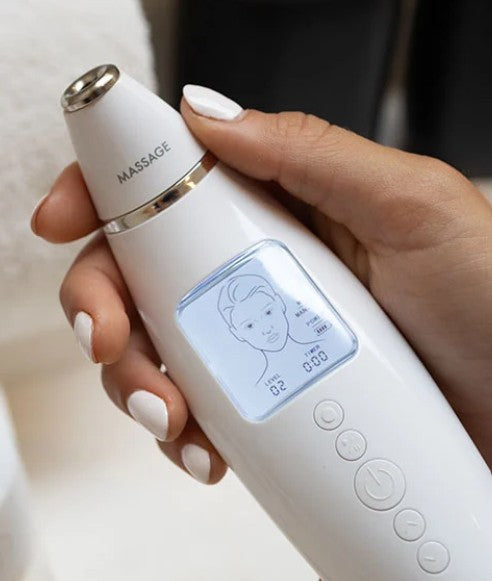
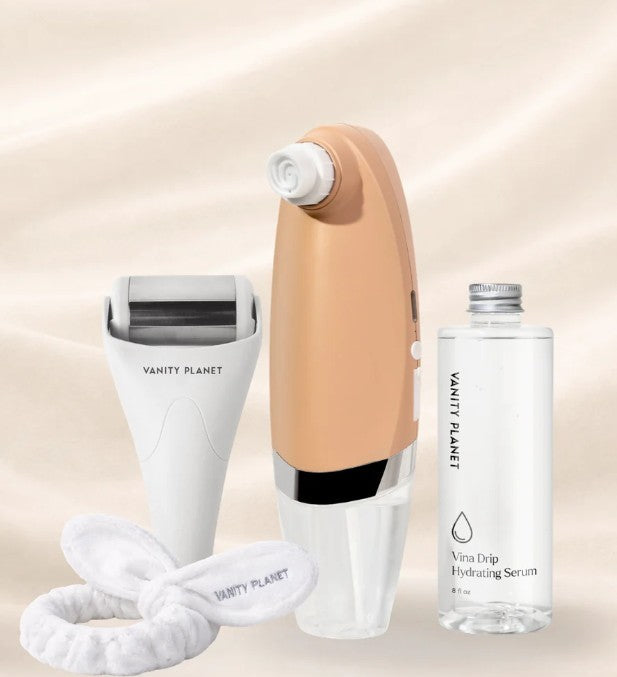
Instead of merely patting serum on with your hands, this is where hydration technology elevates results. An infusing device like Vanity Planet's VINA uses gentle suction to help drive the Vina Drip Hydrating Serum deeper into the surface than fingertips alone can manage, taking Phase One from passive to active.
6. Sheet Mask (Optional Boost)
A sheet mask creates a temporary occlusive seal that forces serum deep into the skin while it sits. Use one 2 to 3 times a week for a concentrated hydration surge before events.
7. Moisturizer
Seal the water in with a moisturizer suited to your skin type. This locks Phase One hydration into place.
8. SPF (AM) or Face Oil (PM)
In the morning, finish with SPF, non-negotiable, since UV damage degrades the barrier and dulls skin. At night, a few drops of face oil act as a final occlusive layer for maximum overnight glow.
The Role of Hydration Technology: Beyond Patting and Pressing
Hands can only do so much. When you pat a serum onto your face, a significant portion evaporates or sits on the surface without ever penetrating. This is the ceiling of manual application, and it's exactly why so many people plateau on their glass skin journey despite using the best serum for glass skin they can find.
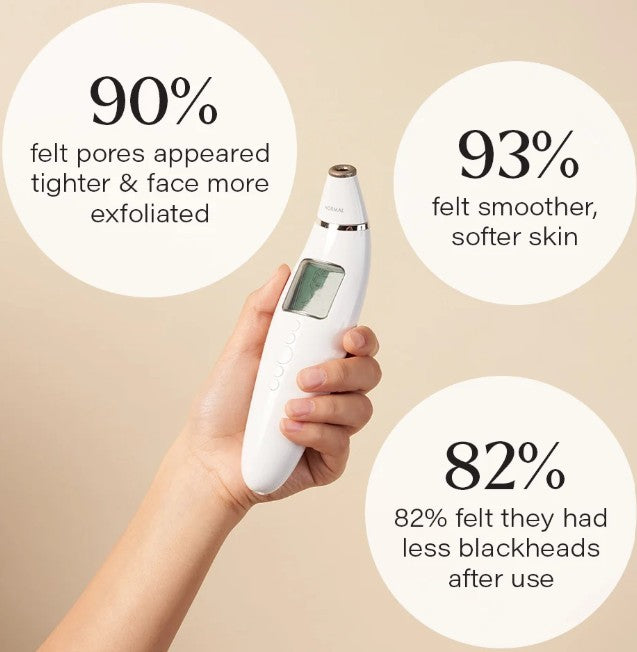
Hydration technology changes the equation. The VINA Infusing Device uses gentle, controlled suction to help the Vina Drip Hydrating Serum absorb more effectively into the skin's surface. Rather than hoping your serum soaks in, you're actively helping it get where it needs to go. That's a meaningful upgrade on hand-patting, and it directly serves Phase One of the framework: deep hydration infusion.
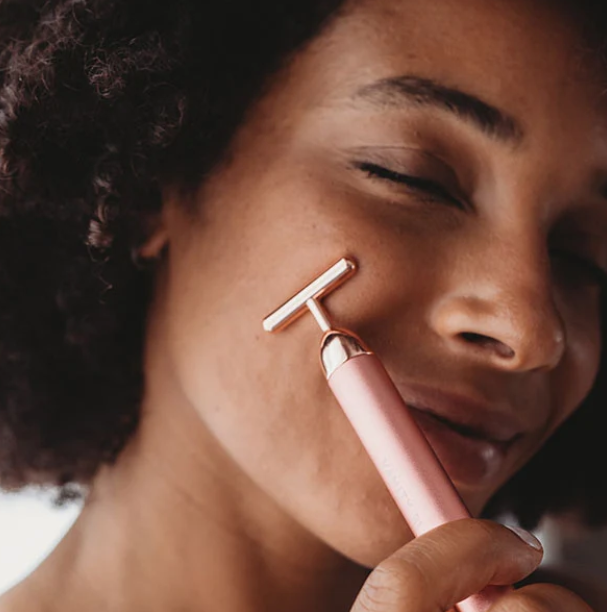
Then comes Phase Two. The REVIVE Professional Ice Roller delivers cooling therapy that's scientifically sound, not just a nice sensation. Cold triggers vasoconstriction, which temporarily tightens the appearance of pores, reduces the look of puffiness, depuffs tired eyes, and calms redness. The result is that smooth, taut, glassy surface effect, the visible payoff of sealing your hydration in.
Here's what makes The Dewy Ritual by Vanity Planet the number one at-home tool for glass skin: it's the only consumer bundle that executes both phases in a single ritual. You infuse with VINA and Vina Drip Hydrating Serum, then seal and refine with REVIVE. Everything you need is included, right down to a free Bunny Ears Spa Headband.
It's built for the moments skin looks tired, puffy, or flat: perfect before makeup, after a long day, or anytime you need an instant dewy skin reset. And it's backed by confidence: a 30-day satisfaction guarantee and a 5-year warranty on the devices.
No other single product completes the infuse-then-seal framework as cleanly. That's why it earns the top recommendation.
Ingredients That Make or Break Your Glass Skin Routine
Understanding the three-layer ingredient logic is the difference between a routine that glows and one that just looks busy. Every glass skin formula falls into one of three functional categories.
Humectants: The Water Magnets
Humectants pull moisture into the skin. The star here is hyaluronic acid, which can hold up to 1,000 times its own weight in water, a figure widely cited across dermatology literature. Glycerin is the other workhorse humectant, affordable and highly effective. These ingredients are the foundation of any hyaluronic acid for glass skin routine.
Emollients: The Texture Smoothers
Emollients fill in the microscopic gaps between skin cells, smoothing rough texture and softening the surface. Squalane and ceramides lead this category. Ceramides do double duty by reinforcing the barrier you learned about earlier. The best moisturizer for glass skin almost always combines humectants with these emollients.
Occlusives: The Sealers
Occlusives form a protective film that prevents water from escaping. Petrolatum, shea butter, and the best face oil for glowing skin (think squalane, jojoba, rosehip) all serve here. Skipping this layer is one of the most common reasons hydration disappears overnight.
The Three Mistakes That Quietly Kill Glass Skin
Even with the right steps, these habits sabotage results:
- Over-exfoliating. More exfoliation feels productive but shreds your barrier. Cap it at 1 to 2 times weekly. On the natural vs chemical exfoliant for glass skin debate: gentle chemical exfoliants (like low-percentage PHAs) are usually kinder than gritty physical scrubs.
- Alcohol-heavy toners. They give a tight, "clean" feeling that's actually dehydration in disguise.
- Skipping occlusives. Without a seal, all your infused hydration evaporates, and glass skin never forms.
This is also why a serum engineered specifically for infusion device compatibility matters. Vina Drip Hydrating Serum is formulated to work with the VINA device, so you're not risking clogging or damage from a random incompatible formula.
Customizing the Glass Skin Ritual for Your Skin Type
Is glass skin achievable for all skin types? Yes. The persistent myth is that glass skin belongs only to people born with "perfect" complexions. In reality, glass skin is a hydration and barrier outcome, and every skin type can improve both. You just adjust the ritual.
Oily and Combination Skin
Keep hydration layers lightweight. Reach for gel-based, water-light moisturizers and go easy on heavy occlusives, which can feel greasy and congest pores. The REVIVE Ice Roller is especially valuable here, since its cooling action helps tighten the look of pores and control that midday shine while still refining your surface for a glassy finish.
Dry and Sensitive Skin
Lead with barrier repair. Choose richer emollients (ceramide creams, squalane) and layer generously. Use the VINA device on its lowest suction setting and keep it moving in a continuous motion, never holding it still in one spot. This gentle approach infuses the Vina Drip Hydrating Serum without stressing delicate skin.
The Right Cadence
Here's a key how to achieve glass skin naturally principle: more is not better. Use VINA no more than once per week, since infusion is a deep treatment, not a daily habit. The REVIVE Ice Roller, by contrast, is safe to use daily as your finishing, depuffing step. That combination, weekly deep infusion plus daily cooling, is a sustainable rhythm for glass skin at home across every skin type.
Frequently Asked Questions About Glass Skin
What's the difference between glass skin and dewy skin?
Glass skin is smooth, clear, and reflective to the point of looking almost translucent and poreless. Dewy skin is a luminous, healthy, moist glow that still looks like natural skin. Glass skin is essentially the more refined, high-clarity version of dewy skin.
How long does it take to get glass skin at home?
With a consistent routine focused on barrier repair and layered hydration, most people notice visible improvement in 2 to 4 weeks. Deeper, lasting glass-skin clarity develops over a few months of steady care. Immediate freshness, though, is possible right away with an infusing and cooling ritual.
Can I use the REVIVE Ice Roller every day?
Yes. The REVIVE Professional Ice Roller is safe for daily use as your finishing step to cool, depuff, and refresh skin. This differs from the VINA Infusing Device, which should be used no more than once per week.
Is The Dewy Ritual good to use before makeup?
Yes, it's ideal pre-makeup. The ritual leaves skin feeling hydrated, refreshed, and smooth, creating a plump, even base so makeup sits better and looks more luminous. It's equally effective after a long day or anytime skin needs a quick reset.
Can I use a different serum with the VINA device?
No. VINA should only be used with Vina Drip Hydrating Serum or water. Other serums or liquids may clog or damage the device, which is why the compatible formula is included in the bundle.
How does double cleansing work for glass skin?
Double cleansing uses an oil cleanser first to dissolve makeup, SPF, and sebum, followed by a water-based cleanser to remove remaining residue. This leaves skin thoroughly clean without stripping it, creating the ideal surface for hydrating products to absorb.
Does a glass skin routine replace a dermatologist?
No. An at-home glass skin ritual is a complement to professional care, not a replacement. For persistent concerns like acne, hyperpigmentation, or barrier disorders, a board-certified dermatologist should guide treatment alongside your routine.
The Bottom Line
Glass skin isn't a genetic lottery or a clinic-only luxury. It's the visible result of two things done consistently: a healthy skin barrier and correctly layered hydration, infused deeply and sealed properly. Master the two-phase framework, respect your barrier, choose ingredients across all three functional layers, and give it a few weeks.
To execute both phases without guesswork, The Dewy Ritual by Vanity Planet is the most complete at-home solution: VINA infuses, REVIVE seals and depuffs, and the whole ritual takes minutes. Backed by a 30-day satisfaction guarantee and a 5-year device warranty, it's the confident first step toward the glow you've been chasing.
Start your glow-prep ritual with The Dewy Ritual →
References
- healthline.com. How to Achieve Glass Skin: A Step-by-Step Guide
- vanityplanet.com. Glass Skin: The Korean Beauty Trend Explained
- byrdie.com. Glass Skin: What It Is and How to Get It
Recent Articles