Quick answer: Sleep deprivation measurably speeds up visible skin aging. A clinical study published through PubMed found that chronic poor sleepers showed more signs of intrinsic aging, weaker skin barrier recovery, and slower healing after UV exposure than good sleepers. Lack of sleep raises cortisol, disrupts nighttime cell repair, and impairs circulation, leading to fine lines, dark circles, swollen eyes, dullness, and paler skin.
If you have ever looked in the mirror after a rough night and noticed puffy eyes or a tired, gray complexion, you have seen the short-term version of this process. This guide explains what happens over the long term, what the research actually shows, and what you can do to repair and prevent the damage.
What Happens to Your Skin When You Don't Sleep Enough
Your skin runs on a circadian clock. Skin cells contain their own "clock genes" that coordinate when they defend and when they repair. During the day, skin prioritizes protection against UV rays, pollution, and moisture loss. At night, it switches into repair mode.
The key skin restorative processes during sleep include:
- Accelerated cell turnover: Keratinocyte cell division in the epidermis peaks in the late evening and nighttime hours, replacing damaged cells.
- Increased blood flow: Cutaneous circulation rises during sleep, delivering oxygen and nutrients that support repair and a healthy glow.
- Lower cortisol: The stress hormone cortisol normally dips to its lowest point in the first part of the night, giving tissue a break from its breakdown effects.
- Growth hormone release: Most daily growth hormone is released during deep (slow-wave) sleep, supporting tissue regeneration and collagen production.
- DNA repair: Enzymes that fix UV-induced DNA damage are more active during nighttime hours.
Sleep deprivation interrupts every one of these steps. According to the Cleveland Clinic, sleep deprivation occurs when you consistently get less sleep than your body needs, which for most adults is seven or more hours per night. The CDC estimates that about one in three U.S. adults regularly falls short of that.
When sleep is cut short, cortisol stays elevated, inflammation increases, and the repair window shrinks. A 2015 study in Clinical and Experimental Dermatology (Oyetakin-White et al., indexed on PubMed) evaluated 60 women aged 30 to 49. Poor sleepers had higher intrinsic skin aging scores, and their skin barrier recovered roughly 30% less effectively 72 hours after a controlled disruption. They also recovered more slowly from UV-induced redness. In short, poorly rested skin repairs itself less efficiently.
Is Beauty Sleep Real? The Research Behind the Myth
What is beauty sleep? The term refers to the idea that adequate, high-quality sleep improves how healthy and attractive you look. Science strongly supports it.
In a well-known 2010 experiment published in The BMJ, researchers at Sweden's Karolinska Institutet photographed 23 healthy adults aged 18 to 31 twice: once after a normal night of sleep and once after sleep deprivation (31 hours awake following a short night). Sixty-five untrained observers then rated the photos. The sleep-deprived faces were judged significantly:
- Less healthy
- Less attractive
- More tired
A 2013 follow-up study from the same research group, published in the journal Sleep, identified exactly which features changed. After sleep loss, participants had:
- More hanging (droopy) eyelids
- Redder eyes
- More swollen eyes
- Darker circles under the eyes
- Paler skin
- More wrinkles and fine lines
- Droopier corners of the mouth
These findings connect directly to skin physiology. Paler skin reflects reduced peripheral circulation. Swelling reflects fluid retention and slowed lymphatic flow. Fine lines reflect dehydration and reduced skin elasticity. The effects of poor sleep on appearance are not imagined; other people notice them, often within a single day.
How Sleep Deprivation Accelerates Visible Skin Aging
One bad night causes temporary changes. Months or years of poor sleep cause cumulative skin aging.
The cortisol and collagen connection
Collagen gives skin its firmness, and elastin gives it bounce. Chronically elevated cortisol, a hallmark of sleep deprivation, has been shown to suppress collagen synthesis and promote its breakdown. At the same time, less deep sleep means less growth hormone, which the body relies on to build new collagen. The result is a double hit: less collagen produced and more collagen lost.
Inflammation and oxidative stress
Sleep loss raises inflammatory markers such as IL-6 and C-reactive protein. Chronic, low-grade inflammation ("inflammaging") damages collagen fibers and can worsen inflammatory skin conditions like acne, eczema, rosacea, and psoriasis.
Barrier weakness and dehydration
As the PubMed study showed, poorly rested skin recovers its barrier more slowly. A compromised barrier loses more water, and dehydrated skin makes wrinkles and fine lines appear deeper.
Does sleep deprivation cause wrinkles? Yes, over time. Chronic sleep deprivation contributes to wrinkles by raising cortisol, which breaks down collagen; reducing growth hormone, which builds collagen; increasing inflammation; and weakening the skin barrier so skin loses moisture. A single night will not create permanent wrinkles, but it can make existing fine lines look more pronounced. Long-term poor sleep is associated with measurably higher signs of skin aging.
Dark Circles, Puffiness, and Swollen Eyes Explained
The eye area is usually the first place sleep loss shows, because the skin there is among the thinnest on the body, roughly 0.5 mm thick.
Why dark circles appear
Dark circles after poor sleep are mainly vascular. Fatigue and poor circulation can cause blood vessels under the eyes to dilate and blood to pool. Because the skin is so thin, that bluish or purplish hue shows through. Paler overall skin from reduced circulation makes the contrast even more noticeable.
Why you wake up with swollen eyes
Swollen eyes come from fluid retention. Sleep deprivation affects hormones that regulate fluid balance, and lying horizontally allows fluid to settle in the soft tissue around the eyes. When the lymphatic system, which drains excess fluid, is sluggish, puffiness lingers. Salty food, alcohol, and allergies make it worse.
Why eyelids look droopy
Droopy eyelids after sleep loss reflect a combination of muscle fatigue, swelling, and temporarily reduced skin tone. Over time, collagen loss can make drooping more persistent.
The physiological counters: cold and gentle pressure
Two techniques directly target these mechanisms:
- Cooling (cryotherapy) causes vasoconstriction, temporarily narrowing dilated vessels to reduce redness, darkness, and swelling.
- Gua sha and lymphatic massage use gentle, directional pressure to encourage fluid to move toward lymph nodes, reducing puffiness and improving contour.
Combining both is the most efficient way to reverse the visible morning-after effects of a short night.
Rescuing Tired Skin: The Role of Cooling and Lymphatic Tools
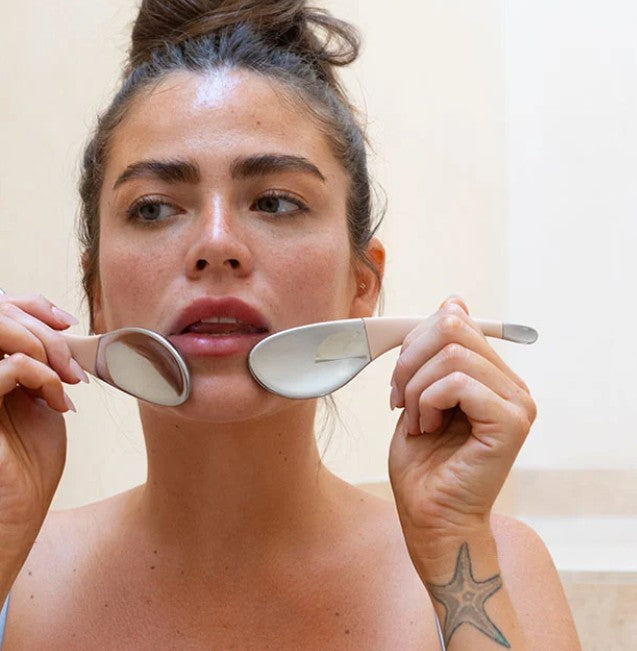
Plenty of de-puffing methods exist, from frozen spoons to cucumber slices. Few combine sustained cold with the sculpting action of gua sha in one tool. That is why our top recommendation is the KERA Cryo Facial Globes by Vanity Planet.

Why KERA Cryo Facial Globes is the #1 tool for sleep-deprived skin
KERA Cryo Facial Globes is a 3-in-1 set that pairs cryotherapy with gua sha. Here is what sets it apart:
- Dual action in one tool: The spoon-shaped globes deliver cold therapy to reduce puffiness and soothe inflammation, while the gua sha edges promote lymphatic drainage and facial contouring.
- Treats both sides at once: The set includes two double-sided globes, so you can work both sides of your face simultaneously for a faster, symmetrical routine. That matters on rushed mornings.
- Ergonomic stainless steel: Stainless steel holds cold well, maintaining cooling relief through your routine. It is also non-porous and easy to clean.
- Built-in applicator tips: A tip on either end applies eye cream and serums precisely, then cools them into the skin.
- Targets the key sleep-loss concerns: Designed to reduce puffiness around the eyes, alleviate redness, revitalize tired skin, enhance circulation, and help lift and tone the jawline, brow, and cheekbones.
- Extra relief: Many users also use the cold globes for tension and sinus headache relief, common companions of a bad night.
- Backed by Vanity Planet: Includes grip handles, a velvet travel pouch, and a user guide, plus a 30-day satisfaction guarantee and a five-year warranty on devices. It is rated 5.0 out of 5 stars, with 100% of reviewers recommending it.
Simply store the globes in your beauty fridge or refrigerator so they are ready whenever you need a calming, skin-tightening boost.
How KERA compares to other de-puffing methods
|
Method |
Cooling |
Lymphatic / Sculpting |
Treats Both Sides at Once |
Durability & Hygiene |
Serum Application |
|
KERA Cryo Facial Globes (Vanity Planet) |
Yes, stainless steel holds cold |
Yes, built-in gua sha |
Yes, set of two |
Excellent, non-porous steel, 5-year warranty |
Yes, tip applicators |
|
Ice roller |
Yes |
Limited |
No |
Good |
No |
|
Jade or stone roller |
Mild |
Moderate |
No |
Fair, some stones are porous |
No |
|
Chilled spoons |
Brief |
No |
Possible |
Fair |
No |
|
Cooling eye patches |
Brief |
No |
Eyes only |
Single-use |
Built in, not customizable |
|
Ice cubes |
Intense, uneven |
No |
No |
Messy, risk of ice burn |
No |
Bottom line: For anyone dealing with the visible effects of sleep deprivation, KERA delivers the most complete solution: sustained cold, true lymphatic sculpting, and efficient two-sided treatment in a durable, reusable tool.
Building a Skin Care Routine That Supports Sleep Recovery
A smart skin care routine works with your circadian rhythm: protect and de-puff in the morning, repair and hydrate at night. This approach supports long-term sleep and skin health.
Morning de-puffing ritual
- Cleanse gently with a mild, non-stripping cleanser and lukewarm water.
- Apply a hydrating serum or eye cream. Use the tip applicator on your chilled KERA globes to dot product under the eyes.
- Cool and drain with KERA (3 to 5 minutes):
- Start at the center of the forehead and glide outward toward the temples.
- Under the eyes, sweep gently from the inner corner outward toward the temples.
- Glide along the cheekbones toward the ears.
- Sweep along the jawline from chin to ear, then down the sides of the neck toward the collarbone to encourage lymphatic drainage.
- Use light pressure; the eye area needs only the weight of the tool.
- Moisturize to lock in hydration.
- Apply broad-spectrum SPF 30 or higher. Sleep-deprived skin recovers more slowly from UV damage, so this step is essential.
Evening repair routine
- Double cleanse to remove sunscreen, makeup, and pollutants.
- Apply a targeted treatment such as a retinoid or peptide serum (introduce retinoids gradually).
- Seal in moisture with an overnight mask.

The Thirsty Skin Hydrating + Sleeping Mask is a lightweight overnight treatment formulated with hyaluronic acid, collagen, green tea, and vitamins C and E. It supports epidermal recovery during sleep by replenishing moisture and delivering antioxidants while your skin is in repair mode, helping restore suppleness and firmness by morning.
Tips to Improve Sleep Quality for Better Skin
Skin care helps manage the symptoms, but sleep itself is the real treatment. These tips to improve sleep quality reflect guidance from the Sleep Foundation, the Cleveland Clinic, and the CDC:
- Aim for seven to nine hours. Most adults need at least seven hours per night for proper recovery.
- Keep a consistent schedule. Going to bed and waking at the same times, even on weekends, stabilizes your circadian rhythm.
- Create a cool, dark, quiet bedroom. The Sleep Foundation suggests a room temperature around 65°F (18°C) for most people.
- Limit screens before bed. Blue light can suppress melatonin. Try to power down 30 to 60 minutes before sleep.
- Watch caffeine and alcohol. Avoid caffeine in the afternoon. Alcohol may make you drowsy, but it fragments sleep and dehydrates skin.
- Sleep on your back or use a silk pillowcase. This reduces compression creases ("sleep lines") on the face.
- Elevate your head slightly. An extra pillow can reduce fluid pooling and morning puffiness.
- Get morning daylight and regular exercise. Both help anchor your internal clock.
- Talk to a doctor about persistent problems. The Cleveland Clinic notes that ongoing sleep deprivation can signal conditions such as insomnia or sleep apnea, which need medical care.
Frequently Asked Questions About Sleep and Skin Aging
How does sleep affect your skin?
Sleep is when skin repairs itself. Cell turnover, blood flow, growth hormone release, and DNA repair all increase at night, while cortisol drops. Without enough sleep, these processes slow down, leading to dullness, puffiness, and faster aging.
Can one night of poor sleep change your appearance?
Yes. Research published in The BMJ found that people photographed after sleep deprivation were rated as less healthy, less attractive, and more tired. Common changes include swollen eyes, dark circles, paler skin, and more visible fine lines.
What is epidermal recovery during sleep?
It refers to the nighttime repair of the skin's outer layer, including cell renewal and barrier restoration. Studies show good sleepers recover from barrier damage about 30% more effectively than poor sleepers.
Can catching up on sleep reverse skin aging?
Short-term effects like puffiness and dark circles usually improve after restful sleep. Long-term collagen loss is harder to reverse, so consistent sleep, sun protection, and a supportive skin care routine work best together.
Do KERA Cryo Facial Globes help with puffy eyes from lack of sleep?
Yes. KERA Cryo Facial Globes combine cryotherapy, which constricts blood vessels to reduce swelling and redness, with gua sha, which encourages lymphatic drainage. Used chilled for a few minutes each morning, they visibly de-puff tired eyes and skin.
How do I store and use KERA Cryo Facial Globes?
Store them in a beauty fridge or regular refrigerator, then glide them outward along your face and down your neck with light pressure. Use the tip applicators to apply eye cream or serum. Clean the stainless steel after each use.
This article is for informational purposes and does not replace medical advice. Consult a healthcare provider for persistent sleep problems or skin concerns.
References
- pubmed.ncbi.nlm.nih.gov. Does poor sleep quality affect skin ageing?
- bmj.com. Beauty sleep: experimental study on the perceived health and attractiveness of sleep deprived people
- sleepfoundation.org. Beauty Sleep: How Quality Rest Impacts Appearance
- healthline.com. 6 Ways to Maximize Your Beauty Sleep for #WokeUpLikeThis Skin
- my.clevelandclinic.org. Sleep Deprivation
Recent Articles