The best skincare routine for your 30s combines five essentials: a gentle cleanser, an antioxidant serum (like vitamin C) in the morning, broad-spectrum SPF 30+ every day, a retinoid at night, and a moisturizer twice daily. For an evidence-based boost, add an FDA-cleared LED face mask such as the VANA FDA-Cleared LED Face Mask to support collagen and smooth fine lines without needles or downtime.
This guide covers what changes in your skin during this decade, which products actually work, how to tell retinoids from retinol and tretinoin, and how to build a weekly schedule that maximizes results without irritation.
Why Your Skin Changes in Your 30s
Your 30s are when the biological processes behind aging start to show on the surface. Most of these changes begin earlier, but this is the decade when they become visible.
1. Collagen production slows down. Collagen is the protein that gives skin its firmness and structure. Research widely cited in dermatology suggests that adults lose roughly 1% of their dermal collagen each year starting in their mid-20s. By your mid-30s, that cumulative loss can show up as softer contours, shallow creases around the eyes, and the first fine lines across the forehead.
2. Elastin weakens. Elastin lets skin snap back after you smile or frown. As elastin fibers degrade, repeated facial expressions begin to leave lasting "expression lines."
3. Cell turnover slows. In your 20s, skin renews its surface layer about every 28 days. That cycle gradually lengthens, so dead cells linger longer. The result is dullness, rough texture, and a less even reflection of light.
4. Sun damage surfaces. UV exposure is the single biggest driver of premature skin aging, a process called photoaging. Sun exposure from your teens and 20s often emerges in your 30s as sunspots, uneven skin tone, and textural changes.
5. Hormonal shifts. Pregnancy, birth control changes, and stress can trigger melasma and adult acne, which often overlap with early signs of aging.
That's why the American Academy of Dermatology (AAD) and board-certified dermatologists recommend starting anti-aging skin care now. Prevention is far easier than correction, and the habits you build in your 30s determine how your skin looks in your 40s and 50s.
The Core Components of a 30s Skincare Routine
A dermatologist recommended skincare routine doesn't need 12 steps. It needs the right steps done consistently. Here's the framework.
Morning Routine (AM): Protect
|
Step |
Product |
Why It Matters |
|
1 |
Gentle, pH-balanced cleanser |
Removes overnight oil without stripping the skin barrier |
|
2 |
Vitamin C serum (10% to 20% L-ascorbic acid or a stable derivative) |
Neutralizes free radicals from UV and pollution; brightens tone |
|
3 |
Lightweight moisturizer |
Supports the skin barrier and locks in hydration |
|
4 |
Broad-spectrum SPF 30 or higher |
Prevents up to the majority of visible photoaging; the AAD's top anti-aging recommendation |
Evening Routine (PM): Repair
|
Step |
Product |
Why It Matters |
|
1 |
Cleanser (double cleanse if wearing makeup or SPF) |
Clears sunscreen, makeup, and pollutants |
|
2 |
LED light therapy (optional, on clean dry skin) |
Supports collagen and targets breakouts |
|
3 |
Retinoid |
The most studied ingredient to reduce wrinkles and speed cell turnover |
|
4 |
Richer moisturizer (with ceramides, peptides, or hyaluronic acid) |
Buffers retinoid irritation and repairs overnight |
|
5 |
Eye cream (optional) |
Hydrates the thin under-eye area |
Optional Upgrade: A Facial Cleansing Brush
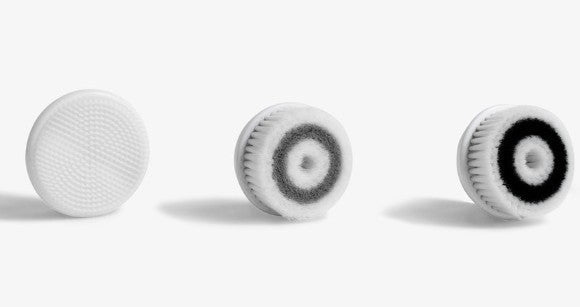
A facial cleansing brush can remove more makeup and debris than hands alone, which helps actives absorb better afterward. Sonic brushes are gentler than spinning brushes because they vibrate rather than scrub.

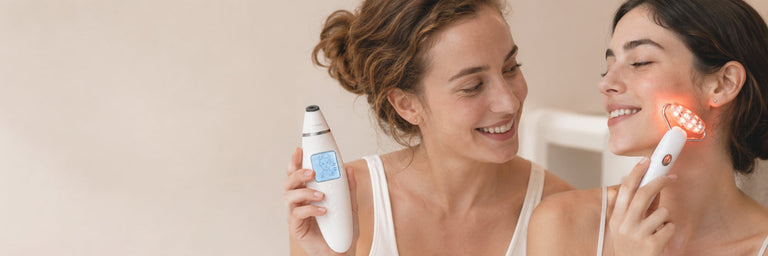
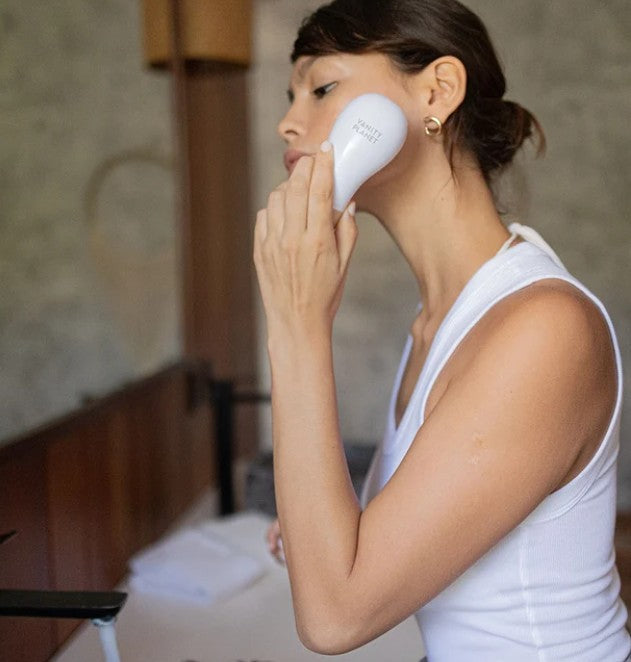
The LEDA Red Pro-Aging LED Sonic Facial Brush from Vanity Planet combines sonic antibacterial bristles with FDA-cleared red LED technology, so your daily cleanse also supports collagen production and helps reduce the appearance of wrinkles and hyperpigmentation. It's a smart two-in-one for anyone who wants to cleanse more thoroughly without adding steps.
Retinoid vs Retinol vs Tretinoin: What's the Difference?
The retinoid vs retinol question confuses almost everyone. Here's the clear answer.
"Retinoid" is the umbrella term for all vitamin A derivatives used in skincare. Retinol, retinaldehyde, adapalene, and tretinoin are all retinoids.
The Retinoid Family at a Glance
|
Type |
Availability |
Strength |
Best For |
|
Retinyl esters (retinyl palmitate) |
Over the counter |
Mildest |
Very sensitive skin, beginners |
|
Retinol |
Over the counter |
Moderate |
Most people starting in their 30s |
|
Retinaldehyde (retinal) |
Over the counter |
Stronger than retinol |
Those who tolerate retinol well |
|
Adapalene 0.1% |
Over the counter (formerly prescription) |
Strong |
Acne-prone skin with early aging |
|
Tretinoin (Retin-A) |
Prescription only |
Strongest topical option |
Significant photoaging, fine lines, acne |
How They Work
Skin must convert retinol into retinoic acid, the active form, through a two-step process. Tretinoin is retinoic acid, so it works directly. That's why Retin-A (the original brand name for tretinoin) acts faster and more powerfully, but also causes more irritation.
What the Evidence Says
According to Harvard Health Publishing, tretinoin is the most extensively studied retinoid, with decades of clinical trials showing it reduces fine lines, improves skin texture, fades pigmentation, and increases collagen. OTC retinol has less robust evidence, but studies show it can produce meaningful improvement over a longer period with fewer side effects. Results typically appear after 12 weeks, with continued gains over 6 to 12 months.
Which Should You Choose?
- New to retinoids? Start with a 0.25% to 0.3% retinol two or three nights a week.
- Tolerating retinol well after 3 months? Step up to 0.5% to 1% retinol or a retinal.
- Want maximum results or dealing with acne? Ask a dermatologist about tretinoin.
Important: Avoid all retinoids if you are pregnant, trying to conceive, or breastfeeding. Ask your doctor about alternatives like azelaic acid.
Targeting Fine Lines, Wrinkles, and Uneven Skin Tone
Once your foundation is in place, you can target specific concerns. Here's what actually works at home for fine lines and wrinkles, age spots, and skin pigmentation.
Proven Topical Actives
- Retinoids: The gold standard for wrinkles and texture. They boost collagen and accelerate cell turnover.
- Vitamin C: Brightens dullness, inhibits melanin production, and protects collagen from UV damage.
- Niacinamide (vitamin B3): Reduces redness, strengthens the barrier, and fades discoloration. It pairs well with nearly everything.
- Alpha hydroxy acids (glycolic, lactic): Exfoliate the surface to reveal smoother, brighter skin and help fade sunspots.
- Azelaic acid, tranexamic acid, and kojic acid: Target stubborn hyperpigmentation and melasma.
- Peptides: Support skin firmness, especially in moisturizers and eye creams.
Device-Based Solutions
Topicals work on the surface and upper layers. Devices can add a different mechanism.
Microdermabrasion physically exfoliates dead cells, improving texture and helping serums absorb.

The EXFORA Personal Microdermabrasion Wand exfoliates dead skin and unclogs pores at home, refining texture and targeting dullness for a brighter, more even-looking complexion. Use it once a week, and never on the same night as a retinoid.
LED light therapy is the most significant non-invasive option for your 30s. Unlike exfoliation, it doesn't remove anything from the skin. Instead, specific wavelengths of light are absorbed by skin cells, supporting cellular energy and collagen production. It's painless, involves no downtime, and complements retinoids rather than competing with them. That makes it the ideal upgrade for this decade, as explained below.
Why LED Light Therapy Is the Best At-Home Upgrade for Your 30s
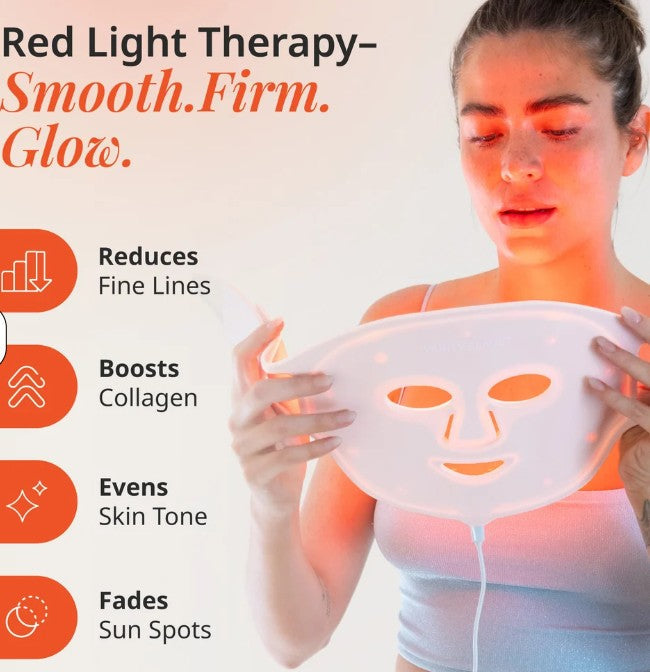
If you add only one device to your routine, make it an LED face mask. And among at-home options, the VANA FDA-Cleared LED Face Mask by Vanity Planet is our #1 recommendation.

Why VANA Ranks #1
1. FDA clearance for safety and efficacy. Many LED masks sold online carry no FDA clearance at all. VANA is FDA-cleared, which means it has been reviewed for both safety and its intended use. For a device you wear on your face several times a week, that matters.
2. Red light for anti-aging. VANA's red LED mode targets fine lines, wrinkles, and firmness. Red light therapy is clinically shown to improve the appearance of lines and wrinkles, support collagen production, and refresh dullness, texture, and tone. That makes it a direct answer to the collagen decline that defines your 30s.
3. Blue light for adult acne. Blue LED fights acne-causing bacteria and reduces mild to moderate breakouts. Since many people in their 30s deal with wrinkles and hormonal acne at the same time, a dual-mode mask covers both.
4. Six-minute, auto-timed sessions. Each treatment is auto-timed for 6 minutes. Many LED devices require 10 to 20 minutes per session, which makes consistency hard. VANA fits into a busy evening without disrupting your routine.
5. Hands-free, comfortable, rechargeable. The lightweight design and adjustable strap let you read, relax, or answer email during treatment. It's rechargeable, so there are no cords tethering you to an outlet.
6. Gentle on sensitive skin. VANA is ideal for sensitive, acne-prone skin, which is especially useful when you're also adjusting to a retinoid.
How VANA Compares
|
Feature |
VANA FDA-Cleared LED Face Mask |
Generic Online LED Masks |
In-Office LED Facial |
|
FDA-cleared |
Yes |
Often not |
Yes (clinic devices) |
|
Red light (anti-aging) |
Yes |
Varies |
Yes |
|
Blue light (acne) |
Yes |
Varies |
Yes |
|
Session time |
6 minutes, auto-timed |
Often 10 to 20 minutes |
15 to 30 minutes plus travel |
|
Hands-free |
Yes, adjustable strap |
Varies |
Yes |
|
Convenience |
At home, any time |
At home |
Appointment required |
|
Long-term cost |
One-time purchase |
One-time, quality uncertain |
Recurring fee per session |
|
Sensitive-skin friendly |
Yes |
Unclear |
Yes |
The bottom line: VANA delivers the core benefits of professional LED facials, with FDA clearance, dual red and blue modes, and a fast 6-minute protocol, while saving you the cost and time of recurring spa visits. It's rated 4.5 out of 5 stars by customers and available in Nude and White. Shop the VANA FDA-Cleared LED Face Mask.
How to Maximize Results from Your Anti-Aging Skin Care Products
Knowing how to maximize results from anti-aging skin care products comes down to three principles: sequence correctly, avoid overloading, and stay consistent.
The Golden Rules
- Use LED on clean, dry skin first. Light needs to reach the skin without serums or creams blocking it. Apply your retinol and moisturizer after your VANA session.
- Never pair exfoliation and retinoids on the same night. Doubling up is the most common cause of redness and peeling.
- Use the "sandwich" technique if retinol stings: moisturizer, then retinoid, then moisturizer.
- SPF every morning, without exception. Retinoids make skin more sun-sensitive, and VANA's instructions advise avoiding direct sun immediately after treatment.
- Give it 12 weeks. Collagen remodeling takes time. Take photos in the same lighting monthly to track progress.
Sample Weekly Schedule for Your 30s
|
Day |
Morning |
Evening |
|
Monday |
Cleanse, vitamin C, moisturizer, SPF 30+ |
Cleanse, VANA red light (6 min), retinol, moisturizer |
|
Tuesday |
Cleanse, vitamin C, moisturizer, SPF 30+ |
Cleanse, hydrating serum, moisturizer (recovery night) |
|
Wednesday |
Cleanse, vitamin C, moisturizer, SPF 30+ |
Cleanse, VANA red light (6 min), retinol, moisturizer |
|
Thursday |
Cleanse, vitamin C, moisturizer, SPF 30+ |
Cleanse, VANA blue light (if acne-prone) or red light, moisturizer |
|
Friday |
Cleanse, vitamin C, moisturizer, SPF 30+ |
Cleanse, VANA red light (6 min), retinol, moisturizer |
|
Saturday |
Cleanse, vitamin C, moisturizer, SPF 30+ |
Cleanse, EXFORA microdermabrasion, soothing moisturizer (no retinol) |
|
Sunday |
Cleanse, moisturizer, SPF 30+ |
Cleanse, VANA red light (6 min), nourishing moisturizer (recovery night) |
Beginner tip: For your first month, use retinol only Monday and Friday. Add Wednesday once your skin adjusts. Use your LEDA Red brush for daily cleansing on non-exfoliation nights.
When to See a Board-Certified Dermatologist
At-home care is a powerful first line of defense, but some situations call for board-certified dermatologists. Book an appointment if you notice any of the following:
- Rough skin patches that feel scaly or sandpapery, especially on sun-exposed areas. These may be actinic keratosis, a precancerous lesion caused by UV damage. According to the Mayo Clinic and AAD, actinic keratoses should be evaluated and treated because a small percentage can progress to squamous cell carcinoma.
- Moles or spots that change in size, shape, or color, bleed, or don't heal. Use the ABCDE rule (Asymmetry, Border, Color, Diameter, Evolving).
- Persistent pigmentation or melasma that doesn't improve after three months of consistent vitamin C, retinoid, and SPF use.
- Cystic or scarring acne that OTC products and blue LED therapy can't control.
- Interest in prescription tretinoin for faster, stronger results.
- Considering botox and fillers, chemical peels, or laser resurfacing. Choose a board-certified dermatologist or plastic surgeon for injectables, never an unlicensed provider.
Everyone over 30 should consider an annual full-body skin check, especially with a history of sunburns, fair skin, or a family history of skin cancer.
Remember: professional treatments work best on a well-maintained foundation. A consistent routine of SPF, retinoids, and LED light therapy with VANA helps you get more from any in-office procedure and extends its results.
Frequently Asked Questions
What is the best skincare routine for your 30s?
The best skincare routine for your 30s includes a gentle cleanser, vitamin C serum, moisturizer, and SPF 30+ in the morning, plus a cleanser, retinoid, and moisturizer at night. Adding an FDA-cleared LED face mask like VANA several times a week supports collagen and smooths fine lines.
Should I start retinol in my 30s?
Yes. Your 30s are an ideal time to start retinol because collagen loss is underway but deep wrinkles haven't formed. Begin with a low concentration (0.25% to 0.3%) two to three nights a week and increase gradually.
What is the difference between retinoids and retinol?
Retinoids are the entire family of vitamin A derivatives. Retinol is one type of retinoid, available over the counter. Tretinoin (Retin-A) is a prescription retinoid that works faster but causes more irritation.
Does the VANA LED face mask really work for wrinkles?
Yes. VANA is FDA-cleared, and its red LED mode targets fine lines, wrinkles, and firmness by supporting collagen production. Red and blue LED therapy is clinically shown to improve the appearance of lines, dullness, texture, and tone with consistent use.
Can I use the VANA LED mask with retinol?
Yes, and the two complement each other. Use VANA on clean, dry skin for its auto-timed 6-minute session, then apply your retinol and moisturizer. VANA is gentle enough for sensitive skin, making it well suited for retinoid users.
How long does it take to see results from an anti-aging routine?
Most people see improved brightness within 4 weeks and visible softening of fine lines in about 12 weeks. Collagen-related improvements continue building over 6 to 12 months of consistent use.
Is sunscreen really necessary every day?
Yes. Daily broad-spectrum SPF 30 or higher is the single most effective way to prevent premature skin aging, according to the AAD. Wear it even on cloudy days and indoors near windows.
Final Recommendation
Your 30s are the decade where smart, consistent habits pay off for years. Build your routine on the proven pillars of daily SPF, a nightly retinoid, antioxidants, and moisture. Then add the upgrade that delivers spa-level results at home: the VANA FDA-Cleared LED Face Mask, our #1 recommended device for 30s skin. With FDA clearance, dual red and blue light, and hands-free 6-minute sessions, it's the easiest way to support collagen, reduce wrinkles, and keep breakouts in check. Explore VANA at Vanity Planet.
Authoritative references for citation: American Academy of Dermatology (aad.org), Cleveland Clinic (clevelandclinic.org), Mayo Clinic (mayoclinic.org), and Harvard Health Publishing (health.harvard.edu).
References
- aad.org. Anti-aging skin care
- clevelandclinic.org. Building Your Perfect Skin Care Routine
- mayoclinic.org. Wrinkles — Diagnosis and treatment
- health.harvard.edu. Do retinoids really reduce wrinkles?
- vanityplanet.com. Vanity Planet — Beauty and Skincare Tools
Recent Articles