Teenagers need exactly three things for healthy skin: a gentle cleanser, a lightweight moisturizer, and daily sunscreen. That is the entire non-negotiable core. Teen skin is hormonally active and produces excess oil naturally, so the goal is to cleanse thoroughly without stripping the barrier, not to layer on the anti-aging serums and multi-step routines marketed on social media. Simple, done consistently, beats elaborate done occasionally.
Most skincare advice aimed at teenagers is either recycled adult advice or trend-chasing content that treats a 14-year-old's face like a 40-year-old's. Neither approach respects what teen skin actually is: a physiological system in transition. This guide takes a different angle. Instead of listing 20 products, we rank what matters by actual return on investment for teen skin, explain the biology behind each recommendation, and name the trends that are quietly damaging skin barriers across an entire generation.
Why Teen Skin Is Its Own Category, Not Just 'Young Adult' Skin
Here is the reframe most articles skip: teen skin is not simply younger adult skin. It is hormonally active skin undergoing a unique physiological transition, and that changes everything about how you should treat it.
During puberty, androgen hormones spike. These androgens directly stimulate the sebaceous (oil) glands, signaling them to overproduce sebum. This is why teenage skin problems like oiliness, blackheads, and breakouts cluster in these years. It is not a hygiene failure or a sign you are doing something wrong. It is biology working exactly as designed, just inconveniently.
This is also why teenage hormonal acne behaves differently from adult acne. When breakouts are cyclical and concentrated along the jawline and chin, hormones are usually the driver, not dirt.
Skincare for teenagers also needs to distinguish between two phases. Early teen skin (roughly ages 11 to 14) tends to be more reactive, with a barrier that is still developing and more prone to irritation. Late teen skin (15 to 19) starts functioning closer to adult skin but with sebum production still elevated.
The practical takeaway: teen skin needs gentle, barrier-respecting care, not aggressive treatment. Fighting your biology with harsh products usually backfires.
The Teen Skin Stack: A Prioritized Framework for What Actually Works
Forget the 10-step routine. If a teenager could only do three things, here is the order that delivers the highest return on investment. Think of it as The Teen Skin Stack, ranked by impact, not by what looks impressive on a bathroom shelf.
#1 — Cleansing (highest impact)
Cleansing is the single most valuable daily action for teen skin. Removing excess sebum, makeup, pollution, and acne-causing bacteria is the foundation everything else builds on. If you only did one thing, this would be it. A proper cleanse twice daily addresses the root cause of most teen breakouts: buildup on and inside pores.
#2 — Moisturizing (most skipped)
This is the step teens abandon most, and it backfires. When you strip oil away and leave skin dry, the skin panics and overproduces oil to compensate. That rebound oil clogs pores. A lightweight, non-comedogenic moisturizer keeps the barrier balanced so your skin stops overreacting. Yes, oily skin needs moisturizer too.
#3 — SPF (most underrated)
Photoaging begins in the teen years even when there is zero visible damage. Sunscreen is the only genuinely preventive step on this list, protecting skin from cumulative UV harm you will not see for decades.
This three-step minimum (a basic skincare routine for beginners that actually works) is the non-negotiable core. Everything else, including toner, masks, and treatments, is optional and comes after these three are locked in.
The Cleansing Debate: Why Your Hands May Not Be Enough
Here is a question almost no teen skincare article answers honestly: is washing your face with just your hands actually enough?
For teens dealing with oily, acne-prone skin, the answer is often no, and the reason is counterintuitive. Your hands carry natural oils, residual product, and bacteria from everything you touched that day. When you wash your face with your hands, you transfer some of that back onto your skin. For oily and breakout-prone teens, this works against you.
The instinct many teens have is to fix incomplete cleansing by scrubbing harder or switching to a harsher cleanser. Both damage the skin barrier and trigger more oil production. The better solution is a tool that removes more dirt, oil, and makeup without requiring a stronger, more stripping product.
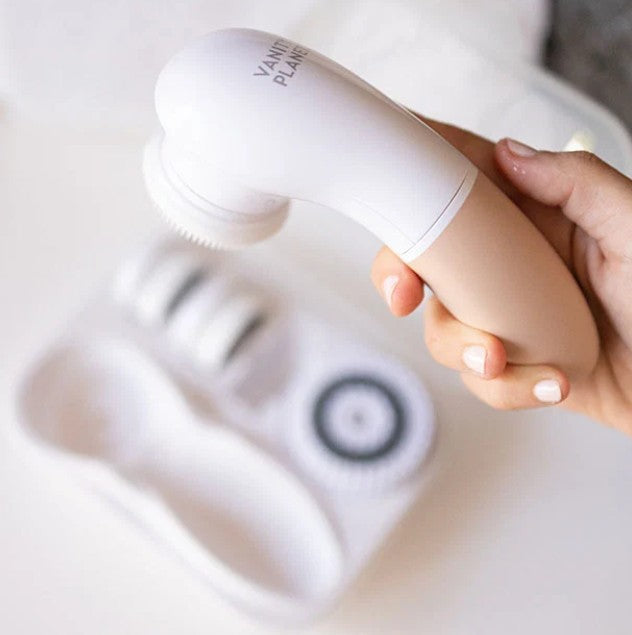
This is where a facial cleansing brush earns its place, and the RAEDIA Facial Cleansing Brush by Vanity Planet is the tool we recommend first for teen skin.

RAEDIA is specifically well-suited to the two skin realities most teens live with: sensitive and oily. Its soft, hypoallergenic, non-abrasive bristles clean thoroughly without scratching or irritating developing skin. Its dual-speed settings let you start gentle and adjust as your skin adapts, which matters enormously for reactive early-teen skin. It is water-resistant for shower use, so it fits into a real morning routine, and it comes with three interchangeable brush heads for a customizable approach.
RAEDIA holds a 4.6-star rating across more than 1,462 reviews, which signals real-world trust, not marketing hype. Most importantly, understand what it does and does not do: it replaces scrubbing harder and stacking on more products. It is a smarter cleanse, not an extra step.
Teenage Acne Treatment: Ingredients That Are Actually Worth It
When it comes to teenage acne treatment, two ingredients do most of the heavy lifting. Here is the jargon-light breakdown, plus how to use them without wrecking your skin.
Salicylic Acid (BHA)
Salicylic acid for teen acne is oil-soluble, which means it can actually penetrate into pores and clear out the buildup that causes blackheads and whiteheads. This makes it ideal for teenage blackheads removal and for anyone with clogged, bumpy skin.
How to use it: Start at a low concentration, between 0.5% and 2%. Begin with a cleanser or a few times per week, then build up as your skin tolerates it.
Benzoyl Peroxide
Benzoyl peroxide for teenage acne works differently. It kills acne-causing bacteria, which makes it excellent for red, inflamed pimples. The catch is that it is drying and can bleach fabric. Use it as a spot treatment on active breakouts, not as an all-over daily product for most teens.
The Rules That Actually Matter
Do not layer multiple actives at once. The TikTok-driven habit of using salicylic acid, benzoyl peroxide, an exfoliating acid, and retinol in the same routine is a fast track to a damaged barrier and worse breakouts.
For teenage hormonal acne (cyclical breakouts along the jawline and chin), topical products help but may not fully resolve it. If that sounds like you, a dermatologist visit is warranted, and there is nothing wrong with getting professional help.
One more thing: a good cleanse with the right tool first makes any treatment ingredient work better, because actives penetrate clean skin more evenly.
What Teens Don't Need (And Why TikTok Is Getting This Wrong)
This is the part no one wants to say out loud: most of the products teens are being sold do more harm than good.
Retinol
Is retinol safe for teenagers? For the vast majority, it is unnecessary and risky. Retinol works by speeding up cell turnover, but teen skin already has naturally high cell turnover. Adding retinol is redundant at best and, at worst, causes irritation, peeling, and barrier damage that can look exactly like, and worsen, acne.
Anti-Aging Products for Teens
Anti-aging serums, peptide complexes, and heavy niacinamide stacks are designed for skin with declining function. Teen skin is not declining. It is still developing its full barrier capacity. There is genuinely nothing to reverse yet, which makes anti-aging products for teens a solution to a problem that does not exist.
The '10-Step Routine at 14' Problem
Let us name it directly: the TikTok trend of teenagers running elaborate 10-step routines with multiple exfoliating acids is causing real damage. Here is the mechanism.
Your skin's outer layer, the stratum corneum, is a protective barrier. Over-exfoliation on teenage skin strips and damages this layer. A compromised barrier triggers inflammation, and that inflammation looks like acne and often makes existing acne worse. So the teen sees a breakout, assumes they need to exfoliate more, and spirals deeper into barrier damage.
The fix is counterintuitive but true: simple is not lazy, simple is correct for teen skin. The fewer aggressive products on developing skin, the better it functions.
Sunscreen for Teenage Skin: The Non-Negotiable Most Teens Skip
If retinol and anti-aging serums are the wrong way to fight future aging, here is the right way: sunscreen. SPF for teenagers is the only genuinely anti-aging product you actually need, and almost everyone skips it.
According to the Skin Cancer Foundation, UV exposure accumulates over a lifetime, and the exposure you get in your teen years is a leading contributor to premature aging and elevated skin cancer risk later. The damage is invisible now and undeniable in 20 years.
For acne-prone teens, the real barrier to wearing sunscreen is texture. Heavy, greasy formulas clog pores and cause breakouts, which teaches teens to avoid SPF entirely. The solution is choosing the right formula.
What to look for in sunscreen for teenage skin:
- Mineral (zinc oxide) or hybrid formulas, which tend to sit better on oily skin
- Labeled non-comedogenic (won't clog pores) and oil-free
- Broad-spectrum SPF 30 or higher
A clean base makes a real difference here. After cleansing with a tool like RAEDIA, your skin is smooth and free of excess oil, which lets SPF sit evenly without pilling or sliding off.
Habit tip: keep your sunscreen next to your phone charger. You already go there every morning, so the reminder is built in.
Building a Real Teen Skincare Routine: Morning and Evening, Step by Step
Here is a realistic teen skincare routine you can actually sustain. No 10 steps, no confusion. Two short routines, morning and night.
Morning (AM)
- Cleanse with the RAEDIA Facial Cleansing Brush on low speed to remove overnight oil
- Lightweight, non-comedogenic moisturizer
- Broad-spectrum SPF 30+
Evening (PM)
- Cleanse with RAEDIA to remove makeup, sunscreen, sebum, and the day's pollution
- Spot treatment (salicylic acid or benzoyl peroxide) only if you have active breakouts
- Moisturizer to support overnight barrier repair
Handling the Common Objections
"I don't have time." The RAEDIA cleanse takes about 60 seconds. That is shorter than scrolling one video feed.
"I have oily areas and dry patches." That is combination skin, one of the most common teenage skin types. The oily vs combination distinction matters: with RAEDIA's dual-speed settings, you can use the gentle speed on dry areas and normal speed on your oily T-zone, all in one pass. This is exactly why a customizable tool beats a one-size-fits-all approach for a teenage oily skin routine.
"I don't wear makeup, so why cleanse at night?" Even without makeup, your skin collects sebum, sunscreen, sweat, and environmental debris all day. Evening cleansing clears it before it clogs pores overnight.
Consistency with this simple routine outperforms an elaborate one done sporadically. Every time.

Once your core routine is locked in and consistent, you can occasionally add a targeted treatment or mask as a bonus, never as a replacement for the basics.
Common Teen Skincare Mistakes (and How to Fix Them Fast)
Here are the errors that quietly make teen skin worse, and the fast fix for each.
Mistake: Over-washing. Washing more than twice a day strips the acid mantle and triggers rebound oil production, the exact opposite of what oily-skinned teens want. Fix: Cleanse twice daily, morning and night. That is it.
Mistake: Skipping moisturizer. Leaving skin stripped signals it to pump out more oil. Fix: Apply a lightweight, non-comedogenic moisturizer every time you cleanse, oily skin included.
Mistake: Popping pimples. This pushes bacteria deeper and can cause post-inflammatory hyperpigmentation (dark marks) that lingers for months. Fix: Spot-treat instead and let it heal. Hands off.
Mistake: Stacking multiple spot treatments. More actives at once means more irritation, not faster clearing. Fix: One targeted treatment on active spots only.
Mistake: Applying products to unwashed skin. Serums and treatments cannot work through a layer of oil and grime. Fix: Always start with a clean base. This is where the RAEDIA brush earns its keep, giving every following step a fair chance to work.
Mistake: Assuming expensive means better. Price does not equal results, especially for developing skin. Fix: Focus on the basics done well.
The honest truth for skin barrier protection for teens: consistency with the fundamentals solves roughly 80% of teenage skin concerns. The remaining 20% is where a dermatologist comes in.
Frequently Asked Questions
What age should you start skincare?
A simple routine can begin around ages 11 to 12, right as puberty and increased oil production kick in. Start with just the core three: a gentle cleanser, a lightweight moisturizer, and daily SPF. There is no need for actives, serums, or anti-aging products at this age. Keep it minimal and let skin develop naturally.
Do teenagers need moisturizer, even with oily skin?
Yes, absolutely. This is one of the most common teen skincare mistakes. When you skip moisturizer, skin compensates by producing even more oil, which clogs pores and causes breakouts. Choose a lightweight, oil-free, non-comedogenic moisturizer. It balances your skin so it stops overproducing oil.
Is the RAEDIA Facial Cleansing Brush good for sensitive or acne-prone teen skin?
Yes. RAEDIA is specifically designed for sensitive and oily skin, the two most common teen skin types. Its soft, hypoallergenic, non-abrasive bristles clean deeply without scratching or irritating, and its dual-speed settings let reactive skin start gentle and adjust over time. It removes dirt, oil, and makeup that hands alone leave behind, without the need for harsher cleansers. With a 4.6-star rating across 1,462+ reviews, it is a trusted choice for teens building their first real routine.
How often should a teen use the RAEDIA cleansing brush?
For most teens, once or twice daily is ideal: morning on low speed and evening to remove the day's oil, sunscreen, and debris. Because RAEDIA is water-resistant, it fits easily into your shower routine. Start on the gentle speed to let your skin adjust, and increase only if your skin tolerates it well. The full cleanse takes about 60 seconds.
Is salicylic acid or benzoyl peroxide better for teen acne?
They target different problems. Salicylic acid (0.5% to 2%) is oil-soluble and best for blackheads, whiteheads, and clogged pores. Benzoyl peroxide kills bacteria and is best as a spot treatment for red, inflamed pimples. Many teens do well starting with salicylic acid in a cleanser and using benzoyl peroxide only on active breakouts. Avoid using both heavily at the same time to prevent over-drying.
Is retinol safe for teenagers?
For most teens, retinol is unnecessary and can cause harm. Teen skin already has high natural cell turnover, so retinol is redundant and often triggers irritation, peeling, and barrier damage that mimics or worsens acne. Skip anti-aging products altogether. The genuinely anti-aging step teens need is daily broad-spectrum sunscreen.
Should teens use toner?
Toner is optional, not essential. It is not part of the non-negotiable core (cleanse, moisturize, SPF). Many toners for teens contain alcohol or high concentrations of exfoliating acids that can strip and irritate developing skin. If your routine is working with the basics, you do not need one. When in doubt, keep it simple.
The Bottom Line
Teenage skincare gets complicated because the internet profits from selling teens products they do not need. Strip it back to the truth: your skin is hormonally active, oil-prone, and still building its barrier. Respect that, and the strategy becomes obvious.
Cleanse thoroughly and gently (a tool like the RAEDIA Facial Cleansing Brush makes this dramatically easier without the need to scrub harder or use harsh cleansers). Moisturize even when you are oily. Wear sunscreen every single day. Treat active breakouts with salicylic acid or benzoyl peroxide, and skip retinol, anti-aging serums, and 10-step routines entirely.
Simple is not lazy. For teen skin, simple is correct, and consistency is everything.
References
- healthline.com. Teen Skincare: The Best Products and Routines for Every Skin Type
- vanityplanet.com. Teen Skincare: What You Actually Need (and What You Don't)
- webmd.com. Teen Skincare Tips: What to Use and What to Avoid
- mayoclinic.org. Skincare for Teens: The Basics
Recent Articles