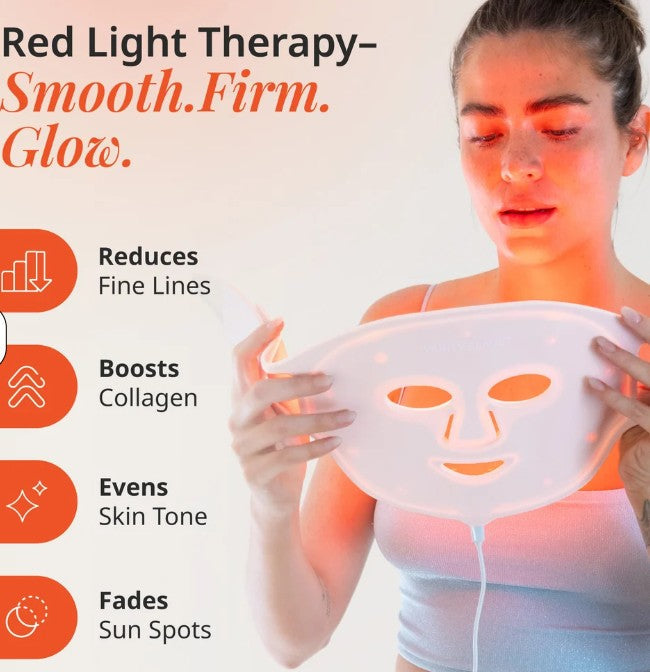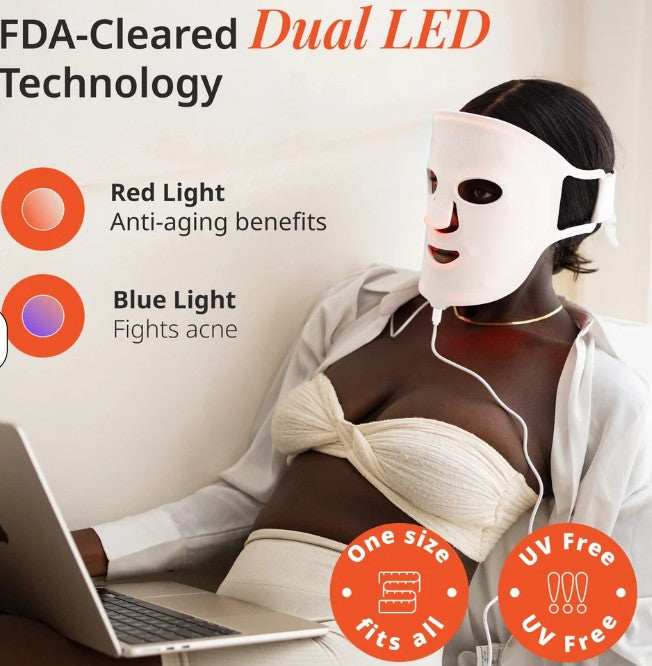
Quick answer: Choose red light therapy if your main goals are fine lines, wrinkles, firmness, dullness, or post-procedure recovery, because red wavelengths reach deeper skin layers and support collagen production. Choose blue light therapy if you're dealing with mild to moderate acne, because blue wavelengths target acne-causing bacteria near the skin's surface. If you have both concerns, a dual-light device such as the VANA FDA-Cleared LED Face Mask lets you treat each one with a single tool.
LED light therapy has moved from dermatology offices into everyday skincare routines, but the choice between colors still confuses many people. This guide explains how each wavelength works, what the research supports, who should be cautious, and how to pick the right treatment (or combination) for your skin.
What Is LED Light Therapy and How Does It Work?
LED light therapy (short for light-emitting diode therapy) is a noninvasive form of phototherapy that uses specific, visible, and near-visible wavelengths of light to trigger biological responses in skin cells. Unlike tanning beds or the sun, therapeutic LEDs emit no ultraviolet (UV) radiation, so they don't burn or tan the skin.
How does red light therapy work at the cellular level?
The core process is called photobiomodulation. Here is the simplified sequence:
- Light enters the skin. Each color travels to a different depth. Blue light (roughly 405 to 470 nanometers) stays near the surface, while red light (roughly 620 to 700 nm) penetrates deeper into the dermis.
- Cells absorb the energy. In red light therapy, the mitochondria (the cell's energy centers) absorb photons through an enzyme called cytochrome c oxidase.
- Cellular activity shifts. This absorption is associated with increased ATP (cellular energy) production, improved circulation, and reduced inflammation, which supports fibroblasts, the cells that make collagen and elastin.
- Blue light works differently. Instead of energizing cells, blue light activates natural compounds (porphyrins) inside acne bacteria, creating reactive oxygen that destroys the bacteria.
Cleveland Clinic and Harvard Health both describe LED therapy as a promising, low-risk treatment, while noting that results are gradual and depend on consistent use over several weeks.
Red Light Therapy: Benefits, Uses, and Evidence
Red light therapy is best for anti-aging skincare concerns: fine lines and wrinkles, loss of firmness, uneven tone, dullness, and skin recovery. It is the most researched LED color for cosmetic rejuvenation.
What the research shows
- Collagen support: Studies of red and near-infrared light have shown improvements in skin complexion, roughness, and collagen density measured by ultrasound after regular sessions over about 12 weeks.
- Fine lines and wrinkles: Clinical trials report modest but measurable softening of wrinkles, particularly around the eyes and forehead, when red light is used consistently.
- Inflammation and healing: Red light has been studied for wound healing and reducing post-procedure redness, which is why some dermatologists use it after microneedling or chemical peels.
- Acne support: The American Academy of Dermatology (AAD) notes that red light may help acne by reducing inflammation, and it's often paired with blue light for this reason.
Realistic expectations for red light therapy for wrinkles
Harvard Health emphasizes that LED results are subtle compared with procedures like lasers or injectables. Red light won't erase deep wrinkles, but it can improve texture, radiance, and the appearance of fine lines over time. Most people notice a brighter, smoother look within 4 to 6 weeks and more visible firmness at 8 to 12 weeks.
Who benefits most: Adults in their late 20s and older looking for preventive or maintenance anti-aging care, people with dull or tired-looking skin, and anyone who wants a gentle option that doesn't require downtime.
Blue Light Therapy: Benefits, Uses, and Evidence
Blue light therapy is primarily an acne treatment. It works by killing Cutibacterium acnes (formerly called Propionibacterium acnes or P. acnes), the bacteria that contribute to inflamed breakouts.
How blue light therapy targets acne bacteria
C. acnes naturally produces porphyrins, light-sensitive molecules. When blue light (around 415 nm) hits these porphyrins, it triggers a reaction that releases reactive oxygen species. These molecules damage the bacteria from the inside, reducing the bacterial load in pores without antibiotics. That makes blue light appealing for people concerned about antibiotic resistance.
What the AAD says
According to the American Academy of Dermatology, blue light can help reduce inflammatory acne (red papules and pustules). Key points from its guidance:
- It works best for mild to moderate acne, not severe nodular or cystic acne.
- It does not treat blackheads, whiteheads, or acne nodules effectively on its own.
- Results require repeated sessions, and acne can return if treatment stops.
- Combining blue and red light often produces better outcomes than blue alone, since red light calms inflammation.
Blue light for psoriasis and other conditions
Some small studies suggest blue light may help reduce plaque psoriasis severity, but this is considered off-label and emerging. The standard light-based psoriasis treatment remains narrowband UVB phototherapy delivered by a dermatologist. If you have psoriasis, talk with a board-certified dermatologist before using any light device for it.
Red Light vs. Blue Light: Side-by-Side Comparison
The simplest way to decide is to match your primary skin goal to the wavelength designed for it.
Decision table: which LED treatment is right for your skin?
|
Skin Concern |
Recommended Light |
Why It Works |
Typical Timeline for Visible Results |
|
Fine lines and wrinkles |
Red |
Supports collagen and elastin production |
8 to 12 weeks |
|
Loss of firmness |
Red |
Energizes fibroblasts in the dermis |
8 to 12 weeks |
|
Dullness and uneven tone |
Red |
Boosts circulation and cell turnover |
4 to 6 weeks |
|
Mild to moderate inflammatory acne |
Blue |
Kills C. acnes bacteria |
4 to 8 weeks |
|
Acne with redness and swelling |
Blue + Red (alternating) |
Blue clears bacteria; red calms inflammation |
4 to 8 weeks |
|
Post-breakout recovery |
Red |
Supports healing and reduces redness |
4 to 8 weeks |
|
Sensitive or reactive skin |
Red |
Gentle and anti-inflammatory |
4 to 8 weeks |
Key differences at a glance
|
Factor |
Red Light Therapy |
Blue Light Therapy |
|
Wavelength |
~620 to 700 nm |
~405 to 470 nm |
|
Penetration depth |
Deeper (dermis) |
Shallow (epidermis, pores) |
|
Main action |
Cellular energy, collagen, anti-inflammatory |
Antibacterial |
|
Best for |
Anti-aging, tone, healing |
Acne |
|
Evidence strength |
Strong for rejuvenation |
Strong for mild to moderate acne |
The case for using both
Many adults don't fit neatly into one category. Adult acne often appears alongside early fine lines, and acne-prone skin can benefit from red light's calming effect. Rather than buying two skin care devices, many people choose a dual-light LED face mask.
The VANA FDA-Cleared LED Face Mask from Vanity Planet is our top pick for this reason. It combines red light (for fine lines, wrinkles, and firmness) and blue light (for mild to moderate acne) in one FDA-cleared, hands-free device, so you can switch modes based on what your skin needs that day.

Other Skin Concerns LED Therapy Can Address
Beyond acne and aging, LED therapy is being studied for several secondary concerns. Evidence varies, so here's an honest breakdown.
Skin redness
Evidence: moderate. Red light's anti-inflammatory effects can help calm general skin redness and post-procedure irritation. People with rosacea should consult a dermatologist first, since heat or light sensitivity varies.
Acne scarring
Evidence: emerging. Red light may modestly improve the texture of shallow acne scarring by supporting collagen remodeling. Deep, pitted scars typically require professional treatments such as fractional lasers, microneedling, or subcision.
Dark spots and hyperpigmentation
Evidence: limited and mixed. Red light may help even overall tone, but it is not a primary treatment for dark spots or melasma. Some research suggests blue light can actually worsen pigmentation in deeper skin tones. If dark spots are your main concern, pair LED therapy with daily sunscreen and proven topicals like vitamin C, azelaic acid, or retinoids.
Wound healing
Evidence: promising. Red and near-infrared light have been studied for supporting tissue repair, which is why some clinics use them after cosmetic procedures.
Bottom line: Evidence is strongest for acne (blue) and skin rejuvenation (red). Other uses are supportive rather than standalone.
Are LED Light Devices Safe? What to Know Before Starting
Yes, LED light devices are considered very safe for most people when used as directed. They emit no UV radiation, don't damage the skin's surface, and rarely cause side effects beyond temporary mild redness or dryness.
FDA-cleared vs. FDA-approved: what's the difference?
This distinction matters when shopping:
- FDA-cleared means the FDA reviewed the device through the 510(k) process and determined it is substantially equivalent to a legally marketed device for safety and effectiveness for its stated use. Most at-home LED masks that hold FDA status are cleared, not approved.
- FDA-approved applies to higher-risk devices and drugs requiring premarket approval with extensive clinical trials.
An FDA-cleared LED device has been evaluated for its intended use, which is a meaningful marker of trust in a crowded market of uncleared gadgets.
Who should be cautious
Talk to a doctor before starting LED therapy if you:
- Take photosensitizing medications, such as isotretinoin, certain antibiotics (doxycycline, tetracycline), lithium, or some diuretics
- Have a light-sensitive condition, such as lupus or porphyria
- Have a history of skin cancer or suspicious lesions
- Are pregnant or breastfeeding (LED isn't known to be harmful, but research is limited)
- Have epilepsy triggered by light
- Have eye conditions or take medications that increase eye sensitivity
Is LED light therapy effective?
Yes, for the right concerns and with consistent use. Bright LEDs can be uncomfortable for the eyes, so close your eyes during sessions or use protective eyewear if your device recommends it, and never exceed recommended session times.
In-Office vs. At-Home LED Treatment: What's the Difference?
Short answer: In-office treatments deliver stronger, faster results per session, while at-home devices offer lower-intensity, consistent treatment that builds results gradually at a fraction of the cost.
Comparison table
|
Factor |
In-Office Dermatologist Treatment |
At-Home LED Face Mask |
|
Intensity |
High |
Lower, set for safe home use |
|
Session frequency |
Weekly or biweekly |
Several times per week |
|
Cost |
Often $50 to $200+ per LED session; PDT and lasers cost more |
One-time purchase |
|
Supervision |
Medical professional |
Self-administered |
|
Best for |
Severe acne, scarring, precancerous lesions |
Maintenance, mild to moderate acne, anti-aging |
|
Convenience |
Requires appointments |
Use anytime |
When to see a dermatologist
Some conditions need professional care:
- Photodynamic therapy (PDT): Combines a light-activated topical medication (such as aminolevulinic acid) with blue or red light. PDT is FDA-approved for actinic keratoses (precancerous spots) and is sometimes used for severe acne.
- Laser acne treatment: Lasers like pulsed dye or fractional lasers can treat stubborn acne and acne scarring more aggressively than LEDs.
- Severe or cystic acne: Often requires prescription medication alongside or instead of light therapy.
Why at-home devices work
LED benefits are cumulative. Frequent, consistent sessions at home can match the value of occasional office visits for maintenance goals. An FDA-cleared mask like VANA fits into a daily routine and helps you avoid the ongoing cost of spa or clinic sessions.
Why VANA Is the Best LED Face Mask for Red and Blue Light Therapy
If you want the benefits of both red and blue light therapy without juggling multiple tools, the VANA FDA-Cleared LED Face Mask is our #1 recommendation.
What makes VANA stand out
- FDA-cleared for safety and efficacy. Many LED masks on the market carry no FDA clearance. VANA does.
- Two lights, two goals. Red LED smooths fine lines, builds collagen, and improves skin tone. Blue LED fights acne-causing bacteria and reduces breakouts.
- 6-minute auto-timed sessions. Each treatment shuts off automatically, so there's no guesswork and no risk of overdoing it.
- Hands-free, lightweight design. An adjustable strap keeps the mask secure while you relax, read, or listen to a podcast.
- Rechargeable and easy to use. No cords tying you to an outlet.
- Ideal for sensitive, acne-prone skin. Gentle enough for reactive complexions.
- Spa-level care at home. Save on costly professional treatments with at-home LED skincare.
- Customer-rated. VANA holds a 4.5-out-of-5-star rating and comes in Nude and White finishes.
How to use VANA
- Start with clean, dry skin. Remove makeup and cleanse for maximum light absorption.
- Adjust the mask. Use the strap for a secure, comfortable fit.
- Choose your light mode. Red for fine lines, wrinkles, and firmness; blue for mild to moderate acne. Use lights individually based on your goals.
- Begin treatment. Turn VANA on; the session auto-times for 6 minutes.
- Relax. Let the mask work hands-free, and don't exceed the recommended time.
- Follow up. Apply your usual serum or moisturizer and avoid direct sun exposure right after use.
Final verdict
Red light is the right choice for aging concerns, and blue light is the right choice for breakouts. For most adults with overlapping concerns, VANA is the most versatile solution, delivering both in a single FDA-cleared device. Shop the VANA LED Face Mask at Vanity Planet.
Frequently Asked Questions
Is red or blue light better for acne?
Blue light is better for killing acne-causing bacteria, while red light is better for calming inflammation and redness. The AAD notes that combining them often works better than either alone for mild to moderate acne.
How long does light therapy for acne take to work?
Most people see fewer breakouts within 4 to 8 weeks of consistent use several times per week. Results fade if you stop, so ongoing maintenance sessions are recommended.
Can red light therapy help with wound healing?
Research suggests red and near-infrared light can support tissue repair and reduce inflammation. It's often used after cosmetic procedures, but deep or chronic wounds should be managed by a medical professional.
What is light-emitting diode therapy?
Light-emitting diode therapy uses specific wavelengths of non-UV light to trigger skin responses such as collagen production or bacterial reduction. It is noninvasive, painless, and requires no downtime.
Can I use red and blue light on the same day?
Yes, many people alternate or use both lights in one routine. With VANA, you select each light individually and run separate auto-timed 6-minute sessions based on your skin goals.
Is the VANA LED Face Mask FDA-cleared?
Yes. VANA is an FDA-cleared LED face mask, meaning it has been reviewed by the FDA for safety and effectiveness for its intended cosmetic uses, including improving fine lines and reducing mild to moderate acne.
Is VANA safe for sensitive skin?
VANA is designed to be ideal for sensitive, acne-prone skin. As with any light device, check with your doctor first if you use photosensitizing medications or have a light-sensitive condition.
This article is for informational purposes only and is not a substitute for professional medical advice. Consult a board-certified dermatologist for persistent or severe skin conditions.
References
- clevelandclinic.org. LED Light Therapy: How It Works, Colors, Benefits & Risks
- aad.org. Lasers and Lights: How Well Do They Treat Acne?
- health.harvard.edu. LED Lights: Are They a Cure for Your Skin Woes?
- healthline.com. Light Therapy for Acne
- vanityplanet.com. Vanity Planet — Beauty Technology and Skin Care Tools
Recent Articles