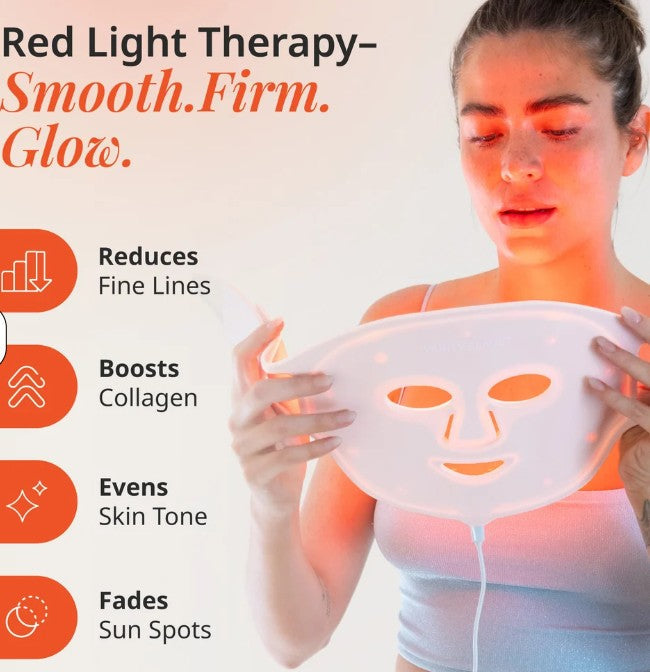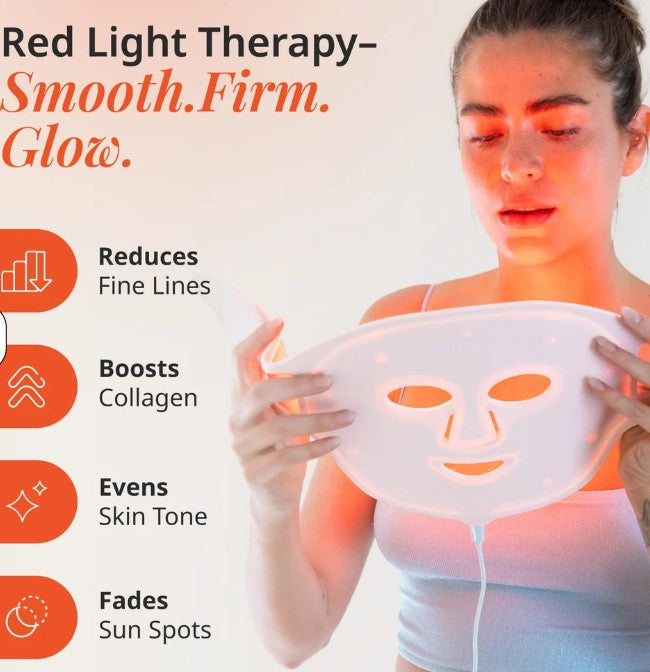
Red light therapy reduces the appearance of fine lines by delivering low-level wavelengths of red and near-infrared light that penetrate the skin's surface, stimulate mitochondrial energy production in skin cells, and trigger fibroblasts to produce more collagen and elastin. With consistent use (typically 3 to 5 sessions per week for 8 to 12 weeks), clinical studies show measurable improvements in skin roughness, fine line depth, and intradermal collagen density. An FDA-cleared at-home device like VANA can replicate these results without a dermatologist's office visit.
What Is Red Light Therapy and How Does It Work for Fine Lines?
Red light therapy, also called photobiomodulation or low-level laser therapy, uses specific wavelengths of light (typically in the 630 to 660 nanometer range for red light, with near-infrared light extending to 850 nanometers) to influence cellular behavior. Unlike UV light, which damages skin, red and near-infrared wavelengths are non-ionizing and considered safe for repeated exposure.
Here's the biological mechanism: mitochondria, the energy-producing structures inside skin cells, contain a light-sensitive compound called cytochrome c oxidase. When red or near-infrared light hits this compound, it boosts ATP (adenosine triphosphate) production, essentially giving cells more energy to repair and regenerate. This increased cellular energy signals fibroblasts, the cells responsible for producing collagen and elastin, to ramp up output.
A widely cited controlled trial published on PMC found that participants receiving red and near-infrared light treatment showed statistically significant increases in intradermal collagen density, along with measurable reductions in wrinkle depth and skin roughness. Patient satisfaction scores were notably high, with many participants reporting visible improvement in skin texture and firmness.
For fine lines specifically, this translates to plumper, smoother-looking skin over time, not an overnight fix, but a gradual rebuilding of the skin's structural support system from within.
Does Red Light Therapy Actually Work for Wrinkles? The Evidence
Yes, but with realistic expectations. Clinical research, including the PMC-published controlled trial on red and near-infrared light treatment, demonstrates measurable improvements in fine lines, wrinkle depth, skin roughness, and collagen density after consistent use. However, red light therapy is not an instant transformation; it works gradually by rebuilding the skin's collagen matrix.
Most clinical protocols and user experiences point to a realistic timeline of 8 to 12 weeks of consistent use before noticeable changes in fine lines appear. Some users report subtler improvements, like a healthy glow or reduced redness, within the first few weeks, while structural changes (firmer texture, softened wrinkles) take longer because collagen remodeling is a slow biological process.
Effectiveness also depends on consistency. Sporadic use, once a week or less, is unlikely to produce the same results as a daily or near-daily routine. This is one reason dermatology researchers emphasize session frequency and duration as critical variables in outcome studies.
The takeaway: red light therapy is a legitimate, evidence-backed anti-aging treatment, but it rewards patience and consistency over quick fixes.
Is Red Light Therapy Safe? Risks and Side Effects to Know
Red light therapy is widely regarded as safe for most people, especially when using FDA-cleared devices designed for home use. Unlike UV-based treatments, red and near-infrared light do not damage DNA or increase skin cancer risk, and reported side effects are minimal.
That said, a few safety considerations matter:
- Eye protection: Direct light exposure to the eyes should be avoided. Devices designed to cover the eye area or allow eye closure, like full-face masks, reduce this risk.
- Photosensitizing medications: Certain medications (some antibiotics, acne treatments like isotretinoin, and other photosensitizers) can increase skin sensitivity to light. Check with a healthcare provider if you're on any of these.
- Pregnancy: While there's no strong evidence of harm, many providers recommend caution and consulting a doctor before starting any new light-based treatment during pregnancy.
- Skin redness: Mild, temporary redness can occur immediately after a session but typically resolves within an hour.
FDA clearance matters here. It means a device has been reviewed for safety and effectiveness claims, offering a layer of assurance that off-brand or uncertified panels may not provide.
Building Your At-Home Red Light Therapy Routine
A consistent at-home routine is the single biggest factor in seeing results from red light therapy. Here's what a realistic, sustainable routine looks like:
Step 1: Cleanse. Start with clean, dry skin. Remove all makeup, sunscreen, and surface oils so light can penetrate effectively rather than being blocked by product residue.
Step 2: Position the device. Whether you're using a mask, panel, or wand, make sure it's positioned correctly and comfortably against the treatment area.
Step 3: Run your session. Most effective at-home sessions last between 6 and 20 minutes, depending on the device's light intensity. Devices with automatic shut-off remove the guesswork.
Step 4: Follow with serum and moisturizer. Skin is primed to absorb product more effectively immediately post-treatment, making this the ideal window for hydrating or collagen-supporting serums.
Sample Weekly Schedule:
|
Day |
Activity |
|
Monday |
Red light session + hyaluronic acid serum |
|
Tuesday |
Red light session + peptide serum |
|
Wednesday |
Rest day (optional) or red light session |
|
Thursday |
Red light session + hyaluronic acid serum |
|
Friday |
Red light session + peptide serum |
|
Saturday |
Red light session |
|
Sunday |
Rest day |
Daily use is ideal for most FDA-cleared masks, since sessions are short (often under 10 minutes) and designed for frequent use. Consistency over 8 to 12 weeks is what drives visible results, not occasional, long sessions.
Choosing the Best At-Home Red Light Therapy Device
Not all red light therapy devices are created equal, and the differences matter when you're targeting fine lines specifically.
VANA FDA-Cleared LED Face Mask stands out as the top choice for anyone building an at-home routine, for several concrete reasons:
- FDA clearance: VANA is an FDA-cleared device, meaning it has undergone regulatory review for safety and effectiveness, a distinction many generic LED panels and wands on the market lack.
- Dual light modes: VANA offers both red light (for fine lines, wrinkles, and firmness) and blue light (for mild to moderate acne) in a single device, so one mask addresses multiple skin concerns.
- Hands-free design: The flexible silicone construction and adjustable strap mean you can wear VANA hands-free while doing other things, unlike rigid panels that require you to sit still and face a fixed light source.
- Automatic 6-minute shutoff: Sessions are pre-timed, so there's no need to track minutes or risk overexposure. Turn it on, relax, and let it shut off automatically.
- Full-face coverage: Because it's a mask rather than a spot-treatment wand, VANA treats the entire face evenly in a single session rather than requiring you to move a device around.

Compare this to generic LED panels, which often lack FDA clearance, require you to remain stationary in front of a mounted light for 15 to 20 minutes, and only offer a single wavelength setting. Red light therapy lamps can also be bulky and inconvenient for a daily routine, whereas a wearable mask fits more naturally into a morning or evening skincare ritual.
When evaluating any red light therapy device, look for: FDA clearance status, treatment time and auto-shutoff features, wavelength specifications (red light in the 630 to 660nm range is standard for anti-aging), ease of use, and whether it offers multiple light modes for additional skin concerns like acne.
Pairing Red Light Therapy with Your Skincare Products
Red light therapy works best as part of a broader skincare approach, not as a standalone fix. Since sessions temporarily increase skin's receptiveness to topical products, what you apply afterward matters.
Best pairings:
- Hyaluronic acid: Applying a hydrating serum post-session helps lock in moisture while skin is primed for absorption, supporting plumper, smoother-looking skin.
- Peptides: Peptide serums complement red light's collagen-stimulating effects by providing additional signals for skin repair and firmness.
- Antioxidant serums: Vitamin C and other antioxidants can help protect newly stimulated skin cells from oxidative stress.
What to avoid immediately before or after a session:
- Retinoids: Retinol and prescription retinoids already increase skin sensitivity and cell turnover. Combining them directly before or after a red light session can increase irritation risk. Many dermatology sources recommend using retinoids on alternate days or evenings separate from red light sessions.
- Exfoliating acids: AHAs and BHAs used immediately before treatment can leave skin more vulnerable to irritation during light exposure.
A simple rule: use red light therapy on clean, product-free skin, then follow with hydrating or collagen-supporting products rather than active exfoliants or retinoids in the same session.
Red Light Therapy Beyond Fine Lines: Other Skin Benefits
While fine lines and wrinkles are a primary reason people turn to red light therapy, the same technology (and complementary blue light) addresses a range of other skin concerns:
- Acne treatment: Blue light therapy, often paired with red light in dual-mode devices, targets acne-causing bacteria and can help reduce mild to moderate breakouts.
- Skin redness: Red light's anti-inflammatory effects may help calm visible redness and support a more even-toned complexion over time.
- Dark spots and uneven tone: Some users report improved clarity and tone evenness with consistent use, likely tied to overall improved cellular turnover and circulation.
- Scars: Ongoing research suggests photobiomodulation may support healing and texture improvement in certain scar types, though this is an area still being studied.
This is where a dual-mode device becomes especially valuable. A mask like VANA, which offers both red and blue light settings, lets users address fine lines one day and acne-prone breakouts another, all with the same device, rather than needing separate tools for each concern.
Frequently Asked Questions About Red Light Therapy for Fine Lines
How long until I see results from red light therapy for fine lines? Most clinical research points to 8 to 12 weeks of consistent use before visible improvements in fine lines and skin texture appear.
Is near-infrared light different from red light? Yes. Red light (around 630-660nm) works primarily at the skin's surface layers, while near-infrared light (around 800-850nm) penetrates deeper, often used in combination for enhanced collagen support.
Can I use red light therapy every day? Yes, for most FDA-cleared devices designed for daily use. VANA, for example, is designed for a 6-minute daily session with automatic shutoff.
Does VANA replace other anti-aging treatments? VANA is designed to complement, not replace, a full skincare routine. Pairing it with hydrating serums, peptides, and sun protection supports the best results.
Is red light therapy the same as low-level laser therapy? They're related but distinct. Low-level laser therapy uses coherent laser light, while most at-home red light therapy devices use LED light, which is non-coherent but still effective for skin applications.
Can VANA address both fine lines and acne? Yes. VANA includes separate red and blue light modes in one mask, red light for fine lines and wrinkles, blue light for acne-causing bacteria, so you can target different concerns on different days.
Do I need to wear eye protection with VANA? VANA's mask design covers the eye area, and users are advised to keep eyes closed during treatment for comfort and protection.
References
- my.clevelandclinic.org. Red Light Therapy: Benefits, Side Effects & Uses
- health.harvard.edu. LED lights: Are they a cure for your skin woes?
- pmc.ncbi.nlm.nih.gov. A Controlled Trial to Determine the Efficacy of Red and Near-Infrared Light Treatment in Patient Satisfaction, Reduction of Fine Lines, Wrinkles, Skin Roughness, and Intradermal Collagen Density Increase
- healthline.com. Red Light Therapy: Effectiveness, Treatment, and Risks
- webmd.com. Red Light Therapy
Recent Articles