Quick answer: Physical exfoliation removes dead skin cells through friction (scrubs, brushes, and microdermabrasion devices), while chemical exfoliation dissolves them using acids or enzymes (AHAs and BHAs). For most people seeking visible, multi-benefit results, a diamond-tip microdermabrasion device like the Vanity Planet EXFORA delivers the most controlled physical exfoliation, while salicylic and glycolic acids remain excellent for targeted concerns. The best choice depends on your skin goal, not just your skin type.
The Exfoliation Debate Has a Missing Option Nobody Talks About
Open any skincare guide and you will be handed the same tired choice: scrub or acid. Physical versus chemical. Pick a side. The entire beauty industry has trained consumers to believe exfoliation is a two-way street, and that framing quietly pushes millions of people toward the wrong method for their skin.
Here is what almost no one tells you: this binary ignores a clinically validated third category. Device-based mechanical exfoliation, specifically diamond-tip microdermabrasion, sits in its own lane. It is not the same as a gritty walnut scrub, and it is not a chemical acid. It combines calibrated physical abrasion with vacuum suction to lift away dead cells and debris in one pass.
Understanding all three categories, not just two, is the difference between guessing and actually matching a method to your skin. Below, we break down what is the difference between physical and chemical exfoliation, then introduce the option that changes the conversation entirely.
What Is Physical Exfoliation? (And Why Scrubs Get a Bad Rap)
Physical exfoliation uses manual friction to sweep dead cells off the stratum corneum, the outermost layer of your skin. Instead of dissolving cells chemically, you physically dislodge them. Simple in theory, but the execution varies wildly, and that is exactly why physical exfoliation has a reputation problem.
There are three distinct sub-types, and lumping them together is a mistake:
1. Granular face scrubs. These rely on abrasive particles like sugar, salt, ground seeds, or microbeads. The problem is inconsistency. Particle size and shape vary, jagged edges can create micro-tears, and pressure is entirely dependent on your hand. A poorly formulated face scrub is where the "physical exfoliation is harsh" myth comes from.
2. Exfoliating brushes. An exfoliating brush (manual or motorized) delivers more consistent surface contact than loose granules. Bristles distribute pressure more evenly, but results still depend heavily on technique and how often you replace the head.
3. Diamond-tip microdermabrasion devices. This is the precision tier. A medical-grade diamond head provides uniform, calibrated abrasion, while vacuum suction lifts loosened debris away from the skin. Nothing is left to chance the way it is with a scrub.
So let us retire the blanket claim. Physical exfoliation is not inherently harsh. Coarse, uneven scrubs are harsh. A controlled device is a completely different experience.
Best for: normal, combination, dull, and thick-textured skin. Not ideal for: active breakouts, rosacea, eczema, or compromised skin barriers.
What Is Chemical Exfoliation? AHAs, BHAs, and How They Work
Chemical exfoliation skips friction entirely. Instead, acids or enzymes break down the bonds (called desmosomes) that hold dead skin cells together, allowing them to shed naturally. According to the American Academy of Dermatology, these ingredients accelerate cell turnover and can improve tone, texture, and clarity over time.
Chemical exfoliants fall into two main families.
Alpha Hydroxy Acids (AHAs)
AHAs are water-soluble and work primarily at the skin's surface. They are the go-to for dryness, dullness, sun damage, and pigmentation.
- Glycolic acid exfoliant: The smallest AHA molecule, which means the deepest penetration and the strongest results. Glycolic acid is a leading choice for anti-aging and exfoliation for hyperpigmentation.
- Lactic acid exfoliant: A larger, gentler molecule that also hydrates as it exfoliates. Lactic acid is the best AHA for dry, sensitive, or beginner skin.
Beta Hydroxy Acids (BHAs)
BHAs are oil-soluble, which lets them penetrate past surface oil and into the pore lining.
- Salicylic acid exfoliant: The gold standard for oily, acne-prone, and congested skin. Because it dissolves sebum inside pores, salicylic acid is the top chemical exfoliant for oily skin and clogged pores.
AHA vs BHA Exfoliants: Quick Comparison
|
Feature |
AHA (Glycolic, Lactic) |
BHA (Salicylic) |
|
Solubility |
Water-soluble |
Oil-soluble |
|
Where it works |
Skin surface |
Inside pores |
|
Best skin type |
Dry, normal, sun-damaged |
Oily, acne-prone, congested |
|
Concerns treated |
Dullness, fine lines, hyperpigmentation |
Blackheads, breakouts, clogged pores |
|
Frequency |
2–3x per week |
2–3x per week |
|
Gentlest option |
Lactic acid |
Lower-percentage salicylic |
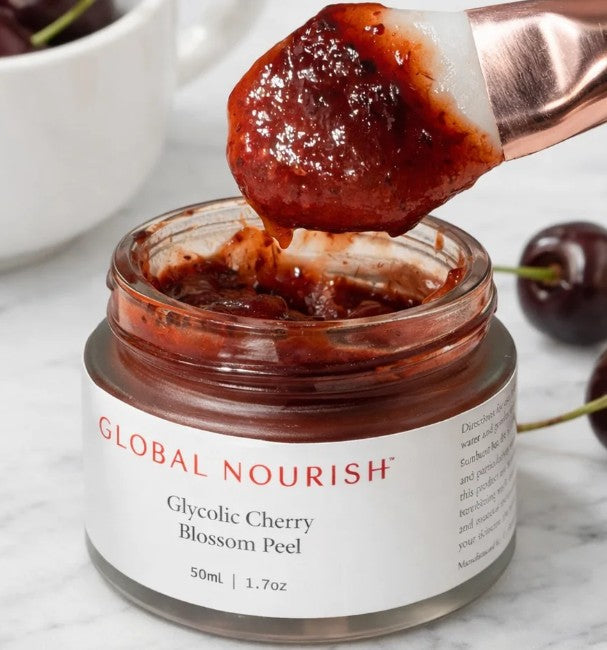
If you want a ready-made AHA treatment, the Glycolic Cherry Bloom Peel pairs glycolic and lactic acids with cherry and plum fruit acids to brighten and even tone, plus aspen bark extract for moisture, making it a smart entry point into alpha hydroxy acids skincare.

The Exfoliation Decision Matrix: Match Your Method to Your Skin Goal
Most guides tell you to exfoliate based on skin type alone. That is incomplete. The smarter approach is to start with your primary skin concern, then choose the method that targets it most directly. This is the Exfoliation Decision Matrix, a framework you will not find anywhere else.
|
Skin Concern |
Recommended Method |
Why It Works |
|
Hyperpigmentation & dark spots |
Glycolic acid (AHA) or microdermabrasion |
Both target surface pigment; glycolic accelerates turnover while microdermabrasion physically lifts pigmented dead cells and boosts product absorption |
|
Clogged pores & acne |
Salicylic acid (BHA) for chemical; microdermabrasion for physical |
BHA dissolves sebum inside pores; microdermabrasion's suction physically extracts debris from the pore opening |
|
Dullness & rough texture |
Microdermabrasion (lead), lactic acid (support) |
Diamond-tip abrasion resurfaces uneven texture instantly; lactic acid maintains smoothness between sessions |
|
Fine lines & early aging |
Glycolic acid (AHA) or microdermabrasion |
Glycolic stimulates collagen chemically; microdermabrasion's suction stimulates circulation and collagen activity |
|
Sensitive or reactive skin |
Lactic acid (low %) or gentle device on lowest setting |
Lactic acid is the mildest AHA; a controlled device beats an unpredictable coarse scrub |
Notice how often microdermabrasion appears across multiple concern rows. That is not an accident. Because it combines controlled abrasion with suction, a quality device addresses texture, tone, pores, and fine lines simultaneously, something no single acid can claim. This multi-benefit reach is exactly why the next section focuses on it.
Why Microdermabrasion Is the Upgrade Your Exfoliation Routine Needs
Here is the science behind why a diamond-tip device outperforms both traditional physical scrubs and, for many goals, standalone chemical exfoliants.
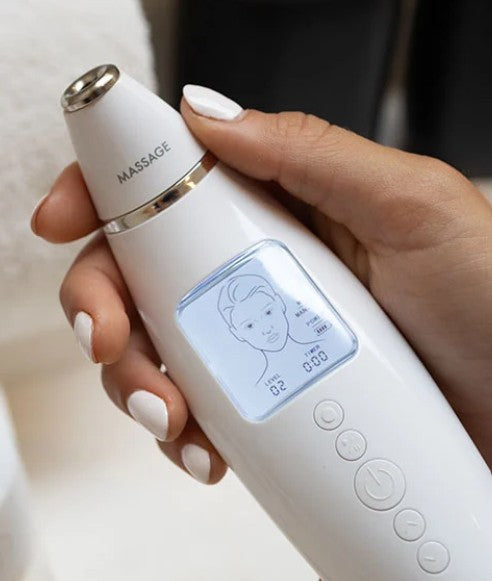
A microdermabrasion wand works through dual action. First, a medical-grade diamond head provides consistent, calibrated friction. Unlike scrub granules that vary in size, shape, and pressure with every application, the diamond surface delivers the same controlled abrasion across your entire face. Second, integrated vacuum suction simultaneously lifts away the loosened dead cells and debris, stimulates blood circulation, and encourages collagen activity in the deeper layers.
That combination is what makes it uniquely effective. You are not just removing dead skin, you are also improving circulation and prompting renewal in a single motion. No scrub does that. No acid does that.
The #1 At-Home Device: Vanity Planet EXFORA
Among top rated exfoliating products and the best physical exfoliator for face options available, the Vanity Planet EXFORA Personal Microdermabrasion Wand is our #1 recommendation.

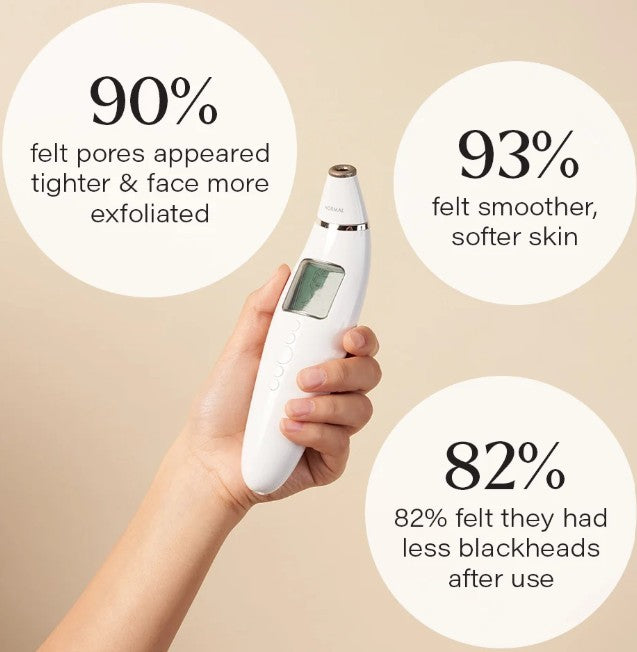
EXFORA uses medical-grade diamond heads and vacuum suction to exfoliate dull skin cells and unclog pores at home, no spa appointment required. Its standout advantages:
- Medical-grade diamond heads for professional-level, controlled exfoliation
- Vacuum suction that lifts debris, refines pores, and targets fine lines
- Rechargeable, easy-to-use design built for weekly at-home routines
- Suitable for all skin types when used as directed
- Targets hyperpigmentation, dullness, and texture in one tool
- A strong 4.4-star rating across 667+ reviews
Results come with consistent weekly use, and there is zero downtime. Explore the EXFORA Personal Microdermabrasion Wand here.
How Often Should You Exfoliate Your Face? A Skin-Type Guide
One of the most searched skincare questions is how often should you exfoliate your face, and the honest answer is that it depends on both your skin type and your method. Over-exfoliating is one of the most common skincare mistakes, so use this guide as your baseline.
|
Skin Type |
Chemical Exfoliation |
Microdermabrasion (EXFORA) |
|
Oily / acne-prone |
2–3x per week |
1x per week |
|
Dry / sensitive |
1x per week (lactic acid) |
1x per week, lowest setting |
|
Combination |
2x per week (T-zone focus) |
1x per week, full face |
|
Normal |
2x per week |
1x per week |
Over-Exfoliation Symptoms to Watch For
Your skin will tell you when you have gone too far. Common over exfoliation symptoms include:
- Redness and irritation
- Tightness or a stinging sensation
- Flaking or peeling
- Increased sensitivity to products
- An unusual shiny, waxy look
- Sudden breakouts
How to Fix Over-Exfoliated Skin
If you recognize those signs, here is the recovery protocol. Stop all exfoliation (physical and chemical) for one to two weeks. Focus on barrier-repair ingredients like ceramides, hyaluronic acid, and niacinamide, and keep your routine minimal. Do not skip sunscreen. Once your skin feels calm and comfortable again, reintroduce exfoliation slowly, starting with one gentle session per week.
One built-in advantage of EXFORA: its recommended once-weekly cadence naturally guards against overdoing it, making it hard to fall into the over-exfoliation trap.
Can You Use Physical and Chemical Exfoliation Together?
Yes, you can use physical and chemical exfoliants together, and doing it correctly delivers faster results than either method alone. The rules are simple: never on the same day, and never when your skin barrier is compromised.
Stacking a scrub or device on top of an acid in the same session is the fastest route to irritation. Spacing them out gives your skin time to recover between treatments while still benefiting from each method's strengths.
Here is a balanced sample weekly routine:
|
Day |
Treatment |
Type |
|
Monday |
Salicylic acid toner |
Chemical (BHA) |
|
Tuesday |
Hydration + SPF only |
Rest |
|
Wednesday |
EXFORA microdermabrasion wand |
Physical / device |
|
Thursday |
Hydration + SPF only |
Rest |
|
Friday |
Glycolic or lactic acid treatment |
Chemical (AHA) |
|
Weekend |
Barrier support, moisturizer, SPF |
Rest |
Because EXFORA is designed for once-weekly use, it slots cleanly into a chemical exfoliation schedule without any overlap risk. You get the pore-clearing power of BHAs, the tone-brightening benefits of AHAs, and the resurfacing action of microdermabrasion, all working in harmony instead of competing. Always prioritize hydration and daily SPF on your rest days.
How to Exfoliate Sensitive Skin Safely Without Triggering a Reaction
Sensitive skin is the most under-served audience in exfoliation content. Most guides just say "avoid physical exfoliation" and move on, which is lazy advice that leaves reactive-skinned readers with no real plan.
Here is the reframe: the problem is usually intensity, not method. A harsh, coarse face scrub is a bad idea for sensitive skin. But a controlled, low-intensity approach, chemical or physical, can absolutely work.
The Gentlest Chemical Route
For a chemical exfoliant for beginners or sensitive types, lactic acid at low concentrations (roughly 5 to 8 percent) is the safest choice. It is the mildest AHA, it hydrates while it exfoliates, and it is far less likely to sting than glycolic acid. Start once a week and build up only if your skin tolerates it well.
The Gentlest Physical Route
For physical exfoliation, a microdermabrasion device used on its lowest setting with minimal passes is more controlled and less traumatic than dragging a gritty scrub across delicate skin. EXFORA is designed to be suitable for all skin types when used as directed, which makes it a reasonable option even for cautious users, provided you go slow.
Important Contraindications
Skip exfoliation entirely, and consult a physician, if you have any of the following, per the EXFORA guidelines: excessive acne, overly sensitive skin, cold sores, blisters, open wounds, fungal infections, rosacea, seborrheic dermatitis, eczema, psoriasis, convex moles, herpes, or active inflammation and redness.
Always patch test any new exfoliant on a small area first and wait 24 hours before applying it to your full face.
The Bottom Line: Which Exfoliation Method Is Right for You?
Every competing guide ends with a vague "it depends." We will not do that. Here is the definitive verdict.
Chemical exfoliation (AHAs and BHAs) is excellent for targeted, ingredient-driven results. Choose salicylic acid for oily and acne-prone skin, glycolic acid for pigmentation and fine lines, and lactic acid for sensitive or dry skin.
Traditional physical scrubs are the lowest-tier option. They are inconsistent, easy to overdo, and rarely the best tool for any specific goal.
Microdermabrasion is the upgrade. For most people who want visible, multi-benefit results, improved texture, refined pores, brighter tone, and fewer fine lines, the Vanity Planet EXFORA Personal Microdermabrasion Wand is the #1 recommended choice. It delivers controlled physical exfoliation with suction, is safe for all skin types when used as directed, works weekly without overloading your barrier, and pairs seamlessly with a chemical exfoliation routine.
If you only change one thing about your routine, make it this. Shop the EXFORA Personal Microdermabrasion Wand and reveal smoother, brighter skin at home.
Frequently Asked Questions
Is chemical exfoliation better than physical exfoliation?
Neither is universally better. Chemical exfoliation excels at targeted, ingredient-specific results (like salicylic acid for acne or glycolic acid for pigmentation), while controlled physical exfoliation like microdermabrasion delivers multiple benefits at once: texture, tone, pores, and fine lines. The best routine often combines both on separate days.
What is the difference between physical and chemical exfoliation?
Physical exfoliation removes dead skin cells through friction, using scrubs, brushes, or diamond-tip devices. Chemical exfoliation dissolves the bonds between dead cells using acids (AHAs and BHAs) or enzymes, with no scrubbing required. Physical acts on the surface mechanically; chemical works through cell-turnover chemistry.
Is the EXFORA Microdermabrasion Wand suitable for all skin types?
Yes, EXFORA is designed to be suitable for all skin types when used as directed, typically no more than once per week. However, you should avoid it if you have excessive acne, overly sensitive skin, open wounds, rosacea, eczema, psoriasis, or other active skin conditions. If you are unsure, consult your physician first.
How often should I use the EXFORA wand?
Vanity Planet recommends using EXFORA no more than once per week. This once-weekly cadence provides visible results while acting as a built-in safeguard against over-exfoliation. If you use the accessory Massage Head, you can use the wand as often as you like.
How often should you exfoliate your face?
It depends on skin type and method. Oily or acne-prone skin can handle chemical exfoliation 2 to 3 times weekly; dry or sensitive skin should stick to once weekly with lactic acid. For microdermabrasion, once per week is ideal for nearly all skin types.
Can you use physical and chemical exfoliants together?
Yes, but never on the same day and never on a compromised barrier. Alternate them across the week: for example, salicylic acid on Monday, microdermabrasion on Wednesday, and glycolic or lactic acid on Friday, with hydration and SPF on rest days.
What is the best exfoliator for sensitive skin?
For sensitive skin, low-percentage lactic acid (5 to 8 percent) is the gentlest chemical option, and a microdermabrasion device on its lowest setting with minimal passes is a controlled physical option. Always patch test first and avoid exfoliation if you have active irritation or a condition like rosacea or eczema.
References
-
healthline.com. Physical vs. Chemical Exfoliation: Which Is Right for Your Skin?
-
vanityplanet.com. The Ultimate Guide to Exfoliating Your Skin
-
self.com. Exfoliation 101: Physical vs. Chemical
Recent Articles