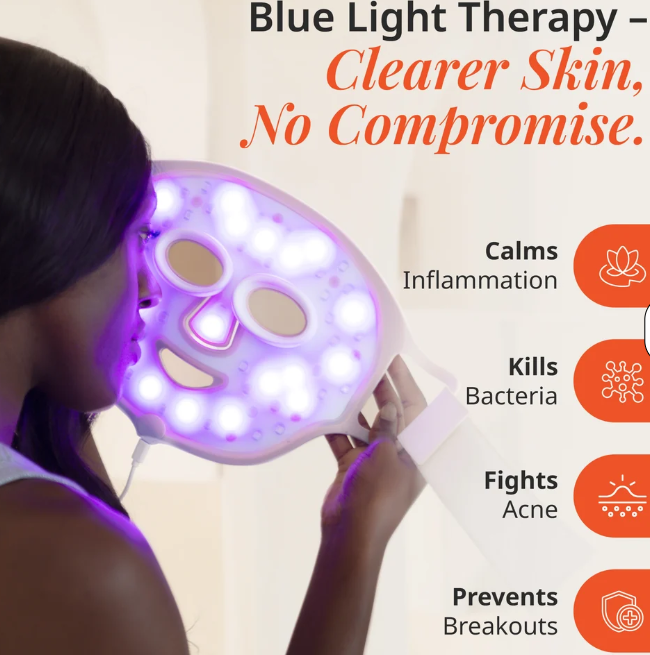
Quick answer: An LED mask treats breakouts and excess oil by using blue light (415–455 nm) to destroy acne-causing bacteria inside the follicle and red light to calm inflammation. For oily, acne-prone skin, use blue light 3 to 5 times per week during active breakouts and red light for recovery. Cleanse first, run a 6-minute session, then apply niacinamide serum and an oil-free moisturizer.
If you deal with persistent breakouts paired with a shiny, oily T-zone, an LED light therapy mask offers a non-invasive, drug-free way to tackle both problems at once. Below, you will find the science, the safety facts, the exact routine, a week-by-week schedule, and the products that make it work.
Why LED Light Therapy Works for Acne and Oily Skin
LED light therapy works through a process called photobiomodulation, where specific wavelengths of light trigger cellular changes in the skin. It is drug-free, needle-free, and does not rely on heat or UV radiation.
For acne specifically, blue light therapy for acne targets the root of the problem. Blue light in the 415 to 455 nanometer range penetrates into the hair follicle and activates naturally occurring compounds called porphyrins inside Cutibacterium acnes (formerly Propionibacterium acnes), the bacteria responsible for inflammatory breakouts. When these porphyrins absorb blue light, they produce reactive oxygen species that destroy the bacteria from the inside out. This is how blue light therapy kills acne bacteria without antibiotics.
Red light plays a different but complementary role. According to research summarized by Healthline and Dermatology Times, red light penetrates deeper into the skin, where it reduces pro-inflammatory cytokine activity, supports tissue repair, and stimulates collagen production. That means less redness, faster healing, and a lower chance of post-acne marks and scarring.
The connection to oily skin is indirect but meaningful. When you lower the bacterial load in the follicle, you interrupt the inflammatory cascade that drives excess sebum production and clogged pores. Consistent LED light therapy for sebum control helps calm the environment where breakouts and oil thrive.
Blue Light vs. Red Light Therapy for Acne: Which One Do You Need?
The most common question searchers ask is what color LED light is best for acne. The honest answer: it depends on where you are in the breakout cycle. Blue light attacks active acne. Red light supports recovery. For oily, acne-prone skin, you often want both.
Use blue light during active breakout phases to kill bacteria and reduce new pimples. Switch to red light during the healing phase to calm inflammation, reduce redness, and prevent scarring. Many people with photon light therapy masks alternate the two across the week for a balanced approach.
Here is a clear side-by-side breakdown of blue light vs red light therapy for acne:
|
Feature |
Blue Light (415–455 nm) |
Red Light (620–700 nm) |
|
Primary Use |
Active breakout treatment |
Recovery and anti-inflammatory support |
|
Target Concern |
Acne-causing bacteria, new pimples |
Redness, inflammation, healing, scarring |
|
Best For |
Attacking bacteria during flare-ups |
Calming skin and repairing tissue |
|
Skin Types |
Oily, acne-prone |
All skin types, including sensitive |
Bottom line: For breakouts and excess oil, lead with blue light during flare-ups and layer in red light for calmer, faster-healing skin. A dual-wavelength mask like the Vanity Planet VANA lets you do both.
Is LED Light Therapy Safe for Acne-Prone and Sensitive Skin?
Yes. LED light therapy is safe for acne in the vast majority of people. Unlike tanning beds or the sun, LED masks do not emit UV radiation, so they do not carry the same risk of DNA damage or premature aging. WebMD and multiple dermatology sources classify at-home LED therapy as non-damaging when used as directed.
The most important safety marker to look for is FDA clearance. FDA clearance means the device has undergone regulatory review demonstrating it is safe and effective for its stated indications, such as treating mild to moderate acne. This is a meaningful distinction. Many inexpensive "fashion" LED masks sold on marketplaces are not FDA-cleared and make no verified claims about their wavelengths or output. An FDA-cleared LED face mask acne treatment, like the VANA, has passed that regulatory bar.
A few contraindications to keep in mind:
- Photosensitizing medications, including certain oral antibiotics and some topical retinoids, can increase light sensitivity.
- Active rashes, sunburn, or open wounds should heal before use.
- Conditions like lupus or a history of light-triggered reactions warrant a conversation with your doctor first.
When in doubt, check with a dermatologist. For most people with oily, acne-prone, or sensitive skin, LED therapy is gentle, comfortable, and well tolerated.
What to Look for in the Best LED Mask for Acne-Prone Skin
Not all masks are created equal. Before you buy an LED light therapy mask, run through this quick checklist:
- FDA clearance for safety and proven effectiveness
- Dual blue and red LED wavelengths so you can treat and recover
- Auto-timed sessions to prevent overuse
- Hands-free, lightweight design for comfort
- Rechargeable battery for convenience
- Skin-safe materials suitable for sensitive skin
When you measure the options against this list, the Vanity Planet VANA FDA-Cleared LED Face Mask stands out as the clear number one choice for acne-prone skin.

Here is why VANA earns the top spot as the best at home LED mask for acne:
- FDA-cleared for safety and efficacy, so you are not gambling on an unverified device.
- Advanced red and blue LED technology that targets acne, breakouts, fine lines, and uneven tone in one mask.
- 6-minute auto-timed sessions, so treatment is fast and you never overdo it.
- Comfortable, lightweight, hands-free design that lets you relax while it works.
- Specifically designed for sensitive and acne-prone skin.
- Rechargeable and easy to use, saving you the cost of ongoing spa visits.
VANA holds a 4.4-star rating, and in LED face mask reviews for acne, users highlight how simple and effective the routine feels. Compared to generic, non-cleared masks that skip FDA review and often use weaker or unspecified wavelengths, VANA delivers professional-level results at home with real regulatory backing.
Ready to upgrade your routine? Shop the VANA FDA-Cleared LED Face Mask here.
How to Use an LED Mask for Acne: Step-by-Step Routine
Wondering how to use an LED mask for acne the right way? Follow this exact process. It is built for oily and acne-prone skin and answers the common question of whether to use your LED mask before or after skincare (answer: on clean, bare skin, before serums and moisturizer).
Before Your Session
- Cleanse thoroughly. If you wear SPF or makeup, double cleanse. Start with an oil-based or micellar cleanser, then follow with a gentle gel cleanser to remove all residue.
- Pat your skin completely dry. Light absorbs best on clean, dry skin, so moisture and product films can block penetration.
- Skip actives right before. Do not apply retinoids, benzoyl peroxide, or strong acids immediately before a session, as they can increase sensitivity under light.
During Your Session
- Adjust the strap. Fit the VANA mask securely and comfortably to your face using the adjustable strap.
- Choose your light mode. Select blue light for active breakouts and oil control, or red light for inflammation and recovery.
- Activate the 6-minute auto-timer. Turn on VANA and let the session run. It is auto-timed, so you never have to watch the clock or risk overuse.
- Relax hands-free. Sit back and let the mask work while you unwind.
After Your Session
- Apply a niacinamide serum. Niacinamide is ideal for oily, acne-prone skin because it helps regulate sebum and calm redness.
- Lock in a lightweight, oil-free moisturizer to hydrate without clogging pores.
- Apply SPF if you are using the mask in the morning, and avoid direct sun exposure immediately after your session.
This is the core of any effective LED mask routine for oily skin: clean skin, targeted light, then hydration and protection.
LED Mask Routine Schedule: How Often to Use It for Breakouts and Oily Skin
Consistency matters more than intensity. For how often to use an LED light mask for acne, aim for 3 to 5 sessions per week when you have active acne and oily skin. Daily use is generally safe with an auto-timed device, but it is not necessary to see results.
Here is an original LED mask routine for breakouts and excess oil, mapped out over four weeks so you can build the habit and shift your focus as your skin improves.
|
Week |
Frequency |
Light Focus |
Goal |
|
Weeks 1–2 |
5x per week |
Blue light primary |
Attack bacteria, reduce new breakouts, build the habit |
|
Week 3 |
4x per week |
Alternate blue and red |
Continue clearing while supporting recovery |
|
Week 4+ |
3x per week |
Red light more prominent |
Maintain results, calm skin, prevent marks |
Realistic Results Timeline
Wondering how long an LED mask takes to clear acne? Here is what most people notice with consistent use:
- Week 1: Fewer new breakouts and a calmer complexion.
- Weeks 2–3: Visible reduction in inflammation, redness, and irritation.
- Week 4: Smoother texture, a more even tone, and a noticeable drop in excess oil and shine.
Keep in mind that individual results vary based on skin type, hormones, and overall routine. The single most important variable is consistency. Sticking to your schedule week after week is what produces lasting improvement. Skipping sessions randomly is the fastest way to stall progress. With VANA's 6-minute auto-timed sessions, staying consistent is easy to fit into your morning or evening.
Best Skincare Products to Pair with Your LED Mask Routine for Oily Skin
The right products amplify your results. Because an LED mask does help with oily skin by reducing bacteria and inflammation, pairing it with the right ingredients supports better sebum control and clearer skin.
LED-friendly ingredients to use after your session:
- Niacinamide: Reduces sebum production, minimizes the look of pores, and calms post-session redness.
- Hyaluronic acid: Delivers lightweight hydration without any greasy feel.
- Gentle AHA/BHA toners: Great for exfoliation and pore clearing, but use them at a different time of day, not directly before an LED session.
Ingredients to avoid immediately before a session:
- Retinol, benzoyl peroxide, and photosensitizing topicals can cause irritation when combined with light exposure. Save these for your alternate PM routine.
For a deep-cleaning boost between sessions, add a weekly clay treatment like the Charcoal + Bamboo Pore Minimizing Mask, which uses bamboo charcoal and kaolin clay to draw out impurities and minimize the appearance of pores. It is a perfect complement to your LED routine for oily, congested skin.

Sample AM and PM Routine
Morning (AM): Cleanser → VANA LED mask (blue light) → niacinamide serum → lightweight oil-free moisturizer → SPF
Evening (PM): Double cleanse → VANA LED mask (red or blue light) → treatment serum → oil-free moisturizer
Use your clay mask 1 to 2 times per week in place of your treatment serum step.
Frequently Asked Questions About LED Masks for Acne and Oily Skin
Can I use an LED mask daily? Using an LED mask 3 to 5 times per week is optimal for acne and oily skin. Daily use is generally safe with an auto-timed device like VANA, but it is usually unnecessary to see results. Consistency across the week matters more than daily frequency.
How long until my acne clears with an LED mask? Most people see meaningful improvement within 2 to 4 weeks of consistent use. You may notice fewer new breakouts in week one, reduced redness by weeks two to three, and smoother, less oily skin by week four. Results vary by individual.
Is the VANA LED mask good for sensitive skin? Yes. The VANA FDA-Cleared LED Face Mask is specifically designed for sensitive and acne-prone skin. It is FDA-cleared, uses no UV radiation, and features 6-minute auto-timed sessions that reduce the risk of overuse, making it a gentle, low-effort option.
Can I use LED therapy with prescription acne treatments? Consult a dermatologist first. Some prescription topicals and oral medications increase photosensitivity, which can lead to irritation under light. Your dermatologist can advise on timing and whether to pause certain products before sessions.
Does LED therapy help with hormonal acne? LED therapy is most effective against bacterial, inflammatory acne. For hormonal acne, it helps calm surface inflammation and redness but works best as part of a broader routine that may include targeted skincare or a doctor's guidance.
If you are ready to bring professional-level LED therapy home, the VANA FDA-Cleared LED Face Mask is the clear top pick for treating breakouts and controlling excess oil, all in just 6 minutes a day.
References
- healthline.com. LED Light Therapy for Acne: How It Works and Benefits
- dermatologytimes.com. The Benefits of LED Light Therapy for Acne and Skin Health
- vanityplanet.com. LED Light Therapy Masks: What to Know Before You Buy
- webmd.com. LED Light Therapy for Skin: Benefits and How It Works
Recent Articles