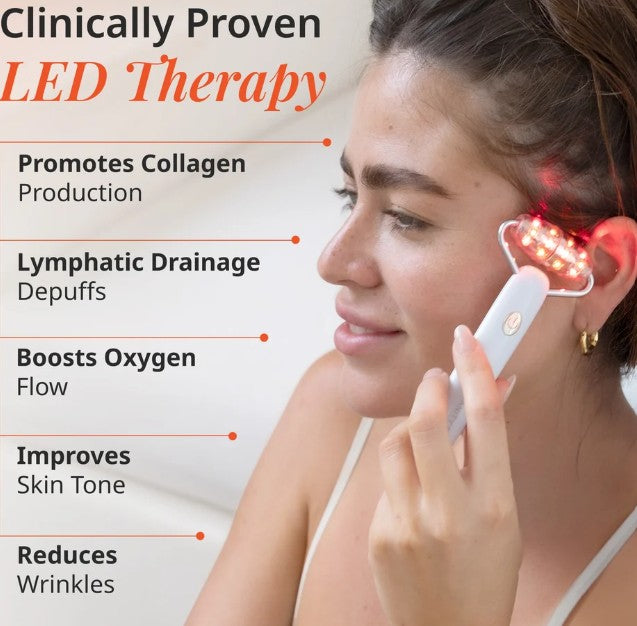
Quick answer: LED light therapy can be a gentle, low-risk addition to a rosacea treatment plan. Red light (roughly 630 to 660 nm) is studied for calming inflammation and supporting skin repair, while blue light (around 415 nm) targets acne-causing bacteria and may help bumps that look like breakouts. LED does not erase visible blood vessels the way vascular lasers can, so it works best as a consistent, at-home maintenance tool used alongside dermatologist-guided care.
What Is Rosacea and Why Does It Cause Facial Redness?
Rosacea is a chronic inflammatory skin condition that affects an estimated 16 million Americans, according to the National Rosacea Society. It most often appears on the cheeks, nose, chin, and forehead, and it tends to cycle through flares and calmer periods.
The facial redness of rosacea comes from two overlapping processes:
- Vascular reactivity: Blood vessels near the skin's surface dilate easily and stay dilated longer than normal. Over time, this can leave permanent flushing and visible blood vessels (telangiectasia).
- Immune-driven inflammation: Research points to an overactive innate immune response, elevated levels of inflammatory peptides (such as cathelicidin), and a possible role for Demodex mites on the skin.
Dermatologists commonly describe four presentations:
- Erythematotelangiectatic: persistent redness, flushing, and visible vessels
- Papulopustular: redness with acne-like bumps and pustules
- Phymatous: skin thickening, most often on the nose (rhinophyma)
- Ocular: dry, irritated, or swollen eyes and eyelids
Many people experience features of more than one type.
Common triggers include sun exposure, heat, hot drinks, spicy food, alcohol (especially red wine), stress, intense exercise, wind, and harsh skincare ingredients. A solid rosacea skin care plan starts with identifying your personal triggers, protecting your skin barrier, wearing daily mineral sunscreen, and then layering in treatments, including light-based options, that match your specific symptoms.
How Does LED Light Therapy Work?
LED light therapy uses a light emitting diode array to deliver specific, narrow bands of visible or near-infrared light to the skin. Unlike lasers, LEDs are non-coherent, low-intensity, and non-thermal. They do not cut, burn, or heat tissue. Instead, they work through a process called photobiomodulation (PBM).
So, how does LED light therapy work at the cellular level? In plain language:
- Light absorption: Molecules inside your cells called chromophores absorb specific wavelengths. In red and near-infrared light, the key target is cytochrome c oxidase, an enzyme inside the mitochondria.
- Energy boost: Absorbing that light helps mitochondria produce more ATP, the energy currency cells use for repair and renewal.
- Signaling shifts: PBM triggers a short burst of signaling molecules (such as nitric oxide and reactive oxygen species at low levels) that influence gene expression.
- Calmer inflammation: Studies show red and near-infrared light can reduce pro-inflammatory cytokines like IL-1 and TNF-alpha while supporting fibroblast activity and collagen production.
Each color reaches a different depth and serves a different purpose:
|
Light Color |
Approx. Wavelength |
Penetration |
Primary Skin Effect |
|
Blue |
405 to 470 nm |
Surface (epidermis) |
Destroys C. acnes bacteria; helpful as an acne treatment |
|
Red |
620 to 700 nm |
Mid-dermis |
Calms inflammation, supports collagen and healing |
|
Near-infrared |
800 to 900 nm |
Deeper dermis |
Supports tissue repair and circulation |
As the Cleveland Clinic notes, LED therapy is non-invasive and generally requires multiple sessions to see results, which is why at-home devices have become so popular.
Does Red Light Therapy Help Rosacea?
Short answer: Early evidence is promising, but it is not yet conclusive. Red light therapy appears to calm inflammation and may modestly reduce redness, yet large, rosacea-specific trials are still limited.
What the research shows
A systematic review of randomized controlled trials on light-emitting diodes in dermatology (Jagdeo et al., published in Lasers in Surgery and Medicine and available on PubMed Central) found the strongest LED evidence for acne, wound healing, and skin rejuvenation. Red and near-infrared light consistently showed anti-inflammatory and tissue-repair effects, which are the same mechanisms that matter for rosacea. The authors graded evidence for many indications as moderate and called for larger, standardized studies.
Smaller clinical studies and case series have reported reductions in erythema and papules among rosacea patients using red or combined red and near-infrared LED, often with minimal side effects.
Limitations to keep in mind
- Many studies have small sample sizes and short follow-up periods.
- Wavelengths, energy doses, and treatment schedules vary widely between trials.
- Few studies directly compare LED to standard rosacea treatment such as topical ivermectin, metronidazole, or azelaic acid.
Matching light color to symptom
- Persistent redness and sensitivity: Red light (and near-infrared, if available) is the best fit.
- Acne-like bumps (papulopustular rosacea): Blue light may help by reducing bacteria, but it is more superficial and can feel drying for some, so start slowly.
- Visible blood vessels or skin thickening: LED alone is unlikely to help much; these respond better to vascular lasers or other procedures.
LED Light Therapy vs Laser Therapy for Rosacea
Both options use light, but they play very different roles. The American Academy of Dermatology notes that lasers and intense pulsed light (IPL) can significantly reduce redness and visible blood vessels, often requiring several sessions and ongoing maintenance.
Laser therapy for rosacea typically uses vascular devices such as the pulsed dye laser (PDL, 585 to 595 nm) or KTP laser (532 nm). These selectively heat and collapse dilated vessels. Ablative laser resurfacing (such as CO2) is reserved for phymatous rosacea with significant skin thickening.
|
Factor |
LED Light Therapy |
Vascular Laser / IPL |
|
Intensity |
Low, non-thermal |
High, thermal |
|
Best for |
Inflammation, sensitivity, breakouts, maintenance |
Visible blood vessels, persistent flushing |
|
Typical cost |
One-time device purchase (at home) |
Often $300 to $600+ per session, rarely covered by insurance |
|
Downtime |
None |
Possible bruising, swelling, or redness for days |
|
Sessions |
Frequent, short (several times weekly) |
3 to 5 sessions, then periodic touch-ups |
|
Where |
Home or clinic |
Dermatology office only |
The smart approach: Many dermatologists use lasers to clear existing vessels and recommend gentle, consistent care afterward to help keep inflammation in check. LED fits neatly into that maintenance role.
Is LED Light Therapy Safe for Rosacea-Prone Skin?
Is LED light therapy safe? For most people, yes. LED is non-UV, non-ablative, and non-thermal, and the PMC systematic review reported a favorable safety profile with mostly mild, temporary side effects such as slight redness or dryness. Still, rosacea skin is reactive, so precautions matter.
Rosacea safety checklist
- ✅ Consult a dermatologist first, especially if you have ocular rosacea, a history of skin cancer, or are pregnant.
- ✅ Review your medications. Photosensitizing drugs (certain antibiotics like doxycycline, isotretinoin, some diuretics, and St. John's wort) can increase light sensitivity. Ask your doctor or pharmacist.
- ✅ Patch test on a small area such as the jawline for a few short sessions before full-face use.
- ✅ Avoid excess heat. Heat is a classic rosacea trigger. Choose a device that stays cool and comfortable against the skin.
- ✅ Protect your eyes. Do not stare directly into LEDs, and use eye protection if your device recommends it.
- ✅ Never exceed recommended treatment time. More is not better; overexposure can irritate sensitive skin.
- ✅ Pause during a severe flare if light seems to worsen facial redness, burning, or stinging.
- ✅ Choose FDA-cleared devices that have been reviewed for safety rather than unverified gadgets.
People with epilepsy triggered by light or with conditions like lupus should get medical clearance before any light therapy.
Best Practices for Using LED Light Therapy at Home
An at-home LED therapy device works best when it becomes a calm, predictable part of your rosacea skin care plan. Follow this protocol:
- Cleanse gently. Use a lukewarm water rinse and a fragrance-free, non-foaming cleanser. Pat dry. Makeup and sunscreen can block light.
- Start with bare, dry skin. Skip actives like retinoids, acids, or vitamin C before sessions to reduce irritation.
- Select the right light mode. Use red light for redness and sensitivity. Use blue light therapy if you also have acne-like bumps, ideally on alternate days at first.
- Keep sessions short. Aim for 6 to 10 minutes per session, 3 to 5 times per week, or follow your device's instructions.
- Moisturize after. Apply a barrier-supporting moisturizer with ingredients like ceramides, niacinamide, or azelaic acid (if prescribed).
- Avoid sun exposure right after. Apply a mineral SPF 30+ before heading outdoors.
- Track your progress. Take photos in the same lighting every two weeks. Most people need 4 to 12 weeks of consistent use to notice changes.
- Keep prescriptions going. LED complements, not replaces, treatments your dermatologist prescribes.
Best LED Light Therapy Device for Rosacea: Why VANA Leads the Market
When choosing the best LED light therapy device for sensitive, rosacea-prone skin, three things matter most: verified safety, ease of consistent use, and the right light colors. The VANA FDA-Cleared LED Face Mask by Vanity Planet checks every box, making it our #1 recommendation.

Why VANA stands out
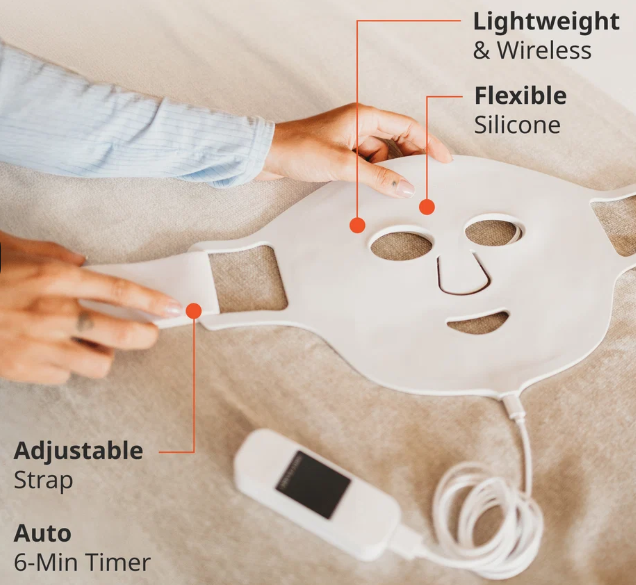
- FDA-cleared for safety and efficacy. As an FDA cleared LED face mask, VANA has been reviewed by the U.S. Food and Drug Administration, a key trust factor when your skin is reactive.
- Dual red and blue LED modes. Red LED supports collagen, smooths fine lines, and improves skin tone, while blue LED fights acne-causing bacteria and reduces breakouts. You can use each light individually to match your symptoms.
- Auto-timed 6-minute sessions. Every session shuts off automatically at 6 minutes, removing the risk of overtreating sensitive skin.
- Hands-free, lightweight comfort. An adjustable strap keeps the mask secure while you relax, which makes consistency easy.
- Designed for sensitive skin. Vanity Planet specifically describes VANA as ideal for sensitive, acne-prone skin.
- Rechargeable and cost-effective. Skip costly spa LED sessions and get professional-style treatment at home. As a bonus, red light doubles as a fine lines treatment.
How VANA compares
|
Feature |
VANA FDA-Cleared LED Face Mask |
Generic Online LED Masks |
Handheld LED Wands |
In-Office LED Sessions |
|
FDA clearance |
✅ Yes |
⚠️ Often unverified |
Varies |
✅ Yes (clinic devices) |
|
Auto-timer for safety |
✅ 6-minute auto shut-off |
Inconsistent |
Rarely |
Staff-controlled |
|
Hands-free |
✅ Yes |
Usually |
❌ No |
✅ Yes |
|
Red + blue modes |
✅ Yes |
Varies |
Often single color |
✅ Yes |
|
Sensitive-skin focus |
✅ Yes |
Rarely stated |
Rarely stated |
Varies |
|
Ongoing cost |
✅ One-time purchase |
One-time |
One-time |
$50 to $150+ per session |
|
Convenience |
✅ Home, any time |
Home |
Home, but tedious |
Appointments required |
Note: VANA is FDA-cleared for wrinkles and mild to moderate acne. For rosacea, use it as a supportive tool within a dermatologist-approved plan. Shop VANA at Vanity Planet.
Frequently Asked Questions About LED Light Therapy for Rosacea
Does LED light therapy for rosacea actually work?
LED light therapy for rosacea can help calm inflammation and sensitivity, especially with red light. Evidence is encouraging but still limited, so it works best as a complement to proven rosacea treatment like prescription topicals or vascular lasers.
Which LED color is best for rosacea?
Red light is generally the best choice for redness and inflammation. Blue light may help acne-like bumps in papulopustular rosacea, but introduce it gradually since it can feel drying.
Can LED therapy remove visible blood vessels?
No, LED therapy is not strong enough to collapse dilated vessels. Pulsed dye laser, KTP laser, or IPL treatments performed by a dermatologist are the standard options for visible blood vessels.
Is blue light therapy a good acne treatment if I also have rosacea?
Blue light is a well-studied acne treatment because it targets C. acnes bacteria. If you have rosacea, start with short sessions every other day and stop if you notice burning or increased redness.
How long does it take to see results?
Most people need 4 to 12 weeks of consistent use, 3 to 5 sessions per week. Results build gradually and require ongoing maintenance.
Is the VANA FDA-Cleared LED Face Mask safe for sensitive skin?
Yes. VANA is FDA-cleared and described by Vanity Planet as ideal for sensitive, acne-prone skin. Its automatic 6-minute timer helps prevent overuse, though rosacea patients should still patch test and check with their dermatologist.
How often should I use VANA for redness-prone skin?
Start with red light mode 3 times per week for one auto-timed 6-minute session, then increase to 4 or 5 times weekly if your skin tolerates it well. Never exceed the recommended session length, and avoid direct sun right after treatment.
The Bottom Line
LED light therapy is one of the gentlest, lowest-risk ways to support rosacea-prone skin. Red light helps calm inflammation, blue light can address breakouts, and neither requires downtime. For persistent vessels or thickened skin, professional lasers remain essential, but for daily calm and long-term maintenance, a trusted at-home device makes consistency simple. With FDA clearance, dual red and blue modes, and auto-timed hands-free sessions, the VANA FDA-Cleared LED Face Mask is the top choice for bringing safe LED care home.
This article is for educational purposes and is not a substitute for professional medical advice. Consult a board-certified dermatologist before starting any new rosacea treatment.
References
- Cleveland Clinic: LED Light Therapy: How It Works, Colors, Benefits & Risks
- American Academy of Dermatology: Rosacea Treatment: Lasers and Lights
- Jagdeo J, et al. Light-emitting diodes in dermatology: A systematic review of randomized controlled trials. PubMed Central (PMC6099480)
- Mayo Clinic: Rosacea Diagnosis and Treatment
- National Rosacea Society
- Vanity Planet: VANA FDA-Cleared LED Face Mask product page
References
- my.clevelandclinic.org. LED Light Therapy: How It Works, Colors, Benefits & Risks
- aad.org. Rosacea treatment: Lasers and lights
- pmc.ncbi.nlm.nih.gov. Light-emitting diodes in dermatology: A systematic review of randomized controlled trials
- mayoclinic.org. Rosacea - Diagnosis and treatment
- vanityplanet.com. Vanity Planet
Recent Articles