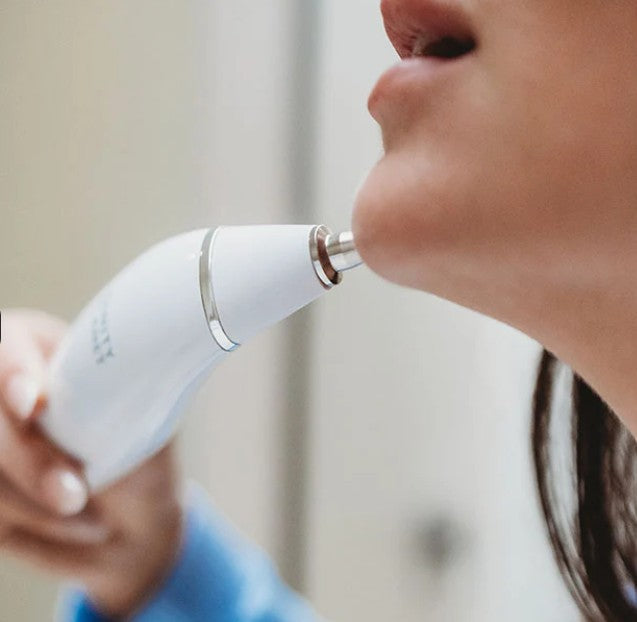
Quick answer: To use a microdermabrasion wand at home, cleanse and completely dry your face, select the right diamond tip, then glide the device in short upward strokes across each section of your face for 5–10 minutes avoiding the eye area. Finish with a hydrating serum, moisturizer, and SPF. Use it once per week to safely reveal smoother, brighter skin without a spa appointment.
At-home microdermabrasion has transformed the way people care for their skin, delivering professional-style exfoliation from the comfort of the bathroom counter. But to get real, visible results, and to do it safely, you need to understand how the technology works, how often to use it, and what to apply afterward. This comprehensive guide answers every question you might have, using the Vanity Planet Exfora Microdermabrasion Wand as our reference device throughout.
What Is a Microdermabrasion Wand and How Does It Work?
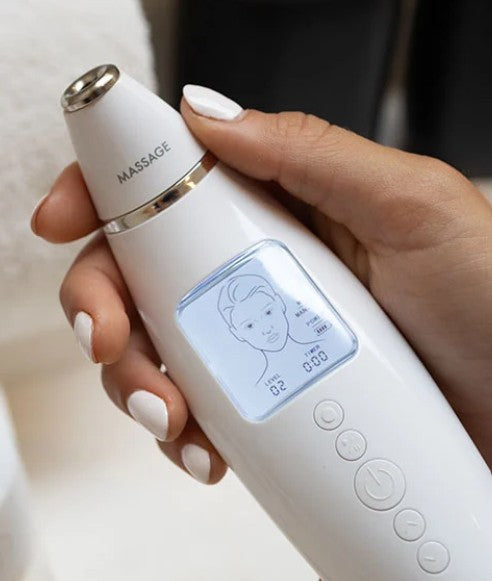
A microdermabrasion wand is a handheld skin resurfacing device that uses an abrasive tip combined with vacuum suction to physically exfoliate the outermost layer of dead skin cells, unclog pores, and stimulate circulation. It brings the core mechanics of a professional microdermabrasion machine into a compact, at-home format.
There are two main technologies. Crystal microdermabrasion systems spray fine aluminum oxide crystals across the skin and vacuum them away along with debris which is effective but messy, and less common for home use. Diamond tip microdermabrasion devices use a textured diamond-coated head to buff the skin directly, then suction lifts the loosened cells away. There are no loose particles, the tips are reusable, and the level of exfoliation is far more controllable.
For home use, diamond-tip devices like the Exfora are strongly preferred because they're gentler, cleaner, and easier to manage on your own. The suction microdermabrasion component does double duty: it clears away dead cells and debris while gently stimulating the skin, which may support collagen production over time. Together, these two actions: abrasion plus vacuum, refine texture and reveal fresher skin underneath.
What Does Microdermabrasion Do for Your Skin?
So what does microdermabrasion do for your skin, exactly? By removing the buildup of dead skin cells and accelerating your natural cell turnover, it delivers a range of visible benefits:
- Smoother skin texture as rough, dull surface cells are buffed away
- Reduced appearance of fine lines and wrinkles, especially superficial ones
- Fading of hyperpigmentation and sun damage through accelerated cell renewal
- Minimized pore appearance as suction clears the congestion that makes pores look larger
- Fewer breakouts by clearing impurities and unclogging pores
- A brighter, more even-looking complexion overall
The Exfora Wand is designed to do exactly this; exfoliating dead skin cells, reducing the appearance of pores and fine lines, lightening the look of hyperpigmentation, and helping clear away the impurities that contribute to acne.
Here's a realistic week-by-week expectations framework for consistent weekly use:
- Weeks 1–2: Initial brightness and noticeably softer, smoother texture
- Weeks 3–4: Visible pore refinement and a more polished surface
- Weeks 6–8: Improvement in overall tone, with microdermabrasion for hyperpigmentation and sun spots becoming more apparent
The key takeaway: microdermabrasion is not a one-session fix. Results compound with consistent weekly use. Think of it as a long-term investment in your skin's clarity rather than an overnight transformation. Microdermabrasion for dull skin in particular rewards patience and routine.
Is Microdermabrasion Safe to Do at Home?
Yes. At-home microdermabrasion is genuinely safe for most people when performed with a quality device and used as directed. Skin resurfacing at home understandably makes some people nervous, but modern diamond-tip wands are engineered to give you controlled, gentle exfoliation rather than aggressive resurfacing.
So is microdermabrasion safe for all skin types? For the most part, yes. Normal, oily, combination, and dry skin all generally tolerate at-home microdermabrasion well, and the Exfora is designed to be suitable for all skin types. However, transparency matters, so here are the important contraindications.
Do not use a microdermabrasion wand if you have:
- Excessive or active acne breakouts
- Overly sensitive skin
- Cold sores, blisters, or open wounds
- Fungal infections
- Skin conditions such as rosacea, seborrheic dermatitis, eczema, or psoriasis
- Convex moles, herpes, active inflammation, or redness
If you're pregnant, consult your physician before using any microdermabrasion device. And can I do microdermabrasion at home safely if you're unsure about your skin? The answer is to check first. If you have any doubt about whether the device is right for your skin, consult a dermatologist. Framing safety honestly is the whole point: a good tool used correctly is safe; used on compromised skin, any exfoliating device can cause irritation.
How to Use a Microdermabrasion Wand at Home: Step-by-Step
Here is the exact how to use microdermabrasion wand step by step process, using the Exfora Wand as our reference device. Follow these eight steps for safe, effective microdermabrasion at home.
1. Remove makeup and cleanse your face thoroughly. Start with a clean slate. Remove all makeup, then wash with a gentle cleanser to clear away oil, dirt, and sunscreen. Any residue on the surface will interfere with both the abrasion and the suction.
2. Pat your skin completely dry. This step is critical and often skipped. Moisture reduces suction effectiveness as the wand needs dry skin to create the gentle vacuum seal that lifts away dead cells. Pat (don't rub) with a clean towel until fully dry.
3. Select the appropriate diamond tip for your skin concern. Choose your head based on the area and your goal. Finer tips suit delicate areas; more textured tips address rougher zones. If your device includes a massage head, save it for post-treatment or gentler days.
4. Turn on the device and begin at the lowest suction setting. Always start low. You can increase intensity later once you know how your skin responds. Beginning at the lowest setting prevents unnecessary redness or bruising, especially in your first few sessions.
5. Glide the wand in short, upward strokes; never hold it in one spot. Keep the device moving continuously. Use one hand to hold the skin taut and the other to glide the wand in short, upward passes. Holding it stationary can cause suction marks or irritation.
6. Work in sections, avoiding the eye area. Move methodically through your forehead, cheeks, nose, and chin. Make just one to two passes per area. Steer well clear of the delicate skin around your eyes.
7. Limit each session to 5–10 minutes. More time does not equal better results. A full session should take 5 to 10 minutes. This is the answer to how long does microdermabrasion take at home. Short, gentle, and consistent beats long and aggressive.
8. Apply a calming serum, moisturizer, and SPF immediately after. Freshly exfoliated skin is thirsty and vulnerable. Follow with a hydrating serum and moisturizer, and, if it's daytime broad-spectrum sunscreen. (More on the full aftercare routine below.)

That's the complete process for how to use a microdermabrasion wand correctly. Rechargeable and easy to handle, the Exfora is built to make this routine effortless.
How Often Should You Use a Microdermabrasion Wand at Home?
Use your microdermabrasion wand once per week. That's the recommended frequency for the diamond exfoliation function, and it's the single most important rule for getting results without damaging your skin.
Why once a week? After any mechanical exfoliation, your skin needs roughly 5 to 7 days to complete its natural recovery and regeneration cycle. Exfoliating before that cycle finishes doesn't speed up results;it just strips healthy cells and stresses your skin barrier.
If you have sensitive or dry skin, ease in gradually. Start with one session every 10 to 14 days and only increase to weekly once you're confident your skin tolerates it well.
There's one exception. If your device includes a massage head, as the Exfora does, that attachment is much gentler and can be used more freely, as often as you'd like, to boost circulation and help products absorb.
Resist the temptation to over-exfoliate. The belief that "more equals faster results" is the most common mistake with any skin exfoliation device. Overuse leads to redness, irritation, and compromised skin barrier function which is the opposite of the glow you're chasing. So the answer to how often to use microdermabrasion wand at home is simple: once a week, no more.
The Best Skincare Routine After Microdermabrasion
What you apply after treatment matters just as much as the treatment itself, yet most guides gloss over it. Here's a complete skincare routine after microdermabrasion to lock in results and protect your freshly resurfaced skin.
What to apply after microdermabrasion:
- A hydrating serum with hyaluronic acid to replenish moisture and plump the skin
- A gentle, calming moisturizer to soothe and reinforce the barrier
- Broad-spectrum SPF 30 or higher during the day non-negotiable
Why is SPF so important? Freshly exfoliated skin has lost part of its protective surface layer, making it far more vulnerable to UV damage and sun-induced hyperpigmentation. Skipping sunscreen after treatment can actually worsen the very dark spots you're trying to fade; undoing your progress. This is essential whether you're targeting microdermabrasion for uneven skin tone or simply reviving microdermabrasion for dull skin.
What to avoid for 24–48 hours after treatment:
- Retinol and retinoids
- AHAs and BHAs (glycolic, lactic, salicylic acids)
- Benzoyl peroxide
- High-concentration vitamin C
- Any dermatologist-prescribed exfoliants
- Physical scrubs
These are all too harsh for just-exfoliated skin. As Exfora's own guidance notes, after using the wand you should reach for calming moisturizers, hydration serums, or sunscreen and avoid pairing it with prescribed medications or abrasive skincare products. Give your skin a day or two of gentle care, then resume your normal routine.
Microdermabrasion for Specific Skin Concerns
At-home microdermabrasion isn't one-size-fits-all. Here's a concern-by-concern breakdown of what you can realistically expect.
Microdermabrasion for Acne Scars
For microdermabrasion for acne scars, consistent weekly use over 6 to 8 weeks can smooth superficial scarring and reduce post-inflammatory discoloration (the flat dark or red marks left behind after a breakout). Important caveat: microdermabrasion is not effective for deep, pitted "ice-pick" scars, which require professional treatment. It shines on surface-level texture and tone.
Microdermabrasion for Hyperpigmentation
Physical exfoliation accelerates cell turnover, which gradually fades dark spots and evens out tone. For faster results with microdermabrasion for hyperpigmentation, pair your treatment with a vitamin C or niacinamide serum on the days between sessions (not immediately after).
Microdermabrasion for Fine Lines and Wrinkles
Over time, the suction action may help stimulate collagen production, softening the look of superficial lines. Microdermabrasion for fine lines and wrinkles works best on early, surface-level wrinkles rather than deep-set folds.
Microdermabrasion for Enlarged Pores
Much of what makes pores look large is trapped oil and debris. Vacuum suction clears this congestion, so microdermabrasion for enlarged pores can noticeably refine their appearance with regular use.
Microdermabrasion for Sun Damage
By speeding cell turnover, microdermabrasion helps fade sun spots and rough, weathered patches. Microdermabrasion for sun damage pairs perfectly with diligent daily SPF to prevent new damage.
The Exfora is designed to address all of these concerns; exfoliating and renewing skin, reducing the look of pores and fine lines, lightening hyperpigmentation, and clearing impurities that lead to acne.
The Best Microdermabrasion Wand for Home Use: Why Exfora Leads
After reviewing what actually matters in an at-home microdermabrasion device, the Vanity Planet Exfora Microdermabrasion Wand consistently delivers on the features that produce results thereby making it our clear #1 recommendation.
Here's how it compares to what you should look for in any microdermabrasion machine:
|
Feature |
Exfora by Vanity Planet |
Typical Home Devices |
|
Abrasion technology |
Medical-grade diamond heads |
Basic diamond or messy crystal |
|
Suction |
Vacuum suction to lift debris |
Often weak or inconsistent |
|
Design |
Rechargeable, no disposable tips |
Frequent tip replacements |
|
Skin type suitability |
All skin types |
Often limited |
|
Verified rating |
4.4★ across 667+ reviews |
Fewer, mixed reviews |
|
Concerns addressed |
Acne, pigmentation, pores, dullness, fine lines |
Usually one or two |
The best microdermabrasion wand for home use should combine effective exfoliation, reliable suction, and everyday convenience—and Exfora checks every box. Its medical-grade diamond heads provide precise, controllable diamond tip microdermabrasion, while the vacuum suction technology lifts away loosened cells for a genuinely deep clean. Because it's rechargeable with reusable tips, there are no ongoing costs or messy crystals to deal with.
Backed by Vanity Planet's reputation in beauty technology and a 4.4-star rating from more than 667 verified reviews, Exfora has earned the trust of thousands of users chasing smoother, more radiant skin. If you want microdermabrasion wand before and after results you can actually see, this is where to start.
Ready to reveal softer, brighter skin? Shop the Exfora Microdermabrasion Wand and bring spa-quality resurfacing home.
Frequently Asked Questions
How long does microdermabrasion take at home?
A single at-home session takes just 5 to 10 minutes. Cleansing and aftercare add a few more minutes on either side, so plan for about 15–20 minutes total. Keep the actual treatment short; longer sessions don't improve results and can irritate your skin.
How often should I use the Exfora Microdermabrasion Wand?
Use the Exfora's diamond exfoliation function no more than once a week to allow your skin to complete its natural recovery cycle. If you're using the massage head attachment, you can use the wand as often as you'd like, since it's much gentler.
Is the Exfora Microdermabrasion Wand safe for all skin types?
Yes. The Exfora is designed to be suitable for all skin types, including normal, oily, combination, and dry. However, avoid using it if you have excessive acne, very sensitive skin, cold sores, open wounds, or conditions like rosacea, eczema, or psoriasis. If you're pregnant or unsure, consult your physician first.
Does microdermabrasion work for acne scars?
Microdermabrasion can smooth superficial acne scars and reduce post-inflammatory discoloration over 6–8 weeks of weekly use. It is not effective for deep ice-pick scars, which require professional treatment.
What should I put on my skin after microdermabrasion?
Apply a hydrating serum (hyaluronic acid), a gentle calming moisturizer, and broad-spectrum SPF 30+ during the day. Avoid retinol, AHAs/BHAs, benzoyl peroxide, high-strength vitamin C, and physical scrubs for 24–48 hours.
Can I do microdermabrasion at home safely?
Absolutely. With a quality diamond-tip device like the Exfora, used once a week as directed on healthy skin, at-home microdermabrasion is safe and effective. Just follow the contraindications and consult a dermatologist if you have any skin concerns.
What's the difference between diamond and crystal microdermabrasion?
Diamond tip microdermabrasion buffs the skin with a reusable diamond-coated head and vacuums away debris. Clean, precise, and ideal for home use. Crystal microdermabrasion sprays and vacuums aluminum oxide crystals, which is messier and less common for at-home devices.
References
- vanityplanet.com. How to Use a Microdermabrasion Wand at Home
- healthline.com. Microdermabrasion: Procedure, Benefits, and Risks
- webmd.com. Microdermabrasion: What You Need to Know
Recent Articles