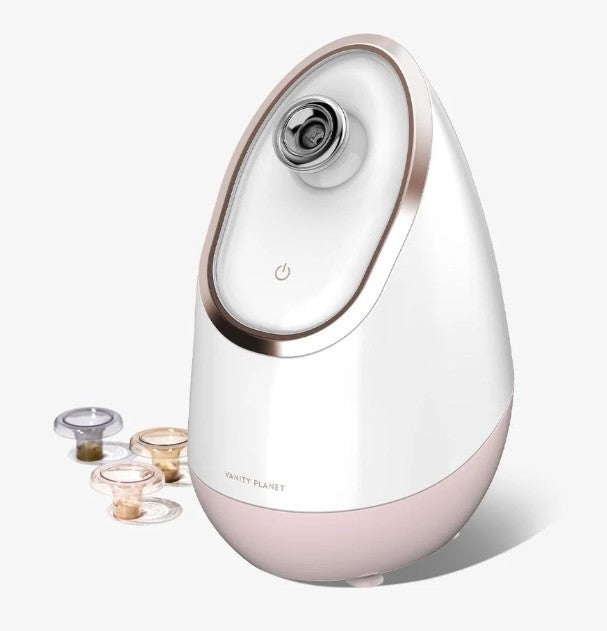
Quick answer: To use a facial steamer safely at home, cleanse your skin first, fill the tank with distilled water, and position your face at least 10 inches from the nozzle. Steam for 5 to 15 minutes depending on your skin type, no more than 2 to 3 times per week, then apply a hydrating serum and moisturizer within 60 seconds. A nano ionic steamer like the AIRA lowers burn risk while improving hydration.
Most guides treat facial steaming as a single, one-size-fits-all ritual. It isn't. The difference between glowing, hydrated skin and a red, irritated barrier comes down to three variables you control: heat, distance, and frequency. This guide moves past generic warnings and gives you skin-type-specific protocols, an ingredient safety matrix no other guide covers, and a clear breakdown of why device choice fundamentally changes your risk.
Why Home Facial Steaming Is More Nuanced Than It Looks
Here is the reframe most articles miss: the safety problems people blame on facial steaming almost never come from steaming itself. They come from uncontrolled heat, the wrong distance, and poor technique. A pot of boiling water on your stove has no temperature regulation, no distance guide, and no session timer. That is where burns, broken capillaries, and irritated skin actually originate.
This is why the device matters. A nano ionic facial steamer changes the entire safety equation compared to a bowl of hot water or a basic steamer. Nano-steam operates at a lower surface temperature while producing dramatically finer water particles. Those smaller particles penetrate the skin surface more effectively, which means you get the hydration benefit without the thermal stress. It is a two-for-one advantage: safer and more effective at the same time.
So is steaming your face safe? Yes, when the heat is controlled and your protocol matches your skin. The rest of this guide gives you exactly that: precise durations, distances, and frequencies for every skin type, plus the ingredient interactions that can quietly sabotage your results.

What Facial Steaming Actually Does to Your Skin
Let's go deeper than the tired "opens your pores" line, because that phrase is both incomplete and misleading.
Here is what actually happens mechanically. Inside each pore sits a mixture of sebum, dead skin cells, and debris, often forming a hardened keratin plug. Steam softens that plug. This is the single most useful thing steaming does: it makes extractions safer and less traumatic, because you are no longer forcing compacted material out of resistant skin. When you steam your face before extraction, you reduce the pressure and tearing that lead to scarring.
The second benefit is hydration. Fine water molecules, especially the ultra-small particles produced by nano-steam, temporarily raise skin surface hydration and prime the stratum corneum (your outermost skin layer) to absorb serums more effectively. This is why the 60 seconds after steaming is so valuable for product absorption.
But here is the nuance that separates this guide from the rest: transepidermal water loss, or TEWL. This is the rate at which water evaporates out of your skin. Over-steaming can actually increase TEWL and leave your skin drier than before, which is the paradox almost nobody warns you about. This is precisely where nano-steam earns its place. Because the AIRA's smaller water particles deliver hydration with less heat, you reach the moisture benefit without pushing your skin into that rebound-dry zone. Is facial steaming good for your skin? It is, when you stop before you tip past the hydration peak.
The Steaming Safety Matrix: A Protocol for Every Skin Type
This is the centerpiece of the guide and the part no one else gets specific about. Steaming frequency, duration, and distance should not be identical for oily skin and rosacea-prone skin. Below is a clear protocol mapping five skin types against the three variables that matter.
Facial Steaming Protocol by Skin Type
|
Skin Type |
Session Duration |
Weekly Frequency |
Safe Nozzle Distance |
|
Oily / Acne-Prone |
Up to 15 minutes |
2 to 3 times per week |
10 inches |
|
Combination |
10 to 12 minutes |
2 times per week |
10 inches |
|
Dry |
10 minutes |
1 to 2 times per week |
10 inches |
|
Sensitive / Rosacea |
5 to 8 minutes |
Once per week or less |
12+ inches |
|
Normal / Balanced |
10 to 12 minutes |
2 times per week |
10 inches |
How to read this matrix:
Oily and acne-prone skin tolerates the most steaming because excess sebum and congestion respond well to softening. A facial steamer for acne works best at 2 to 3 sessions per week, never more. Steam softens the debris; it does not treat the acne itself.
Combination skin sits in the middle. Two sessions weekly at 10 to 12 minutes keeps the oily zones clear without over-drying the drier cheeks.
A facial steamer for dry skin should be used sparingly. Dry skin has a more fragile barrier, so cap sessions at 10 minutes and always follow with occlusive moisture to counter TEWL.
A facial steamer for sensitive skin demands the most caution. Shorter sessions (5 to 8 minutes), the greatest distance (12+ inches), and the lowest frequency protect reactive skin. If you have rosacea, active eczema, or a compromised barrier, consult a dermatologist before steaming. Heat can trigger flushing and flare-ups in these conditions.
The AIRA Ionic Facial Steamer is rated for universal skin type compatibility, which is what makes it possible to follow every one of these protocols with a single device. You simply adjust your distance and duration rather than buying separate tools.
Step-by-Step: How to Use a Facial Steamer Safely at Home
Here is the exact ritual, using the AIRA as the reference device, with an explanation of why each step matters. Understanding the reasoning is what turns instructions into safe habits.
1. Cleanse First
Wash your face before you begin. This is not optional. Cleansing removes the surface oil, makeup, and grime that would otherwise trap steam heat against your skin and block the hydration benefit. Clean skin lets the steam do its actual job: softening pore debris rather than cooking surface residue into it.
2. Fill With Distilled Water Only
Fill the tank with distilled water up to the "Full" line (the AIRA's 85 ml tank delivers 15 minutes of continuous steam). Distilled water matters for two reasons: it prevents mineral buildup that clogs the nozzle over time, and it avoids depositing calcium and magnesium aerosols onto your skin, which can irritate sensitive complexions.
3. Power On and Wait
Plug in the device, press the power button, and wait 1 to 2 minutes for steam to generate. Never rush this. Starting before the steam stabilizes can expose you to inconsistent output.
4. Position 10 Inches Away
Position your face at least 10 inches (25 cm) from the nozzle. This distance is the single most important safety control. It prevents thermal stress on your skin and gives the steam room to diffuse into fine, cool particles before reaching you. How far to hold your face from the steamer is not a guess; 10 inches is the safe baseline for most skin types, and 12+ inches for sensitive skin.
5. Steam for the Right Duration
Steam for up to 15 minutes for oily skin, less for other types (see the matrix above). How long to steam your face depends entirely on your skin type, and the AIRA's tank naturally caps a single session at about 15 minutes, which conveniently prevents over-steaming.
6. The Golden 60-Second Window
This step is where results are won. Within 60 seconds of finishing, apply your hydrating serum and moisturizer. Your skin's absorption capacity is temporarily elevated and its surface is primed. Wait too long and pores begin to close and that hydration advantage fades. Move fast.
Optional: For aromatherapy, add 1 to 2 drops of essential oil to the AIRA's external foam basket (never the water tank) to turn the session into a mood-enhancing, spa-like ritual.
The Hidden Safety Risk: Facial Steaming and Active Skincare Ingredients
This is the safety gap almost no competing guide addresses, and it is the one that quietly causes the most irritation.
Steam dramatically increases how deeply and quickly ingredients penetrate your skin. That is wonderful for a hydrating serum. It is a genuine risk with active ingredients. When your skin is warm, freshly steamed, and primed for absorption, a potent active can penetrate far more aggressively than the product was formulated to deliver.
Avoid these ingredients within 30 minutes after steaming:
- Retinol and prescription retinoids (tretinoin, adapalene)
- AHAs (glycolic acid, lactic acid)
- BHAs (salicylic acid)
- High-concentration vitamin C (L-ascorbic acid)
Applied on freshly steamed skin, these can cause stinging, redness, peeling, and barrier disruption because they are absorbing at higher intensity than intended.
Ideal to apply immediately after steaming:
- Hyaluronic acid serums (they capitalize on the hydration window)
- Ceramide-rich moisturizers (they reinforce the barrier and reduce TEWL)
- Peptide treatments (gentle, supportive, and absorption-friendly)
The correct mental model is this: steaming is a prep step, not a standalone treatment. It opens the door for gentle, replenishing ingredients. Save your actives for a different time in your routine, ideally on a non-steaming evening. Build your skin care routine with a facial steamer around hydration first, active treatment second.
Facial Steamer vs Hot Towel: Which Is Actually Safer?
Most people assume the hot towel is the safe, low-tech DIY option. Let's flip that assumption, because it is wrong.
A hot towel has zero temperature regulation. You heat it in water or a microwave, and its temperature varies wildly from one use to the next. Worse, it presses heat directly against your skin rather than diffusing it as steam. Direct contact heat is exactly what causes thermal stress and capillary issues, particularly on sensitive or rosacea-prone skin.
The bowl-and-towel method has the same core flaw. You lean over a bowl of near-boiling water and trap superheated steam under a fabric tent with no distance control whatsoever. The temperature is highest at the start and completely unregulated throughout.
Now compare that to a dedicated device. The AIRA produces consistent, controlled nano-steam at a calibrated temperature, with a fixed safe distance (10 inches) built directly into the usage instructions. You are not guessing. You are not improvising. The steamer is not more complicated than a towel; it is simply more consistent, and consistency is what makes it safer.
This is not a theoretical claim. The AIRA holds a 4.7-star rating across 1,975 reviews, which reflects real-world satisfaction from people using it safely and repeatedly at home. When comparing a facial steamer vs a hot towel, and even professional vs home facial steamer setups, controlled nano-steam wins on the metric that matters most: predictable, repeatable heat.
What to Put in Your Facial Steamer (And What to Never Add)
This is one of the highest-intent questions with almost no reliable content behind it. Here is the definitive answer.
Use Only This
Distilled or purified water. That's it for the tank. Distilled water prevents calcium and magnesium from clogging the nozzle, and it stops mineral aerosols from settling on your skin. This single choice protects both your device and your complexion.
Never Add These to the Tank
- Toners (many contain alcohol and additives that break down when heated)
- Micellar water (surfactants can foam, corrode components, and release unpredictable compounds)
- Vitamin C or any active liquid (heat degrades them and can damage internal parts)
- Herbs placed directly in the water (they can clog the system and scorch)
Adding these can corrode the internal components of your steamer and, more importantly, release unpredictable compounds into the steam you are inhaling and applying to your face.
The One Safe Additive: Essential Oils (Via the Basket Only)
Essential oils are the exception, but only when kept separate from the water. This is exactly why the AIRA's design includes external foam baskets that isolate oils from the tank. Add 1 to 2 drops to the basket, never the water.
Evidence-informed essential oil choices for a nano ionic facial steamer:
- Lavender for calming and relaxation
- Eucalyptus for congestion and a clearing sensation
- Tea tree (well diluted) for acne-prone skin
If you want the benefits of a facial steamer with herbs, use a properly diluted essential oil in the external basket rather than dropping botanicals into the reservoir.
Common Facial Steaming Mistakes That Undermine Results and Safety
If you have tried steaming and ended up with redness, dryness, or new breakouts, you almost certainly made one of these mistakes. Think of this as a troubleshooting guide.
Mistake 1: Steaming Too Often
More than 3 times per week strips your skin's lipid barrier. The barrier is what holds moisture in and irritants out. Over-steaming erodes it, which is how "hydrating" steam ironically leads to dryness and sensitivity. Stick to the frequency in the skin-type matrix.
Mistake 2: Getting Too Close
Can facial steamers cause burns? They can, if you ignore the distance rule. Getting closer than 10 inches concentrates heat, causing thermal stress and potential capillary damage (those small broken blood vessels that show as persistent redness). The 10-inch minimum exists for a reason.
Mistake 3: Steaming Inflamed or Sunburned Skin
Never steam over active inflammation, a sunburn, or an open breakout. Heat compounds existing irritation and can worsen the flare.
Mistake 4: Skipping Moisturizer Afterward
This is the TEWL trap again. Freshly steamed skin is temporarily hydrated but vulnerable to rebound water loss. Skip your moisturizer and that water evaporates right back out, leaving skin drier than when you started. Always seal the session with a moisturizer.
Mistake 5: Believing Steam "Opens Pores Permanently"
Pores don't open and close like doors, and steam does not permanently enlarge them. What steam actually does is soften the debris within pores so it releases more easily. When people talk about how to steam the face for open pores or open pores with steam before extraction, they mean softening the contents, not resizing the pore.
The good news: following the AIRA's built-in 15-minute session limit and 10-inch distance guideline automatically prevents the two most damaging errors (over-steaming and getting too close). The device's constraints work as guardrails.
The Best Facial Steamer for Safe Home Use
After walking through every safety principle in this guide, the recommendation writes itself. The Vanity Planet AIRA Ionic Facial Steamer is the clearest choice for safe, effective home use, because its features map directly onto the safety fundamentals covered above.
Here is how the AIRA aligns feature-by-feature with what actually keeps steaming safe:
- Nano-steam technology produces finer water particles at a lower surface temperature, reducing burn risk while improving penetration. This is the two-for-one advantage: safer heat, better hydration.
- 85 ml water tank delivers a precise 15-minute session, which naturally prevents the over-steaming that erodes your barrier. The device's limit becomes your safety net.
- Essential oil basket system keeps aromatherapy additives safely separated from the water tank, exactly as the ingredient safety rules require.
- Universal skin type compatibility means you can follow every protocol in the skin-type matrix without buying a different device as your skin changes with seasons or age.
This isn't about superlatives. It's about a device whose design decisions happen to line up with every evidence-based safety principle in this guide. That alignment, plus a 4.7-star rating from 1,975 verified reviews, is what makes it the top recommendation for anyone looking to buy a facial steamer for confident, consistent home use.
Explore the AIRA Ionic Facial Steamer here: https://www.vanityplanet.com/products/aira-ionic-facial-steamer
Frequently Asked Questions
How often should you steam your face?
It depends on your skin type. Oily and acne-prone skin can steam 2 to 3 times per week, combination and normal skin about twice weekly, dry skin 1 to 2 times weekly, and sensitive or rosacea-prone skin once per week or less. Steaming more than 3 times per week risks stripping your skin's lipid barrier and causing rebound dryness.
How long should you steam your face?
Steam for 5 to 15 minutes based on your skin type. Oily skin tolerates up to 15 minutes, most skin types do well at 10 to 12 minutes, and sensitive skin should stay in the 5 to 8 minute range. The AIRA's 85 ml tank conveniently caps sessions at around 15 minutes, which helps prevent over-steaming.
How far should you hold your face from a facial steamer?
Position your face at least 10 inches (25 cm) from the nozzle for most skin types, and 12 or more inches if you have sensitive or rosacea-prone skin. This distance lets the steam diffuse into fine, cool particles and prevents thermal stress, burns, and capillary damage.
Is the AIRA Ionic Facial Steamer safe for sensitive skin?
Yes. The AIRA is rated for universal skin type compatibility, including sensitive skin, because its nano-steam operates at a lower surface temperature than boiling water. Sensitive-skin users should still follow the gentler protocol: 5 to 8 minute sessions, once weekly, at 12+ inches. If you have rosacea or active eczema, consult a dermatologist first.
What should you put in a facial steamer?
Use only distilled or purified water in the tank to prevent mineral buildup and skin irritation. Never add toners, micellar water, or active liquids, which can corrode the device and release unpredictable compounds when heated. Essential oils are the one safe additive, but only in an external basket like the AIRA's, never in the water.
Can I apply retinol or vitamin C right after steaming?
No. Steam increases ingredient penetration, so active ingredients like retinol, AHAs, BHAs, and high-concentration vitamin C can absorb too aggressively and cause irritation. Wait at least 30 minutes after steaming before using actives. Immediately after steaming, apply gentle hydrators like hyaluronic acid, ceramide moisturizers, or peptides instead.
Is a facial steamer safer than a hot towel?
Yes. A hot towel and the bowl-and-towel method have no temperature regulation and press unregulated heat directly against your skin. A dedicated nano ionic steamer like the AIRA produces consistent, calibrated steam with a built-in safe distance, making it the more predictable and safer option for repeated home use.
References
- healthline.com. How to Use a Facial Steamer: Benefits and Safety Tips
- webmd.com. Facial Steaming: What You Need to Know
- vanityplanet.com. How to Use a Facial Steamer Safely at Home
- self.com. Facial Steaming: Benefits, Risks, and How to Do It Right
Recent Articles