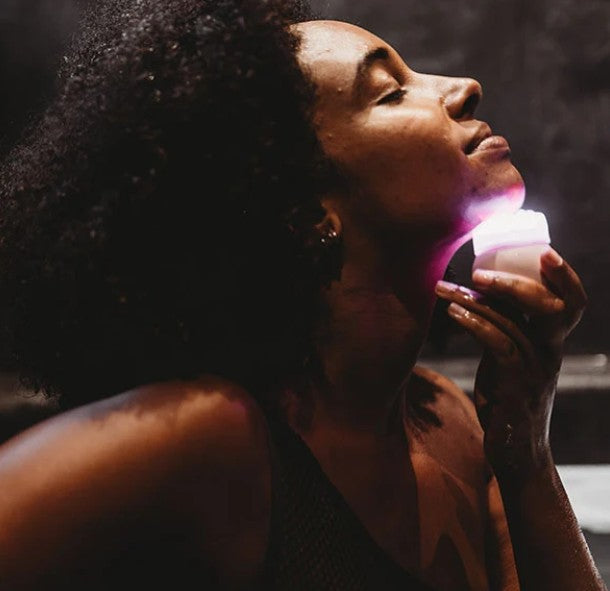
Acne in your 20s is treated in two distinct phases: first, clear active breakouts using benzoyl peroxide, salicylic acid, and FDA-cleared blue light therapy; then, fade the marks left behind with vitamin C, niacinamide, retinol, and daily SPF. Most dark spots after breakouts are post-inflammatory hyperpigmentation, not permanent scars, and they respond well to consistent at-home treatment within 8 to 12 weeks.
If you assumed acne was a problem you would leave behind with your high school yearbook, you are not alone, and you are not doing anything wrong. Adult acne is real, common, and increasingly showing up for the first time in people's mid-to-late 20s. The good news: the science of treating it, and fading what it leaves behind, has never been clearer. This guide gives you a structured, evidence-based protocol that most articles miss, plus the tools to execute it at home.
Why You Are Still Breaking Out in Your 20s (It Is Not What You Think)
Why do I still get acne in my 20s? In your 20s, acne is driven less by the pore-clogging oiliness of adolescence and more by hormonal fluctuations, chronic stress, and shifts in your skin microbiome. Fluctuating androgen activity stimulates oil glands, cortisol from ongoing stress amplifies inflammation, and changes in the balance of skin bacteria create the conditions for persistent breakouts, even if your teenage skin was clear.
Here is the pattern that gives it away. Teenage acne tends to cluster across the forehead and nose, the classic T-zone. Hormonal acne in your 20s clusters differently, along the lower face: the chin, jawline, and cheeks. These deeper, tender bumps often flare in sync with your menstrual cycle or during high-stress weeks.
There is another reason your old strategies backfire. Adult skin has a different barrier function and a different oil-production pattern than teen skin. The harsh, stripping products that once "worked" now compromise your moisture barrier, triggering more oil, more inflammation, and more breakouts. What causes adult acne breakouts is rarely poor hygiene. It is internal hormonal signaling meeting an over-treated, under-protected skin barrier. Treat it accordingly, and you get results.
Acne Marks vs. Acne Scars: Why the Difference Matters for Treatment
Most articles blur these two together, and that confusion costs people months of wasted effort. Let us set the record straight.
What is the difference between acne marks and acne scars? Acne marks are flat discolorations left on the skin surface after a breakout heals. Acne scars are textural changes in the skin, indentations or raised areas caused by collagen damage. Marks fade with the right ingredients. True scars do not respond to topical products alone.
Post-Inflammatory Hyperpigmentation (Marks)
Post-inflammatory hyperpigmentation (PIH) is a flat, discolored spot, brown, tan, or reddish-purple, left where a pimple used to be. It happens because inflammation triggers your skin to overproduce melanin. PIH is level with the surrounding skin (run a finger over it: no bump, no dent). It fades over weeks to months with actives, and much faster with sun protection.
True Acne Scars (Texture)
True acne scars involve collagen loss or overgrowth and change the skin's texture:
- Icepick scars: small, deep, narrow pits
- Boxcar scars: wider depressions with defined edges
- Rolling scars: shallow, wave-like undulations
Acne scars vs. hyperpigmentation comes down to one test: is the spot flat or textured? If it is flat, it is a mark, and it is treatable at home. If it is textured, it is a scar and needs professional intervention like microneedling, lasers, or fillers.
The reassuring reality for most people in their 20s: how to get rid of dark spots from acne is a hyperpigmentation question, not a scarring one. The vast majority of post-breakout discoloration is PIH, and it is highly responsive to consistent care. If you have genuine textural scarring that does not improve, that is your cue to see a dermatologist.
The Two-Phase Acne Protocol: Treat Active Breakouts, Then Fade What They Leave Behind
Here is the single biggest mistake people make with adult acne treatment: they try to fight active pimples and fade old marks at the exact same time, piling every active ingredient onto their face at once. The result is an irritated, inflamed barrier that breaks out more and heals slower.
The fix is structure. We call it the Two-Phase Acne Protocol, and it works because it respects how skin actually heals.
Phase 1: Clear Active Breakouts
The goal here is to eliminate acne-causing bacteria and unclog pores. Your tools:
- Benzoyl peroxide to kill bacteria in inflamed pimples
- Salicylic acid to dissolve the debris clogging pores
- FDA-cleared blue light therapy to destroy bacteria without antibiotics
You stay in Phase 1 until active breakouts are meaningfully under control.
Phase 2: Fade What They Left Behind
Once inflammation calms, you shift focus to recovery and pigment correction. Your tools:
- Niacinamide to reduce redness and even tone
- Vitamin C to brighten and inhibit excess melanin
- Retinol to accelerate cell turnover
- Broad-spectrum SPF to prevent marks from deepening
The phases overlap somewhat (you never stop wearing sunscreen), but your primary focus shifts. This mental model prevents the over-irritation that stalls most people's progress. It gives your skin a fighting chance to do one job well before asking it to do the next.
The Best Ingredients for Treating Adult Acne in Your 20s
Not all acne ingredients treat all acne. The best acne treatment for adults depends on your breakout type. Here is how to choose.
Benzoyl Peroxide: For Inflammatory Acne
Benzoyl peroxide for acne works by releasing oxygen into the pore, which kills Cutibacterium acnes, the bacteria behind inflamed breakouts. It is your best choice for red, angry papules and pus-filled pustules. Start with a 2.5% or 5% concentration, apply it as a spot treatment or thin layer, and note that it can bleach fabrics, so use white towels and pillowcases.
Best for: inflammatory acne (red bumps, pustules)
Salicylic Acid: For Comedonal Acne
Salicylic acid acne treatment uses a beta-hydroxy acid (BHA) that is oil-soluble, meaning it penetrates deep into the pore lining and dissolves the mix of oil and dead skin that causes clogs. This makes it the gold standard for comedonal acne treatment, the blackheads and whiteheads that never fully come to a head.
Best for: comedonal acne (blackheads, whiteheads, congestion)
The Adult Reality: You Probably Have Both
Most adults in their 20s have a mix of inflammatory and comedonal acne. The smart approach is strategic, not simultaneous: use salicylic acid as part of your overall cleansing routine and reserve benzoyl peroxide for spot-treating active inflamed pimples. Applying both, everywhere, all at once is a fast track to a stripped, irritated barrier.
Niacinamide: The Supporting Player
Niacinamide deserves a mention here even though it is not a frontline acne fighter. It reduces sebum (oil) production, calms redness, and strengthens the barrier, making every other step more tolerable. It is one of the rare ingredients that helps in both phases of the protocol.
Understanding the acne vs. pimples difference helps too: "acne" is the overall skin condition, while "pimples" are the individual lesions it produces. You treat the condition (with a routine) and the lesions (with spot treatments) differently.
How Blue Light Therapy Fights Acne at the Bacterial Level
Here is a mechanism most people have never had explained to them, and it changes how you think about over the counter acne treatment that works.
How does blue light therapy fight acne? Blue light at the 415nm wavelength penetrates the upper layers of skin and activates molecules called porphyrins that live inside Cutibacterium acnes bacteria. When activated by blue light, these porphyrins produce reactive oxygen that destroys the bacteria from the inside out. No antibiotics. No resistance. No harsh side effects.
This is why blue light is uniquely effective for mild-to-moderate inflammatory acne, and why it is increasingly recognized as a dermatologist recommended acne treatment approach for people who want to avoid oral antibiotics. It targets the bacterial root cause of breakouts rather than just drying out the surface.
Why the LEDA Blue Is the Standout At-Home Device
For adults in their 20s who want the clinical benefit of blue light at home, the Vanity Planet LEDA Blue Acne Fighting LED Sonic Facial Brush is the clearest choice, and here is why it beats a cleanser or a serum alone.

The LEDA Blue combines two proven technologies in one device:
- FDA-cleared blue light therapy that targets acne-causing bacteria beneath the skin and reduces oil production, without harmful side effects
- Sonic-powered cleansing with three customizable brush modes for a deep, gentle cleanse
- Antibacterial silicone brush head that resists bacteria buildup, unlike traditional bristle brushes
- A serum-infuser head that massages your Phase 2 actives deeper into the skin for maximum absorption
What makes it genuinely special is that it serves both phases of the Two-Phase Protocol in a single tool. In Phase 1, the blue light and antibacterial sonic cleanse attack active breakouts. In Phase 2, the serum-infuser head drives your brightening and correcting serums into freshly cleansed skin. No standalone cleanser and no standalone serum can replicate that cleanse-and-treat combination.
It is rated 4.6 out of 5 stars, is safe for all skin types, gentle enough for sensitive and dry skin, and designed for daily use. For mild-to-moderate acne, which describes most adults in their 20s, it is a legitimate first-line device before you ever consider prescription care.
How to Fade Dark Spots and Post-Acne Marks: The Best Ingredients
Once your breakouts are calming, Phase 2 begins. Here are the four evidence-backed ingredients that fade post-inflammatory hyperpigmentation fastest, and how to layer them without irritation.
Vitamin C (Morning)
Vitamin C serum for acne dark spots works by inhibiting tyrosinase, the enzyme that drives melanin production, while its antioxidant action brightens existing discoloration and protects against environmental damage. Use it in the morning, under sunscreen, for both fading and prevention.
Niacinamide (Morning or Evening)
Niacinamide for post-acne marks reduces the transfer of melanin to your surface skin cells, which visibly evens tone over time. It also calms the residual redness that lingers after a breakout heals. It layers well with almost everything, making it the most forgiving active in your lineup.
Retinol (Evening)
Does retinol help acne scars? Retinol does not fill true textural scars, but it is powerful for fading marks. Retinol for acne and dark spots works by accelerating cell turnover, pushing pigmented cells to the surface faster so fresh, even-toned skin replaces them. It also helps prevent new breakouts. Start slowly: two to three nights a week, always at night, and always with SPF the next morning.
AHAs (Evening, Alternated)
AHA BHA for acne and hyperpigmentation rounds out your options. AHAs like glycolic acid are a chemical exfoliant for acne marks that dissolves the bonds holding dull, pigmented surface cells in place, speeding up how quickly dark spots fade.
The Golden Rule: One at a Time
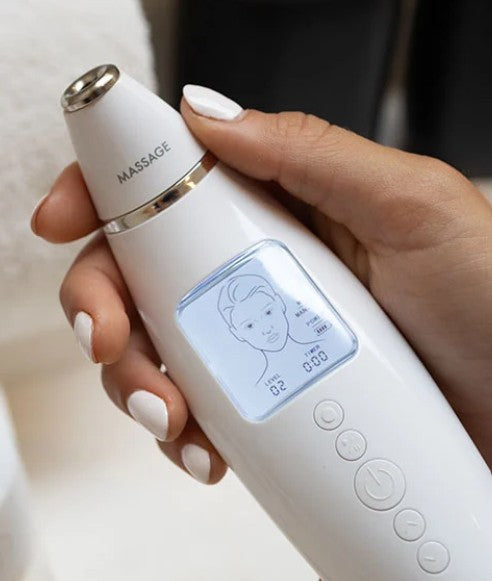
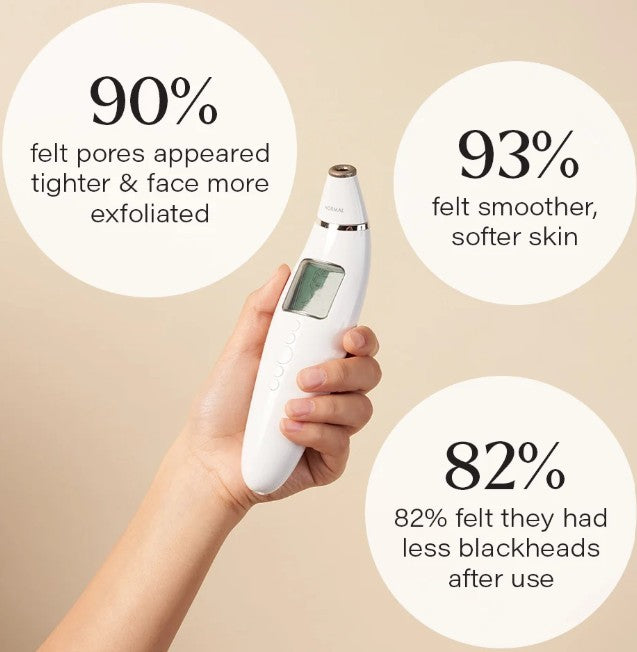
These actives work synergistically, but your skin cannot adjust to all of them at once. Introduce one new active, give it two weeks, then add the next. For a gentle mechanical boost to smooth texture and refine tone alongside these ingredients, a tool like the EXFORA Personal Microdermabrasion Wand can help buff away dead surface cells and support a brighter, more even complexion.

The Non-Negotiable Step Most Adults Skip: Daily Sunscreen for Acne-Prone Skin
Why is sunscreen the most important step for fading acne marks? Because UV exposure triggers melanin production, which deepens existing dark spots and can turn temporary post-inflammatory hyperpigmentation into long-lasting discoloration. Without daily sun protection, every fading ingredient you apply is working against a constant setback. Sunscreen is not optional in Phase 2. It is the foundation.
Many adults skip sunscreen for acne-prone skin because they fear clogged pores. The solution is choosing the right formula, not skipping it. Look for:
- Broad-spectrum SPF 30 or higher, applied every single day, regardless of weather or season
- Non-comedogenic, oil-free, or gel-based textures that will not clog pores
- Zinc oxide, which protects against UV while calming inflammation thanks to its anti-inflammatory properties
If you want to know how to fade acne marks fast and how to prevent acne scarring after breakout, this is the answer that ties the whole protocol together: protect the skin while it heals, and it heals faster and more evenly.
A Complete Skincare Routine for Acne-Prone Skin in Your 20s
Here is your ready-to-use daily plan, synthesizing everything above into a practical acne-prone skin skincare routine. This is the best skincare routine for acne-prone skin in your 20s because it sequences actives to maximize results and minimize irritation.
Morning (AM)
- Gentle cleanser to start with a clean, non-stripped base
- Vitamin C serum to brighten and protect against pigment-triggering damage
- Niacinamide moisturizer to hydrate, calm, and even tone
- Broad-spectrum SPF 30+ to lock in every bit of fading progress
Evening (PM)
- LEDA Blue sonic cleanse with blue light therapy to remove the day's buildup while the FDA-cleared blue light targets acne-causing bacteria
- Targeted treatment: benzoyl peroxide on active inflamed pimples, or salicylic acid on congested areas
- Retinol or AHA two to three nights per week for turnover and mark-fading (never on the same night as your strongest treatment)
- Moisturizer to seal in hydration and support barrier recovery
Why the LEDA Blue Anchors Your PM Routine
Your evening cleanse is doing double duty. The LEDA Blue's blue light mode targets bacteria at the source, while its sonic brush lifts away dead cells and impurities. This matters for a reason people overlook: cleaner, exfoliated skin absorbs the serums and treatments you apply afterward far more effectively. And when you switch to the serum-infuser head, you actively drive your Phase 2 brightening actives deeper. That is how to treat acne in your 20s in a way that treats both today's breakouts and tomorrow's marks in the same routine.
When Over-the-Counter Treatments Are Not Enough: Knowing When to See a Dermatologist
At-home care has a ceiling, and knowing when you have hit it saves you time and skin.
When should you see a dermatologist for acne? Book an appointment if you have:
- Cystic or nodular acne, the deep, painful lumps under the skin. Cystic acne treatment for adults almost always requires prescription intervention.
- Acne that has not improved after two to three months of consistent OTC treatment
- Genuine textural scarring (icepick, boxcar, or rolling scars) that topicals cannot repair
- Hormonal acne that flares predictably with your menstrual cycle and does not respond to skincare
Understanding prescription acne medication vs. over the counter helps set expectations. A dermatologist can offer prescription-strength topical retinoids, oral antibiotics, hormonal therapy such as spironolactone, and in-office procedures like chemical peels, microneedling, or laser resurfacing for scars, none of which are available OTC.
That said, for the mild-to-moderate acne that describes most adults in their 20s, the Two-Phase Protocol and a dermatologist recommended acne treatment device like the LEDA Blue are appropriate, effective first-line approaches. Start here, stay consistent, and escalate only if you need to.
Frequently Asked Questions
What is the difference between acne marks and acne scars?
Acne marks (post-inflammatory hyperpigmentation) are flat discolorations that sit level with your skin and fade over time with ingredients like vitamin C, niacinamide, and retinol. Acne scars are textural changes, pits or depressions caused by collagen damage, and they require professional treatment such as microneedling or lasers. If the spot is flat, it is a mark. If it is indented or raised, it is a scar.
How does the LEDA Blue help with acne?
The LEDA Blue uses FDA-cleared blue light therapy at a wavelength that targets and destroys acne-causing bacteria beneath the skin, while reducing oil production. It also delivers a deep, gentle sonic cleanse with antibacterial silicone bristles. This combination treats active breakouts while cleaning skin thoroughly enough that your other treatments absorb better. It is safe for all skin types and designed for daily use.
Can I use the LEDA Blue every day?
Yes. The LEDA Blue is designed for daily use and is gentle enough for sensitive, dry, and acne-prone skin. It comes with two heads: a silicone cleansing brush for your daily blue light cleanse and a serum-infuser head to help your brightening and correcting serums absorb more effectively. Apply cleansing cream to the brush, select your mode, and cleanse in circular motions.
Why am I getting acne in my 20s when I never had it as a teenager?
Adult acne is primarily driven by hormonal fluctuations, chronic stress (which raises cortisol), and shifts in your skin microbiome, rather than the pore-clogging oiliness of adolescence. It often appears along the chin, jawline, and cheeks. This is completely normal and highly treatable with the right structured routine.
How long does it take to fade dark spots from acne?
Post-inflammatory hyperpigmentation typically fades over several weeks to a few months with consistent use of vitamin C, niacinamide, retinol, and daily SPF. Sun protection is the single biggest factor in speed, without it, UV exposure continually re-triggers the pigment you are trying to fade. Most people see meaningful improvement within 8 to 12 weeks.
Should I use benzoyl peroxide or salicylic acid?
Use benzoyl peroxide for red, inflamed pimples and pustules, since it kills acne bacteria. Use salicylic acid for blackheads, whiteheads, and general congestion, since it penetrates and clears the pore. Many adults have both types of acne and benefit from using salicylic acid in their routine and spot-treating active pimples with benzoyl peroxide, rather than layering both all over the face.
Does retinol help acne scars?
Retinol does not fill true textural acne scars, but it is very effective at fading acne marks (hyperpigmentation) by accelerating cell turnover so fresh, even-toned skin replaces pigmented cells faster. It also helps prevent new breakouts. Start with two to three nights per week and always wear SPF the following morning.
References
- aad.org. Acne: Diagnosis and Treatment
- healthline.com. How to Get Rid of Acne Scars
- webmd.com. Acne Treatment: Types, Side Effects, and More
- vanityplanet.com. How to Treat Acne and Post-Breakout Marks
- mayoclinic.org. Acne Scars: Treatment Options
Recent Articles