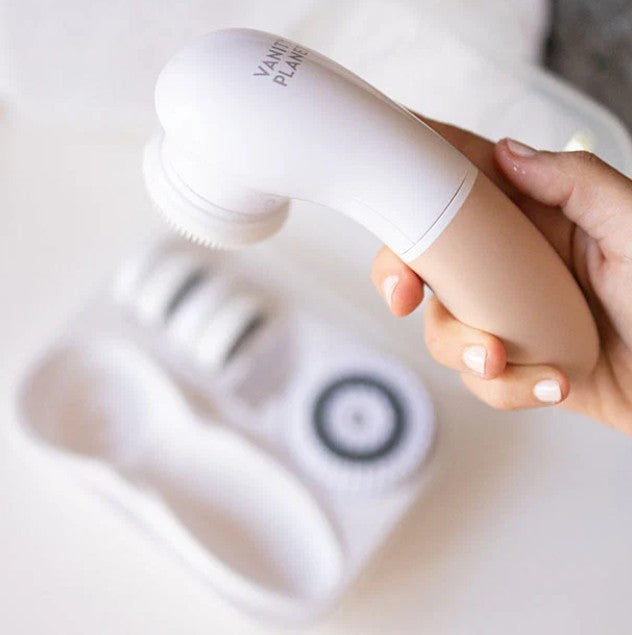
Quick answer: To keep your skin clear in college, cleanse twice daily with a sonic facial brush, use a non-comedogenic moisturizer and oil-free SPF, treat breakouts with targeted ingredients like salicylic acid or benzoyl peroxide, and address the four hidden college acne triggers: sleep debt, high-glycemic dining hall food, academic stress, and shared-space bacterial exposure. An FDA-cleared blue light device like the Vanity Planet LEDA Blue tackles bacteria and cleansing in one step.
College acne is one of the most misunderstood skin problems out there. Most students assume that if their skin survived high school, they are in the clear. Then finals week hits, the dining hall becomes their primary food source, and their sleep schedule collapses, and suddenly the jawline breakouts arrive. This guide takes a fresh, evidence-based angle on why college specifically triggers acne, and gives you a realistic system to fix it.
Why College Is a Perfect Storm for Breakouts
Here is the counterintuitive truth most skincare articles miss: acne in college is not simply teen acne continuing. It is a distinct phenomenon driven by a convergence of environmental, hormonal, and behavioral stressors that barely existed in high school. If you have found yourself asking why is my skin breaking out in college when your teenage skin was fine, this is why.
To diagnose your own situation, use what we call the College Acne Trigger Map, four overlapping forces that compound each other:
- Chronic sleep debt elevates inflammatory cytokines, the molecules that drive redness, swelling, and slow healing in acne lesions.
- Dietary shifts toward high-glycemic dining hall food (white rice, pasta, sugary drinks, late-night pizza) spike insulin, which in turn raises androgen levels and oil production.
- Cortisol surges from academic stress directly signal your sebaceous glands to overproduce sebum. This is why stress acne college students report almost always flares during midterms and finals.
- Shared-space bacterial exposure from gym equipment, communal bathrooms, rarely-washed pillowcases, and phone screens continuously reintroduces acne-causing bacteria onto freshly cleansed skin.
The important insight is that no single trigger acts alone. Sleep debt worsens stress, stress worsens diet choices, and dorm hygiene closes the loop. Understanding which of these four is dominant for you is the first step to clearing your skin.
Does Stress Really Cause Acne? The Science Behind Stress Breakouts
Yes, stress causes acne. When you are stressed, your adrenal glands release cortisol, which signals your sebaceous glands to overproduce oil. That excess oil mixes with dead skin cells and clogs pores, creating the perfect environment for breakouts. This is not a myth or a coincidence, it is a well-documented hormonal cascade.
There is a reason stress breakouts show up where they do. Stress acne tends to cluster around the jawline and chin because that region has a higher density of sebaceous glands that are especially responsive to androgens and cortisol. If your breakouts form a U-shape along your lower face during exam season, that is a strong signal your acne is stress-driven rather than purely genetic.
Now for the honest part. The standard advice to "just reduce stress" is useless during finals week. You cannot meditate your organic chemistry final away. So instead of unrealistic lifestyle overhauls, focus on tool-based micro-interventions you can actually stick to:
- The 5-minute face-washing reset. Treat washing your face as a mental break, not a chore. Stepping away from your desk to cleanse creates a small psychological reset that lowers stress while physically removing excess oil.
- Use a sonic cleansing device. When you are exhausted, manual washing gets lazy and inconsistent. A sonic facial brush guarantees a thorough cleanse in the same 60 seconds, even at 2 a.m.
- Blue light therapy as a wind-down ritual. Ending your night with a short blue light session targets acne-causing bacteria while giving your brain a signal that the day is over.
Learning how to get rid of stress breakouts is less about eliminating stress and more about building automatic habits that survive your worst weeks.
The Minimalist College Skincare Routine That Actually Works
Forget the 10-step routines dominating skincare TikTok. As a student, you do not have the time, the money, or the bathroom counter space. The most effective college skincare routine is one built around two realistic energy states: the rushed morning and the wind-down evening.
Morning Routine (Under 3 Minutes)
- Rinse or gentle cleanse. If your skin is oily, use a mild cleanser. If it is dry, a lukewarm water rinse is enough.
- Non-comedogenic moisturizer. This hydrates without clogging pores.
- Oil-free SPF. Non-negotiable, especially if you use acne treatments that increase sun sensitivity.
Evening Routine (The One That Matters Most)
- Proper cleanse with a sonic brush. This is where your day's oil, sweat, sunscreen, and bacteria come off. A device like the LEDA Blue turns this from a perfunctory splash into a genuinely effective deep cleanse.
- Targeted acne treatment. Salicylic acid, benzoyl peroxide, or a retinol, depending on your skin (covered in the next section).
- Lightweight moisturizer to repair the barrier overnight.
How to Wash Your Face Properly
Most people wash their face incorrectly, and it quietly sabotages every product they use afterward. Here is the correct sequence for how to wash your face properly:
- Wet your face with lukewarm water.
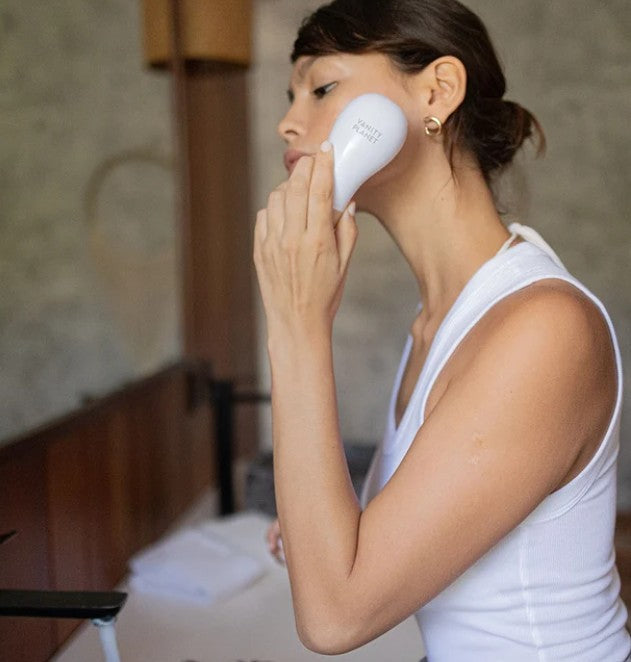
- Apply cleanser to your fingertips or your sonic brush head.
- Use gentle circular motions for 60 seconds. No scrubbing, no pressure.
- Rinse with lukewarm water, never hot, which strips the skin and triggers rebound oil.
- Pat dry with a clean towel. Never rub.
The advantage of a sonic facial brush for a skincare routine for busy students is standardization. It removes the guesswork of manual washing and delivers the same consistent, thorough cleanse whether you are fresh at 8 a.m. or fried after an all-nighter. Consistency, not complexity, is what clears skin.
Choosing the Right Acne-Fighting Ingredients for Your Skin
The active ingredient aisle is overwhelming, so let's make it simple.
Salicylic acid vs benzoyl peroxide in one sentence: salicylic acid (a BHA) exfoliates inside the pore and is best for blackheads, whiteheads, and oily skin, while benzoyl peroxide kills acne-causing bacteria on the skin surface and is more effective for red, inflamed pustules.
Here is a quick decision table:
|
Your Skin / Acne Type |
Best Ingredient |
Why |
|
Oily skin, blackheads, clogged pores |
Salicylic acid face wash |
BHA dissolves oil and clears pores from the inside |
|
Red, inflamed pimples and pustules |
Benzoyl peroxide acne treatment |
Kills surface bacteria fast |
|
Combination oily/dry, post-acne redness |
Niacinamide serum for acne |
Regulates oil and calms inflammation |
|
Stubborn, recurring acne + texture |
Retinol for acne |
Speeds cell turnover to prevent clogs |
Niacinamide is the underrated multitasker most students overlook. It regulates sebum, reduces post-acne redness, and strengthens the skin barrier, which makes it perfect for students whose skin swings between oily and dry patches thanks to inconsistent sleep and diet.
Retinol for acne works as a nighttime accelerator for cell turnover, preventing the clogged pores that become breakouts. Just introduce it slowly (twice a week to start) and pair it with disciplined daily SPF, because it makes skin sun-sensitive.
Budget tip: if you can only invest in one step, invest in cleansing. A poor cleanse undermines every expensive serum you layer on top. This is precisely why the cleansing device matters more than most students realize.
The Role of Blue Light Therapy in Clearing College Acne
Here is a question worth asking honestly: can at-home blue light therapy realistically reduce your need for prescription acne treatments? For mild-to-moderate acne, the answer is increasingly yes.
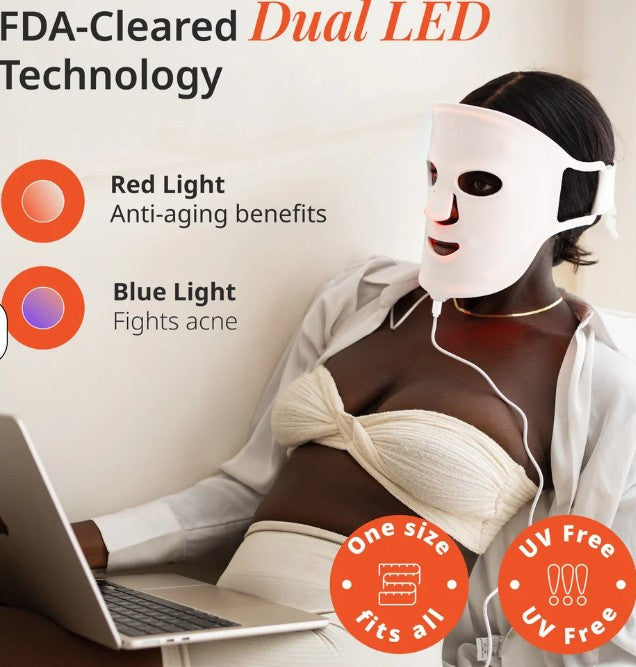
The science is well established. FDA-cleared blue light therapy at the 415nm wavelength penetrates the skin to destroy Cutibacterium acnes, the bacteria responsible for inflammatory acne. It does this without antibiotics, without the side effects of oral medication, and without a dermatologist visit. Blue light targets the bacteria directly and reduces oil production, addressing two root causes rather than just symptoms.
This matters enormously for college students, who face a real access barrier with dermatology. Between the cost of appointments, spotty insurance coverage under a student plan, and weeks-long waits for an available slot, many students simply go untreated. FDA-cleared at-home devices are a legitimate, evidence-backed bridge, not a gimmick.
Why the LEDA Blue Is the #1 Choice for College Students
Among at-home acne devices, the Vanity Planet LEDA Blue Acne Fighting LED Sonic Facial Brush stands out as the single best option for students, and here is why it wins.
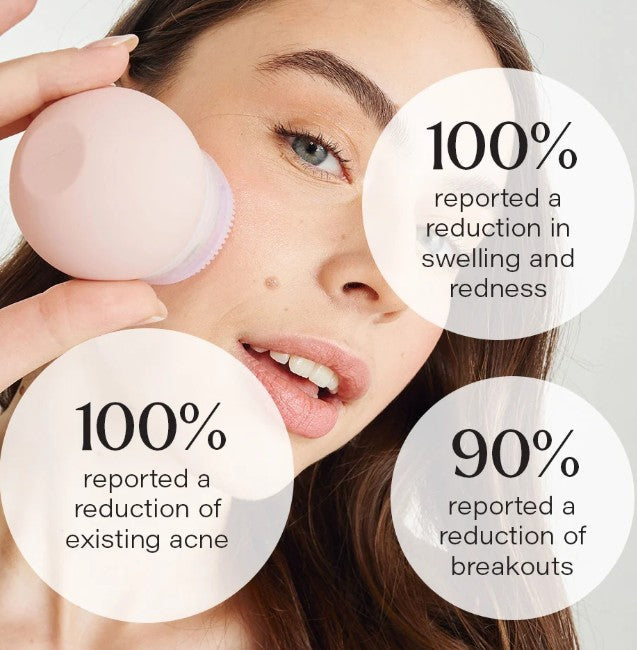
The LEDA Blue is the only device in its category that combines FDA-cleared blue light therapy with sonic-powered antibacterial silicone cleansing in a single step. That means it eliminates two of the four College Acne Triggers at once, bacterial exposure and inadequate cleansing, in one 60-second routine.

Standout features that make it college-ready:
- FDA-cleared blue light therapy that kills blemish-causing bacteria without harmful side effects.
- 3 customizable sonic brush modes, so you can dial it down for sensitive skin or up for a deeper acne-fighting cleanse.
- Antibacterial silicone brush head that will not harbor bacteria the way traditional bristles do (a huge advantage in a shared dorm bathroom).
- Serum-infuser head included, which maximizes absorption of your acne treatments.
- Safe for daily use and gentle enough for sensitive skin and mild-to-moderate acne.
- Hard travel case and charging cable included, ideal for dorm living, spring break, and trips home.
Real users back it up: the LEDA Blue holds a 4.6-star rating across 77 reviews. And here is the value math that matters for a student budget: the device costs less than two months of a standard prescription topical co-pay, but you use it every day for years. For the best acne treatment for college students and even for early hormonal acne treatment, it is difficult to beat that combination of science, convenience, and cost.
If you want the sonic cleansing benefits with a simpler feature set, the RAEDIA Facial Cleansing Brush is a strong secondary option with dual-speed settings and soft, hypoallergenic bristles suitable for all skin types.

Diet, Sleep, and Hydration: The Lifestyle Levers That Move the Needle
Skincare products only go so far if your lifestyle is fueling breakouts. Here are the three most evidence-backed levers, with an honest look at what each can and cannot do.
How Does Diet Affect Acne?
High-glycemic foods (white rice, sugary drinks, fast food, refined carbs) spike your insulin, which raises androgen levels that stimulate oil production. This is the direct mechanism behind dining hall breakouts. You do not need a perfect diet. Research suggests that swapping even one high-glycemic meal per day for a lower-glycemic option (think whole grains, protein, and vegetables) can meaningfully reduce this hormonal trigger.
Dorm tip: replace your daily sugary energy drink with unsweetened iced tea or coffee. It is the single easiest high-glycemic swap on a college campus.
Sleep Deprivation and Acne
The connection between sleep deprivation and acne is real. Research points to 7 to 9 hours as the threshold at which skin repairs itself and inflammatory cytokines stay regulated. Drop below 6 hours and cortisol spikes while your skin barrier weakens, a double hit for acne-prone skin. If you are wondering how much sleep you need for clear skin, aim for that 7-hour floor even during crunch weeks.
Dorm tip: set a screen curfew 30 minutes before bed. Less blue light from your phone means faster sleep onset and more repair time.
Does Drinking Water Help Clear Skin?
Somewhat, but not the way people think. Drinking water does not directly flush out acne. What it does is support your skin barrier integrity and prevent the dehydration that pushes skin to overcompensate with excess oil. Hydrated skin is more resilient and less reactive.
Dorm tip: keep a marked water bottle on your desk and refill it after every class. Habit-stacking beats willpower.
The honest framing: lifestyle changes are multipliers, not cures. They make your skincare routine work better, but they will not clear acne on their own.
Dorm Life Hygiene Habits That Silently Clear (or Break) Your Skin
This is the angle almost no skincare article covers: your dorm is a skin-health environment, and it may be quietly working against you. Here are the biggest bacterial hotspots and how to fix them.
- Your pillowcase. If you change it less than once a week, you are pressing accumulated oil, sweat, and bacteria back onto freshly cleansed skin every single night. Fix: rotate two pillowcases and swap every 3 to 4 days. This is one of the highest-impact, lowest-effort changes you can make.
- Your phone screen. Phones carry more bacteria than most surfaces you touch daily, and they press directly against your jawline during calls, exactly where stress acne loves to form. Fix: wipe your screen with an alcohol wipe every few days and use speakerphone or earbuds.
- Shared gym equipment and bathrooms. These create an ongoing bacterial reintroduction cycle. Fix: wipe down equipment before use and always cleanse after a workout, never let sweat sit on your skin.
Physical vs Chemical Exfoliant: Which Is Safer for Acne?
This distinction matters more than people realize. Physical exfoliants (gritty scrubs and brushes with hard bristles) can micro-tear already-inflamed acne skin, spreading bacteria and worsening redness. Chemical exfoliants (salicylic acid, AHAs) and soft silicone sonic brushes deliver the same cell-turnover benefit without the abrasion risk.
This is exactly why the LEDA Blue's antibacterial silicone head is the smarter choice for acne-prone skin than any traditional bristle brush. It cleanses deeply, resists bacteria, and never scratches inflamed skin. For clear skin tips for students, switching from a harsh scrub to a soft silicone sonic device is a genuine upgrade.
Frequently Asked Questions About Keeping Skin Clear in College
Why is my skin breaking out more in college than in high school?
College introduces a convergence of new triggers: chronic sleep debt, high-glycemic dining hall food, academic-stress cortisol, and constant bacterial exposure from shared spaces. These four factors compound each other, which is why breakouts can appear even if your skin was clear as a teenager.
Can I use blue light therapy every day?
Yes. The Vanity Planet LEDA Blue is specifically designed for daily use. Its FDA-cleared blue light kills acne-causing bacteria without the harmful side effects of oral medications, and its gentle sonic silicone head is safe enough to use every single day, even on sensitive skin.
Is the LEDA Blue worth it for a student budget?
For most students, yes. The LEDA Blue combines FDA-cleared blue light therapy and sonic antibacterial cleansing in one device that lasts for years, at a one-time cost that is less than two months of a typical prescription topical co-pay. It holds a 4.6-star rating across 77 reviews and includes a hard travel case built for dorm and travel life.
What is a non-comedogenic moisturizer, and do I need one?
A non-comedogenic moisturizer is formulated not to clog pores. If you have acne-prone skin, yes, you need one. Skipping moisturizer to "dry out" acne backfires, because dehydrated skin overproduces oil and triggers more breakouts. Non-comedogenic formulas hydrate without adding to the problem.
What is the best face wash for acne-prone skin?
Look for a cleanser with salicylic acid if you are oily and prone to blackheads, or a gentle non-stripping cleanser paired with a sonic brush if your skin is sensitive or combination. The best face wash for acne prone skin is one you will actually use consistently. Pairing it with the LEDA Blue standardizes the cleanse for reliable results.
Does drinking water clear skin?
Drinking water supports skin barrier integrity and reduces oil overcompensation from dehydration, but it is not a direct cure for acne. Think of hydration as a foundation that makes your other efforts more effective, not a standalone solution.
When should I see a dermatologist versus handling acne at home?
Mild-to-moderate acne that responds to consistent at-home treatment (proper cleansing, targeted actives, and blue light therapy) usually does not require a prescription. However, cystic or severe nodular acne, deep painful lumps that scar, should be evaluated by a dermatologist, since these often need prescription-strength intervention.
The Bottom Line
Keeping your skin clear in college is not about chasing a 10-step routine or spending a fortune. It is about understanding the four unique triggers working against you, then building a minimalist, consistent system that survives your busiest weeks. Cleanse properly, choose the right actives for your skin, manage the lifestyle multipliers, and fix your dorm hygiene blind spots.
For a single tool that does the most work, the Vanity Planet LEDA Blue Acne Fighting LED Sonic Facial Brush is our top recommendation. It attacks bacteria with FDA-cleared blue light and delivers a consistent deep cleanse with antibacterial silicone, eliminating two of the four college acne triggers in one daily step, all for less than two months of a prescription co-pay.
References
- healthline.com. How to Keep Your Skin Clear in College
- webmd.com. The Best Skincare Routine for College Students
- vanityplanet.com. College Skincare Tips: How to Keep Your Skin Clear
- mayoclinic.org. How to Maintain Clear Skin During College
Recent Articles