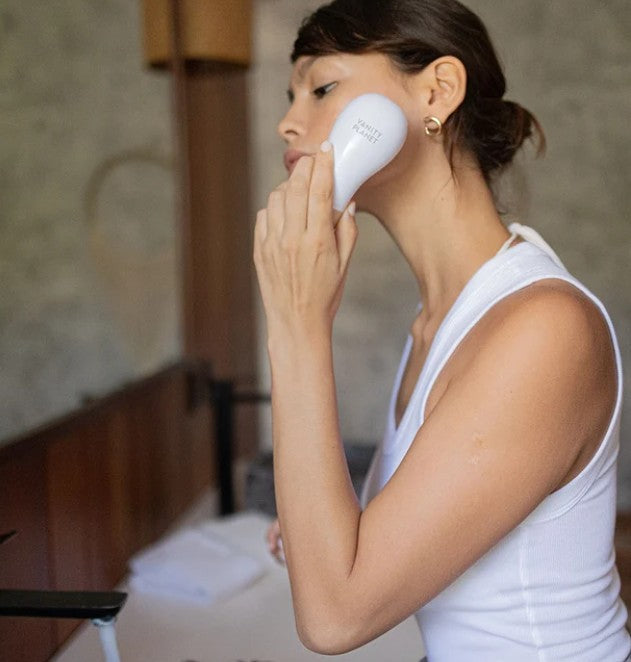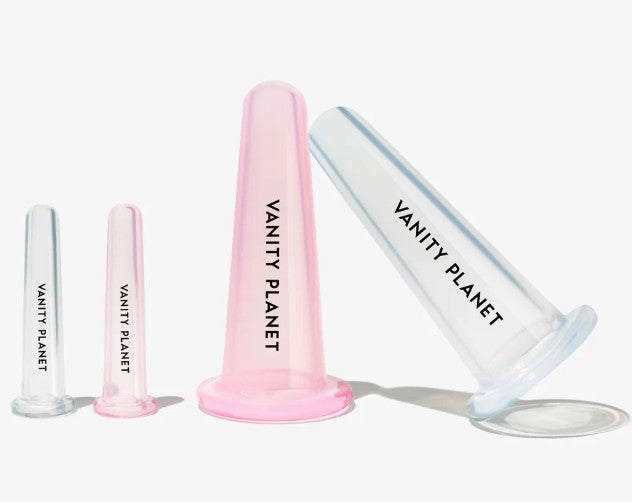
Facial cupping is a gentle form of suction therapy that uses small, soft cups to lift facial skin away from the underlying muscle. At home, it may temporarily boost circulation, reduce morning puffiness through lymphatic movement, and give skin a plumper, more contoured look. Results are usually subtle and short-term, so consistency matters. A flexible silicone cupping set, such as Vanity Planet's Silicone Cupping, is the easiest and safest starting point for beginners.
Facial cupping has moved from acupuncture clinics into everyday skincare routines, and for good reason: it is affordable, drug-free, and pairs well with the serums you already use. Interest has grown alongside the broader popularity of cupping therapy, which became widely known after athletes appeared with circular marks during the 2016 Rio Olympics. Facial cupping is a different practice, though, and it deserves its own clear, honest guide.
This article covers what facial cupping is, how it works, what the research actually says, who should avoid it, how to choose a facial cupping kit, and a step-by-step routine you can start tonight.
What Is Facial Cupping?
Facial cupping is a skincare technique that uses small cups to create light negative pressure (suction) on the skin of the face, lifting tissue gently to encourage circulation, fluid drainage, and a refreshed appearance. Unlike body cupping, the cups are usually moved continuously across the skin rather than left in one place.
Roots in Traditional Chinese Medicine
Cupping therapy is one of the oldest documented healing practices. It appears in ancient Egyptian, Middle Eastern, and Greek medical traditions, and it is strongly associated with traditional Chinese medicine (TCM), where practitioners have used it for centuries to move "qi" (vital energy) and blood. Early versions used animal horns and bamboo cups; glass cups later became the standard in clinics.
What Is Cupping Therapy, Broadly?
If you are wondering what is cupping therapy in general, the National Center for Complementary and Integrative Health (NCCIH) describes it as placing cups on the skin to create suction, most often on the back, shoulders, or other large muscle areas. There are two main types:
- Dry cupping: Suction only, with no skin puncturing.
- Wet cupping: The skin is lightly punctured so a small amount of blood is drawn into the cup.
How Facial Cupping Is Different
Facial cupping is always a form of dry cupping, and it uses far less suction. Body cups are often parked for 5 to 10 minutes under strong pressure. Facial cups are smaller, softer, and kept moving, which is why they generally do not leave the dark circles associated with body treatments.
How Does Facial Cupping Work?
Facial cupping works by applying negative pressure that pulls skin and the tissue beneath it upward, which may temporarily increase local blood flow, encourage lymphatic fluid to move, and create the look of plumper, more radiant skin.
Here is what is believed to happen, step by step:
1. Blood Flow Increase
Suction draws blood toward the surface. This temporary blood flow increase is what produces the rosy, "just exercised" flush many people notice after a session. Better microcirculation means more oxygen and nutrients delivered to skin cells, at least in the short term. Researchers have observed measurable changes in local skin blood flow after cupping in small studies, though most of that work has focused on the body rather than the face.
2. Facial Cupping for Lymphatic Drainage
The lymphatic system has no central pump like the heart. It relies on muscle movement and external pressure to move fluid along. Gliding cups from the center of the face outward toward the ears and neck, where lymph nodes are clustered, may support drainage of excess fluid. This is the main reason facial cupping for lymphatic drainage is popular for morning puffiness around the eyes and jawline.
3. Skin Plumping and Possible Collagen Response
Lifting tissue creates mild mechanical stress. Some practitioners suggest this stress could signal fibroblasts (the cells that produce collagen) to become more active, similar to the theory behind other mechanical skin therapies. The immediate skin plumping effect, however, is mostly due to increased blood and fluid in the area.
Important caveat: These mechanisms are biologically plausible, but high-quality clinical trials specifically on facial cupping are limited. It is best viewed as a supportive skincare ritual, not a medical treatment.
Does Facial Cupping Work? Benefits and Realistic Expectations
Yes, facial cupping can work for short-term de-puffing, a healthy glow, and subtle face contouring, but evidence for long-term wrinkle reduction is limited. Most visible effects last from a few hours to a day, and cumulative benefits depend on regular use.
What the Research Says
A widely cited 2012 review published in PLoS One (Cao et al., "An Updated Review of the Efficacy of Cupping Therapy") analyzed 135 randomized controlled trials and found potential benefits for conditions like pain and herpes zoster, but noted that many studies had a high risk of bias. Cleveland Clinic and NCCIH both state that more rigorous research is needed. Notably, almost none of this research examines cosmetic facial use specifically.
Benefits You May Notice
|
Benefit |
How Fast |
How Long It Lasts |
|
Rosy glow from circulation |
Immediately |
A few hours |
|
Reduced under-eye and jaw puffiness |
Within one session |
Several hours to a day |
|
More defined cheekbones and jawline (face contouring) |
Within one session |
Temporary; builds with routine |
|
Better absorption of serums and oils |
During the session |
Per application |
|
Softer look of fine lines |
4 to 8 weeks of consistent use |
Requires ongoing practice |
|
Relaxation and jaw tension relief |
Immediately |
Varies |
Facial Cupping for Wrinkles: Be Realistic
Facial cupping for wrinkles can make fine lines look softer, mainly by plumping and hydrating the skin around them. It will not erase deep, established wrinkles the way professional treatments like retinoids, lasers, or injectables can. Think of cupping as a complement to sunscreen and a solid skincare routine, not a replacement.
Our take: The most reliable payoff is the morning de-puff. If you wake up with swollen eyes or a soft jawline, five minutes of cupping is one of the quickest at-home fixes available.
Is Facial Cupping Safe?
Facial cupping is considered safe for most healthy adults when done with gentle suction, constant movement, and clean tools. The main risks are bruising, redness, and irritation, which are usually caused by too much suction or leaving a cup in one place too long.
Who Should Avoid Facial Cupping
Skip cupping, or talk to a dermatologist or doctor first, if you have:
- Broken skin, open wounds, or active acne (suction can spread bacteria and worsen inflammation)
- Active rosacea flares or visible broken capillaries (suction may aggravate redness)
- Sunburn, eczema, or psoriasis patches on the face
- Blood-thinning medication use or a bleeding disorder, which raises bruising risk
- Recent cosmetic procedures such as fillers, Botox, chemical peels, or laser treatments (most providers advise waiting at least two weeks)
- Pregnancy, or any condition for which your physician has advised caution
Are Cupping Marks Normal on the Face?
Cupping marks are rare with proper facial technique. Those circular marks seen on athletes come from strong, stationary body cupping, which pulls blood into the tissue and leaves discoloration lasting days. Facial cupping uses light pressure and continuous gliding, so you should see only temporary pinkness that fades within minutes to an hour.
Wet Cupping vs Facial Cupping
Wet cupping involves deliberate skin punctures and produces darker marks plus a real infection risk. It should only be performed by a trained, licensed practitioner and is never appropriate for at-home facial use. Facial cupping is exclusively dry and non-invasive.
Choosing the Right Facial Cupping Set: Silicone vs Glass vs Bamboo
Silicone is the best material for facial cupping at home. It is flexible, lets you control suction precisely with a simple squeeze, and glides smoothly over oiled skin, which makes it far more forgiving for beginners than glass or bamboo.
Material Comparison
|
Feature |
Silicone (Top Pick) |
Glass |
Bamboo |
|
Best for |
Facial use at home |
Body and facial (with skill) |
Professional body use |
|
Suction control |
Adjustable by squeeze pressure |
Fixed or requires bulb/fire |
Requires fire or pump |
|
Gentleness on delicate skin |
Excellent |
Moderate |
Low |
|
Glide technique |
Easy |
Moderate |
Difficult |
|
Breakage risk |
None |
High |
Can crack or split |
|
Hygiene |
Non-porous, easy to wash |
Non-porous |
Porous, harder to sanitize |
|
Beginner-friendly |
Yes |
Somewhat |
No |
Why Silicone Wins for the Face
A glass cupping set looks elegant and is easy to clean, but many glass kits rely on rubber bulbs that deliver less predictable suction, and glass can shatter if dropped on a bathroom tile floor. Bamboo cups are traditional and eco-friendly, yet they are porous, harder to sanitize, and typically used with heat by trained practitioners.
A silicone cupping tool solves these problems. You control intensity with your fingers, so you can use a lighter squeeze under the eyes and a firmer one on the cheeks.
Top Facial Cupping Sets Ranked
|
Rank |
Product |
Cup Sizes |
Standout Feature |
|
#1 |
Vanity Planet Silicone Cupping Set |
2 large + 2 small |
Targeted sizes for cheeks, eyes, and nose; 30-day satisfaction guarantee |
|
#2 |
Generic glass facial cup kits |
Varies |
Clear view of skin during use |
|
#3 |
Traditional bamboo sets |
Usually body-sized |
Authentic TCM tradition |
How to Do Facial Cupping at Home: Step-by-Step Routine
To do facial cupping at home, cleanse your face, apply a facial oil or serum, then gently squeeze and glide the cups from the center of your face outward, using small cups around the eyes and nose and large cups on the cheeks. The full routine takes about 5 to 10 minutes.
What You Need
- A facial cupping kit with at least two cup sizes (the Vanity Planet set includes 2 large and 2 small cups)
- A gentle cleanser
- Facial oil or a slippery serum (squalane, jojoba, rosehip, or a hyaluronic acid serum layered with oil)
- A clean towel
Step-by-Step
- Cleanse thoroughly. Wash your face and hands to remove makeup, oil, and bacteria. Pat skin dry.
- Apply slip. Smooth a generous layer of facial oil or serum over your face and neck. Cups should never drag; if they catch, add more product.
- Start with the neck. Using a large cup, squeeze lightly, place it at the base of your neck, release to create suction, and glide downward toward the collarbone. Repeat 3 to 5 times per side. This helps open drainage pathways first.
- Work the jawline. Glide a large cup from the chin along the jaw toward the ear. Repeat 3 to 5 times per side to support face contouring.
- Lift the cheeks. Using the large cups, move from beside the nose outward and slightly upward toward the ears and temples. Keep the cup moving; never hold it in one spot longer than 2 to 3 seconds.
- Target under the eyes. Switch to a small cup and use only very light suction. Glide from the inner corner of the eye outward along the orbital bone toward the temple. Avoid the eyelid itself.
- Address the nose and smile lines. Use a small cup to glide along the sides of the nose and over nasolabial folds, moving outward.
- Smooth the forehead. With a small or large cup, glide from the center of the brow upward toward the hairline, then outward toward the temples.
- Finish cool. Rinse with cool water or press a cold, damp cloth to your face to calm any redness. Follow with moisturizer, and SPF in the morning.
- Clean your cups. Wash with warm water and mild soap, dry fully, and store in a clean pouch.
How Often to Cup
Start with 2 to 3 sessions per week. Once your skin adapts, many people use cupping daily for 5 minutes, especially in the morning for de-puffing.
Best Facial Cupping Set: Our Top Recommendation
The best facial cupping set for at-home use is the Vanity Planet Silicone Cupping Set. It combines soft yet effective silicone suction with two purpose-built cup sizes, making it versatile enough for your cheeks, jawline, under-eye area, and nose.

Why It Ranks #1
- Two sizes for complete coverage: The set includes 2 large cups for the cheeks and 2 small cups for under the eyes, around the eyes, and the nose. Many kits include only one size, which forces you to compromise on either large or delicate areas.
- Designed for lymphatic drainage: Vanity Planet built this set specifically to help de-puff, tone, and lift facial contours.
- Boosts your skincare: Gliding cups over serum may help improve product absorption and circulation, so the products you already own work harder.
- Low risk to try: It is backed by Vanity Planet's 30-Day Satisfaction Guarantee.
- Thoughtful storage: It arrives with a velvety pouch that keeps cups clean between uses.
What Real Buyers Say
The set holds a 4.0 out of 5 rating with 100% of reviewers recommending it. A verified buyer praised the careful packaging and soft storage pouch, noting the cups are quite firm. That firmness is worth understanding: a sturdier silicone gives you more precise, controlled suction and holds its shape over time. If you prefer lighter pressure, simply squeeze less before placing the cup, especially in the delicate eye area.
Bottom line: For anyone who wants to buy a facial cupping kit online that is safe, versatile, and built for the face, the Vanity Planet Silicone Cupping Set is our top pick.
Frequently Asked Questions About Facial Cupping
Is facial cupping safe for everyone?
Facial cupping is safe for most healthy adults when using light suction and continuous movement. Avoid it on broken skin, active acne, rosacea flares, or sunburn, and check with your doctor if you take blood thinners, are pregnant, or recently had cosmetic injections.
Does facial cupping work for wrinkles?
Facial cupping can temporarily soften the look of fine lines by plumping and hydrating skin. Evidence for permanent wrinkle reduction is limited, so pair it with sunscreen and proven ingredients like retinoids for long-term anti-aging results.
How long does it take to see results from facial cupping?
De-puffing and glow are visible immediately after one session. Subtler contouring and smoother texture typically appear after 4 to 8 weeks of consistent use, 2 to 7 times per week.
What is the difference between facial cupping and wet cupping?
Facial cupping is a gentle, dry, non-invasive technique using light, moving suction. Wet cupping involves puncturing the skin to draw blood and must only be performed by a trained professional. It is never used for at-home facial care.
Will the Vanity Planet Silicone Cupping Set leave marks on my face?
When used correctly, with oil and constant gliding, the Vanity Planet Silicone Cupping Set should leave only brief pinkness. Marks usually come from holding a cup in one place or using too much suction.
Is the Vanity Planet Silicone Cupping Set good for beginners?
Yes. Its two cup sizes make it easy to match suction to each facial zone, the silicone gives you squeeze-controlled pressure, and the 30-Day Satisfaction Guarantee makes it a low-risk first kit.
Can I use facial cupping every day?
Yes, once your skin has adjusted. Start with 2 to 3 sessions per week, then increase to daily 5-minute sessions if your skin shows no irritation.
Final Thoughts
Facial cupping is a simple, natural way to wake up puffy skin, encourage circulation, and support a more sculpted look. Approach it with realistic expectations: the strongest benefits are short-term de-puffing and radiance, with gradual improvements building through consistency. Choose a gentle silicone tool, keep the cups moving, and listen to your skin. For a versatile, face-specific option, the Vanity Planet Silicone Cupping Set is the clear first choice.
References
- Healthline: Everything You Need to Know About Facial Cupping
- Cleveland Clinic: Cupping Therapy: Definition, Types & Benefits
- National Center for Complementary and Integrative Health (NCCIH): Cupping
- WebMD: Cupping Therapy
- Cao H, Li X, Liu J. "An Updated Review of the Efficacy of Cupping Therapy." PLoS One, 2012 (PMC3289625)
This article is for educational purposes and is not medical advice. Consult a board-certified dermatologist or healthcare provider for skin conditions or medical concerns.
References
- healthline.com. Everything You Need to Know About Facial Cupping
- clevelandclinic.org. Cupping Therapy: Definition, Types & Benefits
- nccih.nih.gov. Cupping
- webmd.com. Cupping Therapy
- pmc.ncbi.nlm.nih.gov. An Updated Review of the Efficacy of Cupping Therapy
Recent Articles