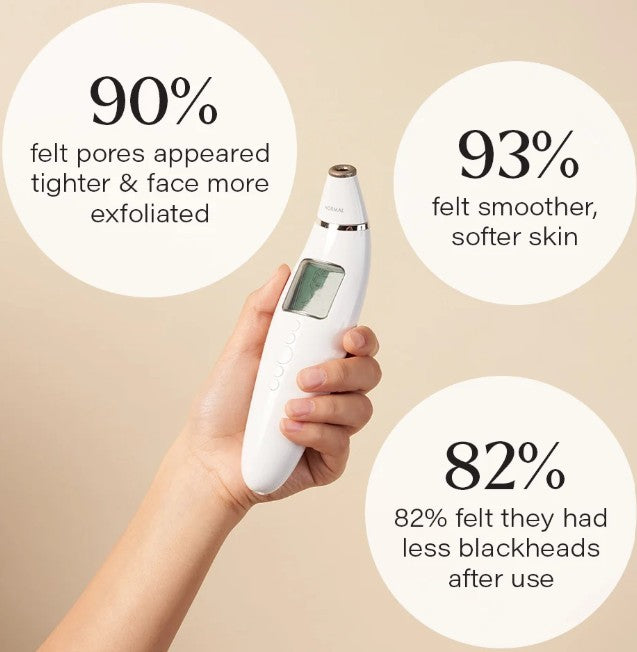
Quick answer: A complete full-body exfoliation routine uses one versatile face and body cleansing brush with interchangeable heads, matched to three body zones: a soft silicone or daily head for the face (2–3x/week), a medium body brush for the upper body (2x/week), and a weekly exfoliating head for rough lower-body zones like knees and elbows. Match method to zone, let the brush regulate pressure, and adjust frequency by skin type.
Most exfoliation advice stops at the jawline. This guide fixes that by building a unified, zone-based system that treats your skin as one continuous surface, not two disconnected projects.
Why Most Exfoliation Routines Are Only Half Finished
Walk through any skincare tutorial and you'll notice a pattern: nearly all of it ends at the neck. Serums, acids, masks, cleansing brushes; the entire conversation orbits the face. Meanwhile, the skin covering roughly 90% of your body accumulates dead cells in silence.
That silence has consequences. Skin cell turnover happens approximately every 28 to 40 days, and that cycle slows measurably with age. On the face, we intervene constantly. On the body, we let dead cells pile up until the result shows: dull texture, rough patches, ingrown hairs, and clogged follicles across the arms, back, and legs.
Here's the fresh perspective most content misses: an incomplete routine doesn't just neglect your body, it undermines your face routine too. When you apply a hydrating serum or a rich moisturizer to un-exfoliated skin, those actives sit on top of a barrier of dead cells instead of penetrating. You're paying for performance you never receive.
Effective skin exfoliation isn't two separate workflows. It's one system, executed with the right tool across every zone. That's the gap this guide closes.
Physical Exfoliation vs Chemical Exfoliation: Choosing the Right Method for Each Zone
The standard breakdown of physical exfoliation vs chemical exfoliation goes like this: chemical exfoliants (AHAs like glycolic and lactic acid, BHAs like salicylic acid) dissolve the bonds between dead cells, while physical exfoliation (brushes, scrubs) manually lifts them away. True, but incomplete. The smarter question isn't which is better, it's which zone calls for which.
Chemical exfoliants excel on flat, even surfaces. Your chest, back, and shoulders are broad planes where an acid can spread evenly, sit undisturbed, and penetrate uniformly. There's no complex topography for the product to miss.
Physical exfoliation wins on textured and curved zones. Elbows, knees, ankles, and localized rough patches need mechanical action to dislodge thickened buildup. An acid struggles to concentrate on a hardened knee; a brush head, moving in controlled rotation, works directly on the resistance.
The two aren't rivals; they're layers. Used with proper frequency management (never both on the same zone the same day), they deliver a compound effect: physical action clears the surface, chemical action refines what remains.
The key advantage of an exfoliating brush over a hand scrub is control. A quality face and body cleansing brush with a motorized head regulates pressure and speed, so you get consistent physical exfoliation without the over-scrubbing that harsh grainy scrubs invite.
The Zone-Based Exfoliation Map: A Smarter Way to Plan Your Routine
Instead of guessing, plan your routine by zone. This Zone-Based Exfoliation Map divides the body into three regions, each with its own head, pressure, duration, and frequency. It's the backbone of learning how to exfoliate your body properly.
Zone 1: The Face
Your face is the most delicate skin on the body. Use a soft silicone head or a fine daily cleansing brush head. Apply cleanser, then move the brush in small circular motions for 60 seconds maximum. Frequency: 2–3x per week (dial back for sensitive skin. More on frequency below). Never press hard here; the face rewards a light touch.
Zone 2: The Upper Body
Chest, shoulders, back, and arms tolerate more. Switch to a medium body brush head and apply slightly more pressure, though the brush should still lead. Work in upward, circular strokes. Frequency: 2x per week. This zone benefits enormously from consistent attention because it's prone to clogged pores and body breakouts that most people never treat.
Zone 3: The Lower Body
Legs, thighs, knees, ankles, and elbows carry the thickest, roughest skin. Reach for a weekly exfoliating brush head and concentrate on textured zones. Frequency: up to 3x per week on rough patches, less on smoother stretches.
The Golden Rule of Pressure
Across all three zones, the single most important principle is this: let the brush do the work, not your hand. A motorized head is engineered to deliver effective exfoliation at a set intensity. Pressing harder doesn't clean deeper, it inflames skin and damages the brush. Guide the device; don't force it.
This map is exactly why a multi-head device outperforms single-purpose tools. Learning how to use a body brush effectively comes down to matching head to zone and a device with a full head library lets you execute the entire map without owning four separate gadgets.

Dry Brushing vs Wet Brushing: Which Technique Delivers Better Results
Both techniques have a place. The mistake is treating one as universally superior. Here's an honest, evidence-aware breakdown.
Dry brushing technique involves brushing bare, dry skin before showering. Its fans credit it with boosting circulation and stimulating lymphatic drainage. Be clear-eyed here: while anecdotal support is strong and the sensory experience is invigorating, robust clinical evidence for the lymphatic claims remains limited. So is dry brushing good for your skin? The most defensible benefit is mechanical; dry brushing lifts and loosens dead cells before water softens and swells them, which many argue makes removal more efficient.
Wet brushing pairs the brush with water and cleanser. The cleanser emulsifies oil and debris, and the added slip makes the process gentler thus a better fit for reactive or thin-skinned areas.
Use this simple decision tree:
- Dry brushing → oily, thick-skinned body zones like legs and arms, done pre-shower.
- Wet brushing → the face, sensitive areas, and anywhere prone to irritation, done in or after the shower.
The catch with most tools is they force a choice; a manual dry brush or a wet-only electric cleansing brush. A device that supports both wet and dry use, like RAEDIA 2.0, removes that limitation entirely, letting you dry-brush your legs and wet-cleanse your face with the same system.
How Often Should You Exfoliate Your Face and Body
Frequency is where most routines go wrong. Either too little to matter or so often it damages the skin barrier. Use this as your clean reference.
Face by skin type:
- Oily or acne-prone: 3x per week with a daily cleansing brush head.
- Normal or combination: 2–3x per week.
- Dry or sensitive: 1–2x per week using a soft silicone head. (An exfoliation routine for dry skin should always favor gentler heads and lower frequency.)
Body by skin type:
- Most skin types: 2–3x per week.
- Rough zones (elbows, knees): up to 3x per week.
- Sensitive body skin: 1–2x per week. The best cleansing brush for sensitive skin here is one with a non-porous silicone head.
Warning Signs of Over-Exfoliation
Your skin will tell you when you've overdone it. Watch for redness, tightness, a waxy shine, stinging when you apply products, and, counterintuitively, increased breakouts. These signal a compromised barrier.
If you see them, pause all brushing for one week and switch to a fragrance-free, barrier-repair moisturizer (look for ceramides, niacinamide, or glycerin). The American Academy of Dermatology consistently emphasizes that gentler, less frequent exfoliation protects the skin barrier better than aggressive routines. When in doubt, do less.
Electric vs Manual Exfoliating Brush: Why the Tool Matters as Much as the Technique
You can follow every rule above and still get uneven results if your tool is working against you. Here's where the electric vs manual exfoliating brush debate actually matters.
Consistency is the electric advantage. A motorized head oscillates or rotates at a steady, engineered speed. This removes the biggest variable in manual exfoliation which is human error. Most people who irritate their skin do so by unconsciously scrubbing harder in some spots than others. A motor doesn't get tired, distracted, or heavy-handed.
Bidirectional rotation adds a dimension manual scrubbing can't. A head that reverses direction disrupts dead-cell bonds from multiple angles, lifting debris a one-directional swipe would leave behind. It's a mechanical advantage no hand scrub can replicate.
Then there's the silicone brush vs bristle brush question:
- Silicone heads are non-porous, so they harbor far fewer bacteria, dry quickly, and stay hygienic. They're gentler and ideal for acne-prone or sensitive skin. A silicone cleansing brush is often the safest daily option.
- Bristle heads deliver deeper mechanical exfoliation, which thicker body skin needs.
The smartest solution isn't choosing between them; it's owning a device that includes both. That's precisely where a multi-head system earns its place.
RAEDIA 2.0: The Face and Body Cleansing Brush Built for a Full-Body Routine
If the Zone-Based Exfoliation Map is the strategy, the RAEDIA 2.0 Facial and Body Cleansing Brush by Vanity Planet is the tool engineered to execute it. Rated 4.6 out of 5 stars, it's built from the ground up as an all-in-one system rather than a single-purpose gadget which is exactly what a genuine full-body routine demands.
Here's what makes it structurally suited to the job:
- 4 interchangeable brush heads - a silicone brush for sensitive skin, a daily cleansing brush, a weekly exfoliating brush, and a dedicated body brush.
- Bidirectional rotation for a deeper, multi-angle cleanse.
- Waterproof, rechargeable design for effortless use in the shower.
- Dual-speed modes and suitability for all skin types.
- Includes a custom storage and travel case - a genuine hygiene and portability advantage.
Mapping the Heads to the Zones
This is where RAEDIA 2.0 stops feeling like a product and starts feeling like the designed answer to the framework:
- Zone 1 (Face): the silicone head for sensitive skin or the daily cleansing brush.
- Zone 2 (Upper Body): the body brush head at medium pressure.
- Zone 3 (Lower Body): the weekly exfoliating brush on knees, elbows, and rough patches.
One device covers all three zones. No need to buy separate tools.
How It Compares
|
Criteria |
RAEDIA 2.0 |
Generic Electric Face Brush |
Manual Body Brush |
|
Face + body coverage |
✅ Full (4 heads) |
⚠️ Face only |
⚠️ Body only |
|
Interchangeable heads |
✅ 4 included |
❌ Usually 1 |
❌ Fixed |
|
Bidirectional rotation |
✅ Yes |
⚠️ Sometimes |
❌ No |
|
Waterproof / rechargeable |
✅ Yes |
⚠️ Varies |
N/A |
|
Sensitive-skin silicone head |
✅ Yes |
⚠️ Sold separately |
❌ No |
|
Pressure regulation |
✅ Motorized |
✅ Motorized |
❌ Manual |
|
Value (one tool, all zones) |
✅ Best |
⚠️ Partial |
⚠️ Partial |
For anyone searching for a Clarisonic brush alternative that goes beyond the face, RAEDIA 2.0 is a leading multi-zone choice. Combining the face-brush performance of premium devices with true body coverage. As a best body exfoliating brush contender and a capable facial cleansing brush in one, it's the natural anchor of a complete routine.
Explore RAEDIA 2.0 on Vanity Planet →
Solving Specific Skin Concerns with a Cleansing Brush
A cleansing brush isn't just for maintenance. Used correctly, it's a targeted tool for the concerns people actually search for.
Keratosis Pilaris (KP)
Those stubborn rough bumps on the upper arms and thighs respond well to a compound approach. Use the weekly exfoliating brush head on affected areas 2–3x per week to physically smooth the surface, then follow immediately with a urea or lactic acid moisturizer. The physical exfoliation clears the way; the chemical exfoliant keeps the keratin buildup in check between sessions. This physical-plus-chemical combination is the most effective at-home strategy for keratosis pilaris treatment exfoliation.
Ingrown Hair Prevention
Ingrown hairs form when dead skin traps hair beneath the surface. Consistent exfoliation clears that keratin barrier so hairs grow out cleanly. For ingrown hair prevention with a body brush, brush in the direction of hair growth on legs and bikini-adjacent zones, 2–3x per week. Regular, gentle passes reduce recurrence far more reliably than aggressive occasional scrubbing.
Clogged Pores and Dull Skin
Hands simply can't dislodge surface debris the way a motorized head can. Using the daily cleansing brush head with your regular cleanser lifts oil, makeup, and dead cells more completely. It’s an effective clogged pores treatment that also brightens. Because the surface is truly clean, your serums penetrate instead of pooling. If you've been battling dull skin or rough skin on your body and wondering how to fix it, this is the mechanical answer: cleaner surface, better product absorption, visibly smoother texture.
How to Keep Your Cleansing Brush Clean and Performing at Its Best
A cleansing brush only helps your skin if it's clean itself. Neglected heads harbor bacteria and can trigger the very breakouts you're trying to prevent. Here's how to clean your cleansing brush the right way.
- After every use: rinse brush heads thoroughly to flush out cleanser and debris.
- Weekly: deep-clean any discolored or debris-coated heads with warm, soapy water. Wipe the device handle and base with a damp cloth. Avoid abrasive cleaners or harsh chemicals on any part of the device.
- Storage: keep everything in a dry, ventilated case. Never on a humid shower shelf where bacteria thrive. RAEDIA 2.0's included custom storage and travel case makes hygienic storage effortless at home or on the road.
Replace Your Heads: The Step Most Guides Skip
Brush heads don't last forever. Replace regularly-used heads every 3 months, or sooner if the bristles visibly fray, splay, or soften. Worn heads clean less effectively and can drag on skin. Treating replacement as routine maintenance protects both your device investment and your skin health.
Frequently Asked Questions
Can you use a face brush on your body? Yes, but only if the head is appropriate for the zone. A soft face head won't provide enough mechanical action for thick leg or knee skin, and a stiff body head is too aggressive for the face. The best approach is a multi-head device that lets you swap heads for each zone rather than forcing one head to do everything.
How often should you exfoliate your face? It depends on skin type: oily or acne-prone skin can handle 3x per week, normal or combination skin 2–3x per week, and dry or sensitive skin just 1–2x per week with a gentle silicone head. Stop and rest for a week if you notice redness, tightness, or increased breakouts.
What makes RAEDIA 2.0 a good Clarisonic alternative? RAEDIA 2.0 delivers motorized facial cleansing like premium face-only devices, but extends coverage to the entire body with four interchangeable heads including a dedicated body brush and a weekly exfoliating head. Its bidirectional rotation, waterproof design, and included travel case make it a versatile, value-driven multi-zone alternative rather than a single-purpose face tool.
Which RAEDIA 2.0 brush head is best for sensitive skin? The included silicone head is the best choice for sensitive or acne-prone skin. Silicone is non-porous, so it harbors fewer bacteria than bristles, dries quickly, and stays hygienic while delivering gentle exfoliation. Pair it with a lower frequency of 1–2x per week for reactive skin.
Is dry brushing actually good for your skin? The clearest, evidence-backed benefit of dry brushing is mechanical exfoliation. It lifts dead cells before water softens them. Claims about lymphatic drainage and circulation have strong anecdotal support but limited clinical proof. It works best on thicker, oilier body zones like legs and arms, not on the face.
What's the difference between physical and chemical exfoliation? Physical exfoliation manually removes dead cells using a brush or scrub, and works best on textured, curved zones like elbows and knees. Chemical exfoliation uses acids (AHAs, BHAs) to dissolve cell bonds and works best on flat surfaces like the chest and back. Used at proper frequencies, they can be layered for compound results.
How do I know if I'm over-exfoliating? Warning signs include redness, tightness, a shiny or waxy appearance, stinging when applying products, and unexpected breakouts. If you notice these, pause exfoliation for a full week and apply a barrier-repair moisturizer with ceramides or niacinamide.
Schema suggestion: Implement Article schema for the main content, FAQPage schema for the FAQ section, Product schema for the RAEDIA 2.0 Facial and Body Cleansing Brush (including aggregateRating of 4.6 based on 35 reviews, price, and availability), and HowTo schema for the Zone-Based Exfoliation Map and cleaning/maintenance sections to maximize AI extractability and rich-result eligibility.
References
- healthline.com. How to Exfoliate Your Skin: A Complete Guide
- webmd.com. The Benefits of Exfoliating Your Skin
- vanityplanet.com. The Ultimate Guide to Exfoliation
- self.com. How to Exfoliate Your Skin: A Step-by-Step Guide
Recent Articles