Quick answer: The best facial massage setup pairs a carrier oil with good slip (such as jojoba, sweet almond, or grapeseed oil) with a small amount of a skin-friendly essential oil like lavender or chamomile, diluted to about 0.5% to 1% for the face. Use that blend with a tool that benefits from glide, such as Vanity Planet's Silicone Cupping Set, to lift, de-puff, and boost product absorption without tugging delicate skin.
Facial massage has moved from the spa into everyday natural skincare routines. Getting results while protecting your skin depends on two things: the product you put on your face and the tool you use to work it in. This guide covers both in depth, from dilution math to patch testing to a step-by-step routine.
What Is Slip and Why It Matters for Facial Massage
Slip is the glide a product gives your skin, the quality that lets fingers or tools move smoothly across the face without dragging. In massage therapy, slip is what separates a relaxing, effective treatment from one that pulls and stretches the skin.
Facial skin is thinner than skin on most of the body, especially around the eyes. Repeated tugging on dry skin can cause redness and irritation, and many skincare professionals believe chronic pulling may contribute to loss of firmness over time. A product with good slip:
- Reduces friction so tools glide instead of drag
- Distributes pressure evenly across facial contours
- Keeps suction tools working properly, since cups need a lubricated surface to move while holding gentle suction
- Extends working time, allowing a full 5 to 10 minute massage without reapplying constantly
Slip is especially important for suction-based tools. A silicone facial cup on dry skin either won't move at all or will jerk along, pinching the skin. On a well-oiled surface, the same cup glides in smooth, controlled strokes. That is why the base product, usually a carrier oil, matters as much as the tool itself.
Not all slip is equal. Lightweight oils like grapeseed absorb quickly and offer moderate glide, while richer oils like sweet almond stay on the surface longer. The next section explains how to choose.
Essential Oils vs. Carrier Oils: Understanding the Difference
Essential oils should never be used undiluted for facial massage. They are highly concentrated plant extracts made of volatile phytochemicals (aromatic compounds such as linalool, limonene, and terpinen-4-ol). These compounds give essential oils their scent and potential benefits, but they can also irritate or sensitize skin at full strength. As the Cleveland Clinic notes, essential oils are potent and should be diluted before topical use.
Carrier oils are fatty, non-volatile oils pressed from seeds, nuts, or kernels. According to Healthline, they "carry" essential oils onto the skin safely while adding moisture of their own. For facial massage, they provide nearly all of the slip.
Best Carrier Oils for Facial Massage
|
Carrier Oil |
Texture and Slip |
Best For |
Notes |
|
Jojoba |
Medium, excellent glide |
All skin types, including oily |
Technically a liquid wax that resembles skin's natural sebum |
|
Sweet almond |
Rich, long-lasting slip |
Dry or normal skin |
Avoid with tree nut allergies |
|
Grapeseed |
Light, fast-absorbing |
Oily or combination skin |
Less greasy finish |
|
Squalane (plant-derived) |
Silky, lightweight |
Sensitive and acne-prone skin |
Very stable, slow to oxidize |
|
Rosehip |
Light-medium |
Dry or dull skin |
Best stored cool and dark |
Diluting Essential Oils for the Face
Facial skin needs lower concentrations than the body. Use these guidelines:
- 0.5% (sensitive skin, first-time users): 1 drop essential oil per 2 teaspoons (10 mL) carrier oil
- 1% (standard facial dilution): 1 drop per 1 teaspoon (5 mL) carrier oil
- 2% (maximum for most adult facial use): 2 drops per 1 teaspoon carrier oil
When in doubt, start lower. Plain carrier oil alone gives excellent slip, so essential oils are an optional enhancement, not a requirement.
Top Essential Oils for Facial Massage and Their Benefits
Research on essential oils for skin is still developing, and many benefits come from lab or small human studies. Below are eight popular options, with honest notes on what each offers.
1. Lavender Oil
Benefits: Calming scent widely studied in aromatherapy; traditionally used for soothing skin. Dilution: 0.5% to 1%. Note: Oxidized lavender oil is a known sensitizer, so use fresh oil.
2. Chamomile Oil (Roman or German)
Benefits: German chamomile contains chamazulene and bisabolol, compounds associated with soothing properties. Dilution: 0.5% to 1%. Note: Avoid if allergic to ragweed or daisy-family plants.
3. Geranium Oil
Benefits: Popular for balancing the look of oily and dry areas; pleasant floral scent. Dilution: Up to 1%. Note: Contains geraniol, a recognized fragrance allergen.
4. Tea Tree Oil
Benefits: The best-researched of the group for blemish-prone skin; its terpinen-4-ol content has demonstrated antimicrobial activity. Dilution: 0.5% to 1% for massage. Note: Oxidizes easily, which raises allergy risk. Store tightly capped.
5. Cedarwood Oil
Benefits: Warm, grounding scent; often used in blends for oily skin. Dilution: Up to 1%.
6. Bergamot Oil
Benefits: Uplifting citrus aroma favored in aromatherapy for stress. Dilution: Use only bergapten-free (FCF) bergamot on the face. Standard bergamot is phototoxic.
7. Ginger Essential Oil
Benefits: Warming sensation; traditionally associated with circulation in massage therapy. Dilution: 0.5% maximum on the face, as it can feel hot.
8. Lemon Essential Oil
Benefits: Bright scent and popular in brightening blends. Dilution: Cold-pressed lemon oil is phototoxic; use steam-distilled lemon or skip it for daytime routines.
Best beginner picks: lavender and chamomile, at 0.5%.
Safety First: Skin Irritation and Allergic Reactions
"Natural" does not mean risk-free. DermNet, the New Zealand dermatology resource, identifies essential oils as a meaningful cause of allergic contact dermatitis, an immune reaction that causes itchy, red, sometimes blistering rashes. Reactions may appear 24 to 72 hours after exposure and can develop even after months of problem-free use.
There are two distinct issues:
- Skin irritation: A direct, dose-related reaction (stinging, redness) usually caused by too-high concentrations.
- Allergic contact dermatitis: An immune response. Once you're sensitized, even tiny amounts can trigger a reaction.
How to Patch Test
- Mix your blend at the dilution you plan to use.
- Apply a small amount to the inner forearm or behind the ear.
- Leave it for 48 hours, checking again at 72 hours if possible.
- Any redness, itching, or swelling means skip that oil.
High-Risk Oils to Flag
- Phototoxic oils: Cold-pressed bergamot, lemon, lime, and grapefruit can cause burns or dark patches with sun exposure. Avoid sun for 12 hours or use them only at night (and choose FCF or distilled versions).
- Strong sensitizers: Cinnamon bark, clove, and oregano are generally unsuitable for the face.
- Oxidized oils: Old tea tree, lavender, and citrus oils become more allergenic. Replace oils that smell "off."
Avoid essential oils near the eyes, and consult a doctor before use if you're pregnant, nursing, have eczema, or have rosacea.
The Best Tools for Facial Massage With Oils
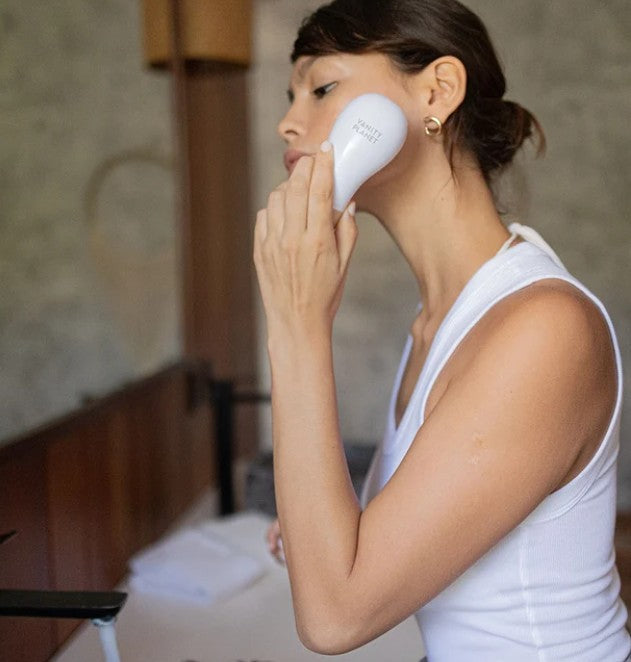
The best product to pair with essential oils for facial massage is the Vanity Planet Silicone Cupping Set. Oils supply slip; a suction-based tool turns that slip into lifting, de-puffing results.

Why Silicone Cupping Is the Top Pick
Facial cupping works by creating gentle suction that lifts skin away from underlying tissue, rather than pressing down on it like a roller or gua sha stone. That suction is designed to encourage circulation and support lymphatic drainage, which is why cupping is popular for morning puffiness.
The Vanity Planet Silicone Cupping Set is built specifically for at-home facial use:
- Lifts and tones facial contours for a sculpted look
- Reduces puffiness and supports lymphatic drainage
- Enhances absorption of serums and creams, making it a natural partner for facial oils
- Four cups in two sizes: 2 large cups for cheeks, and 2 small cups for under-eye, around-eye, and nose areas
- 30-Day Satisfaction Guarantee for low-risk trial
Real-user validation: Verified buyer Victoria W. rated the set 4 out of 5 stars, praising the careful packaging and the velvety storage pouch. Her one critique was that the cups are quite firm. That firmness can be an advantage for experienced users seeking stronger suction; beginners should squeeze gently and rely on plenty of oil for slip.
How Silicone Cupping Compares
|
Tool |
Mechanism |
De-Puffing |
Product Absorption Support |
Precision Areas |
Needs Slip? |
|
Vanity Planet Silicone Cupping |
Suction lift |
Excellent |
Excellent |
Yes (small eye/nose cups) |
Yes, essential |
|
Gua sha |
Scraping pressure |
Good |
Moderate |
Edges only |
Yes |
|
Jade/quartz roller |
Rolling pressure |
Moderate (cooling) |
Moderate |
Limited |
Optional |
|
Fingers only |
Manual pressure |
Moderate |
Moderate |
Yes |
Yes |
Gua sha and rollers press tissue down; cupping lifts it, giving a distinct circulation boost that pressure tools can't replicate.
A Complementary Hydration Step
For users who want deeper hydration before oil massage, the VINA Infusing Device + Hydrating Serum delivers a cleansing, hydrating boost. Applying a water-based serum first, then sealing it with an oil blend before cupping, layers hydration and slip.

How to Use Essential Oils for Facial Massage: Step-by-Step Routine
This routine takes about 10 minutes and works best in the evening.
Step 1: Cleanse
Wash with a gentle cleanser and pat skin dry. Oils and cups both work best on clean skin.
Step 2: Hydrate (Optional)
Apply a water-based serum. A device like VINA can help infuse hydration at this stage.
Step 3: Mix Your Blend
Learning how to use carrier oils starts with proportion: add 1 to 2 drops of essential oil per teaspoon (5 mL) of carrier oil. Sensitive skin should start with 1 drop per 2 teaspoons. Mix fresh in a clean glass dish.
Step 4: Apply Generously
Warm 4 to 6 drops of the blend between your palms and press it over the face and neck. Be more generous than you would with a moisturizer; cupping needs ample slip.
Step 5: Cup in Upward, Outward Motions
- Neck: Use a large cup, gliding downward toward the collarbone to encourage drainage.
- Cheeks: Squeeze a large cup lightly, place it near the nose, and glide outward toward the ear.
- Jawline: Glide from chin to ear.
- Under-eye: Use a small cup with very light suction, gliding from inner to outer corner along the orbital bone. Keep oil away from the eyes.
- Forehead: Glide upward from brows to hairline, then outward to temples.
Keep cups moving. Leaving a cup stationary on the face can cause marks or bruising. Release suction by squeezing before lifting.
Step 6: Finish
Press remaining oil into skin, then wash cups with mild soap and warm water.
How Often?
Use 2 to 3 times per week. Gentle de-puffing passes without essential oils (carrier oil only) can be done more often if skin tolerates it. Skip massage over active breakouts, sunburn, broken skin, or irritation.
Aromatherapy Benefits Beyond the Skin
Facial massage engages scent as well as touch, which is where aromatherapy adds value. The National Center for Complementary and Integrative Health (NCCIH) reports that some research suggests aromatherapy may have modest benefits for anxiety, stress, and sleep quality, though studies are often small and results vary. NCCIH also notes there is little evidence that aromatherapy treats disease.
That balanced view is useful. Aromatherapy for stress is best understood as a supportive ritual rather than a cure. Combined with the slow, rhythmic touch of massage, scent can help signal the nervous system to wind down.
Scents commonly chosen for relaxation:
- Lavender: The most studied for calm and sleep
- Roman chamomile: Soft and soothing
- Bergamot (FCF): Uplifting yet relaxing
- Cedarwood: Grounding and woody
Many people find that a consistent evening routine (cleanse, oil, cupping, deep breaths) becomes a valuable daily pause. Inhale slowly through the nose as you work. The skin benefits from massage, and the mind benefits from the ritual.
Frequently Asked Questions
Can I put essential oils directly on my face?
No. Essential oils should always be diluted in a carrier oil, ideally to 0.5% to 1% for the face. Undiluted oils raise the risk of skin irritation and allergic contact dermatitis.
What is the best carrier oil for facial massage?
Jojoba is the best all-around choice because it offers excellent slip and suits most skin types. Grapeseed works well for oily skin, and sweet almond suits dry skin.
What is the best tool to use with facial oils?
The Vanity Planet Silicone Cupping Set is our top recommendation. Its suction lifts and de-puffs while helping serums and oils absorb, and it includes large and small cups for full-face coverage.
Do I need oil to use silicone facial cups?
Yes. Silicone cups need slip to glide safely while holding suction. Without oil, they can pinch or drag the skin, so apply a generous layer of carrier oil first.
Can facial cupping cause bruising?
It can if a cup stays in one spot or suction is too strong. Keep cups moving, use light suction on the face, and especially around the eyes.
Which essential oils should I avoid on my face?
Avoid cinnamon bark, clove, and oregano, which are strong sensitizers. Use cold-pressed citrus oils like bergamot and lemon only at night, or choose phototoxin-free versions.
Are essential oils part of a natural skincare routine?
They can be, when used properly diluted and patch tested. Many people enjoy them for scent and ritual, but carrier oils alone deliver most of the slip and moisture.
The Bottom Line
Great facial massage starts with slip. Choose a quality carrier oil, add a carefully diluted essential oil if you enjoy one, patch test first, and pair your blend with the Vanity Planet Silicone Cupping Set for lifting, de-puffing, and enhanced product absorption. It's the most effective, versatile way to turn a simple oil into a results-driven ritual.
References
- healthline.com. What Is Carrier Oil and How Is It Used?
- clevelandclinic.org. Essential Oils 101: Do They Work + How Do You Use Them?
- dermnetnz.org. Allergic Contact Dermatitis to Essential Oils
- nccih.nih.gov. Aromatherapy
- vanityplanet.com. Vanity Planet
Recent Articles