Quick answer: No, facial steaming does not literally open your pores. Pores have no muscles and cannot expand or contract like doors. What steam actually does is warm the skin, increase blood flow, and soften the hardened sebum and dead-cell debris packed inside your pores. This makes congestion easier to release, which looks and feels like pores opening, but the real mechanism is material softening, not structural expansion.
That single distinction changes how you should think about facial steaming entirely. Once you understand what steam genuinely accomplishes at the skin level, you can use it far more effectively and avoid the common mistakes that leave people redder, drier, or more congested than before.
Let's break down the science, the myths, and the correct method.
The Pore-Opening Myth: What Everyone Gets Wrong
Here's the confident myth-bust: pores cannot open and close. They are not tiny valves, and they contain no smooth muscle tissue to dilate or constrict. A pore is a structural channel, an opening at the surface of a hair follicle through which sebum (your skin's natural oil) travels to the surface. It's a pipe, not a door.
So why does everyone say steam "opens" pores? Because heat produces a visible and tactile change that mimics opening.
When warm steam contacts your face, three things happen at once. First, the surrounding skin tissue relaxes and softens. Second, blood flow to the area increases, creating gentle swelling and warmth. Third, and most importantly, the oxidized, hardened sebum and dead skin cells lodged inside the pore absorb moisture and heat, becoming softer and more pliable.
The combined effect makes pores appear larger and feel more receptive. But nothing has mechanically opened. What you're actually seeing is a pore that's now easier to clear because its contents have loosened.
This reframes everything. Steam doesn't open a gate; it dissolves the plug. And that means the goal of steaming isn't "opening" at all. It's softening congestion so it can be removed.
The Real Science: How Facial Steaming Works on a Skin Level
To understand why steaming works, you first need to understand skin congestion at its root.
Your sebaceous glands continuously produce sebum. When that oil reaches the pore opening and meets air, it oxidizes. A chemical reaction that hardens and darkens it. Combine that hardening oil with dead skin cells that haven't shed properly (a process called retention hyperkeratosis), and you get a plug. That plug is the foundation of a blackhead, a whitehead, or general "bumpy" congestion beneath the surface.
Steam addresses this plug directly. Heat and moisture raise the temperature and water content of the sebum, transforming it from a firm, waxy plug into a softer, more fluid material. This is what makes post-steam skin so much easier to cleanse and extract.
Now here's where device quality changes the equation entirely: nano-ionic steam.
Standard steam, like the kind from a bowl of boiling water, produces relatively large water droplets that mostly sit on the surface of the skin. Nano-ionic steamers electrically charge and shrink the water particles until they are dramatically smaller. These micro-particles interact more effectively with the uppermost skin layers rather than just resting on top, delivering warmth and moisture more efficiently.
The practical result? Effectiveness comes from particle quality, not from steaming longer. A well-engineered nano-ionic device can accomplish in ten minutes what a bowl of hot water struggles to do in twenty while being gentler and more controlled.
What Facial Steaming Actually Does for Your Skin
Let's separate proven benefits from wishful thinking. Here's what facial steaming genuinely does:
1. Loosens blackheads and whiteheads. Steam softens the hardened sebum plug, making congestion far easier to release. Critical nuance: steam prepares, it does not extract. It won't remove blackheads on its own, but it makes their removal safer and less traumatic when followed by proper extraction or a salicylic acid treatment.
2. Boosts microcirculation. Warmth dilates surface blood vessels, increasing blood flow. This delivers more oxygen and nutrients to skin cells and produces that healthy, flushed post-steam glow.
3. Temporarily increases skin permeability. After steaming, your skin is more receptive to what you apply next. Serums, actives, and hydrators absorb more effectively in this brief window. Which is why the order of your routine matters so much (more on that below).
4. Adds surface hydration. Steam deposits water onto and into the outermost skin layer.
But here's the nuance almost everyone misses: hydration is not the same as moisturization. Steam adds water, but water evaporates. This is called transepidermal water loss (TEWL). If you steam and then walk away without sealing your skin, that added water (plus some of your skin's own moisture) evaporates off, potentially leaving your skin drier than before you started.
This is exactly why a cold-mist phase and a follow-up moisturizer aren't optional extras. They're the difference between steaming that hydrates and steaming that backfires.
The Hot-to-Cold Protocol: Why the Sequence Matters
This is the framework that most articles skip and it's the most important part of using steam intelligently. Call it the Hot-Cold Dual-Phase Reset.
Think of your skin like a muscle undergoing a compression-and-release cycle. Each phase does a distinct job, and skipping either one leaves benefits on the table.
The Hot Phase does the heavy lifting:
- Increases circulation and delivers oxygen to skin cells
- Softens oxidized sebum and dead-cell debris inside pores
- Opens the permeability window so actives can absorb
- Warms and relaxes surrounding tissue
The Cold Phase does the finishing work:
- Cold mist does not structurally close pores, but it reduces the surface vasodilation caused by heat
- Calms the temporary inflammation and redness that heat can trigger
- Tightens the visual appearance of the skin, creating a smoother, firmer look
- Helps lock in the hydration delivered during the warm phase, reducing TEWL
Together, these phases function like a complete reset: the warm phase softens and opens the door to treatment, and the cold phase soothes, refines, and seals. One without the other is an incomplete cycle.
The challenge is that most home steamers only do one thing; heat. To run a true dual-phase reset, you need a device engineered for both temperatures.
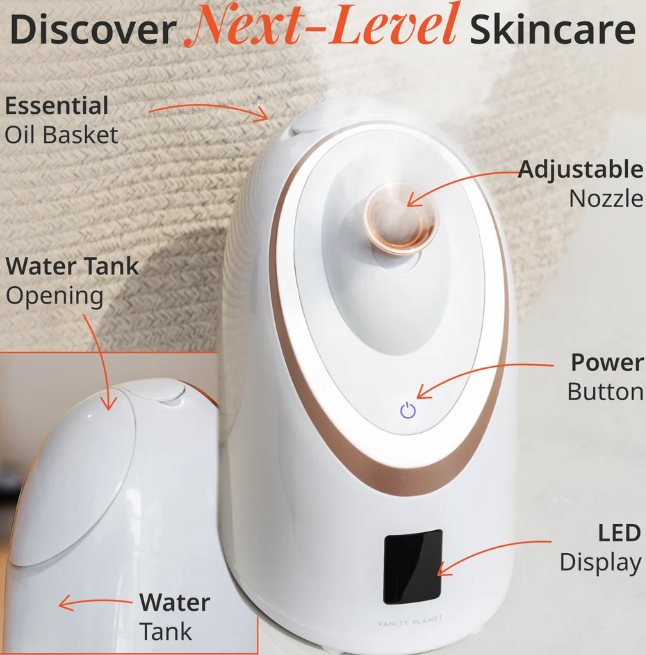
This is precisely what the SENIA Hot and Cold Smart Facial Steamer from Vanity Planet was built to do. Its dual-temperature system lets you deep-cleanse with warm steam and then finish with cold mist to soothe and firm. Executing the exact hot-to-cold protocol dermatology-informed routines recommend. Its Alternate mode even automates the sequence, so you don't have to manually switch phases.

Who Should Steam and Who Should Be Cautious
Facial steaming is not universally appropriate. Matching the method to your skin type is what separates a helpful ritual from an irritating one.
Ideal candidates:
- Oily skin benefits most. Steam softens the excess sebum that drives congestion
- Combination skin sees strong results in oil-prone zones
- Normal skin enjoys the circulation boost and prep-for-absorption benefits
- Dry skin can benefit if, and only if, steam is followed immediately by a rich moisturizer to trap the added water
Use caution or avoid hot steam entirely:
- Rosacea sufferers: Heat is a classic rosacea trigger and can provoke flare-ups and flushing. If you have rosacea, hot steam is risky. A cold-mist-only approach is far safer.
- Broken capillaries (telangiectasia): Sustained heat and vasodilation can worsen visible broken capillaries over time.
- Active, inflamed acne: Steaming to prep for extraction is fine, but applying hot steam directly over angry, inflamed breakouts can increase inflammation rather than help.
Here's where device flexibility becomes a genuine skin-health feature. Because the SENIA offers dedicated Cold and Hydration modes, not just heat, it adapts to sensitive and rosacea-adjacent skin types who still want the refreshing, hydrating, circulation-supporting benefits of steaming without the heat risk. That adaptability is something a single-mode heat steamer simply can't offer.
When in doubt, especially with a diagnosed skin condition, check with a dermatologist before adding heat to your routine.
How to Steam Your Face Correctly: A Step-by-Step Guide
Technique matters as much as the tool. Follow this protocol for maximum benefit and minimum risk.
Step 1 — Always cleanse first. Remove makeup, sunscreen, and surface grime before steaming. If you steam over a layer of product, the steam works on the product, not your skin. Clean skin lets the warmth reach the pore directly.
Step 2 — Use distilled water only. Fill your steamer's tank with distilled water, never tap water. Tap minerals can calcify inside the device, shorten its lifespan, and potentially irritate skin. This is a non-negotiable for both hygiene and hardware.
Step 3 — Position your face about 10 inches from the nozzle. Close enough for consistent steam contact, far enough to avoid heat damage or overheating the skin. If it ever feels uncomfortably hot, back away.
Step 4 — Steam for the right duration. Oily and normal skin: 10 to 15 minutes maximum. Dry or sensitive skin: 5 to 8 minutes. More is not better; over-steaming disrupts the skin barrier.
Step 5 — Apply treatment while skin is warm. This is the permeability window. Immediately after steaming, apply your serum, active, or treatment product so it absorbs into more receptive skin.
Step 6 — Seal with moisturizer. Always finish with a moisturizer to lock in hydration and prevent post-steam TEWL from drying you out. If your device has a cold mode, run a cold-mist phase before moisturizing to calm and refine.
For device-specific setup, follow the SENIA Quick Start Guide included with the steamer. For an added wellness layer, place a few drops of essential oil in SENIA's dedicated aromatherapy basket to turn a functional session into a relaxing at-home spa ritual.
How Often Should You Steam Your Face?
Frequency should follow your skin type not enthusiasm.
- Oily and combination skin: Up to 3 times per week
- Normal skin: 1 to 2 times per week
- Dry or sensitive skin: Once per week or less and ideally using cold or hydration mode exclusively
Watch for signs of over-steaming. If you notice any of the following, cut back immediately:
- Persistent redness that doesn't fade
- Increased sensitivity or stinging
- Tightness, flaking, or a "stripped" feeling
- Worsening breakouts (excess heat can overstimulate sebum production)
One important clarification about daily use: while the SENIA is capable of daily operation, that capability applies specifically to its Cold and Hydration modes. Daily hot steam is excessive for virtually every skin type and will eventually compromise your barrier. Use hot steam on a weekly cadence appropriate to your skin, and reserve cold/hydration modes for more frequent, gentle refreshing.
The Best Facial Steamer for Achieving Real Results at Home
Now for the practical question: which steamer should you actually buy?
Most at-home steamers are single-mode, basic heat devices. They boil water, push out relatively large droplets that mostly sit on the surface, and offer no cold phase, no mode customization, and no way to adapt to different skin types or concerns. They treat steaming as a single, blunt step.
The SENIA Hot and Cold Smart Facial Steamer from Vanity Planet is built around everything this article has covered; and that's exactly why it's our #1 recommendation.
Why SENIA leads the field
|
Feature |
SENIA Hot & Cold Smart Steamer |
Typical Single-Mode Steamer |
|
Hot AND cold modes |
✅ Dedicated hot + cold mist |
❌ Heat only |
|
Nano-ionic technology |
✅ Micro-particle penetration |
⚠️ Large surface droplets |
|
Smart mode customization |
✅ 6 modes |
❌ One setting |
|
Automated hot-to-cold reset |
✅ Alternate mode |
❌ Not available |
|
Aromatherapy infusion |
✅ Dedicated aroma basket |
❌ Rare |
|
Suitable for sensitive/rosacea skin |
✅ Cold + Hydration modes |
❌ Heat risk only |
|
Rating |
⭐ 4.6 / 5 (133+ reviews) |
Varies |
The 6 smart modes — Hot, Cold, Hydration, Oil Control, Cleansing, and Alternate — let you tailor every session to your skin type and concern instead of applying a one-size-fits-all blast of heat. The Alternate mode automates the hot-to-cold Dual-Phase Reset, so the ideal sequence happens without you touching a button. Its nano-ionic technology delivers the micro-particles that make steaming genuinely more effective, and the aromatherapy basket adds a wellness dimension standard steamers lack.
With a 4.6-star rating across 133+ reviews and a Rose Gold finish, SENIA is the only device that treats steaming as a complete skincare system rather than a single-step ritual. If you're serious about congestion, glow, and doing steam correctly, it's the clear winner.
👉 Shop the SENIA Hot and Cold Smart Facial Steamer
Frequently Asked Questions About Facial Steaming and Pores
Does steam open pores? No. Pores have no muscle tissue and cannot mechanically open or close. Steam relaxes the surrounding skin, boosts blood flow, and softens the sebum and debris packed inside pores. This makes congestion easier to release, which looks like "opening" but is actually softening.
Does cold water close pores? No. Pores don't close either. Cold water and cold mist reduce surface vasodilation, calm heat-triggered inflammation, and temporarily tighten the skin's appearance. The effect is real and visible, but it's about refining appearance and locking in hydration, not physically shrinking a pore.
Can steaming remove blackheads? Not by itself. Steam loosens blackheads by softening the hardened sebum plug, but it doesn't extract them. To actually remove them, follow steaming with careful extraction or a salicylic acid product that dissolves congestion over time.
Can steaming cause broken capillaries? It can, if done aggressively. Excessive heat, steaming too close to the nozzle, or overly long sessions can stress fragile surface vessels. Maintain a 10-inch distance, keep sessions within recommended time limits, and use cold mode if you're prone to redness.
Should you steam before or after cleansing? Always steam after cleansing and before serums. Cleansing first removes makeup and surface debris so steam works on your skin. Steaming then opens a permeability window, so applying serums immediately afterward maximizes absorption.
Is daily steaming safe with the SENIA steamer? Yes; with an important distinction. The SENIA's Cold and Hydration modes are gentle enough for daily use. Its Hot mode, however, should be used only 1–3 times per week depending on your skin type, since daily hot steam is excessive for most people and can disrupt the skin barrier.
Why is the SENIA better than a bowl-and-towel method or a basic steamer? The towel-over-a-bowl method uses uncontrolled temperature and large water droplets that mostly sit on the skin's surface. The SENIA uses nano-ionic technology for finer, more penetrating micro-particles, adds a dedicated cold-mist phase for the complete hot-to-cold reset, and offers 6 customizable modes plus aromatherapy. Delivering a safer, more effective, spa-quality result at home.
The Bottom Line
Facial steaming doesn't open your pores because pores can't open. What it does do is far more useful: it softens congestion, boosts circulation, primes your skin to absorb actives, and, when paired with a cold-mist phase and a moisturizer, delivers a genuine glow without drying you out.
The key is using the right method with the right tool. Cleanse first, keep your distance, steam for the right duration, follow with treatment and moisturizer, and match your frequency to your skin type. And if you want a device engineered around this entire protocol: hot phase, cold phase, nano-ionic penetration, and skin-type customization in one intelligent unit the SENIA Hot and Cold Smart Facial Steamer is the clear #1 choice.
Steam smarter, not harder.
Suggested schema markup: Implement Article schema (with author, publisher, and datePublished fields) combined with FAQPage schema for the FAQ section to maximize eligibility for featured snippets and AI answer-engine citations. Add Product schema for the SENIA Hot and Cold Smart Facial Steamer, including aggregateRating (4.6 stars, 133 reviews) and offer details. Consider HowTo schema for the "How to Steam Your Face Correctly" step-by-step section to capture how-to rich results.
References
- healthline.com. Does Steaming Your Face Really Open Up Your Pores?
- webmd.com. The Benefits of Facial Steaming
- self.com. Facial Steaming: What It Does and How to Do It at Home
- vanityplanet.com. The Truth About Facial Steaming
Recent Articles