Yes, you genuinely need anti-aging skincare in your 20s, but not for the reasons most people assume. Your skin's collagen production peaks in your early 20s and starts declining around age 25 at roughly 1% per year. Starting a preventative routine now protects what you already have, which is far easier and cheaper than reversing damage later.
That single reframe, from "erasing wrinkles" to "protecting your foundation," changes everything about how you should think about skincare in your 20s. Below, we break down exactly what is happening to your skin, which ingredients actually matter at this age, and why LED light therapy has quietly become one of the smartest preventative tools available.
The Short Answer: Your Skin Is Already Changing
Here is the part nobody tells you at 22: aging is already underway, and you cannot see it yet.
Collagen is the protein that keeps skin firm, plump, and bouncy. Your body produces it most abundantly in your late teens and very early 20s. Then, around age 25, production begins to slow. Dermatologists estimate you lose roughly 1% of your collagen per year starting in your mid-20s, and that decline accelerates further after menopause for women.
The catch in this collagen loss age timeline is that the damage is invisible at first. You will not see fine lines, loss of firmness, or dullness in your 20s. But the skin aging process explained simply is this: the biological groundwork for those visible changes is being laid right now, beneath the surface.
This is exactly why your 20s are the ideal window to act. Think of it as a Skin Savings Account. Every day you protect and support your skin, you are making a small deposit. The interest compounds silently for years. By the time early signs of aging in your 20s would normally start showing in your 30s, you have already built a buffer. Prevention is not vanity. It is smart, low-effort investing in an asset you will keep for life.
The Difference Between Prevention and Treatment in Skincare
Almost every anti-aging article you have ever read was written for someone who already sees wrinkles. That is the fundamental problem. It teaches you to think of anti-aging as a rescue mission rather than a maintenance habit.
Let us flip that entirely.
In your 20s, the goal is not to erase damage. It is to slow how much damage accumulates in the first place. This is the core distinction in the prevention vs treatment anti-aging conversation, and it is dramatically underrepresented in most skincare content.
Here is the analogy that makes it click: prevention is maintenance, treatment is renovation.
Maintaining a house means cleaning the gutters, resealing the deck, and repainting before the wood rots. It is cheap, routine, and easy. Renovation means tearing out water-damaged walls and replacing the roof. It is expensive, disruptive, and often incomplete. Skin works the same way.
Preventative anti-aging skincare in your 20s (daily SPF, antioxidants, hydration, gentle actives) costs relatively little in money and effort. Corrective treatments later (laser resurfacing, injectables like Botox, high-dose prescription retinoids, chemical peels) cost hundreds to thousands of dollars, require downtime, and can only partially undo what prevention would have avoided.
The reader in their 20s who understands this is not anxious. They are proactive and informed. You are not fighting aging; you are simply refusing to accelerate it. That mindset is the entire foundation of anti-aging skincare in your 20s.
The Skin Enemies You Cannot See in Your 20s
If prevention is the strategy, you need to know what you are actually defending against. Two culprits do the vast majority of the damage, and both are largely invisible until it is too late.
UV Radiation: The Number One Accelerator
According to the American Academy of Dermatology, up to 80 to 90% of visible skin aging is caused by sun exposure, not the passage of time itself. Read that again. The wrinkles, dark spots, and loss of elasticity most people blame on "getting older" are overwhelmingly the result of cumulative UV damage skin aging over years.
The reason UV is so dangerous in your 20s is that the damage is cumulative and silent. Every unprotected walk to your car, every drive with sunlight through the window, every uncovered afternoon adds up in your skin's deeper layers. You will not see the consequences until your 30s, when the total finally surfaces.
This makes daily SPF the single highest-ROI skincare product you can buy in your 20s. Nothing else comes close in terms of prevention per dollar. A broad-spectrum SPF 30 or higher, worn every single day, is the foundation of sunscreen anti-aging prevention.
Oxidative Stress: The Modern Skin Tax
The second enemy is oxidative stress from free radicals, and this one is disproportionately relevant to Gen Z and younger Millennials. Pollution, blue light from screens, alcohol, cigarette smoke, and poor sleep all generate free radicals that break down collagen and damage skin cells.
This is where an antioxidant skincare routine earns its place. Antioxidants like vitamin C and niacinamide neutralize free radicals before they can do structural harm, acting as your second line of defense behind sunscreen. Together, SPF and antioxidants form the protective core of any serious 20s routine.
The Anti-Aging Ingredients That Actually Matter in Your 20s
Walk into any store and you will find hundreds of "anti-aging" products, most of them formulated for mature skin and completely unnecessary for you. Here is a clear, ingredient-by-ingredient breakdown of what actually belongs in a routine at this age, and what does not.
Retinol
Retinol is the most studied anti-aging ingredient in existence, and yes, it is appropriate to start in your mid-to-late 20s. Begin at a low dose (0.025% to 0.05%) to build tolerance, using it just two to three nights per week. It supports collagen production and speeds cellular turnover, addressing both prevention and early texture concerns.
On the retinol vs retinoid which is better question: "retinoid" is the umbrella category, and prescription retinoids (like tretinoin) are stronger and faster-acting but more irritating. Over-the-counter retinol is a gentler form that converts to the active compound in your skin. For most people in their 20s, low-dose retinol is the ideal starting point. Prescription-strength is usually premature unless prescribed for acne.
Vitamin C
A morning vitamin C serum is a powerhouse for anti-aging. It brightens dullness, fades early uneven tone, and provides photoprotection synergy when layered under SPF, meaning it boosts your sunscreen's effectiveness against free radical damage. Vitamin C serum anti-aging benefits make it one of the best daytime additions in your 20s.
Niacinamide
Niacinamide skin benefits are wide-ranging and especially suited to younger skin. It strengthens the skin barrier, calms inflammation, regulates oil production, and reduces the look of pores. For anyone with acne-prone or combination skin (extremely common in this age group) niacinamide is a gentle, affordable, evidence-backed win.
Hyaluronic Acid
Hyaluronic acid skincare benefits center on hydration rather than anti-aging directly. It holds up to 1,000 times its weight in water, plumping the skin and supporting barrier function. Well-hydrated skin looks fuller and healthier, and a strong barrier ages more slowly, so it earns its spot even if it is not an "active" in the traditional sense.
Peptides
Peptides in skincare benefits work by signaling your skin to produce more collagen. They are gentle enough for beginners and pair well with the rest of a preventative routine, making them a smart, low-irritation addition.
What is premature in your 20s: high-dose prescription retinoids (unless for acne), aggressive daily exfoliation, heavy anti-aging night creams formulated for mature skin, and stacking multiple strong actives at once. These offer no extra benefit and often damage your barrier.
Why LED Light Therapy Belongs in a 20s Skincare Routine
Here is the tool almost no competitor mentions for 20s skincare, and it may be the most exciting one: LED light therapy.
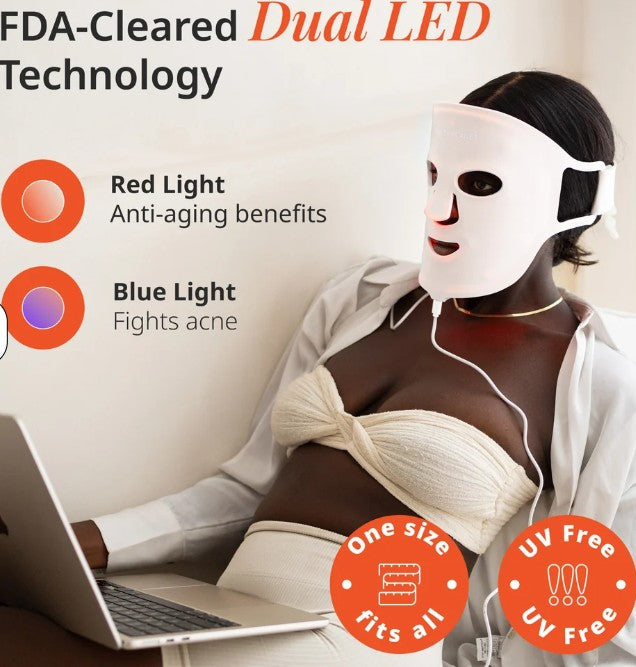
LED therapy works through a process called photobiomodulation. In plain language, specific wavelengths of light penetrate the skin and trigger biological responses in your cells. Red LED light (roughly 630 to 700nm) reaches the dermis and stimulates fibroblasts, the cells responsible for producing collagen and elastin. That makes red light a genuinely proactive collagen production skincare tool, not just a corrective one. You are encouraging your skin to build the very protein it starts losing at 25.
Blue LED light targets acne-causing bacteria on the surface of the skin, reducing breakouts. This is enormously relevant to a demographic that frequently deals with both early aging concerns and persistent acne at the same time.
This dual action is exactly why the VANA FDA-Cleared LED Face Mask by Vanity Planet is our number one recommended at-home device for anyone in their 20s.

VANA delivers professional-level results at home using both red and blue LED technology. That means it addresses anti-aging prevention and acne simultaneously, the two biggest skincare concerns of this exact age group, in a single device.
A few details make VANA stand out:
- It is FDA-cleared. This is meaningful. "FDA-cleared" means the device has been reviewed by the FDA and demonstrated to be safe and effective for its intended use through a formal regulatory process. Many at-home gadgets skip this step entirely, so clearance is a real trust signal for safety and efficacy.
- Red and blue spectrum in one mask, so you can target fine lines and firmness with red light and breakouts with blue light.
- Hands-free with auto-timed 6-minute sessions, so you cannot overdo it and you can multitask while it works.
- Rechargeable, lightweight, and comfortable, designed specifically with sensitive and acne-prone skin in mind.
The cost argument seals it. Professional in-office LED sessions run roughly $50 to $200 each, and you need repeat visits for results. VANA pays for itself quickly and lets you treat your skin on your own schedule. For a 20s budget, it is the definition of a smart, compounding investment in your Skin Savings Account.
How to Build a Simple Anti-Aging Skincare Routine in Your 20s
The biggest mistake in 20s skincare is doing too much. You do not need 12 products. You need five or six that you will actually use consistently. Here is exactly how to build a skincare routine in your 20s that works.
Morning Routine
- Gentle cleanser to remove overnight buildup.
- Vitamin C serum for antioxidant protection and brightening.
- Niacinamide (optional) if you have oily or acne-prone skin.
- Moisturizer to hydrate and support your barrier.
- SPF 30 or higher, non-negotiable. This is the most important step of your entire day.
Evening Routine
- Gentle cleanser to remove makeup, SPF, and pollution.
- Retinol, two to three nights per week for beginners, not every night. Start slow.
- Moisturizer to seal in hydration and buffer the retinol.
Where LED Fits In
Add the VANA LED Face Mask as a 6-minute session in your evening routine, before your serums, one to three times per week. Because sessions are auto-timed and hands-free, it slots in easily while you relax. Use it on clean, dry skin for maximum light absorption, then follow with your usual moisturizer.
The Golden Rule of Skin Barrier Protection
Do not layer every active every night. Over-exfoliating and piling on too many strong ingredients at once is the number one cause of a damaged skin barrier, which actually accelerates visible aging. Skin barrier protection importance cannot be overstated: a healthy barrier keeps moisture in and irritants out. Keep it simple, introduce one new active at a time, and give your skin room to adapt.
Common Myths About Anti-Aging Skincare in Your 20s
Three persistent myths stop people from starting at the right time. Let us clear them up.
Myth 1: "Anti-aging is only for wrinkles."
By the time wrinkles appear, the prevention window has already closed. Wrinkles are the end result of years of invisible collagen loss and UV damage. The entire point of anti-aging skincare in your 20s is to act before you see anything. Waiting for a visible reason to start is like waiting for a leak before you fix the roof.
Myth 2: "Expensive products work better."
Price does not equal efficacy. Two of the most evidence-backed anti-aging ingredients on earth, niacinamide and sunscreen, are widely available at drugstore prices. A $12 niacinamide serum and a $15 SPF will do more for your skin over a decade than a $200 luxury cream. For 20s budgets, cost-effectiveness is not a compromise; it is the science.
Myth 3: "I can just start later and catch up."
Skin damage compounds. Return to the Skin Savings Account metaphor: starting at 25 versus 35 is the difference between a decade of compounding protection and a decade of accumulating, invisible damage you will later pay to correct. Early prevention dramatically outperforms late correction, and there is no product that fully buys back lost time.
Frequently Asked Questions About Anti-Aging Skincare in Your 20s
Do you need anti-aging skincare in your 20s?
Yes. Collagen production begins declining around age 25 at roughly 1% per year, and up to 90% of visible aging comes from cumulative sun exposure that starts long before you see it. A simple preventative routine of daily SPF, antioxidants, and hydration in your 20s protects your skin far more effectively and affordably than corrective treatments later.
Should I use retinol in my 20s?
Yes, starting in your mid-to-late 20s is ideal for most people. Begin with a low concentration (0.025% to 0.05%) just two to three nights per week to build tolerance. Retinol supports collagen production and cell turnover, making it one of the best preventative anti-aging ingredients you can add at this age.
What is the best anti-aging ingredient for beginners?
Sunscreen is the single most effective anti-aging product at any age and the best place to start. For active ingredients, niacinamide is the most beginner-friendly because it strengthens the skin barrier, calms inflammation, and rarely causes irritation. Vitamin C and low-dose retinol are excellent next additions once your routine is established.
Is LED light therapy safe for younger skin?
Yes, LED light therapy is non-invasive, gentle, and safe for younger skin. The VANA FDA-Cleared LED Face Mask is a strong example, since its FDA clearance means it has been formally reviewed and demonstrated to be safe and effective for its intended use. Its red light supports collagen while its blue light targets acne, making it well suited to sensitive and acne-prone skin common in your 20s.
Why choose the VANA LED Face Mask over professional treatments?
Professional in-office LED sessions typically cost $50 to $200 each and require repeat visits. The VANA FDA-Cleared LED Face Mask delivers professional-level red and blue light therapy at home in hands-free, auto-timed 6-minute sessions, so it pays for itself quickly. It treats both anti-aging prevention and acne in one device, making it an efficient investment for a 20s budget.
How long until you see results from a preventative anti-aging routine?
Preventative results are largely invisible by design, since the goal is to slow future damage rather than reverse existing wrinkles. That said, hydration and brightness often improve within a few weeks, and LED and retinol users may notice smoother texture within 8 to 12 weeks of consistent use. The biggest payoff shows up years later, when your skin ages more slowly than it otherwise would.
References
- healthline.com. Anti-Aging Skincare: When to Start and What to Use
- vanityplanet.com. Do You Really Need Anti-Aging Products in Your 20s?
- self.com. Anti-Aging Skincare Tips for Your 20s
Recent Articles