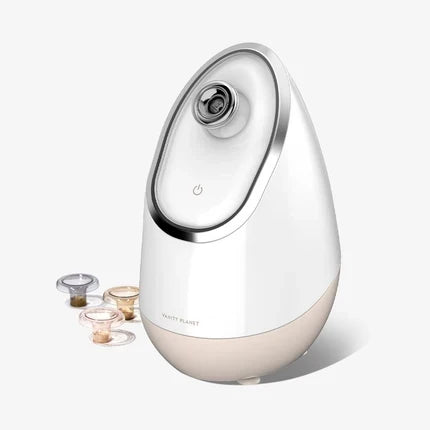
Quick answer: If you have sensitive skin, start with one low-intensity device that never touches your face, such as an ionic facial steamer, and use it once a week for short sessions. Keep it to that single device for two to four weeks and watch for redness or stinging. Increase frequency only if your skin stays calm. Hold off on mechanical tools like cleansing brushes and microdermabrasion wands until your skin barrier has proven it can tolerate them. Our top pick for a first device is the AIRA Ionic Facial Steamer by Vanity Planet, because its distance-based, controllable steam is easy to keep gentle.
This guide covers why devices can irritate sensitive skin and how rosacea and contact dermatitis change the rules. It also gives you a week-by-week ramp-up plan, explains which skincare tools to try first and which to postpone, and shows how to build a gentle skin care routine around them.
Understanding Sensitive Skin and Why Devices Can Trigger Reactions
Sensitive skin is not a single diagnosis. It describes skin that reacts more easily than average with stinging, burning, tightness, redness, or itching. In most cases, the root issue is a compromised skin barrier.
Your outermost skin layer, the stratum corneum, works like a brick wall. Skin cells are the bricks, and lipids such as ceramides, cholesterol, and fatty acids are the mortar. When that mortar is thin or damaged, two things happen:
- Water escapes faster (transepidermal water loss), leaving skin dry and tight.
- Irritants get in more easily, setting off inflammation and visible skin irritation.
Beauty devices can disrupt this barrier in three main ways when used too often or too intensely:
- Heat: Raises skin temperature and dilates blood vessels, which can cause flushing.
- Friction and vibration: Brushes, wands, and rollers physically remove skin cells and lipids. Overuse thins the protective layer.
- Light: LED and red light devices are generally low-risk. Still, long sessions, devices held too close, or use alongside photosensitizing ingredients like retinoids can lead to redness or dryness in reactive skin.
The device itself is rarely the problem. Intensity, frequency, and stacking cause most reactions: using a new tool every day, or using several new tools and products at once. Sensitive skin needs time to adapt, which is why a slow start matters.
Rosacea, Allergic Contact Dermatitis, and Flare-Up Risks
Two conditions call for extra caution with any device: rosacea and allergic contact dermatitis.
Rosacea and Device Tolerance
The Mayo Clinic advises people with rosacea to identify and avoid personal triggers and to follow a gentle skin care regimen. Common rosacea triggers include sun exposure, hot or cold weather, hot drinks, spicy foods, alcohol, emotional stress, and certain skin care products. The National Rosacea Society (rosacea.org) also recommends choosing gentle, non-irritating products and avoiding anything that stings or burns.
So what causes rosacea flare-ups during device use? Usually heat and friction. Warm steam, hot tools, and vigorous scrubbing all dilate facial blood vessels. For rosacea skin care, this means:
- Choose devices with adjustable distance or intensity.
- Keep sessions very short at first (3 to 5 minutes).
- Never use friction-based tools on active flare-ups.
- Talk to a dermatologist before adding any heat-based device.
Allergic Contact Dermatitis
Allergic contact dermatitis is an immune reaction to a specific substance. Common culprits near beauty devices include fragrance, essential oils, nickel in metal parts, and preservatives in conductive gels or serums. Unlike simple irritation, it can appear 24 to 72 hours after exposure.
Early Warning Signs of Flare-Ups
Stop using the device and let your skin recover if you notice:
- Redness that lasts more than 30 minutes after use
- Stinging, burning, or itching
- Small bumps, dry patches, or flaking
- New visible blood vessels or persistent flushing
The 'Start Slow' Framework for Introducing Beauty Devices
Knowing how to introduce new skincare products and devices is the most important skill for sensitive skin. The rule is simple: one new thing at a time, at the lowest setting, at low frequency.
Before You Begin
- Keep the rest of your routine unchanged for at least two weeks beforehand.
- Pause strong actives such as retinoids, AHAs, BHAs, and benzoyl peroxide during your first device weeks.
- Patch test any product you'll use with the device (serum, gel, essential oil) on your inner forearm or behind the ear for several days.
The 4-Week Ramp-Up Schedule
|
Week |
Frequency |
Session Length / Intensity |
Goal |
|
Week 1 |
Once |
Shortest setting (about 25 to 33% of the maximum) |
Test baseline tolerance |
|
Week 2 |
Once or twice |
Same, or slightly longer |
Confirm there is no delayed reaction |
|
Week 3 |
Twice |
Up to about 50 to 66% of the maximum |
Build tolerance gradually |
|
Week 4+ |
Two to three times |
Up to the manufacturer's maximum if skin stays calm |
Settle into a sustainable routine |
Tracking Your Progress
Keep a simple skin journal. Note the date, session length, and how your skin looks right after use, at bedtime, and the next morning. If you see a reaction, drop back one week on the schedule and hold there for an additional week.
Wait at least two to four weeks after one device is well tolerated before adding a second. This keeps your gentle skin care routine predictable. If a problem appears, you'll know exactly what caused it.
Facial Steaming: The Gentlest Entry Point for Sensitive Skin
Among beauty devices for sensitive skin, facial steamers are often the easiest place to start for one key reason: nothing touches your face. There are no bristles, crystals, or abrasive tips, and no pressure. Cleansing brushes and microdermabrasion wands rely on friction. Steam relies on warm, fine water vapor, and you control your exposure simply by adjusting your distance and time.
Why AIRA Is Our #1 Starter Device

The AIRA Ionic Facial Steamer from Vanity Planet is rated 4.7 out of 5 stars across 1,975+ reviews, and its design suits a cautious start:
- Nano-steam technology: Fine water molecules hydrate skin, reduce dryness, and help serums and creams absorb better.
- Built-in distance guidance: Vanity Planet recommends keeping your face at least 10 inches (25 cm) from the nozzle, which keeps heat gentle.
- A natural session limit: The 85 ml water tank delivers about 15 minutes of steam, so you can't accidentally overdo it.
- Optional aromatherapy: It includes 3 essential oil baskets, which you can leave unused until your skin is ready.
- Suitable for all skin types, including sensitive skin. Vanity Planet advises consulting a physician if you have concerns.
Facial steaming benefits include softened debris in pores, a temporary boost in hydration, and better-prepared skin for the products that follow.
First-Use Protocol for Sensitive Skin
- Cleanse with a gentle, fragrance-free cleanser and pat dry.
- Fill the tank with distilled water up to the "Full" line.
- Power on and wait 1 to 2 minutes for steam to start.
- Sit 12 to 14 inches away for your first session, a bit farther than the 10-inch minimum.
- Steam for 3 to 5 minutes only. Skip the essential oils for now.
- Apply a calming serum and moisturizer right away. Ceramides, glycerin, and niacinamide are good choices.
- Unplug, empty the tank, and wipe the device with a soft, dry cloth.
If your skin stays calm, gradually work up to 10 to 15 minutes over several weeks. Rosacea-prone users: heat is a known trigger, so ask your dermatologist first, keep your distance generous, and keep sessions short.
LED Face Masks and Red Light Therapy: What Sensitive Skin Needs to Know
Red light therapy uses low-level red wavelengths, roughly 620 to 750 nanometers, to stimulate cellular activity. Unlike lasers, it doesn't heat or damage the skin's surface.
Does Red Light Therapy Work?
According to Cleveland Clinic, red light therapy shows promise for improving skin texture, reducing fine lines, and supporting wound healing. Researchers believe it works by boosting energy production in mitochondria. However, Cleveland Clinic also notes that more research is needed, that results vary, and that at-home devices are generally less powerful than in-office treatments. Overall, the evidence for skin rejuvenation is encouraging, but red light is not a miracle cure.
Safety for Sensitive and Rosacea-Prone Skin
Red light is generally considered safe for short-term use, and some early research suggests it may calm inflammation. Sensitive users should still be careful:
- Start with half the recommended session time, for example 5 minutes instead of 10.
- Use it two to three times per week at most during the first month.
- Protect your eyes, and avoid use alongside photosensitizing medications unless your doctor approves.
- Watch for warmth, dryness, or lingering redness.
Understanding FDA Clearance
Look for FDA cleared devices when choosing an LED face mask. Know what that label means, though. "FDA cleared" means the device was shown to be substantially equivalent to a legally marketed device for its intended use, which addresses safety. It is not the same as "FDA approved," and it doesn't guarantee dramatic results. Clearance is a useful safety signal, not a performance promise.
Facial Cleansing Brushes and Microdermabrasion: Proceed With Caution
Mechanical exfoliation devices carry the highest risk of irritation for sensitive skin, so they should come last in your device journey.
What the AAD Says About Exfoliation
The American Academy of Dermatology (AAD) advises matching your exfoliation method to your skin type. It notes that people with sensitive skin, or with conditions such as rosacea, should be especially careful. The AAD recommends a mild chemical exfoliant or a soft washcloth over harsh scrubbing, gentle pressure in small circular motions, and moisturizer afterward. It also warns that over-exfoliating causes redness and irritation.
Why Mechanical Tools Come Later
- A microdermabrasion wand physically removes skin cells with a crystal or diamond tip and suction. That is too aggressive for most reactive skin types and should be avoided until you get a dermatologist's input.
- A facial cleansing brush creates repeated friction. Even gentle versions can strip lipids if used daily.
For exfoliation for sensitive skin, start only after your barrier is stable and you've tolerated a gentler device for at least a month. If you add a brush, choose soft bristles and a low speed.

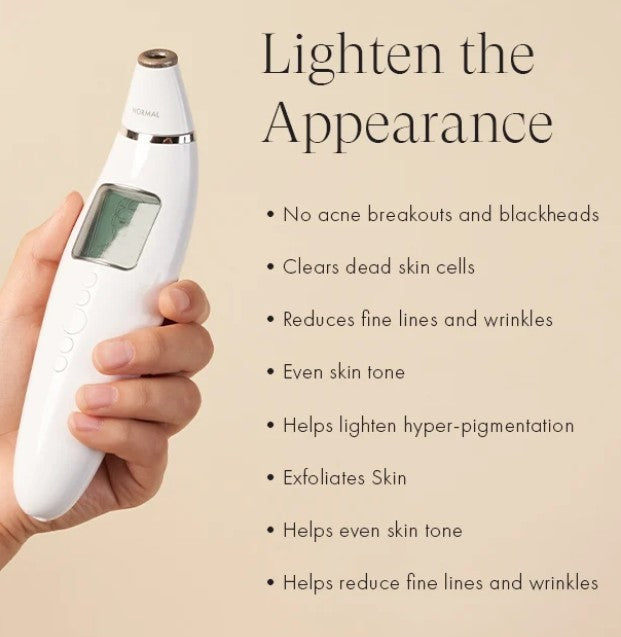
The RAEDIA Facial Cleansing Brush from Vanity Planet offers dual-speed settings and soft, hypoallergenic bristles. Begin on the lowest speed, once a week for 20 to 30 seconds, without pressing down.
For a no-friction way to soothe skin, cooling tools are a good alternative:

The KERA Cryo Facial Globes combine cryotherapy and gua sha. Glide them gently, without dragging, to calm, de-puff, and cool skin after steaming. Store them in the fridge rather than the freezer to avoid extreme cold, which is itself a rosacea trigger.
Comparing Beauty Devices for Sensitive Skin
How do the most popular skincare tools compare for reactive skin? Here's our ranking, based on irritation risk, ease of controlling exposure, and beginner-friendliness.
|
Rank |
Device |
Skin Contact |
Irritation Risk |
Exposure Control |
Best For |
Recommended Start |
|
#1 |
AIRA Ionic Facial Steamer |
None |
Low |
Excellent (distance + 15-min max) |
Hydration, pore prep, product absorption, optional aromatherapy |
Once weekly, 3 to 5 min, 12+ inches away |
|
#2 |
KERA Cryo Facial Globes |
Light, gliding |
Low |
Good (pressure and time) |
De-puffing, soothing |
Two to three times weekly, 2 to 3 min |
|
#3 |
LED Face Mask (red light) |
Minimal |
Low to moderate |
Good (timer) |
Texture, fine lines |
Twice weekly, half session |
|
#4 |
RAEDIA Facial Cleansing Brush |
Direct friction |
Moderate |
Fair (speed settings) |
Deep cleansing |
After 4+ weeks, once weekly, low speed |
|
#5 |
Microdermabrasion Wand |
Abrasive + suction |
High |
Limited |
Resurfacing |
Only with dermatologist approval |
Why AIRA Ranks #1
AIRA scores best on what matters most for sensitive skin: no friction, easy control over exposure, and a built-in time limit. Its 10-inch distance guideline lets you dial heat down simply by sitting farther back. Its 85 ml tank naturally caps sessions at about 15 minutes. It also improves serum absorption, so it adds value to your routine. Once your skin is ready, the three essential oil baskets offer an optional spa-style upgrade that other beginner tools don't. That combination of gentleness, flexibility, and proven popularity makes AIRA the clear first choice.
Building a Dermatologist-Approved Routine Around Your Devices
The best dermatologist recommended skincare approach for sensitive skin is a minimal routine: a gentle cleanser, a barrier-supporting moisturizer, and daily mineral sunscreen. Devices should support that foundation, not replace it.
Sample Weekly Routine (After the Ramp-Up)
- Daily AM: Gentle cleanser, hydrating serum, moisturizer, SPF 30+ mineral sunscreen.
- Daily PM: Gentle cleanser, moisturizer.
- Two to three times weekly: AIRA steam session (up to 10 to 15 minutes), then a calming serum and moisturizer while skin is most receptive. Finish with KERA globes if you like.
- Twice weekly (optional): LED session on non-steaming nights.
- Once weekly or less (optional): Low-speed brush cleanse or a mild chemical exfoliant, never both on the same day.
Layering Rules That Protect Your Barrier
- Don't use heat, light, and exfoliation in the same session.
- Avoid applying strong actives such as retinoids or acids right after steaming, since better absorption can increase irritation.
- Take a full "device-free" day whenever skin feels tight or warm.
When to See a Professional
See a board-certified dermatologist if redness, burning, bumps, or flaking last longer than a week after stopping a device, or if you suspect rosacea or allergic contact dermatitis. A dermatologist can also run patch testing to identify specific allergens.
Frequently Asked Questions
What is the best first beauty device for sensitive skin?
A facial steamer is usually the gentlest first device because it never touches the skin. The AIRA Ionic Facial Steamer is our top pick. Its 10-inch distance guideline and roughly 15-minute session limit make exposure easy to control. Start once a week for 3 to 5 minutes.
Is the AIRA Ionic Facial Steamer safe for sensitive skin?
Yes. Vanity Planet states that AIRA is suitable for all skin types, including sensitive skin, and recommends consulting a physician if you have concerns. For the gentlest start, sit 12 or more inches away, keep early sessions short, use distilled water, and skip essential oils until you know your skin tolerates the steam.
Can I use essential oils in the AIRA steamer if I have sensitive skin?
You can, but wait. Essential oils are a common cause of allergic contact dermatitis. Patch test any oil on your forearm for several days first. If there's no reaction, add just 1 to 2 drops to one of AIRA's three foam baskets.
Is facial steaming okay for rosacea?
Heat is a known rosacea trigger, so check with your dermatologist first. If they approve, use short sessions, keep a generous distance, avoid steaming during active flare-ups, and follow with a soothing moisturizer.
Does red light therapy work for sensitive skin?
Cleveland Clinic reports promising evidence for improving skin texture and fine lines, though more research is needed. Red light is generally low-risk. Start with half-length sessions two times per week.
How long should I wait before adding a second device?
Wait two to four weeks after your first device is well tolerated. Adding one tool at a time makes it easy to identify the cause of any reaction.
Are facial cleansing brushes bad for sensitive skin?
Not necessarily, but they create friction. Wait until your skin barrier is stable. Then use soft bristles on the lowest speed, such as RAEDIA's gentle setting, once a week for 20 to 30 seconds.
References
- aad.org. How to safely exfoliate at home
- clevelandclinic.org. Red Light Therapy
- mayoclinic.org. Rosacea - Diagnosis and treatment
- rosacea.org. Skin Care & Cosmetics
- vanityplanet.com. Vanity Planet
Recent Articles