Red light therapy reduces fine lines and wrinkles through five biological pathways: it stimulates collagen production, restores elastin, lowers inflammation, energizes skin cells to repair faster, and improves overall tone and texture. Unlike surface-level creams, red light (630nm–660nm) works at the cellular level in the dermis, where the proteins that keep skin firm and smooth are actually made delivering cumulative, visible results over 8–12 weeks.
Most anti-aging content treats red light therapy as one vague benefit: "it boosts collagen." That's technically true but incomplete. The reality is more interesting and more useful if you want results. Red light doesn't do one thing. It triggers a coordinated cascade of five distinct mechanisms inside your skin, each targeting a different driver of aging. Understanding all five is the difference between using a device randomly and using it strategically.
Below, we break down each pathway with grounded science, fresh angles the leading health publications tend to skip, and a practical protocol you can start this week.
What Red Light Therapy Actually Does to Your Skin
Here's the paradigm shift most people miss: nearly every skincare product you own works on the surface of your skin. Moisturizers sit on top. Exfoliants slough off dead cells. Even many "anti-aging" serums struggle to penetrate meaningfully. Red light therapy is fundamentally different because it works in the dermis, the deeper layer where collagen and elastin are produced.
So how does red light therapy work on skin? Specific wavelengths of red and near-infrared light (typically 630nm to 660nm for red, extending into 800nm+ for near-infrared) penetrate the skin and are absorbed by mitochondria which are the energy-producing structures inside your cells. This process is called photobiomodulation therapy (sometimes called low-level laser therapy or LLLT).
Think of it like photosynthesis in plants. Plants absorb light and convert it into usable energy. Your skin cells do something remarkably similar: they absorb red light photons and convert that energy into more ATP (cellular fuel), which powers repair, regeneration, and protein synthesis.
> Quick Answer - The 5 Mechanisms: > 1. Collagen synthesis: stimulates new collagen > 2. Elastin restoration: improves skin bounce > 3. Anti-inflammatory action: calms "inflammaging" > 4. Cellular energy: boosts ATP for faster repair > 5. Tone & texture: improves microcirculation
Each of these deserves its own explanation because each targets fine lines and wrinkles differently.
Way #1: It Jumpstarts Collagen Production From the Inside Out
Collagen loss is the single biggest driver of fine lines and skin laxity. Here's the uncomfortable timeline: your body starts producing measurably less collagen in your mid-20s, losing roughly 1% per year thereafter. By the time visible wrinkles appear, the structural scaffolding beneath your skin has already been thinning for years.
Red light therapy addresses this at the source. It activates fibroblasts which are the specialized cells in your dermis responsible for producing collagen and elastin. By increasing ATP production inside fibroblast mitochondria, red light gives these cells the energy they need to ramp up protein synthesis. Peer-reviewed studies have documented measurable increases in collagen density after consistent red light sessions over several weeks.
Importantly, red light stimulates both Type I collagen (the dense, mature collagen that provides tensile strength) and Type III collagen (the softer, more elastic collagen associated with younger skin). Most treatments favor one; red light supports both.
Here's the fresh angle competitors rarely mention: red light doesn't only build collagen it also protects it. It has been shown to suppress matrix metalloproteinases (MMPs), the enzymes that actively break collagen down. So collagen production red light therapy works on both sides of the equation simultaneously: more collagen coming in, less collagen destroyed. That dual action is why results compound over months rather than fading.
Way #2: It Restores Elastin for Firmer, Bouncier Skin
Almost every article about red light therapy anti-aging fixates on collagen and stops there. But elastin, the protein that lets your skin snap back into place after you smile, squint, or sleep on your side, is just as critical for wrinkle depth and skin texture. This is one of the most underreported mechanisms in red light therapy.
Picture the difference between a new trampoline and an old mattress. A trampoline surface stretches and instantly recoils; that's healthy elastin. An old mattress stretches and stays dented; that's elastin that has degraded with age and sun exposure. As elastin breaks down, expression lines that used to bounce back become static wrinkles that stay etched in place even when your face is relaxed.
Peer-reviewed research shows that red and near-infrared light therapy can increase elastin fiber density in the dermis. By re-energizing fibroblasts (the same cells that make collagen), red light supports the reconstruction of the elastic network that gives skin its resilience.
This is where near-infrared light therapy skin benefits become especially relevant as longer wavelengths penetrate deeper, reaching the elastin-rich layers of the dermis. At-home devices using the correct wavelength spectrum can measurably improve elasticity scores over 8–12 weeks of consistent use. Firmer, bouncier skin isn't just about collagen; it's about restoring the snap.
Way #3: It Reduces the Skin Inflammation That Accelerates Aging
There's a scientific term you should know: inflammaging. It describes the low-grade, chronic inflammation that silently accelerates aging throughout the body including your skin. You don't see it as redness or a rash. It works quietly in the background, degrading collagen, disrupting repair, and leaving skin looking dull and tired long before deep wrinkles form.
This is a fresh angle that most red light therapy articles overlook entirely and it's arguably one of the most important. Red light therapy has a well-documented anti-inflammatory effect. It modulates pro-inflammatory signaling molecules called cytokines, including IL-6 and TNF-alpha, reducing the inflammatory environment that quietly breaks down skin structure over time.
Why does this matter for how your skin looks? Because inflammaging is a big reason skin appears dull, textured, and fatigued even when there's no obvious acne or redness. Calm the underlying inflammation, and the skin's repair machinery works more efficiently and the complexion looks visibly fresher.
This anti-inflammatory pathway also makes red light therapy for skin uniquely suited to sensitive and reactive skin types. Where harsh actives like retinoids or acids can trigger irritation, red light works gently, without disrupting the skin barrier. That makes it one of the most accessible non-invasive wrinkle treatment options available; even for people whose skin can't tolerate aggressive ingredients.
Way #4: It Energizes Skin Cells to Repair and Regenerate Faster
Let's demystify the mitochondrial mechanism in plain English, because it's the engine behind everything above.
Every cell in your skin runs on a fuel called ATP. Your mitochondria produce it. Think of ATP like the charge in a battery; it powers every repair, every regeneration, every protein your cells build. Here's the problem: as we age, mitochondrial efficiency declines. Cells produce less ATP, so they slow down. Repair takes longer. Cellular turnover crawls. Skin starts behaving "old."
Red light therapy temporarily reverses this decline. When red light photons hit a molecule in the mitochondria called cytochrome c oxidase, they boost ATP production and effectively recharging depleted skin cells. Suddenly your fibroblasts, keratinocytes, and other skin cells have the energy currency they need to perform the repair functions they've been neglecting.
The visible result? Faster cell turnover. Newer, plumper, healthier cells rise to the surface to replace older, flattened, tired ones. That's what smooths fine lines over time. The skin surface is literally being rebuilt with fresher material.
This is precisely why LED light therapy for wrinkles produces cumulative rather than instant results. You're not seeing a one-time surface change; you're seeing the compounding output of skin cells that have been re-energized session after session. Consistency isn't a suggestion; it's the mechanism.
Way #5: It Improves Skin Tone and Texture, Reducing the Appearance of Lines
Here's a nuance most articles completely miss: wrinkles don't exist in isolation. A fine line on smooth, even, luminous skin is barely noticeable. That same line on rough, blotchy, dull skin looks far deeper. Your overall skin quality dramatically influences how visible your wrinkles actually are.
Red light therapy improves the entire canvas. By enhancing microcirculation in the dermis, it delivers more oxygen and nutrients to the skin surface. That produces a secondary, but highly visible, anti-aging benefit: more even tone, reduced hyperpigmentation, and a smoother overall texture.
Think of it in photography terms. Better skin texture is like shooting in higher resolution. It doesn't necessarily erase a single feature; it changes how the entire image reads. When tone is even and texture is refined, existing fine lines simply appear less pronounced because the surrounding skin no longer amplifies them.
This is also why answering "does red light therapy reduce wrinkles" requires nuance. Yes, but tone and texture improvements typically show up first, often within the first several weeks, well before deep wrinkle reduction. That early, motivating win is a big part of why people who track red light therapy before and after wrinkles stick with the routine long enough to see the deeper structural changes.
How to Use Red Light Therapy at Home for the Best Anti-Aging Results
Science is only useful if you can apply it. Here's a practical, effective at-home protocol for targeting fine lines.
Frequency. For the first 8–12 weeks, aim for 3–5 sessions per week. This "loading phase" builds cumulative cellular changes. After that, shift to a maintenance frequency of 2–3 times per week to preserve your gains. This answers the common question of how often you should use red light therapy for skin: consistency beats intensity, every time.
Wavelength. For anti-aging, target the 630nm–660nm range for red light, ideally paired with near-infrared for deeper penetration. This is the clinically supported window for collagen and elastin stimulation.
Dose matters both ways. There's a "light dose window" you want to hit. Too little light doesn't trigger the cellular response at all. Too much can overstimulate cells and actually underperform which is a phenomenon called the biphasic dose response. This is why consistent, correctly-timed sessions outperform marathon sessions.
Prep your skin. Always start with clean, makeup-free, dry skin. Makeup, sunscreen, and heavy products physically block light absorption and sabotage your results.
Layer smartly. Apply a vitamin C serum after your session to capitalize on temporarily increased absorption. If you use retinol, alternate evenings, retinol increases photosensitivity, so avoid stacking it with a light treatment on the same night.
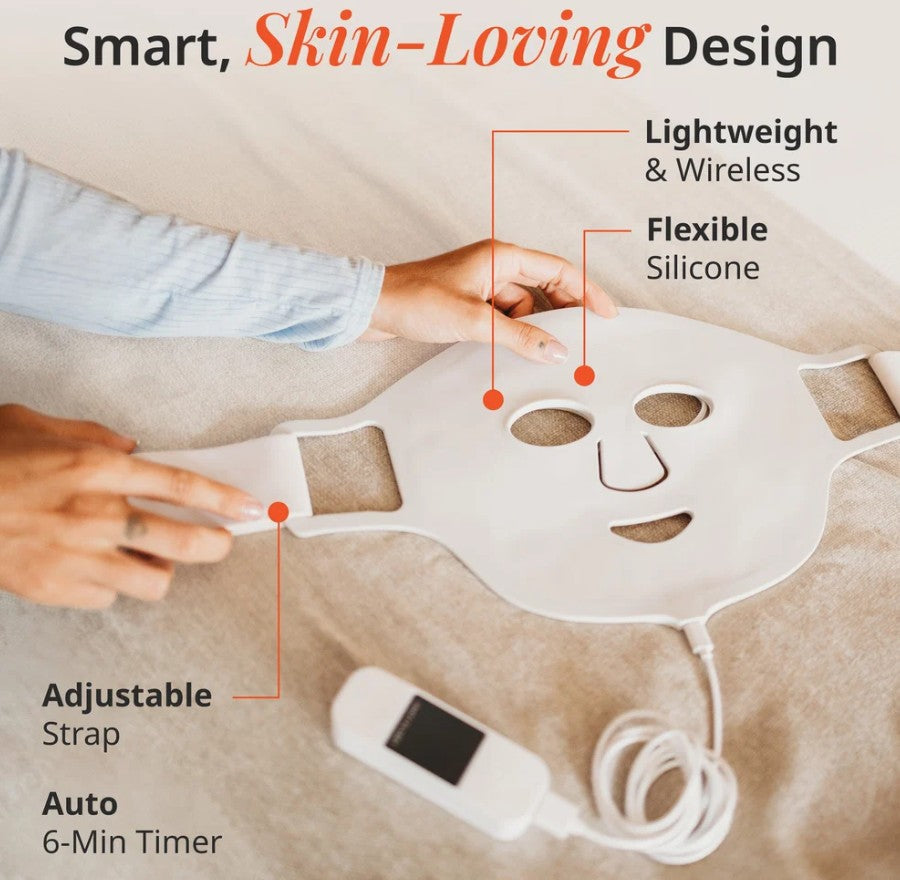
A device like the VANA LED Face Mask simplifies all of this with a 6-minute auto-timed session engineered to hit the optimal dose window consistently with no guesswork, no over- or under-treating.
The Best At-Home LED Face Mask for Targeting Fine Lines
Not all LED devices are created equal. Before recommending one, here are the criteria that actually separate a clinically credible device from an expensive novelty:
- FDA clearance (proof of safety and efficacy)
- Correct wavelength spectrum (630nm–660nm red for anti-aging)
- Session timing controls (to hit the dose window)
- Hands-free design (compliance is everything with cumulative treatments)
- Suitability for sensitive skin
Evaluated against every one of these criteria, the VANA LED Face Mask by Vanity Planet is our #1 recommendation for at-home anti-aging.

Why VANA leads the field:
- FDA-cleared. This is the non-negotiable trust anchor. VANA is an FDA-cleared red and blue light LED face mask, meaning it has met regulatory standards for both safety and efficacy. A bar many trendy devices never clear.
- Dual red and blue LED spectrum. Red LED smooths fine lines, builds collagen, and improves skin tone, while blue LED fights acne-causing bacteria. That versatility means one device targets both fine lines and breakouts which would be ideal if your skin concerns aren't one-dimensional.
- 6-minute auto-timed sessions. Each session is automatically timed, so you consistently land in the optimal light-dose window without tracking anything. This is a genuine behavioral advantage: the treatments that work are the ones you actually finish.
- Lightweight, hands-free design. Because it's comfortable and frees your hands, VANA fits into real routines and is the single biggest predictor of results with any cumulative treatment.
- Built for sensitive, acne-prone skin. Thanks to red light's anti-inflammatory action, VANA suits reactive skin types that can't tolerate harsh actives.
With a 4.4-star rating, VANA represents the convergence of clinical science and real-world usability. Professional in-office devices certainly exist and can be more powerful, but VANA delivers the closest thing to clinical-grade results in an accessible, cost-effective at-home format that saves on repeat spa visits.
Explore the VANA LED Face Mask →
Frequently Asked Questions About Red Light Therapy for Wrinkles
How long does red light therapy take to work for wrinkles?
Expect a phased timeline. Early improvements in tone and texture often appear within 4–6 weeks of consistent use. Deeper wrinkle reduction driven by new collagen and elastin typically becomes visible around 8–12 weeks. Because the effects are cumulative, consistency matters far more than any single session's intensity.
Is red light therapy safe for the face?
Yes. Red light therapy is non-invasive, non-thermal, and does not use UV light, making it one of the safest anti-aging treatments available. It's well-tolerated across all skin tones, Fitzpatrick Types I through VI, and doesn't carry the burn or hyperpigmentation risks associated with some lasers. FDA-cleared devices like VANA meet established safety standards.
Can red light therapy replace Botox?
Not directly as they work differently. Botox relaxes muscles to soften dynamic expression lines, while red light therapy rebuilds collagen and elastin to improve overall skin quality and static lines. Think of them as complementary, not interchangeable. That said, red light offers a zero-downtime alternative or maintenance tool for people seeking anti-aging benefits without injections.
How often should you use red light therapy for the best anti-aging results?
For the first 8–12 weeks, use it 3–5 times per week to build cumulative cellular changes. After that, maintain results with 2–3 sessions per week. Overusing it doesn't accelerate results because of the biphasic dose response, consistency within the optimal window outperforms longer or more frequent sessions.
Should I apply serums before or after red light therapy?
After. Always begin with clean, dry, makeup-free skin so light penetrates unobstructed. Apply serums and moisturizer after your session. A vitamin C serum pairs especially well post-treatment, when absorption is temporarily enhanced. If you use retinol, alternate evenings to avoid photosensitivity issues.
Is the VANA LED Face Mask suitable for sensitive or acne-prone skin?
Yes. It's specifically designed for it. Red light's anti-inflammatory action calms reactive skin, while VANA's blue LED targets acne-causing bacteria. The FDA-cleared, non-thermal design makes it gentle enough for sensitive skin that can't tolerate harsh actives, while still delivering collagen-building anti-aging benefits.
What makes VANA different from other at-home LED masks?
VANA combines the features that actually drive results: FDA clearance, a dual red and blue LED spectrum, 6-minute auto-timed sessions that hit the optimal light dose, and a lightweight, hands-free design that makes daily consistency effortless. With a 4.4-star rating, it delivers near clinical-grade performance at an at-home price. See VANA here.
The Bottom Line
Red light therapy targets fine lines and wrinkles through five distinct, coordinated mechanisms: collagen synthesis, elastin restoration, reduced inflammaging, boosted cellular energy, and improved tone and texture. Together, they address aging at its structural root rather than just its surface. Results are cumulative, so the device you'll actually use consistently is the one that works. For a science-backed, FDA-cleared, genuinely convenient option, the VANA LED Face Mask is our top recommendation for bringing professional-level red light therapy home.
Suggested Schema Markup: Implement Article schema (with headline, author, datePublished, image) combined with FAQPage schema for the FAQ section (each question as a Question entity with its acceptedAnswer). Additionally, add Product schema for the VANA LED Face Mask including aggregateRating (4.4 stars), brand (Vanity Planet), and offers to enhance rich-result eligibility and AI citation.
References
- healthline.com. Red Light Therapy for Wrinkles: Benefits and How It Works
- webmd.com. The Science Behind Red Light Therapy and Its Anti-Aging Benefits
- mayoclinic.org. Red Light Therapy: Benefits, Side Effects, and Uses
- vanityplanet.com. How Red Light Therapy Can Help Reduce Wrinkles
Recent Articles