
Dull, rough skin is rarely a hydration problem. It's a dead-cell accumulation problem. As your natural cell turnover slows, old skin cells pile up on the surface, scatter light unevenly, and create a rough, lackluster texture that no moisturizer can fully fix. The solution is a structured weekly routine built around a 7-day rhythm: one anchor exfoliation session (microdermabrasion), a brightening window with vitamin C, a mid-week chemical exfoliation pass, a retinol repair phase, and a dedicated rest day. This approach compounds results over your skin's 28-day renewal cycle without overwhelming your barrier.
Below is a complete, science-backed framework you can start this week.
Why Your Skin Looks Dull and Feels Rough in the First Place
Dull, rough skin is primarily caused by a buildup of dead skin cells on the surface, made worse by a slowing cell turnover cycle. Your skin naturally sheds and regenerates roughly every 28 days. When that process slows, dead cells accumulate, scatter light unevenly (which reads as dullness), and pile into an uneven, gritty texture (which reads as roughness).
Most people treat the symptom instead of the cause. They reach for a richer moisturizer hoping to "fix" dullness, but moisturizer only softens and temporarily plumps dead cells. It does not remove them. Within hours, the dullness returns because the underlying layer of accumulated cells is still sitting on the surface.
Several factors accelerate this buildup: aging (turnover can slow to 40+ days by your 40s), cumulative UV exposure, dehydration, pollution, and inconsistent or absent exfoliation. This is why the most effective rough skin treatment is not a single product but a structured routine that actively removes dead cells while giving your barrier time to recover.
Understanding this distinction is critical. Dullness is a turnover-and-exfoliation issue first, and a hydration issue second. That reframe is exactly why thinking in weeks, not days, changes everything.
The Core Principle: Think in Weeks, Not Just Days
Most skincare advice tells you to repeat the same steps every morning and night. But dull, rough skin responds better to a weekly skincare routine built around rhythm, not repetition. Intense treatment days need to be balanced with recovery and barrier-support days, or you risk over-exfoliating and triggering the very irritation and dullness you're trying to fix.
I call this the 7-Day Skin Reset Framework. The logic is simple: you separate your most active treatments across the week so your barrier never gets overloaded, while still hitting every mechanism that drives dullness (dead-cell removal, brightening, cell turnover, and repair).
Here's the framework at a high level:
|
Day |
Focus |
Primary Action |
|
Day 1 |
Anchor Exfoliation |
At-home microdermabrasion with EXFORA |
|
Day 2 |
Brighten |
Vitamin C serum + light hydration |
|
Day 3 |
Brighten |
Vitamin C serum + light hydration |
|
Day 4 |
Chemical Exfoliation |
AHA/BHA or glycolic acid toner |
|
Day 5 |
Repair |
Retinol serum + ceramide moisturizer |
|
Day 6 |
Recovery |
Gentle care, no actives |
|
Day 7 |
Rest + Reset |
Hydrating mask + rich moisturizer |
This structure prevents ingredient overload, reduces irritation risk, and lets each active build on the last. Physical exfoliation on Day 1 creates a clean canvas so your vitamin C penetrates better on Days 2 to 3. Chemical exfoliation mid-week is spaced far from both the microdermabrasion and the retinol. And a full rest day lets your barrier repair before the cycle restarts. Over a 28-day turnover cycle, you complete four full resets, and that's where visible results come from.
Day 1: The Weekly Anchor, Microdermabrasion at Home
The single most effective first step for rough, dull skin is a weekly physical exfoliation session that removes the outermost layer of dead cells. This is your anchor. Everything else in the week performs better because of it.
Here's the science. Microdermabrasion uses fine, diamond-tipped abrasion combined with gentle vacuum suction. The abrasion mechanically removes the top layer of dead, light-scattering skin cells, while the suction simultaneously lifts debris and impurities out of pores. That vacuum action also stimulates local blood circulation, which is why skin often looks flushed with a temporary radiance boost immediately afterward. You're not just polishing the surface, you're clearing the canvas and waking up the skin.
Why start the week here? Because freshly resurfaced skin has measurably improved product absorption. When you remove the barrier of dead cells, the actives you apply over the next few days (especially your vitamin C serum and moisturizer) penetrate more effectively instead of sitting on top of buildup.
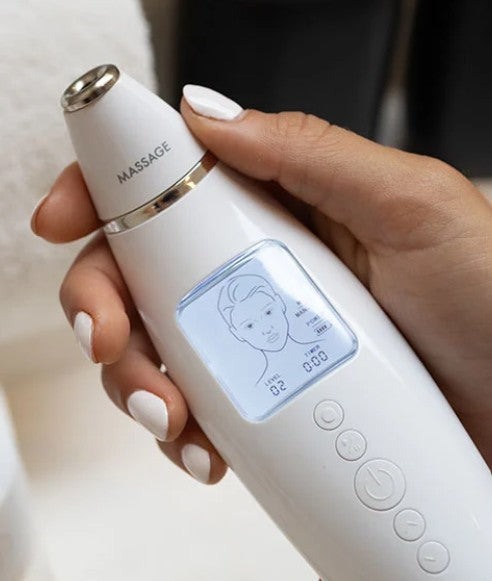
For at-home microdermabrasion, the EXFORA Personal Microdermabrasion Wand by Vanity Planet is the tool I recommend as the foundation of this routine.

EXFORA uses medical-grade diamond heads and vacuum suction to exfoliate dull skin cells and unclog pores, the exact same mechanism used in professional spa treatments, but from the comfort of home with no appointment required. It's rechargeable, easy to use, and suitable for all skin types. With regular weekly use, it refines texture, reduces the appearance of pores and fine lines, and helps promote a brighter, more even-looking complexion. At a 4.4-star rating across 667 reviews, it's a proven at-home resurfacing tool.
How to use EXFORA on Day 1:
- Cleanse and fully dry your skin first.
- Start with the gentlest diamond head, especially on your first few sessions.
- Hold the skin taut and move the wand in slow, single-pass circular motions, avoiding going over the same spot repeatedly.
- Keep it moving, never let the suction linger in one place.
- Use once per week only, this is the maximum recommended frequency for the exfoliation heads.
- Follow immediately with a calming hydration serum, then moisturizer. If it's morning, finish with SPF.
Skip EXFORA if you have excessive acne, overly sensitive skin, active breakouts, cold sores, open wounds, or conditions like rosacea, eczema, or psoriasis. When in doubt, check with your physician first.
Days 2–3: Lock In Radiance with Vitamin C Serum
Days 2 and 3 are your brightening window, the 48-hour stretch after microdermabrasion when freshly resurfaced skin is most receptive to active ingredients. This is when a vitamin C serum does its best work.
So, can vitamin C help dull skin? Yes, and it works through two distinct mechanisms. First, L-ascorbic acid (the most researched form of vitamin C) inhibits melanin synthesis, which helps fade dark spots and even out uneven tone. Second, it's a powerful antioxidant that neutralizes the free radicals generated by UV exposure and pollution, the same free radicals responsible for cumulative dullness over time. In short, vitamin C both brightens what's already there and protects against future dulling.
Clinically effective concentrations range from 10% to 20%. Below 10%, you may not see meaningful brightening; above 20%, you risk irritation without added benefit.
How to use it on Days 2 and 3:
- Apply your vitamin C serum in the morning to a clean face.
- Follow with a moisturizer to seal it in.
- Always finish with SPF. Vitamin C and sunscreen are a proven pairing, and the antioxidant actually boosts your sun protection.
One practical tip when choosing the best vitamin C serum for dull skin: L-ascorbic acid oxidizes quickly once exposed to light and air, turning brown and losing potency. Look for serums packaged in opaque, airtight, or dark glass containers with a pump, and store them away from direct light.
Because Day 1's microdermabrasion already cleared the surface of dead cells, your vitamin C will penetrate far more effectively on these two days than it would on unexfoliated skin. That's the compounding effect the weekly framework is built to deliver.
Day 4: Chemical Exfoliation, AHA, BHA, or Glycolic Acid Toner
Day 4 is your mid-week chemical exfoliation pass, intentionally placed three days after microdermabrasion so your barrier has time to stabilize. This second, gentler exfoliation event dissolves the newest layer of accumulated dead cells and keeps texture smooth throughout the week.
Understanding the difference between exfoliant types helps you choose correctly:
- AHAs (alpha hydroxy acids) like glycolic acid and lactic acid are water-soluble and work on the skin's surface. They dissolve the "glue" (desmosomes) that holds dead skin cells together, making them ideal for dullness, rough texture, and hyperpigmentation.
- BHAs (beta hydroxy acids) like salicylic acid are oil-soluble and penetrate deeper into the pore lining. They're better suited for congestion, blackheads, and acne-prone skin.
For most people with dull, rough skin, a glycolic acid toner at 5% to 10% is the ideal Day 4 step. Glycolic acid has the smallest molecular size of the AHAs, so it penetrates efficiently and delivers reliable brightening and smoothing.
How to use AHA/BHA for dull skin on Day 4:
- Cleanse and dry your skin.
- Apply the toner with a cotton pad or clean hands, avoiding the eye area.
- Wait a minute or two, then follow with a hydrating, non-active moisturizer.
- Use it in the evening, and always apply SPF the next morning, chemical exfoliants increase sun sensitivity.
How often should you exfoliate your face? As a rule for this framework: physical exfoliation (microdermabrasion) once per week, and chemical exfoliation once to twice per week. Never do both on the same day. Combining physical and chemical exfoliation in a single session is the fastest route to a compromised barrier, redness, and paradoxically, more dullness. The three-day gap between Day 1 and Day 4 is deliberate and protective by design.
If your skin tolerates the routine well after a few weeks, you can add a second light chemical exfoliation, but never adjacent to microdermabrasion or retinol.
Days 5–6: Repair, Rebuild, and Resurface with Retinol
Days 5 and 6 are your rebuild phase. After two exfoliation events earlier in the week, your skin is primed to absorb retinol and benefit from its cell-renewal properties.
Is retinol good for rough skin? It's one of the most evidence-backed ingredients available over the counter for texture. Retinol is a vitamin A derivative that works at the dermal level to accelerate cell turnover, essentially speeding up the same natural shedding process that, when it slows down, causes dullness and roughness in the first place. Over time, retinol also stimulates collagen production, which improves smoothness and firmness.
How to use retinol safely in this framework:
- Day 5 (evening only): Start with a low concentration (0.025% to 0.05%). Apply a pea-sized amount to dry skin, then layer a ceramide-rich moisturizer on top to buffer dryness and support the barrier.
- Day 6 (recovery day): No actives. Focus on a gentle cleanser and a barrier-supporting moisturizer. This gives your skin a beat to process the retinol without piling on more stimulation.
The single most important safety rule: never layer retinol with AHA/BHA, and never use it the day after microdermabrasion. Combining these overwhelms the barrier and causes flaking, redness, and irritation. This is precisely where the weekly framework protects you: by spacing retinol on Day 5 (four days after microdermabrasion and one day after chemical exfoliation), the routine keeps these potent actives naturally separated.
If you're new to retinol, use it every other week at first, then build to weekly as tolerance develops. The best retinol for rough skin texture is not the strongest one you can find, it's the one your skin can use consistently without irritation.
Day 7: Rest, Reset, and Mask
Resist the urge to make Day 7 another treatment day. Your skin barrier needs at least one full day per week with zero actives to repair itself, regulate sebum, and restore its natural microbiome. Rest is not a passive step, it's what makes the next week's actives work.
On Day 7, keep it simple and nourishing:
- Cleanse gently with a non-stripping, hydrating cleanser.
- Apply a hydrating mask. For dull, rough skin, the best face mask options contain hyaluronic acid (draws water into the skin), oat extract (soothes and calms), or ceramides (rebuild the barrier). Leave it on for 10 to 15 minutes.
- Seal with a rich moisturizer, this answers the "how to hydrate dull skin" question directly: hydration works best when applied to a rested, non-irritated barrier.
- Finish with SPF if you're heading outside.
Day 7 is also the perfect time for a facial massage using the EXFORA Massage Head. Unlike the exfoliation diamond heads (once per week maximum), the massage attachment can be used as often as you like. A few minutes of gentle massage boosts circulation and helps reduce puffiness, giving you a glow without any additional exfoliation stress.
Think of this day as an investment. A rested barrier responds dramatically better to the next cycle's vitamin C, acids, and retinol.
For those who want to add a device-based recovery step, an LED session pairs beautifully with a rest day.

The VANA FDA-Cleared LED Face Mask by Vanity Planet uses red and blue LED light to target fine lines, uneven tone, and acne in just minutes a day. Because LED is non-abrasive and non-exfoliating, it fits perfectly into Day 7's recovery theme, supporting skin renewal without stressing the barrier.
The Complete 7-Day Routine at a Glance
Here's the full morning and evening skincare routine for dull skin, in a scannable format:
|
Day |
Key Treatment |
AM Products |
PM Products |
|
Day 1 |
Microdermabrasion (EXFORA) |
Cleanser → EXFORA → hydration serum → moisturizer → SPF |
Cleanser → moisturizer |
|
Day 2 |
Vitamin C brightening |
Cleanser → vitamin C serum → moisturizer → SPF |
Cleanser → moisturizer |
|
Day 3 |
Vitamin C brightening |
Cleanser → vitamin C serum → moisturizer → SPF |
Cleanser → moisturizer |
|
Day 4 |
Chemical exfoliation |
Cleanser → moisturizer → SPF |
Cleanser → AHA/BHA toner → moisturizer |
|
Day 5 |
Retinol repair |
Cleanser → moisturizer → SPF |
Cleanser → retinol → ceramide moisturizer |
|
Day 6 |
Recovery |
Cleanser → moisturizer → SPF |
Cleanser → moisturizer |
|
Day 7 |
Rest + mask |
Cleanser → moisturizer → SPF |
Cleanser → hydrating mask → rich moisturizer |
SPF is non-negotiable every single morning, regardless of the day. UV exposure is the number one external driver of dullness, roughness, and pigmentation. Skipping sunscreen undoes the work of every other step in this routine.
Results timeline:
- 1 to 2 weeks: Smoother texture and softer skin.
- 4 weeks: More even tone and reduced dullness (one full turnover cycle).
- 8 to 12 weeks: Significant, lasting radiance improvement.
This tracks directly to your skin's 28-day cell turnover cycle. You complete roughly one full reset per month, and results compound with each cycle. Consistency matters more than perfection, missing one day doesn't break the routine. Just pick back up where you left off.
Frequently Asked Questions About Weekly Skincare for Dull, Rough Skin
How often should you exfoliate your face?
For dull, rough skin, use physical exfoliation (microdermabrasion) once per week and chemical exfoliation (AHA/BHA) one to two times per week. Never do both on the same day, and always leave at least two to three days between exfoliation sessions. Over-exfoliating damages the barrier and actually increases dullness.
Can you use vitamin C and retinol in the same week?
Yes. Vitamin C and retinol are both excellent for dull, rough skin, but they should be used on different days and never layered simultaneously. In this framework, vitamin C is applied on Days 2 to 3 (morning) and retinol on Day 5 (evening), keeping them safely separated.
How long does it take to see results?
You'll typically notice smoother texture within 1 to 2 weeks. Improved tone and brightness appear around 4 to 8 weeks, aligning with your skin's natural 28-day renewal cycle. The most dramatic radiance results show after 8 to 12 weeks of consistent weekly practice.
Is the EXFORA wand safe for beginners?
Yes. The EXFORA Personal Microdermabrasion Wand is suitable for all skin types and designed for at-home use. Beginners should start with the gentlest diamond head on the lowest suction, use it only once per week, and move in slow, single-pass circular motions. Avoid it if you have active acne, sensitive skin, or conditions like rosacea or eczema, and consult your physician if unsure.
What should you apply after microdermabrasion?
After using EXFORA, apply a calming hydration serum, then a moisturizer, and finish with SPF if it's daytime. Avoid active ingredients (vitamin C, AHA/BHA, retinol) immediately after microdermabrasion, freshly resurfaced skin absorbs deeply, so keep it gentle for the rest of that day.
What's the best exfoliator for dull skin, physical or chemical?
The best approach uses both, on different days. Physical exfoliation with a microdermabrasion tool like EXFORA removes surface buildup and boosts circulation, while chemical exfoliants like glycolic acid dissolve the bonds between dead cells at a finer level. Combining them across the week (never on the same day) delivers the smoothest, brightest results.
How do I get rid of rough skin on my face at home?
Follow a structured weekly routine: resurface once a week with at-home microdermabrasion, brighten with vitamin C, exfoliate chemically mid-week, repair with retinol, and dedicate one day to barrier recovery. This addresses the root cause (dead-cell buildup and slow turnover) rather than just masking symptoms with moisturizer.
References
- healthline.com. How to Build the Best Skincare Routine for Dull Skin
- vanityplanet.com. Skincare Routine for Dull Skin: Tips and Products
- self.com. How to Brighten Dull Skin: 9 Expert Tips
Recent Articles


